This six-volume History of the Indian Mutiny was first produced in 1890 by Colonel George Malleson (1825–1898), who combined Sir John Kaye's History of the Sepoy War in India with his own later work. Kaye (1814–1876) was a prolific writer of biography and history who started the Calcutta Review in 1844. His use of first-hand evidence, collected from personal and professional contacts, supports (perhaps predictably) his assertion that the rebellion is a story of British 'national character', and the narrative is illustrated with biographical and personal anecdotes. Malleson's contributions however are derived from his controversial 'Red Pamphlet' (1857) and other writings, in which he is unafraid to criticise or praise British troops and administration as the occasion demands. Volume 2 covers Delhi history and the spread of the revolt from Meerut to Allahabad and Cawnpore, concluding with the battle of Najafgahr and the siege of Delhi.
This six-volume History of the Indian Mutiny was first produced in 1890 by Colonel George Malleson (1825–1898), who combined Sir John Kaye's History of the Sepoy War in India with his own later work. Kaye (1814–1876) was a prolific writer of biography and history who started the Calcutta Review in 1844. His use of first-hand evidence, collected from personal and professional contacts, supports (perhaps predictably) his assertion that the rebellion is a story of British 'national character', and the narrative is illustrated with biographical and personal anecdotes. Malleson's contributions however are derived from his controversial 'Red Pamphlet' (1857) and other writings, in which he is unafraid to criticise or praise British troops and administration as the occasion demands. Volume 3 covers areas including Bengal and Bihar, Agra, the central and north-west, Oudh and Lucknow, and includes character assessments and discussions of conditions and causes.
This six-volume History of the Indian Mutiny was first produced in 1890 by Colonel George Malleson (1825–1898), who combined Sir John Kaye's History of the Sepoy War in India with his own later work. Kaye (1814–1876) was a prolific writer of biography and history who started the Calcutta Review in 1844. His use of first-hand evidence, collected from personal and professional contacts, supports (perhaps predictably) his assertion that the rebellion is a story of British 'national character', and the narrative is illustrated with biographical and personal anecdotes. Malleson's contributions however are derived from his controversial 'Red Pamphlet' (1857) and other writings, in which he is unafraid to criticise or praise British troops and administration as the occasion demands. Volume 5 narrates the ending of the Mutiny, concluding, as Kaye had initially proposed, that the events of the period illustrate British strength of character and fortitude.
This six-volume History of the Indian Mutiny was first produced in 1890 by Colonel George Malleson (1825–1898), who combined Sir John Kaye's History of the Sepoy War in India with his own later work. Kaye (1814–1876) was a prolific writer of biography and history who started the Calcutta Review in 1844. His use of evidence collected from personal and professional contacts supports (perhaps predictably) his assertion that the rebellion is a story of British 'national character', and the narrative is illustrated with biographical and personal anecdotes. Malleson's contributions however are derived from his controversial 'Red Pamphlet' (1857) and other writings, in which he is unafraid to criticise or praise British troops and administration as the occasion demands. Volume 6 examines the non-military aspects of the Mutiny, and the response of Anglo-Indian civilians to the revolt and to its aftermath. It also contains a comprehensive index.
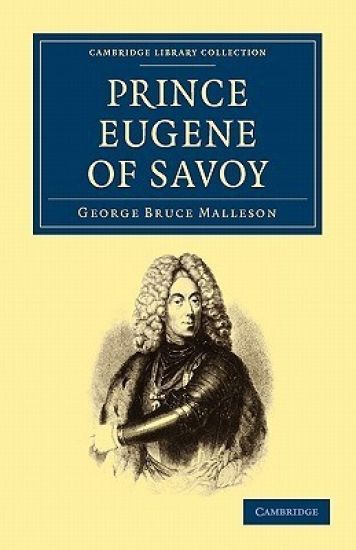
George Bruce Malleson (1825–1898) was a British army officer and military historian. On his commission as an ensign in 1842 he was assigned to the 65th Bengal native infantry, and remained in India for the remainder of his military career, serving in the Second Anglo-Burmese War (1852–1853) and witnessing the Indian Mutiny of 1857. After his retirement in 1877, Malleson devoted the rest of his life to publishing scholarly works on military history. This volume, first published in 1888, contains his detailed biography of Prince Eugene of Savoy (1663–1736). Prince Eugene is considered one of the most successful military commanders of the seventeenth century. Malleson describes his life and military campaigns in detail, exploring his strategies against the Ottoman Empire and his campaigns during the War of the Spanish Succession, and providing valuable insights into the methods and strategies of warfare during this period.