Kirjojen hintavertailu. Mukana 11 244 527 kirjaa ja 12 kauppaa.

Kirjahaku

Etsi kirjoja tekijän nimen, kirjan nimen tai ISBN:n perusteella.

1000 tulosta hakusanalla George Michell

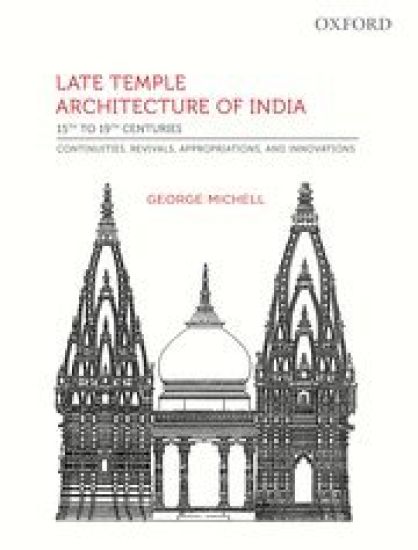
Late Temple Architecture of India, 15th to 19th Centuries
From the fifteenth century on, after a period of widespread destruction and demolition, India witnessed a resumption of temple patronage and building activity. These 'late' temples, however, are usually overlooked by architectural and art historians, who tend to privilege the earlier phases of Indian architecture and art, the prevailing assumption being that Indiaâs âlateâ temples are unworthy of serious attention. As illustrated in this volume, nothing could be further from the truth. Accompanied by maps, photographs, as well as a selection of building plans, this book is the first wide-ranging account of temple architecture in the 500-year period that coincides with the rule of the sultanates, the Mughals, and the British. Through a meticulous study of over 300 temples from 17 geographical zones, this book shows that, as far as temple architecture is concerned, these years were remarkably creative and vibrant. The temples built during this period display a startling diversity of forms, structural techniques, and aesthetic qualities. Rather than characterizing the appearance of domes, vaults, pointed arches, and other such 'borrowings' as inappropriately 'Christian' or 'Islamic', this volume attempts to understand how such attributes came to be integrated into a Hindu and Jain religious context.
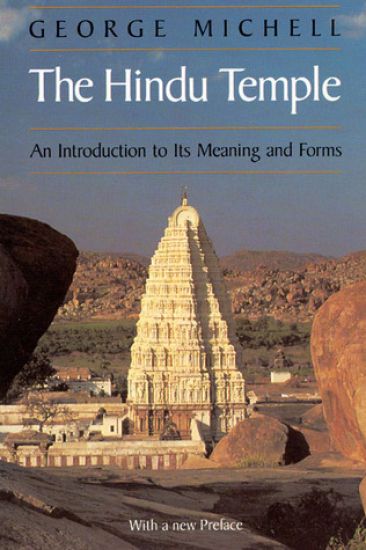
The Hindu Temple

The Hindu Temple

George Michell

University of Chicago Press
1988
nidottu
For more than 1500 years, from the Indian subcontinent to the islands of the Indonesian archipelago, the temple has embodied and symbolized the Hindu worldview at its deepest level and inspired the greatest architectural and artistic achievements in Hindu Asia. In The Hindu Temple, considered the standard introduction to the subject, George Michell explains the cultural, religious, and architectural significance of the temple. He illustrates his points with a profusion of photographs, building plans, and drawings of architectural details, making the book a useful guide for travelers to Asia as well as an illuminating text for students of architecture, religion, and Asian civilizations. Michell's discussion of the meaning and forms of the temple in Hindu society encompasses the awe-inspiring rock-cut temples at Ellora and Elephanta, the soaring superstructures and extraordinary sexual exhibitionism of the sculptures at Khajuraho, and the colossal mortuary temple of Angkor Vat, as well as the tiny iconic shrines that many Hindus wear around their necks and the simple shrines found under trees or near ponds.
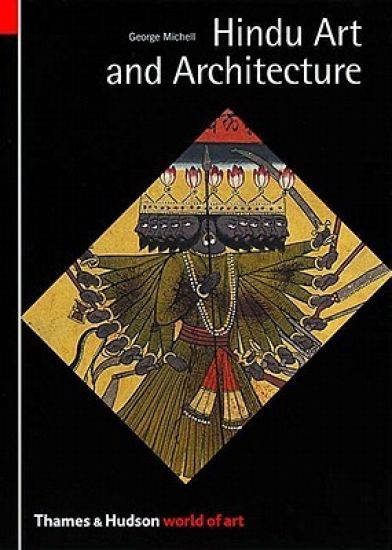
Hindu Art and Architecture

Hindu Art and Architecture

George Michell

Thames Hudson Ltd
2000
nidottu
The art of Hinduism constitutes one of the world's greatest traditions. Michell's new survey examines the entire period, covering shrines consecrated to Hindu cults and works of art portraying Hindu divinities and semi-divine personalities.
Temples of Deccan India

Temples of Deccan India

George Michell

ACC Art Books
2021
sidottu
This beautifully illustrated book showcases the Hindu and Jain temples of Maharashtra, Telangana, Andhra Pradesh and Karnataka built prior to the invasion of peninsular India by the Delhi sultans at the end of the 13th century. Unlike temples in many other parts of India, those of the Deccan are well preserved, with their wealth of figural and decorative carvings miraculously intact. They demonstrate the development of Indian sacred architecture and art over a span of more than 600 years. Focusing on some 50 historical sites, the Temples of Deccan India begins with artificially excavated “cave” shrines dedicated to various Hindu deities, before proceeding on to examine free-standing Hindu and Jain monuments sponsored by successive rulers of the Deccan. Attention is paid to the beautiful sculptures found on temple basements, walls, brackets and ceilings. Carved in crisp relief, and sometimes even in three dimensions, these carvings are among the greatest glories of Indian stone art. Among the featured highlights are the cave temple on the island of Elephanta, with its stupendous representation of three-headed Sadashiva; the colossal, monolithic Kailasa temple at Ellora, a technical feat unsurpassed in the entire history of Indian architecture; the magnificent columned pavilion at Hanamkonda, now currently being reconstructed; and the temple at Belur, with its exquisitely carved female figural brackets. Specially commissioned plans of temple layouts accompany 300+ photographs. and clarify the succession of dynasties that governed the Deccan during the centuries covered here. Maps locate the temple sites, while passages of text illuminate the succession of dynasties that governed the Deccan from the 7th to 13th centuries. Educational, accessible and beautifully illustrated, this book will be of interest to anyone fascinated by Indian architecture.
Back to Bach

Back to Bach

George Michell

Unicorn Publishing Group
2026
sidottu
According to the French composer Olivier Messiaen, ‘Bach’s music reaches all times, all places’. In Back to Bach: From Mozart to Moog George Michell explores the story of Bach’s impact on composers from Mozart and Beethoven to Stravinsky and Shostakovich, as well as on jazz pianists, rock guitarists and pop singers, all of whom set off on their own Back to Bach journeys. Readers are invited to become listeners, to feast on Michell’s musical banquet. Under his guidance, they will discover works, both familiar and unfamiliar, that reveal the persistent influence of Bach’s art. As Michell shows, George Bernard Shaw was right when he predicted that ‘Bach belongs not to the past, but to the future’. An accessible, indispensable reference for all Bach lovers, the book will appeal to the musically curious, willing to explore the incarnations of Bach into acoustics that he could never have known, from the modern grand piano, electric keyboard, saxophone quartet and big band to the Moog synthesiser.
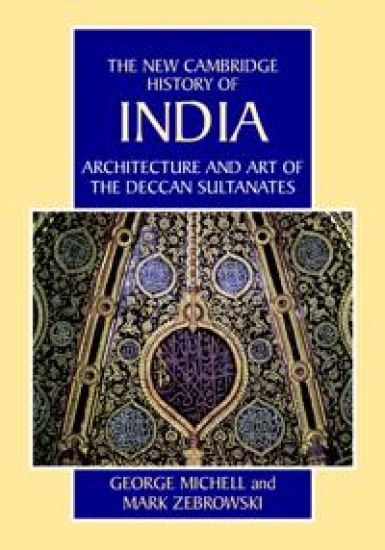
Architecture and Art of the Deccan Sultanates

Architecture and Art of the Deccan Sultanates

George Michell; Mark Zebrowski

Cambridge University Press
1999
sidottu
The Muslim kingdoms of the Deccan plateau flourished from the fourteenth to eighteenth centuries. During this period, the Deccan sultans built palaces, mosques and tombs, and patronised artists who produced paintings and decorative objects. Many of these buildings and works of art still survive as testimony to the sophisticated techniques of their craftsmen. This volume is the first to offer an overall survey of these architectural and artistic traditions and to place them within their historical context. The links which existed between the Deccan and the Middle East, for example, are discernible in Deccani architecture and paintings, and a remarkable collection of photographs, many of which have never been published before, testify to these influences. The book will be a source of inspiration to all those interested in the rich and diverse culture of India, as well as to those concerned with the artistic heritage of the Middle East.
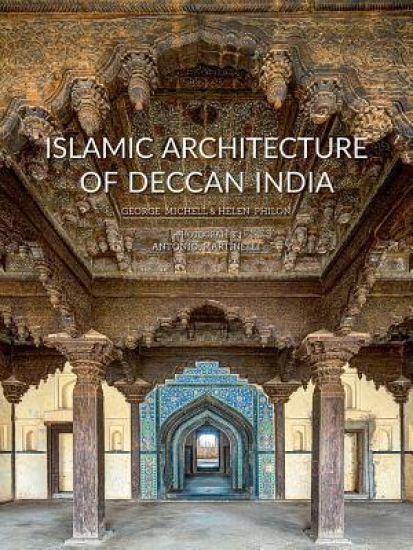
Islamic Architecture of Deccan India

Islamic Architecture of Deccan India

George Michell; Helen Philon

ACC Art Books
2018
sidottu
The buildings erected in the Deccan region of India belonged to a number of pre-Mughal kingdoms that reigned in the Deccan from the middle of the 14th century onwards. The monuments testify to a culture where local and imported ideas, vernacular and pan-Islamic traditions fused and re-interpreted, to create a majestic architectural heritage with exceptional buildings on the edge of the Islamic world. Many are still standing - yet outside this region of peninsular India, they remain largely unknown. General publications on Indian Islamic architecture usually devote a single chapter to the Deccan. Even specialist monographs can only cover a portion of the region, due to the sheer number of sites. While it is impossible to encompass the full breadth of the subject in a single volume, this book aims to embrace the visual diversity of the Deccan without sacrificing the rigour of academic study. Structures of historical or architectural significance are placed in their context, as the authors discuss building typologies, civic facilities and ornamental techniques, from plaster and carved stone to glazed tiles and mural painting. A chapter is dedicated to each principal Deccan site, interweaving the rise and fall of these cities with a pictorial journey through their ruins, and each building is accompanied by an overhead plan view.
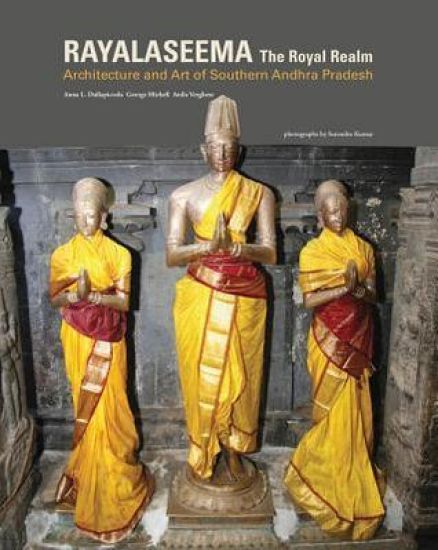
Rayalaseema

Rayalaseema

Anna L. Dallapiccola; George Michell; Anila Verghese

The Marg Foundation
2014
sidottu
This book covers the historical sites of Gudimallam, Tadpatri, Somapallem, Lepakshi, Ahobalam, Srikalahasti, Tirupati/Tirumala, Udayagiri fortress, Chandragiri palaces, etc. Chapters of the book discuss painted model shrines from Tirumala and Tirupati, ceiling paintings at Lepakshi, ornate Vijayanagara temples of Tadpatri and Somapalem, kalamkari textiles and temple hangings at Srikalahasti among others. The book ends with an epilogue on the region about temples submerged in the Srisailam dam and deteriorating temple paintings.
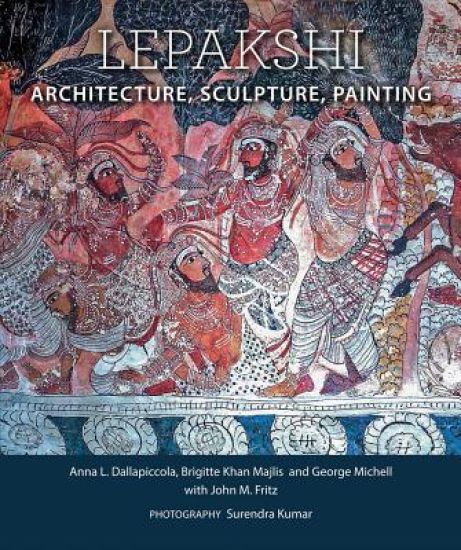
Lepakshi

Lepakshi

Anna L Dallapiccola; Brigitte Khan Majlis; George Michell

Niyogi Books
2019
sidottu
-Unrivalled showcase of sixteenth-century Vijayanagara architecture and art -More than 200 images, specially commissioned from an outstanding photographer of southern Indian art -Offers a complete description of the temple's architecture, sculptures and paintings -Authors are renowned specialists in architecture, painting and textile design -Ceiling paintings are the best preserved examples of Vijayanagara pictorial art Hidden away in the remote village of Lepakshi in the Rayalaseema region of Andhra Pradesh, merely a couple of hours' drive from Bengaluru, is one of the most spectacular Vijayanagara temples. Unlike so many other religious monuments of the period that have suffered disfiguring additions, or have lost their original carvings and ceiling paintings, that at Lepakshi dedicated to Virabhadra, a fierce emanation of Shiva, is miraculously intact. Its architecture, sculptures and paintings showcase the finest artistic achievements in southern India during the first half of the sixteenth century. While the remarkable qualities of Lepakshi have long been recognized, particularly its unique series of ceiling paintings, this volume is the first to provide the temple with a comprehensive description. It is authored by three eminent scholars: George Michell, who has focused on Vijayanagara temple architecture; Anna L. Dallapiccola, who has extensively researched the sculptural and painting traditions of southern India; and Brigitte Khan Majlis, an expert on Indian textile designs and techniques. In addition to newly prepared architectural plans of the monument, the volume is illustrated with more than 250 specially commissioned photographs of the temple's exterior and interior by Surendra Kumar.
George Washington

George Washington

Michelle Graye

Lulu.com
2014
pokkari
This remarkable book (originally published in 1908) by Charles Allen Munn goes into great detail (with fabulous illustrations) of the portraiture done by the famous artists of the day (Gilbert Stuart, John Trumbull, and Charles Willson Peale) to commemorate our first president, George Washington. As an added bonus the 12 page article on Gilbert Stuart from WikiPedia is included as an appendices to the original 1908 work.