A renowned neuroscientist explains how our brains and bodies give rise to knowledge, creativity, and mental experience Burgeoning advancements in brain science are opening up new perspectives on how we acquire knowledge. Indeed, it is now possible to explore consciousness—the very center of human concern—by scientific means. In this illuminating book, Dr. Gerald M. Edelman offers a new theory of knowledge based on striking scientific findings about how the brain works. And he addresses the related compelling question: Does the latest research imply that all knowledge can be reduced to scientific description? Edelman’s brain-based approach to knowledge has rich implications for our understanding of creativity, of the normal and abnormal functioning of the brain, and of the connections among the different ways we have of knowing. While the gulf between science and the humanities and their respective views of the world has seemed enormous in the past, the author shows that their differences can be dissolved by considering their origins in brain functions. He foresees a day when brain-based devices will be conscious, and he reflects on this and other fascinating ideas about how we come to know the world and ourselves.
If you had a complete copy of a dinosaur's DNA and the genetic code, you still would not be able to make a dinosaur,or even determine what one looked like. Why? How do animals get their shape and how does shape evolve? In this important book, Nobel laureate Gerald M. Edelman challenges the notion that an understanding of the genetic code and of cell differentiation is sufficient to answer these questions. Rather, he argues, a trio of related issues must also be investigated,the development of form, the evolution of form, and the morphological and functional bases of behaviour. Topobiology presents an introduction to molecular embryology and describes a comprehensive hypothesis to account for the evolution and development of animal form.
The brain is wider than the sky, For, put them side by side, The one the other will includeWith ease and you beside?, wrote the American poet Emily Dickinson in the mid-nineteenth century. The fundamental mechanI'ms governing mental life are now the subject of scientific study. In this book, Gerald Edelman examines a major aspect of the mied - consciousness.How can the firing of neurons give rise to subjective sensations, thoughts and emotions? How can the disparate domains of mied and body be reconciled? A scientific explanation of consciousness must take into account the causal connections between these two domains. Such a theory must show how the neural bases of consciousness appeared during the evolutionary process and how certain animals developed consciousness. These are some of the key issues that Gerald Edelman examines here.He shows that consciousness cannot be located in a specific area of the brain, because it is a process linked to how the brain functions as a whole, to its wealth of connections and to its great complexity. The brain, he argues, is not a kied of computer.Edelman is regarded as one of the greatest theoreticians of the brain, and his notion of consciousness dominates all discussions on the subject among the international scientific community. This book offers the most accessible version of his theories that is available today.The winner of the 1972 Nobel Prize in Medicine, Gerald Edelman heads the Institute for Neurosciences, in La Jolla, California.
A proposal by two eminent biological scientists for a mechanism whereby mind becomes manifest from the operations of brain tissue.This significant contribution to neuroscience consists of two papers, the first by Mountcastle an, the second by Edelman. Between them, they examine from different but complementary directions the relationships that connect the higher brain-memory, learning, perception, thinking-with what goes on at the most basic levels of neural activity, with particular stress on the role of local neuronal circuits.Edelman's major hypothesis is that "the conscious state results from phasic reentrant signaling occurring in parallel processes that involve associations between stored patterns and current sensory or internal input." This selective process occurs by the polling of degenerate primary repertoires of neuronal groups that are formed during embryogenesis and development. Edelman's theory extrapolates to the brain the selectionistic immunological theories for which he was awarded the 1972 Nobel Prize in Physiology or Medicine. Mountcastle's paper reviews what is known about the actual structure of various parts of the neo cortex. He relates the large entities of the neocortex to their component modules-the local neuronal circuits-and shows how the complex interrelationships of such a distributed system can yield dynamic distributed functioning. There are strong conceptual parallels between Mountcastle's idea of cortical columns and their functional subunits and Edelman's concept of populations of neurons functioning as processors in a brain system based on selectional rather than instructional principles. These parallels are traced and put into perspective in Francis Schmitt's Introduction.
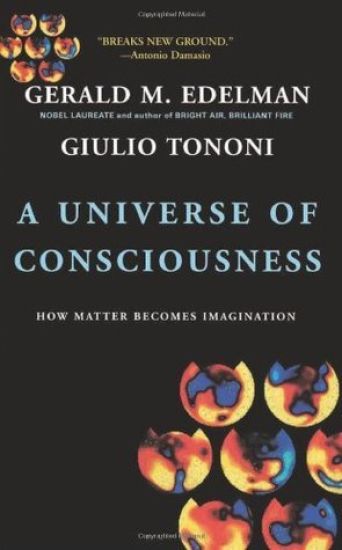
In A Universe of Consciousness, Gerald Edelman builds on the radical ideas he introduced in his monumental trilogy-Neural Darwinism, Topobiology, and The Remembered Present-to present for the first time an empirically supported full-scale theory of consciousness. He and the neurobiolgist Giulio Tononi show how they use ingenious technology to detect the most minute brain currents and to identify the specific brain waves that correlate with particular conscious experiences. The results of this pioneering work challenge the conventional wisdom about consciousness.
What goes on in our heads when we have a thought? With this book, Edelman and Tononi present an empirically-supported full-scale theory of consciousness. They apply all of the resources and insights of modern neuroscience, from the largest computermodels ever constructed to new experiments that detect the changes in brain activity. This pioneering work represents a landmark in our growing understanding of consciousness. Praise for Gerald Edelman: "The new Darwin...His theory is an enrichment of life itself" - Oliver Sacks, The Times
One of the vastly exciting areas in modern science involves the study of the brain. Recent research focuses not only on how the brain works but how it is related to what we normally call the mind, and throws new light on human behavior. Progress has been made in researching all that relates to interior man, why he thinks and feels as he does, what values he chooses to adopt, and what practices to scorn. All of these attributes make us human and help to explain art, philosophy, and religions. Motion, sight, and memory, as well as emotions and the sentiments common to humans, are all given new meaning by what we have learned about the brain. In an introductory essay, Vernon B. Mountcastle traces the progress made in brain science during this century. Gerald M. Edelman touches upon features of the brain that challenge the picture of the brain as a machine. Semir Zeki discusses artists and artistic expression as an extension of the function of the brain. Richard S. J. Frackowiak probes the functional architecture of the brain. Mark F. Bear and Leon N Cooper explore whether complex neural systems can be illuminated by theoretical structures. Jean-Pierre Changeux sheds light on the knowledge gained in recent years concerning the neurobiology and pharmacology of drug action and addiction. Alexander A. Borbuly and Giulio Tononi ponder the quest for the essence of sleep, illuminating its complex dynamic process. George L. Gabor Miklos examines variations in neuroanatomies and sensory systems between individuals of the same species as well as variations across the evolutionary spectrum. Emilio Bizzi and Ferdinando A. Mussa-Ivaldi explain how scientists have approached the study of movement, the problems encountered, and the solutions proposed. Marcel Kinsbourne explores the unity and diversity in the human brain. In the concluding essay, Andy Clark points to recent work in neuroscience, robotics, and psychology that stresses the unexpected intimacy of brain, body, and world, supporting his belief that the mind is best understood as a brain at home in its proper bodily cultural and environmental niche. The breadth and scope of subjects covered in this volume attest to the extraordinary progress taking place in the study of the brain. This brilliant collection of essays by those at the forefront of research in this area will be of interest to all those interested in human behavior. Gerald M. Edelman is director of the Neurosciences Institute and chairman of the Department of Neurobiology at the Scripps Research Institute. Jean-Pierre Changeux is professor at the Collbge de France and the Institute Pasteur.
One of the vastly exciting areas in modern science involves the study of the brain. Recent research focuses not only on how the brain works but how it is related to what we normally call the mind, and throws new light on human behavior. Progress has been made in researching all that relates to interior man, why he thinks and feels as he does, what values he chooses to adopt, and what practices to scorn. All of these attributes make us human and help to explain art, philosophy, and religions. Motion, sight, and memory, as well as emotions and the sentiments common to humans, are all given new meaning by what we have learned about the brain. In an introductory essay, Vernon B. Mountcastle traces the progress made in brain science during this century. Gerald M. Edelman touches upon features of the brain that challenge the picture of the brain as a machine. Semir Zeki discusses artists and artistic expression as an extension of the function of the brain. Richard S. J. Frackowiak probes the functional architecture of the brain. Mark F. Bear and Leon N Cooper explore whether complex neural systems can be illuminated by theoretical structures. Jean-Pierre Changeux sheds light on the knowledge gained in recent years concerning the neurobiology and pharmacology of drug action and addiction. Alexander A. Borbuly and Giulio Tononi ponder the quest for the essence of sleep, illuminating its complex dynamic process. George L. Gabor Miklos examines variations in neuroanatomies and sensory systems between individuals of the same species as well as variations across the evolutionary spectrum. Emilio Bizzi and Ferdinando A. Mussa-Ivaldi explain how scientists have approached the study of movement, the problems encountered, and the solutions proposed. Marcel Kinsbourne explores the unity and diversity in the human brain. In the concluding essay, Andy Clark points to recent work in neuroscience, robotics, and psychology that stresses the unexpected intimacy of brain, body, and world, supporting his belief that the mind is best understood as a brain at home in its proper bodily cultural and environmental niche. The breadth and scope of subjects covered in this volume attest to the extraordinary progress taking place in the study of the brain. This brilliant collection of essays by those at the forefront of research in this area will be of interest to all those interested in human behavior. Gerald M. Edelman is director of the Neurosciences Institute and chairman of the Department of Neurobiology at the Scripps Research Institute. Jean-Pierre Changeux is professor at the Collbge de France and the Institute Pasteur.
Navigate M&A accounting arbitrations with insider perspective M&A Disputes takes you inside the dispute resolution process to help you put together the many "moving parts" necessary to obtain a successful outcome. With deep insight from experts in the field—including valuable advice from the arbitrator's perspective—this book guides you through the entire process to explore the variables at work. The high volume of M&A transactions makes post-closing price adjustment provisions and accounting arbitrations a critical part of doing business. Yet, the field is opaque to non-practitioners and important issues can be easily misunderstood without specific knowledge and experience. A resulting award can make or break a transaction; an intimate understanding of the process's inner working can help you plan your position to the greatest advantage. This book explores the many factors that that contribute to a successful resolution across the entire transaction life cycle from contract negotiation through the dispute phase including due diligence, determination of the target net working capital, conception and closing of the purchase agreement, post-closing negotiation and dispute resolution, the impact of accounting practices, guidance, and documentation as well as relevant auditing concepts, and various facts and circumstances surrounding the target business and the transaction that need to be considered. M&A volume remains high and continues to result in large numbers of current and future post-closing M&A disputes. Clients rely on their attorneys and advisers to guide them through the process and counsel them toward a positive outcome. Those professionals will find that M&A accounting arbitrations carry a range of distinctions that require a specialized knowledge base to navigate correctly. This book provides real-world guidance from experts in the field, with invaluable insight for every stage of the process. Walk through the entire dispute resolution process from arbitrator selection through final awardUnderstand how M&A agreement provisions impact the awarded amount as well as the options available to limit the scope of potential disputes and the "gaming" of the post-closing process by the counterpartyUnderstand the nature of accounting estimates and guidance, their interaction with accounting arbitrations, and how to synthesize facts, circumstances, and GAAP into a persuasive argument to present to the accounting arbitratorGet situation-specific advice for different types of transactionsLearn practitioner "dos" and "don'ts" from the arbitrator's perspective M&A Disputes provides transaction parties and their representatives an inside view at the transaction and commonly disputed items through the eyes of the arbitrator to provide them with uniquely valuable insight. In addition to being an invaluable tool for practitioners appearing before an accounting arbitrator, M&A Disputes also provides advice to would-be and experienced arbitrators alike to successfully resolve disputes that can be significant and complex.
Since the beginning of the twenty-first century, recurring political violence at both state and non-state levels has eroded confidence in the progressively peaceful character of international relations, and has unsettled the parameters of political thought. Frames of peace and frames of war have, throughout Western thought, colored the questions that we ask about politics, the descriptions of the pragmatic and moral alternatives that we face, and the ideas and metaphors that we use at any given moment. These frames, as this book argues, also obscure too much of political life. Gerald M. Mara proposes, instead, a political philosophy that takes both war and peace seriously, and a style of theory committed to questioning rather than closure. He challenges two powerful currents in contemporary political philosophy: the verdict that "premodern" or "metaphysical" texts cannot speak to modern and postmodern societies and the insistence that all forms of political theory be some form of democratic theory. Mara reexamines seminal texts in the history of political theory, from Thucydides to Jacques Derrida, and from Machiavelli to Judith Butler, to examine how frames of reference of war and peace have structured both the writing of these texts, as well as interpretations of them. The result is not a linear history of ideas, but a series of conversations between them, and a democratic justification for moving beyond democratic theory.
A handbook for biologists and biochemists on free radicals, emphasizing the techniques for analysing free radicals. Spinn trapping, the spectroscopic methods for studying free radicals, is subject to a range of difficulties, potential artifacts or errors of interpretation that make a practical, helpful, trouble-shooting guide a rather high priority for anyone working in the area, and there is presently no such book.
On April 27th, 1994, the people of South Africa voted in their first democratic election, bringing down the curtain on 46 years of Apartheid. But, at the very moment of transition, the seeds of a grave epidemic had already been sown. AIDS has indelibly marked the era since the Apartheid's end, exacting an enormous toll on South Africa's Black community. Since the epidemic's onset, more thean 1,000,000 men, women and children have died. Shattered Dreams? is an oral history of how physicians and nurses in South Africa struggled to ride the tiger of the world's most catastrophic AIDS epidemic. Based on interviews - not only from the great urban centres of Johannesburg, Cape Town and Durban - but from provincial centres and rural villages, this book captures the experience of health care workers as they confronted indifference from colleagues, opposition from superiors, unexpected resistance from the country's political leaders, and material scarcity that was both the legacy of Apartheid and a consequence of the global power of the international pharmaceutical industry. In 2003, after years of bitter debate and persistent agitation on the part of treatment activists, the national government committed itself to making anti-retroviral drugs available to those whose lives hung in the balance. Now that a halting rollout of drug treatment has begun, it is more crucial than ever to capture the experiences of those who, as caregivers, have been witness to the unfolding South African epidemic and who are now able to provide these new medications to a small but growing number of their patients.
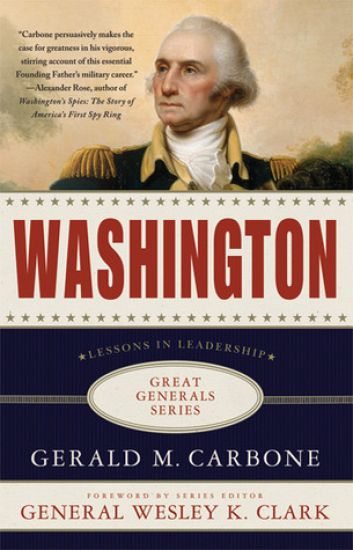
Before he became "the Father of our Country," George Washington was the Father of the American Army. He took an army that had no experience, no tradition, and no training, and fought a protracted war against the best, most disciplined force in the world - the British Army. Deftly handling the political realm, he left his mark with a vision of the Revolution as a war of attrition and his offenses which were as brilliant as they were unpredictable. In Washington, award-winning author Gerald M. Carbone argues that it is this sort of fearless but not reckless, spontaneous but calculated, offensive that Washington should be remembered for - as a leader not of infallibility but of greatness.
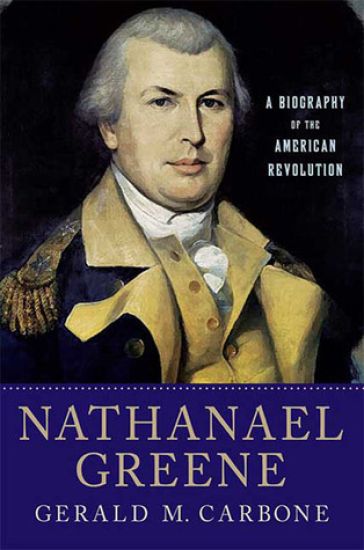
When the Revolutionary War began, Nathanael Greene was a private in the militia, the lowest rank possible, yet he emerged from the war with a reputation as George Washington's most gifted and dependable officer - celebrated as one of three most important generals. Upon taking command of America's Southern Army in 1780, Nathanael Greene was handed troops that consisted of 1,500 starving, nearly naked men. Gerald Carbone explains how within a year, the small worn-out army ran the British troops out of Georgia, South Carolina, and North Carolina and into the final trap at Yorktown. Despite his huge military successes and tactical genius Greene's story has a dark side. Gerald Carbone drew on 25 years of reporting and researching experience to create his chronicle of Greene's unlikely rise to success and his fall into debt and anonymity.
Focusing on the character and personality of Menachem Begin, Gerald Steinberg and Ziv Rubinovitz offer a new look into the peace negotiations between Israel and Egypt in the 1970s. Begin's role as a peace negotiator has often been marginalized, but this sympathetic and critical portrait restores him to the center of the diplomatic process. Beginning with the events of 1967, Steinberg and Rubinovitz look at Begin's statements on foreign policy, including relations with Egypt, and his role as Prime Minister and chief signer of the Israel-Egypt peace treaty. While Begin did not leave personal memoirs or diaries of the peace process, Steinberg and Rubinovitz have tapped into newly released Israeli archives and information housed at the Jimmy Carter Presidential Library and the Begin Heritage Center. The analysis illuminates the complexities that Menachem Begin faced in navigating between ideology and political realism in the negotiations towards a peace treaty that remains a unique diplomatic achievement.
Focusing on the character and personality of Menachem Begin, Gerald Steinberg and Ziv Rubinovitz offer a new look into the peace negotiations between Israel and Egypt in the 1970s. Begin's role as a peace negotiator has often been marginalized, but this sympathetic and critical portrait restores him to the center of the diplomatic process. Beginning with the events of 1967, Steinberg and Rubinovitz look at Begin's statements on foreign policy, including relations with Egypt, and his role as Prime Minister and chief signer of the Israel-Egypt peace treaty. While Begin did not leave personal memoirs or diaries of the peace process, Steinberg and Rubinovitz have tapped into newly released Israeli archives and information housed at the Jimmy Carter Presidential Library and the Begin Heritage Center. The analysis illuminates the complexities that Menachem Begin faced in navigating between ideology and political realism in the negotiations towards a peace treaty that remains a unique diplomatic achievement.
The "suspenseful and completely absorbing story" (San Francisco Chronicle) of how survivors of the worst coal-mining disaster in history triumphed over corporate irresponsibility--written by the young lawyer who took on their case and won.One Saturday morning in February 1972, an impoundment dam owned by the Pittston Coal Company burst, sending a 130 million gallon, 25 foot tidal wave of water, sludge, and debris crashing into southern West Virginia's Buffalo Creek hollow. It was one of the deadliest floods in U.S. history. 125 people were killed instantly, more than 1,000 were injured, and over 4,000 were suddenly homeless. Instead of accepting the small settlements offered by the coal company's insurance offices, a few hundred of the survivors banded together to sue.