Kirjojen hintavertailu. Mukana 12 390 323 kirjaa ja 12 kauppaa.

Kirjahaku

Etsi kirjoja tekijän nimen, kirjan nimen tai ISBN:n perusteella.

1000 tulosta hakusanalla Gerhard Wirth

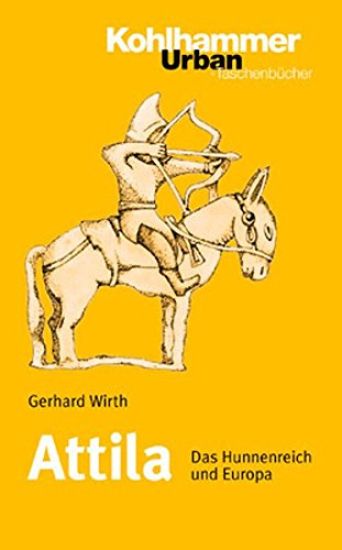
Attila: Das Hunnenreich Und Europa

Attila: Das Hunnenreich Und Europa

Gerhard Wirth

Kohlhammer
1999
nidottu
Mit dem Namen Attila verbindet sich die Erinnerung an die grosse Bedrohung Europas durch die Hunnen zwischen dem Ende der Antike und dem Mittelalter. Aber zugleich ist das nomadische Reitervolk, das sich nun am Nordrand der antiken Welt etabliert, gezwungen, seine Lebensformen den europaischen Verhaltnissen anzupassen und mit den bestehenden Reichen in Verbindung zu treten. Es ist Attila, der diesen Prozess vorantreibt, um seinem Volk neue Lebensmoglichkeiten zu schaffen. Seine Eroberungen machen ihn in der Weltliteratur zum grausamen Rauber und Zerstorer des Bestehenden, zur Gottesgeissel. Seine Abwehr auf den Katalaunischen Feldern 451 gewann den Charakter einer Befreiungstat. Doch sein Reich hatte eine welthistorische Zasur signalisiert.
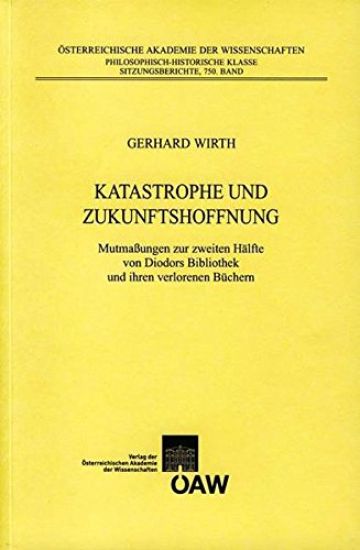
Katastrophe Und Zukunftshoffnung: Mutmassungen Zur Zweiten Healfte Von Diodors Bibliothek Und Ihren Verlorenen Beuchern
The World History of Diodorus ends with the era under Octavian in Diodorus' own lifetime. However, of the 40 books only the first half is complete, the second half, the period from 301 B.C., extant only in fragments from the Byzantine period (Photios, Constantinian Excerpts, Tzetzes). Therefore little is revealed about Diodorus' intentions, his interpretation of his present through the past or his relationship to his own work, which would only be clear from these later sections. Despite this, comparisons with parallel testimonies and characteristics of the language, as well as the interpretation of some chance extant passages suggest that Diodorus' portrayal of the period in question, beginning in the earliest known reaches of history, culminated, so to speak, in the history of Rome. Thus, the origins and the developmental process were not only historical, but even more, they were ethical, the conclusion being the right of Rome to its empire as well as its role as the eliminator of barbarity and the educator of better ways of life. This would determine the next period of the world's history, which naturally followed the unified history as presented by Diodorus. At the same time it seemed to Diodorus that the period from the end of the Diadochen until the triumph of the empire was accompanied in all areas of life by a development that could lead to disaster, not to a small extent caused by the interrelations of heterogeneous segments like the Hellenistic world, which also could not be explained purely politically. The power of Rome's own authority to stem this process is, nonetheless, still another aspect proving its worth.
Gerhard Richter

Gerhard Richter

Dietmar Elger

University of Chicago Press
2010
sidottu
Gerhard Richter is one of the most important and popular artists of the postwar era. For decades he has sought innovative ways to make painting more relevant, often through a multifaceted dialogue with photography. Today Richter is most widely recognized for the photo-paintings he made during the 1960s that rely on images culled from mass media and pop culture. Always fascinated with the limits and uncertainties of representation, he has since then produced landscapes, abstractions, glass and mirror constructions, prints, sculptures, and installations. Though Richter has been known in the United States for quite some time, the highly successful retrospective of his work at the MOMA in 2002 catapulted him to unprecedented fame. Enter noted curator Dietmar Elger, who here presents the first biography of this contemporary artist. Written with full access to Richter and his archives, this fascinating book offers unprecedented insight into his life and work. Elger explores Richter's childhood in Nazi Germany; his years as a student and mural painter in communist East Germany; his time in the West during the turbulent 1960s and '70s, when student protests, political strife, and violence tore the Federal Republic of Germany apart; and, his rise to international acclaim during the 1980s and beyond. Richter has always been a difficult personality to parse, and the seemingly contradictory strands of his artistic practice have frustrated and sometimes confounded critics. But the extensive interviews on which this book is based disclose a Richter who is far more candid and vivid than ever before. The result is a book that will be the foundational portrait of this artist and his profoundly influential oeuvre.
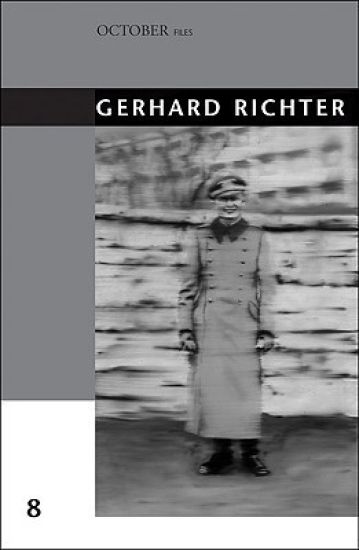
Gerhard Richter
The first collection of essays on Gerhard Richter, who has been called "the greatest modern painter."The contemporary painter Gerhard Richter (born in 1932) has been heralded both as modernity's last painter and as painting's modern savior, seen to represent both the end of painting and its resurrection. Richter works in a dizzying variety of styles, from abstraction to a German cool pop that combines painterly technique and appropriation; his work includes photo paintings, large abstract canvases, and stained glass windows. This collection features writing by prominent critics, including Hal Foster, Gertrud Koch, and Thomas Crow; an essay by Rachel Haidu on Richter's family pictures that is published here for the first time; and an essay and two interviews with the artist by Benjamin H. D. Buchloh, Richter's "longtime sparring partner" (as the curator Robert Storr has called him). These writings examine Richter's work as a whole, from October 18, 1977, his dreamlike series of paintings depicting the dead Baader-Meinhof gang, to his abstract trio Abstract Paintings; from his unsettling portrait of "Uncle Rudi" in Nazi garb to his late series of portraits of his wife and young child. This addition to the October Files series will be an essential handbook to one of the most enigmatic figures in contemporary artContents Gerhard Richter and Benjamin H. D. Buchloh Interview (1986) Gertrud Koch The Richter-Scale of Blur (1992) Thomas Crow Hand-Made Photographs and Homeless Representation (1992) Birgit Pelzer The Tragic Desire (1993) Benjamin H. D. Buchloh Divided Memory and Post-Traditional Identity: Gerhard Richter's Work of Mourning (1996) Peter Osborne Abstract Images: Sign, Image, and Aesthetic in Gerhard Richter's Painting (1998) Hal Foster Semblance According to Gerhard Richter (2003) Johannes Meinhardt Illusionism in Painting and the Punctum of Photography (2005) Rachel Haidu Arrogant Texts: Gerhard Richter's Family Pictures (2007) Gerhard Richter and Benjamin H. D. Buchloh Interview (2004)
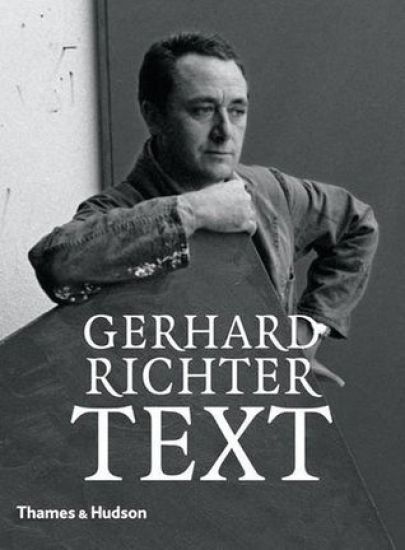
Gerhard Richter - Text

Gerhard Richter - Text

Hans Ulrich Obrist

Thames Hudson Ltd
2009
sidottu
Gerhard Richter is one of the foremost artists of his generation. This book provides a wider selection of Richters texts, from all periods of his career. It includes letters and interviews; private reflections from personal correspondence; and, excerpts from journals discussing the intentions, subjects, methods and sources of his works.
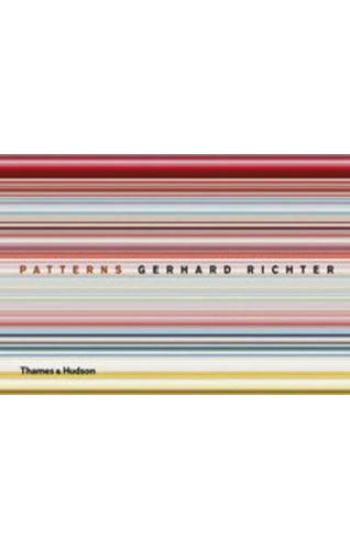
Gerhard Richter Patterns

Gerhard Richter Patterns

Gerhard Richter

Thames Hudson Ltd
2012
sidottu
Documents the author's experiment of taking an image of an original abstract painting and dividing it vertically into two. In this book, each divided part is divided again, mirrored and repeated, producing ever narrower strips, which results in patterns. It includes a total of 238 selected patterns.