The definitive biography and critical study of the great 18th-century composer, this volume features full-chapter treatments of Rameau's operas and ballets as well as his chamber music, cantatas and motets, and minor works. Additional topics include acoustic and harmonic theories, links to Lully, and influence on Gluck. More than 300 musical examples, plus appendixes and indexes.
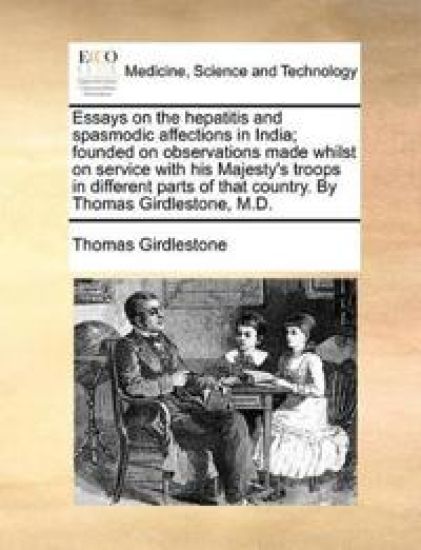
The 18th century was a wealth of knowledge, exploration and rapidly growing technology and expanding record-keeping made possible by advances in the printing press. In its determination to preserve the century of revolution, Gale initiated a revolution of its own: digitization of epic proportions to preserve these invaluable works in the largest archive of its kind. Now for the first time these high-quality digital copies of original 18th century manuscripts are available in print, making them highly accessible to libraries, undergraduate students, and independent scholars.Medical theory and practice of the 1700s developed rapidly, as is evidenced by the extensive collection, which includes descriptions of diseases, their conditions, and treatments. Books on science and technology, agriculture, military technology, natural philosophy, even cookbooks, are all contained here.++++The below data was compiled from various identification fields in the bibliographic record of this title. This data is provided as an additional tool in helping to insure edition identification: ++++British LibraryT064134With a half-title.London: printed for J. Murray, 1787. x, 2],7-65, 1]p.; 8
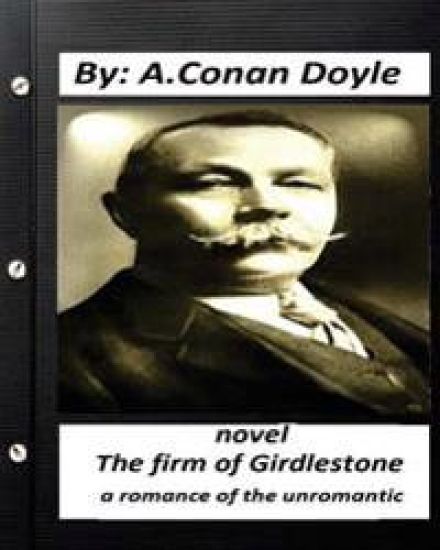
Sir Arthur Ignatius Conan Doyle KStJ DL (22 May 1859 - 7 July 1930) was a British writer and medical doctor. He created the character Sherlock Holmes in 1887 for A Study in Scarlet, the first of four novels and fifty-six short stories about Holmes and Dr. Watson. The Sherlock Holmes stories are generally considered milestones in the field of crime fiction. Doyle was a prolific writer; other than Holmes stories, his works include fantasy and science fiction stories about Professor Challenger and humorous stories about the Napoleonic soldier Brigadier Gerard, as well as plays, romances, poetry, non-fiction and historical novels. One of Doyle's early short stories, "J. Habakuk Jephson's Statement" (1884), helped to popularise the mystery of the Mary Celeste.
The Firm of Girdlestone is a novel by British author Sir Arthur Conan Doyle. It was first published in 1890 by Chatto and Windus in London, England. In 1915 a silent film adaptation The Firm of Girdlestone was made.John Girdlestone owns the firm of Girdlestone. It is a very lucrative business and John Girdlestone and his son Ezra Girdlestone are respected by everyone. Both father and son are cynics and have no other thought but for their business; after giving a donation of 25 for charity, John Girdlestone remarks to himself that it is not a bad "investment", as it will make a favorable impression on the collector, who is a Member of Parliament, whose influence he hopes to use some day. Ezra, his son, is even more of a cynic, as the elder Girdlestone's cynicism is mitigated by his supposed religiosity. However, he manifests a great acumen for business, sometimes, even surpassing his father's sharpness in business matters. A series of disastrous speculations by the elder Girdlestone financially ruins the firm. After keeping the impending bankruptcy a secret from everyone for a time, he tells his son (whom he has fooled with a dummy ledger) about it, who is disgusted by his father's rashnes
The Firm of Girdlestone is a novel by British author Sir Arthur Conan Doyle.It was first published in 1890 by Chatto and Windus in London, England. In 1915 a silent film adaptation The Firm of Girdlestone was made.John Girdlestone owns the firm of Girdlestone. It is a very lucrative business and John Girdlestone and his son Ezra Girdlestone are respected by everyone. Both father and son are cynics and have no other thought but for their business; after giving a donation of 25 for charity, John Girdlestone remarks to himself that it is not a bad "investment", as it will make a favorable impression on the collector, who is a Member of Parliament, whose influence he hopes to use some day. Ezra, his son, is even more of a cynic, as the elder Girdlestone's cynicism is mitigated by his supposed religiosity. However, he manifests a great acumen for business, sometimes, even surpassing his father's sharpness in business matters. A series of disastrous speculations by the elder Girdlestone financially ruins the firm. After keeping the impending bankruptcy a secret from everyone for a time, he tells his son (whom he has fooled with a dummy ledger) about it, who is disgusted by his father's rashness.