

Kirjahaku
Etsi kirjoja tekijän nimen, kirjan nimen tai ISBN:n perusteella.
1000 tulosta hakusanalla Graham Garrett Graham
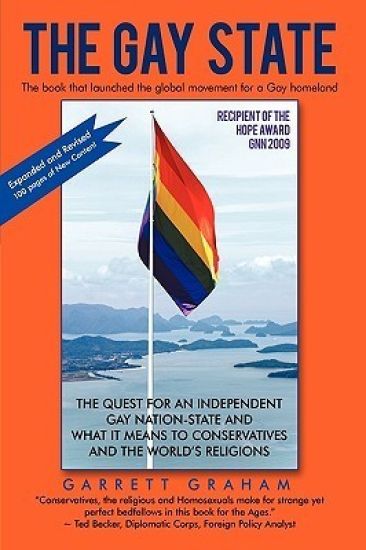

Michelin-starred chef Graham Garrett's autobiographical cookbook features recipes inspired by the extraordinary story of his transformation from stadium-filling rock star to groundbreaking chef.The London-born musician and songwriter has worked in kitchens since the early 90s, running restaurants for renowned chefs such as Nico Ladenis and Richard Corrigan. In 2002 he and his partner Jackie bought The West House restaurant in Kent, which was soon awarded a Michelin star. But if you were an avid concertgoer back in the day you've probably seen Graham's face before. He spent the 80s in the music business, touring the world on drums for bands like Dumb Blondes, Panache and Ya Ya. At 31, Graham hung up his drumsticks, walked into a kitchen and hasn't looked back since. Until now. The book follows Graham's transformation from rock star to Michelin-starred chef and reveals how his love of food started young in 60s East End London and has been heavily inspired by his experiences touring the world as a musician.You'll find more than 50 recipes, from a simple way to make great butter to Miso-glazed Mackerel with Yuzu Mayonnaise to Catalan Trifle, with influences drawn from American, British, Indian, Japanese, Russian and Thai cuisines - a true amalgamation of cultures in the kitchen resulting in a unique collection of eminently cookable dishes.With a foreword by Richard Corrigan and photography by Adrian Franklin.

Getting Open: The Unknown Story of Bill Garrett and the Integrat
Tom Graham; Rachel Graham Cody
Atria Books
2011
nidottu
"A striking and honest portrait of a man overcoming racism in a place that barely acknowledged its existence." --Publishers Weekly Bill Garrett was the Jackie Robinson of college basketball. In 1947, the same year Robinson broke the color line in major league baseball, Garrett integrated big-time college basketball. By joining the basketball program at Indiana University, he broke the gentleman's agreement that had barred black players from the Big Ten, college basketball's most important conference. While enduring taunts from opponents and pervasive segregation at home and on the road, Garrett became the best player Indiana had ever had, an all-American, and, in 1951, the third African American drafted in the NBA. In basketball, as Indiana went so went the country. Within a year of his graduation from IU, there were six African American basketball players on Big Ten teams. Soon tens, then hundreds, and finally thousands walked through the door Garrett opened to create modern college and professional basketball. Unlike Robinson, however, Garrett is unknown today. Getting Open is more than "just" a basketball book. In the years immediately following World War II, sports were at the heart of America's common culture. And in the fledgling civil rights efforts of African Americans across the country, which would coalesce two decades later into the Movement, the playing field was where progress occurred publicly and symbolically. Indiana was an unlikely place for a civil rights breakthrough. It was stone-cold isolationist, widely segregated, and hostile to change. But in the late 1940s, Indiana had a leader of the largest black YMCA in the world, who viewed sports as a wedge for broader integration; a visionary university president, who believed his institution belonged to all citizens of the state; a passion for high school and college basketball; and a teenager who was, as nearly as any civil rights pioneer has ever been, the perfect person for his time and role. This is the story of how they came together to move the country toward getting open. Father-daughter authors Tom Graham and Rachel Graham Cody spent seven years reconstructing a full portrait of how these elements came together; interviewing Garrett's family, friends, teammates, and coaches, and digging through archives and dusty closets to tell this compelling, long-forgotten story.
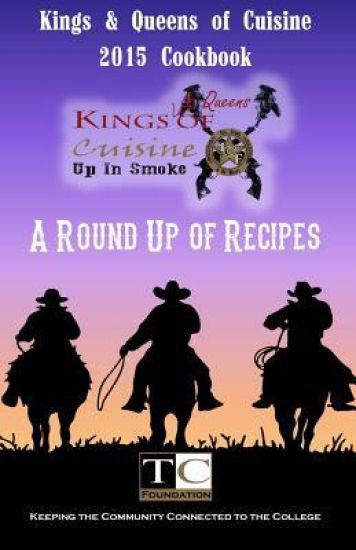
Kings & Queens of Cuisine Cookbook 2015: A Round Up of Recipes
Garrett Street; Jennifer Graham
Createspace Independent Publishing Platform
2015
nidottu

Counterculture UK
Mark Sheerin; Coco Khan; Susan Murray; Mark Edward; Penny Pepper; Paul Quinn; Hayley Foster Da Silva; Ellen Cheshire; Dr K. Charlie Oughton; Simon Smith; Jack Bright; Ben Graham; Em Ayson; Tim Burrows; Dr Tim Garrett; Bella Qvist
Aurora Metro Books
2015
nidottu
What is Counterculture? – It’s an alternative lifestyle... – The ideas that spark a revolution... – A movement that changes the world... This new collection of essays celebrates the incredible originality of British post-war culture. British art, film, theatre, dance, literature and music have attracted international recognition, from the Angry Young Men to the Sex Pistols to Grayson Perry. Now gaming, the internet and social media enable creative communities to flourish and either fight for social justice – or just be entertained. Can we find the creative inspiration to succeed in a postcapitalist future?

Advances and Open Problems in Federated Learning
Peter Kairouz; H. Brendan McMahan; Brendan Avent; Aurélien Bellet; Mehdi Bennis; Arjun Nitin Bhagoji; Kallista Bonawit; Zachary Charles; Graham Cormode; Rachel Cummings; Rafael G. L. D’Oliveira; Hubert Eichner; Salim El Rouayheb; David Evans; Josh Gardner; Zachary Garrett; Adrià Gascón; Badih Ghazi; Phillip B. Gibbons; Marco Gruteser; Zaid Harchaoui; Chaoyang He; Lie He; Zhouyuan Huo; Ben Hutchinson; Justin Hsu; Martin Jaggi; Tara Javidi; Gauri Joshi; Mikhail Khodak; Jakub Konecný; Aleksandra Korolova; Farinaz Koushanfar
Now Publishers Inc
2021
nidottu
The term Federated Learning was coined as recently as 2016 to describe a machine learning setting where multiple entities collaborate in solving a machine learning problem, under the coordination of a central server or service provider. Each client’s raw data is stored locally and not exchanged or transferred; instead, focused updates intended for immediate aggregation are used to achieve the learning objective. Since then, the topic has gathered much interest across many different disciplines and the realization that solving many of these interdisciplinary problems likely requires not just machine learning but techniques from distributed optimization, cryptography, security, differential privacy, fairness, compressed sensing, systems, information theory, statistics, and more. This monograph has contributions from leading experts across the disciplines, who describe the latest state-of-the art from their perspective. These contributions have been carefully curated into a comprehensive treatment that enables the reader to understand the work that has been done and get pointers to where effort is required to solve many of the problems before Federated Learning can become a reality in practical systems. Researchers working in the area of distributed systems will find this monograph an enlightening read that may inspire them to work on the many challenging issues that are outlined. This monograph will get the reader up to speed quickly and easily on what is likely to become an increasingly important topic: Federated Learning.

The Oxford University Studies in the Enlightenment series, previously known as SVEC (Studies on Voltaire and the Eighteenth Century), has published over 500 peer-reviewed scholarly volumes since 1955 as part of the Voltaire Foundation at the University of Oxford. International in focus, Oxford University Studies in the Enlightenment volumes cover wide-ranging aspects of the eighteenth century and the Enlightenment, from gender studies to political theory, and from economics to visual arts and music, and are published in English or French.
Jacob Vernet (1698-1789) was the most important and influential Genevan pastor of his day, successively holding the posts of Professor of Belles-Lettres (1739) and of Theology (1756) at the city’s Académie. A ‘liberal’ theologian, he had personal contacts with several of the leading philosophes, all of which turned sour after a time. This book describes Vernet’s contacts with Montesquieu, d’Alembert, Voltaire and Rousseau. It also investigates a charge made repeatedly by his enemies, namely that he was a hypocrite who disguised his real beliefs. Vernet’s religious and philosophical opinions are thus reviewed as expressed in his major works, Traité de la vérite de la religion chrétienne, Instruction chrétienne and Lettres critiques d’un voyageur anglais. The connection between Vernet’s ideas and the social and political situation in his native Geneva is also studied in depth. The pastor’s relations with Montesquieu have often been seen as a cause for congratulation, for he edited the first edition of De l’Esprit des lois, but a close reading of Montesquieu’s correspondence shows that this episode was far from being an unqualified success. Similarly, Vernet’s contacts with Rousseau give pause for thought: the relevant evidence that he was on occasion somewhat devious in his dealings with the great author is reviewed comprehensively. Particular attention is given to Vernet’s relations with Voltaire. In 1760 the pastor was vilified in the second of the Dialogues chrétiens, accused of greed and dishonesty. But did Voltaire actually write the second Dialogue? If not, who did? These intriguing questions are discussed in detail, special attention being given to Vernet’s own essays of self-justification, the Lettre à Monsieur le Premier Sindic(1760) and Mémoire à Mr. le Premier Sindic (1766, both of which are reproduced in appendices. Jacob Vernet’s long life and many works give a fascinating insight into the problems and inconsistencies of liberal Protestantism during the various stages of the Enlightenment.
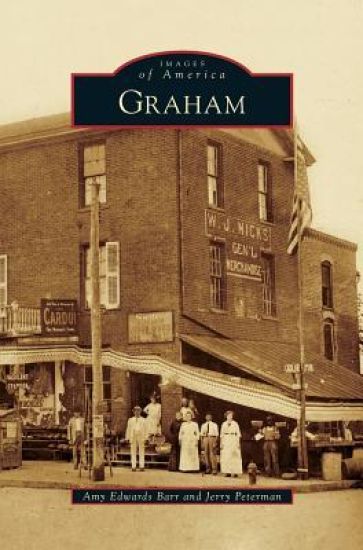


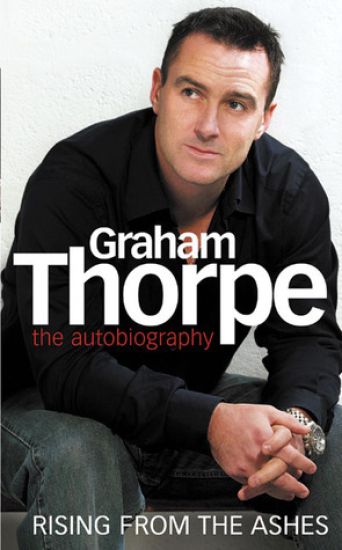
RIP GRAHAM THORPE 1969-2024 Graham Thorpe’s achievements on the cricket field contrasted wildly with his personal problems, where drink and depression combined to send him spiralling off the rails. This is his brutally honest life story. Graham Thorpe was one of the best batsmen in world cricket for more than a decade. Yet the national press hounded him as 'English cricket's most disturbed player' for pulling out of a series of tours and turning his back on the game more than once. With painful candour and often unexpected humour, Thorpe dissects his career in cricket and the inner recesses of his private life: the impact of his bitter divorce; the suicidal depression that afflicted him in his darkest hours; the reasons why he needed to 'save himself' by withdrawing from past England tours; the elation of his magnificent century on his comeback Test at the Oval in 2003; and his fresh outlook in life with a new partner after confronting his own failings and past troubles. Twelve years on from his Test debut against Australia, Thorpe took the decision to retire from international cricket after the disappointment of his controversial non-selection for the Ashes 2005 tour. With updated material on his coaching spell in Australia – where he gained valuable insight into cricket’s No 1 nation. Graham Thorpe died in August 2024.

In his essays, criticism, screenplays, autobiography, and novels, Graham Greene explored a territory located somewhere on the border between despair and faith, treachery and love. This cross-section of Greene's work was originally selected with the author's help in 1973 and has now been extensively revised and updated. It includes the complete novels The Heart of the Matter and The Third Man, along with excerpts from ten other novels; short stories; selections from Greene's memoirs and travel writings; essays on English and American literature; and public statements on issues that range from repression in the Soviet Union to torture in Northern Ireland to the paradoxical virtue of disloyalty. An extensive critical and biographical introduction, headnotes, chronology, and bibliography by editor Philip Stratford make The Portable Graham Greene as invaluable for scholars as it is essential for any traveler through Greene's richly menacing and strangely seductive literary landscapes. For more than seventy years, Penguin has been the leading publisher of classic literature in the English-speaking world. With more than 1,700 titles, Penguin Classics represents a global bookshelf of the best works throughout history and across genres and disciplines. Readers trust the series to provide authoritative texts enhanced by introductions and notes by distinguished scholars and contemporary authors, as well as up-to-date translations by award-winning translators.

Graham Greene's Journeys in Spain and Portugal
Carlos Villar Flor
Oxford University Press
2023
sidottu
In the 1970s and 1980s, Graham Greene adopted the yearly habit of touring Spain and Portugal in the company of his Spanish friend, the priest and university professor Leopoldo Durán. The most outstanding fruit of these trips, almost always in summer, was the inspiration for his major Hispanic novel, Monsignor Quixote (1982), a celebration of friendship above ideological, political, or religious differences, incorporating allusions to Cervantes' famous comic novel within a critical vision of post-Franco Spain. Graham Greene's Journeys in Spain and Portugal: Travels with My Priest reconstructs each of Greene's trips through the Iberian Peninsula between 1976 and 1989, detailing their preparations, itineraries, anecdotes, companions, topics of conversation, and often surprising repercussions. Carlos Villar Flor outlines the trips' biographical importance and fills numerous gaps of documented information on this final phase of Greene's life. His detailed inquiry into Greene's Iberian adventures with Durán also helps us better to understand the genesis and resonances of Monsignor Quixote, which over time became Greene's favourite of his own novels, and the subsequent television adaptation. The book also addresses incidents and aspects that, for one reason or another, never emerged in Durán's own account of their travels together, Graham Greene: Friend and Brother (1994). These include the possible motivations for Greene's first visit to Spain, related to his role as an informant for MI6; the mysterious visits to an old English lady located in Sintra; the writer's attempts in the early 1980s to establish links with Spanish socialists; or the fascinating story of a Spanish nobleman's suspicious proposal to create a Greene Foundation. Ultimately, Greene's trips to Spain and Portugal appear as more layered and intriguing than Durán's account suggests, whilst Durán himself emerges aptly as a complex and quixotic figure--as much the protagonist of this book as Greene.

Much has been written about Graham Greene's relationship to his Catholic faith and its privileged place within his texts. His early books are usually described as 'Catholic Novels' - understood as a genre that not only uses Catholic belief to frame the issues of modernity, but also offers Catholicism's vision and doctrine as a remedy to the present crisis in Western civilization. Greene's later work, by contrast, is generally regarded as falling into political and detective genres. In this book, Mark Bosco argues that this is a false dichotomy created by a narrowly prescriptive understanding of the Catholic genre and obscures the impact of Greene's developing religious imagination on his literary art.
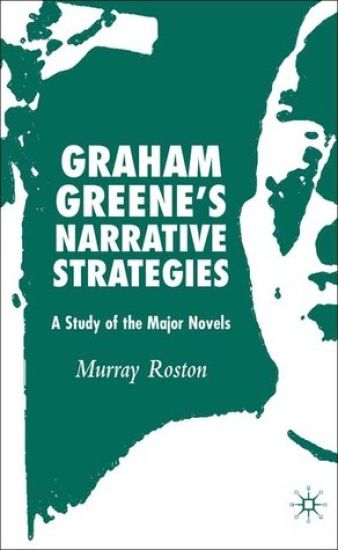
In Narrative Strategies Roston focuses upon the Greene's texts themselves and their manipulation of reader response, highlighting the innovative strategies that Greene developed to cope with the mid-century invalidation of the traditional hero. The result is a stimulating new reading of the major novels.

Graham Greene and the Politics of Popular Fiction and Film
B. Thomson
Palgrave Macmillan
2009
sidottu
One of the most popular, respected and controversial writers of the twentieth century, Greene's work has still attracted relatively little scholarly comment. Thomson charts the intricate dance between his novels and screenplays, his many audiences, and an intellectual establishment reluctant to identify the work of a popular writer as 'literature'.
