Kirjahaku
Etsi kirjoja tekijän nimen, kirjan nimen tai ISBN:n perusteella.
1000 tulosta hakusanalla Graham Goodlad
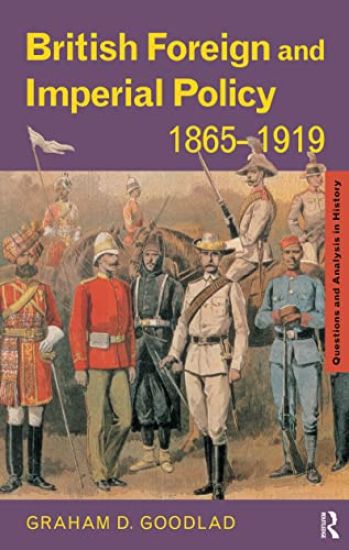
British Foreign and Imperial Policy explores Britains role in International Affairs from the age of Gladstone and Disraeli to the end of the First World War, exploring such themes as Britain's involvement in the Scramble for Africa, the Anglo-Boer War, the foreign policy of Lord Salisbury and the prospects for Britain and the Empire at the end of the First World War.
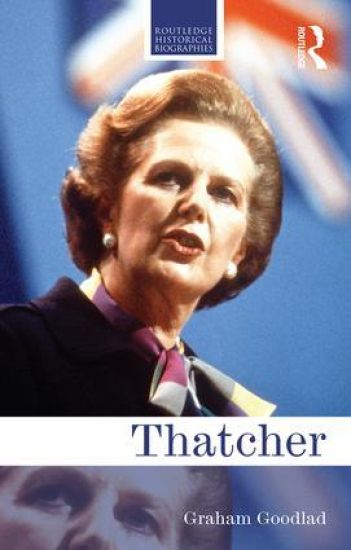
Thatcher provides an accessible and scholarly introduction to the personality and career of Britain’s first female political leader and the twentieth century’s longest serving Prime Minister. Providing a balanced narrative and assessment of one of the most significant figures of the post-war era, this new biography examines the reasons why Margaret Thatcher has been admired by many as an architect of national revival, yet loathed by others as the author of widening social and geographical division. The book begins by examining the making of Margaret Thatcher, her education, the beginning of her political career and her rise through the Conservative Party to her appointment as unexpected leader. Moving on to her tenure as Prime Minister, Graham Goodlad then examines her impact at home and abroad, covering her controversial economic policies and hard line with the trade unions, leadership through the Falklands conflict and during the last decade of the Cold War, and influence on Britain’s relationship with a more closely integrated Europe. Finally, the biography closes with a review of Thatcher’s legacy before and after her death in April 2013, and considers how far she shaped the politics and society of the 1980s and those of our own time. Thatcher is essential reading for all students of twentieth-century history and politics.
British Foreign and Imperial Policy explores Britains role in International Affairs from the age of Gladstone and Disraeli to the end of the First World War, exploring such themes as Britain's involvement in the Scramble for Africa, the Anglo-Boer War, the foreign policy of Lord Salisbury and the prospects for Britain and the Empire at the end of the First World War.
Cambridge International AS Level History Modern Europe 1774–1924 Coursebook with Digital Access (2 Years)
Graham Goodlad; Patrick Walsh-Atkins
Cambridge University Press
2025
muu
This coursebook supports students as they explore European history. This edition offers a variety of activities, including source work and practice questions, to help students build a deep understanding of key historical concepts and develop essential skills. Activities throughout each chapter encourage independent learning, and with opportunities for reflection. This edition brings modern European history to life, with engaging features to spark discussions and deepen understanding. Suitable for the Cambridge International AS Level History syllabus (9489/9981) for examination from 2027, this coursebook also provides digital access, offering digital resources and answers on Cambridge GO.
Cambridge International AS Level History Modern Europe, 1750–1921 Coursebook
Graham Goodlad; Patrick Walsh-Atkins; Russell Williams
Cambridge University Press
2019
pokkari
This series is for the Cambridge International AS History syllabus (9489) for examination from 2021. Written by an experienced author team that includes examiners, a practising teacher and trainer, this coursebook supports the Cambridge International AS History syllabus. With increased depth of coverage, this coursebook helps build confidence and understanding in language, essay-writing and evaluation skills. It develops students' conceptual understanding of history with the five new 'Key concepts', for example exploring similarity and difference in the aims/achievements of Witte and Stolypin. In addition, it encourages individuals to make substantiated judgments and reflect on their learning. Students can consolidate their skills though exam-style questions with source material and sample responses.
Edexcel GCE Politics AS and A-level Student Book and eBook
Graham Goodlad; Andrew Mitchell; Andrew Colclough; Ian Levinson; Samantha Laycock; Kathy Schindler; Adam Tomes
Pearson Education Limited
2017
muu
Exam papers covered: Edexcel AS and A level PoliticsFirst teaching: September 2017First exams: Summer 2018 This Student Book with e-book is specifically designed for the Edexcel AS and A level Politics 2017 specifications, giving you comprehensive coverage of the qualification content and great support for the new assessments – in both print and digital formats. Covers the whole of the two-year A level course, and includes all three components of the course so you have everything you need in one book. Clearly explains all key terminology and includes support for the assessments in every unit, including exam-style questions and guidance with exam technique. Comes with an e-book to give you easy online access to the textbook content on the go.
The origins of the post of Prime Minister can be traced back to the eighteenth century when Sir Robert Walpole became the monarch’s principal minister. From the dawn of the twentieth century to the early years of the twenty-first, however, both the power and the significance of the role have been transformed.British Prime Ministers from Balfour to Brown explores the personalities and achievements of those twenty individuals who have held the highest political office between 1902 and 2010. It includes studies of the dominant premiers who helped shape Britain in peace and war – Lloyd George, Churchill, Thatcher and Blair – as well as portraits of the less familiar, from Asquith and Baldwin to Wilson and Heath. Each chapter gives a concise account of its subject’s rise to power, ideas and motivations, and governing style, as well as examining his or her contribution to policy-making and handling of the major issues of the time. Robert Pearce and Graham Goodlad explore each Prime Minister’s interaction with colleagues and political parties, as well as with Cabinet, Parliament and other key institutions of government. Furthermore they assess the significance, and current reputation, of each of the premiers. This book charts both the evolving importance of the office of Prime Minister and the continuing restraints on the exercise of power by Britain’s leaders. These concise, accessible and stimulating biographies provide an essential resource for students of political history and general readers alike.
Edexcel GCE Politics AS and A-level Student Book 2nd Edition
Andrew Colclough; Graham Goodlad; Samantha Laycock; Ian Levinson; Andrew Mitchell; Alex Porter; Kathy Schindler; Adam Tomes
pearson education limited
2025
nidottu
Cambridge IGCSE® and O Level History Option B: the 20th Century Coursebook
Paul Grey; Rosemarie Little; Robin Macpherson; John Etty; Graham Goodlad
Cambridge University Press
2018
pokkari
Cambridge IGCSE® and O Level History Second edition for Option B: the 20th Century of the syllabus (0470,2147), updated for the revised syllabus for first examination from 2020 and now supporting O Level as well. Help your students take an enquiry-led approach to historical learning with Cambridge IGCSE® and O Level History. Full of activities and primary and secondary sources, this resource encourages the application of historical skills and enables investigative questioning of cause and consequence. Endorsed by Cambridge Assessment International Education for Option B, the coursebook is written by a team of experienced teachers and provides comprehensive coverage of all of the Key Questions and four of the Depth Studies for syllabus Option B: the 20th Century. Sample answers to a selection of the exam-style questions can be found in the teacher's resource.
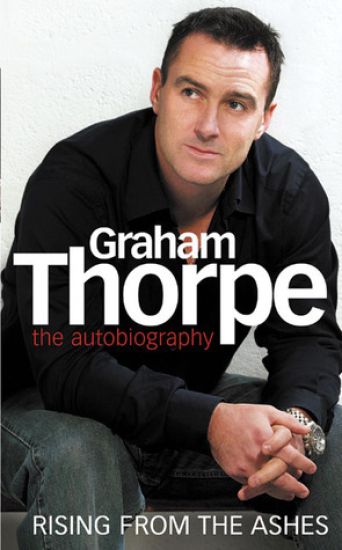
RIP GRAHAM THORPE 1969-2024 Graham Thorpe’s achievements on the cricket field contrasted wildly with his personal problems, where drink and depression combined to send him spiralling off the rails. This is his brutally honest life story. Graham Thorpe was one of the best batsmen in world cricket for more than a decade. Yet the national press hounded him as 'English cricket's most disturbed player' for pulling out of a series of tours and turning his back on the game more than once. With painful candour and often unexpected humour, Thorpe dissects his career in cricket and the inner recesses of his private life: the impact of his bitter divorce; the suicidal depression that afflicted him in his darkest hours; the reasons why he needed to 'save himself' by withdrawing from past England tours; the elation of his magnificent century on his comeback Test at the Oval in 2003; and his fresh outlook in life with a new partner after confronting his own failings and past troubles. Twelve years on from his Test debut against Australia, Thorpe took the decision to retire from international cricket after the disappointment of his controversial non-selection for the Ashes 2005 tour. With updated material on his coaching spell in Australia – where he gained valuable insight into cricket’s No 1 nation. Graham Thorpe died in August 2024.
In his essays, criticism, screenplays, autobiography, and novels, Graham Greene explored a territory located somewhere on the border between despair and faith, treachery and love. This cross-section of Greene's work was originally selected with the author's help in 1973 and has now been extensively revised and updated. It includes the complete novels The Heart of the Matter and The Third Man, along with excerpts from ten other novels; short stories; selections from Greene's memoirs and travel writings; essays on English and American literature; and public statements on issues that range from repression in the Soviet Union to torture in Northern Ireland to the paradoxical virtue of disloyalty. An extensive critical and biographical introduction, headnotes, chronology, and bibliography by editor Philip Stratford make The Portable Graham Greene as invaluable for scholars as it is essential for any traveler through Greene's richly menacing and strangely seductive literary landscapes. For more than seventy years, Penguin has been the leading publisher of classic literature in the English-speaking world. With more than 1,700 titles, Penguin Classics represents a global bookshelf of the best works throughout history and across genres and disciplines. Readers trust the series to provide authoritative texts enhanced by introductions and notes by distinguished scholars and contemporary authors, as well as up-to-date translations by award-winning translators.
Graham Greene's Journeys in Spain and Portugal
Carlos Villar Flor
Oxford University Press
2023
sidottu
In the 1970s and 1980s, Graham Greene adopted the yearly habit of touring Spain and Portugal in the company of his Spanish friend, the priest and university professor Leopoldo Durán. The most outstanding fruit of these trips, almost always in summer, was the inspiration for his major Hispanic novel, Monsignor Quixote (1982), a celebration of friendship above ideological, political, or religious differences, incorporating allusions to Cervantes' famous comic novel within a critical vision of post-Franco Spain. Graham Greene's Journeys in Spain and Portugal: Travels with My Priest reconstructs each of Greene's trips through the Iberian Peninsula between 1976 and 1989, detailing their preparations, itineraries, anecdotes, companions, topics of conversation, and often surprising repercussions. Carlos Villar Flor outlines the trips' biographical importance and fills numerous gaps of documented information on this final phase of Greene's life. His detailed inquiry into Greene's Iberian adventures with Durán also helps us better to understand the genesis and resonances of Monsignor Quixote, which over time became Greene's favourite of his own novels, and the subsequent television adaptation. The book also addresses incidents and aspects that, for one reason or another, never emerged in Durán's own account of their travels together, Graham Greene: Friend and Brother (1994). These include the possible motivations for Greene's first visit to Spain, related to his role as an informant for MI6; the mysterious visits to an old English lady located in Sintra; the writer's attempts in the early 1980s to establish links with Spanish socialists; or the fascinating story of a Spanish nobleman's suspicious proposal to create a Greene Foundation. Ultimately, Greene's trips to Spain and Portugal appear as more layered and intriguing than Durán's account suggests, whilst Durán himself emerges aptly as a complex and quixotic figure--as much the protagonist of this book as Greene.
Much has been written about Graham Greene's relationship to his Catholic faith and its privileged place within his texts. His early books are usually described as 'Catholic Novels' - understood as a genre that not only uses Catholic belief to frame the issues of modernity, but also offers Catholicism's vision and doctrine as a remedy to the present crisis in Western civilization. Greene's later work, by contrast, is generally regarded as falling into political and detective genres. In this book, Mark Bosco argues that this is a false dichotomy created by a narrowly prescriptive understanding of the Catholic genre and obscures the impact of Greene's developing religious imagination on his literary art.
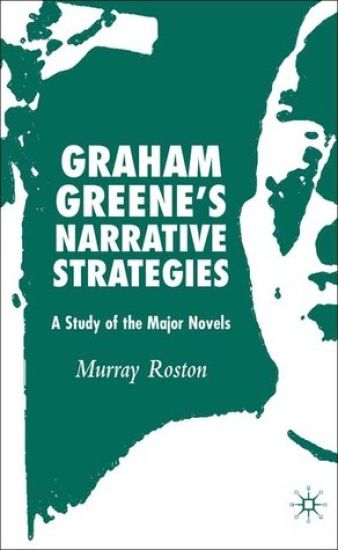
In Narrative Strategies Roston focuses upon the Greene's texts themselves and their manipulation of reader response, highlighting the innovative strategies that Greene developed to cope with the mid-century invalidation of the traditional hero. The result is a stimulating new reading of the major novels.