This work has been selected by scholars as being culturally important and is part of the knowledge base of civilization as we know it.This work is in the public domain in the United States of America, and possibly other nations. Within the United States, you may freely copy and distribute this work, as no entity (individual or corporate) has a copyright on the body of the work.Scholars believe, and we concur, that this work is important enough to be preserved, reproduced, and made generally available to the public. To ensure a quality reading experience, this work has been proofread and republished using a format that seamlessly blends the original graphical elements with text in an easy-to-read typeface.We appreciate your support of the preservation process, and thank you for being an important part of keeping this knowledge alive and relevant.
In this comprehensive family history, Donald Dean Parker traces the remarkable story of the Graham-Patterson family from its earliest origins to the present day. Drawing on extensive research and interviews with family members, Parker provides a vivid portrait of this remarkable family and its many distinguished members. From the Civil War hero General George H. Thomas to the pioneering physician Dr. Martha Graham, this is a family that has made significant contributions to American history and culture.This work has been selected by scholars as being culturally important, and is part of the knowledge base of civilization as we know it.This work is in the "public domain in the United States of America, and possibly other nations. Within the United States, you may freely copy and distribute this work, as no entity (individual or corporate) has a copyright on the body of the work.Scholars believe, and we concur, that this work is important enough to be preserved, reproduced, and made generally available to the public. We appreciate your support of the preservation process, and thank you for being an important part of keeping this knowledge alive and relevant.
This original and significant contribution to the historiography of the civil rights movement and education in the South details a dramatic and disturbing chapter in American cultural history. The tradition of American public libraries is closely tied to the perception that these institutions are open to all without regard to social background. Such was not the case in the segregated South, however, where public libraries barred entry to millions of African Americans and provided tacit support for a culture of white supremacy. A Right to Read is the first book to examine public library segregation from its origins in the late 19th century through its end during the tumultuous years of the 1960s civil rights movement. Graham focuses on Alabama, where African Americans, denied access to white libraries, worked to establish and maintain their own "Negro branches." These libraries-separate but never equal-were always underfunded and inadequately prepared to meet the needs of their constituencies. By 1960, however, African Americans turned their attention toward desegregating the white public libraries their taxes helped support. They carried out "read-ins" and other protests designed to bring attention and judicial pressure upon the segregationists. Patterson Toby Graham contends that, for librarians, the civil rights movement in their institutions represented a conflict of values that pitted their professional ethics against regional mores. He details how several librarians in Alabama took the dangerous course of opposing segregationists, sometimes with unsettling results. This groundbreaking work built on primary evidence will have wide cross-disciplinary appeal. Students and scholars of southern and African-American history, civil rights, and social science, as well as academic and public librarians, will appreciate Graham's solid research and astute analysis. Patterson Toby Graham is Head of Special Collections at the University of Southern Mississippi. His research on library segregation has won four awards, including the ALISE-Eugene Garfield Dissertation Award.
Follow along with Sherman Graham Cracker as he gets lost in Dust Bunny Forest, nearly gets swept away trudging through Cookie Crumb Field, and barely escapes becoming a tasty snack for two flies. Will Sherman discover the hero within himself before the journey is over? Come find out in Sherman Graham Cracker Saves the Town of Crusted Milk.
Clinical Interventions in Criminal Justice Settings balances theoretical frameworks and research methodology to examine the effective evidence-based practices and principles for populations within the criminal justice system. The book explores the major clinical issues that are relevant for adopting evidence-based practices and demonstrates how to implement them. Topics include legislation, law enforcement, courts, corrections, actuarial assessment instruments, treatment fidelity, diverse populations, mental illness, substance use and juvenile delinquency. Clinical Interventions in Criminal Justice Settings models opportunities for evidence-based practice during entry into the criminal justice system (arrest), prosecution (court, pretrial release, jail, and prison), sentencing (community supervision, incarceration), and corrections (jail, prison, probation and parole).
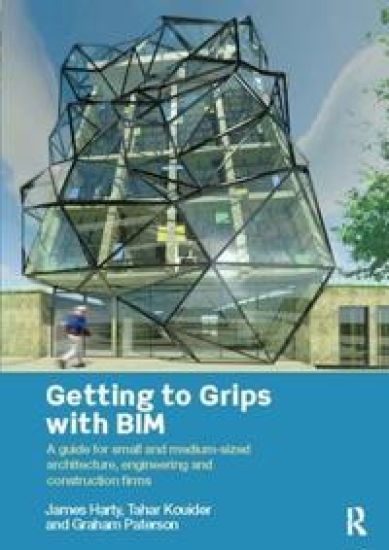
With the UK government‘s 2016 BIM threshold approaching, support for small organisations on interpreting, filtering and applying BIM protocols and standards is urgently required. Many small UK construction industry supply chain firms are uncertain about what Level 2 BIM involves and are unsure about taking first steps towards having BIM capability. As digitisation, increasingly impacts on work practices, Getting to Grips with BIM offers an insight into an industry in change supplemented by practical guidance on managing the transition towards more widespread and integrated use of digital tools to manage the design, construction and whole life use of buildings.
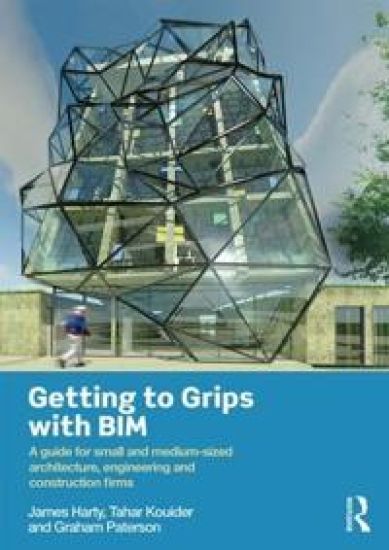
With the UK government‘s 2016 BIM threshold approaching, support for small organisations on interpreting, filtering and applying BIM protocols and standards is urgently required. Many small UK construction industry supply chain firms are uncertain about what Level 2 BIM involves and are unsure about taking first steps towards having BIM capability. As digitisation, increasingly impacts on work practices, Getting to Grips with BIM offers an insight into an industry in change supplemented by practical guidance on managing the transition towards more widespread and integrated use of digital tools to manage the design, construction and whole life use of buildings.
Where to, Australia is a new and challenging look at Australia's future. It asks Australians to envisage the sort of future we could have, if we take control and demand the changes necessary for a better government and a better political system.This book offers a journey to a more honest system, one less corrupted by money, and one that can give citizens better control over elected and appointed representatives. It has the potential of forcing politicians to think in terms of what's best for the nation, instead of pursuing the narrow perspective of winning the next election for a political party.The book is in two parts. The first part explains the reasoning and philosophy behind each chapter of a new and better political system, a system contained in the draft of a new Constitution. The second part of the book is the drafted Constitution itself.Do Australians want a true and honest Constitution, a document created by hundreds of people from all around the county? This new Constitution can be easily read and understood, because it's written by the people and for the people. And, no one needs a law degree to understand this Primary Law for an independent Australia.This is Graham L Paterson's third book in a trilogy about Australia's Constitution and political history over the past century. He taught English as a foreign language at the Xiaogan University in China and has since had five books published by Foreign Language Press of Beijing, China. He now lives in NSW, Australia.
Peter Pattison is a very ordinary boy......or so he thinks until he makes contact with the people of Perulius, a distant planet almost identical to Earth.Why are they here?What do they want?Join Peter and his friends, Hatty and Candice, as they begin an incredible adventure that is quite literally...OUT OF THIS WORLD
Graham Cracker Cake Recipes-Graham Cracker Cake with Filling--Graham Cracker Crumb Cake--Ice Box Cake Favorite--Graham Cracker Fruit Cake--Coffee Cake---Graham Cracker Cakes (2) clair Cake--- Cherry Topped Cheesecake---Cherry Cheesecake ---Cheesecake and Topping---Cheesecake with Almond ExtractAfter every recipe is a note page for you to make comments.
This book looks at lower level visual processing, emphasizing psychophysical experiments which measure the detection and identification of near-threshold patterns and the mathematical models used to draw inferences from experimental results. Neurophysiological and psychophysical evidence is compared and contrasted, while introductory material on psychophysical methods, signal detection theory, and the mathematics of Fourier analysis ensure that the title is accessible to anyone interested in this field. Also included are lists of studies about analysers and parametric sensitivity on various pattern-vision dimensions.
The visual system must extract from the light that falls on the retina meaningful information about what is where in our environment. At an early stage it analyzes the incoming sensory data along many dimensions of pattern vision, e.g. spatial frequency, orientation, velocity, eye-of-origin. Visual Pattern Analyzers provides a definitive account of current knowledge about this stage of visual processing. Nowhere else can such a comprehensive summarty of the lower level pattern analyzers be found. The book's emphasis is on psychophysical experiments measuiring the detection and identification of near-threshold patterns -- and the mathematical models, such as multidimensional signal-detection theory, used to draw inferences from such experimental results -- but neurophysiological evidence is presented and compared critically to the psychophysical evidence. Introductory material on psychophysical methods, signal detection theory, and the mathematics of Fourier analysis is gioven in order to make the book more accessible to all who are interested in the lower or higher levels of visual perception. This volume will be of great value to researchers and graduate students in the fields of vision and perception. Within the scientific community there is wide interest in the visual system, and the book will be of use to investigators in many fields, including psychophysics, neuroscience, ophthalmology and optics, computer science, and cognitive and experimental psychology.