Kirjahaku
Etsi kirjoja tekijän nimen, kirjan nimen tai ISBN:n perusteella.
1000 tulosta hakusanalla Grant N Perryman
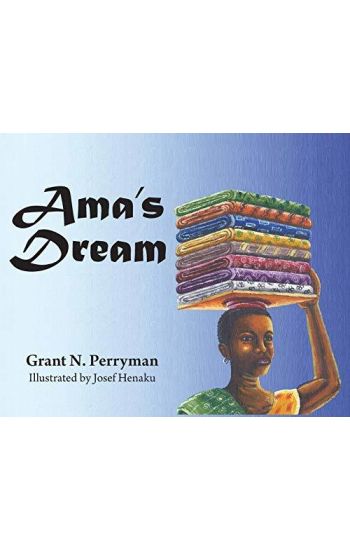
Author, Grant N. Perryman takes his readers on a vivid journery to a rural community located in the picturesque country of Ghana, West Africa. The oldest of five brothers and the only daughter, Ama, is charged with helping her mother with the everyday household work. One chore begins early in the morning before the sun rises. Mother and daughter have to walk a great distance to the nearest water source. Their village community lacks a borehole or fresh water well to meet their daily needs of drinking, bathing, cooking, dish washing and laundry. Ama relies on her active mind and new found faith to transport her into a world of her favorite hopes and dreams to help her cope with her ongoing struggles and hardships. Josef Heneku, an up and coming artist from Ghana, helps the booklover visualize what they are reading with his beautiful original illustrations. Intertwine throughout the book are words and phrases in the Twi language, adding authenticity to the story. Additional features that make this book a great educational tool include a map of the continent of Africa, a Pronunciation Glossary and a Medical Appendix explaining the benefits of clean drinking water. Ama's Dream is a book parents will want to read to their young children and encourage their pre-adolescent juveniles to read on their own. Both will be pleasantly surprised by thier new found knowledge.
Author, Grant N. Perryman takes his readers on a vivid journey to a rural community located in the picturesque country of Ghana, West Africa. The oldest of five brothers and the only daughter, Ama, is charged with helping her mother with the everyday household work. One chore begins early in the morning before the sun rises. Mother and daughter have to walk a great distance to the nearest water source. Their village community lacks a borehole or fresh water well to meet their daily needs of drinking, bathing, cooking, dish washing and laundry. Ama relies on her active mind and new found faith to transport her into a world of her favorite hopes and dreams to help her cope with her ongoing struggles and hardships. Josef Heneku, an up and coming artist from Ghana, helps the booklover visualize what they are reading with his beautiful original illustrations. Intertwine throughout the book are words and phrases in the Twi language, adding authenticity to the story. Additional features that make this book a great educational tool include a map of the continent of Africa, a Pronunciation Glossary and a Medical Appendix explaining the benefits of clean drinking water.Ama's Dream is a book parents will want to read to their young children and encourage their pre-adolescent juveniles to read on their own. Both will be pleasantly surprised by their new found knowledge.
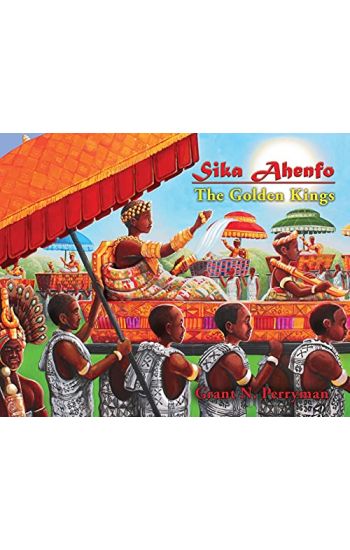
The queen mother of the seventh Kingdom must make a difficult decision. It is time for her to select the next king, but there are seven princes, who are all equally qualified to sit on the throne. The people; however, demand that all seven brothers rule as one even though it is against the law of their supreme god. The people did not care. All they want to do is boast and brag to their neighbors. Like the vibrant colors of the woven fabric called kente, this story artfully weaves together the history, customs, and culture of the Akan people of West Africa. Written in the format of a traditional folktale, this beautiful nontraditional narrative is interlaced with hidden meanings, abundant symbols, and ornate proverbs. Intertwine throughout the chapters are words in the Asante Twi language bringing a cultural authenticity to the text. Follow the happiness of the people as the consequences of their actions slowly deteriorate their joy as they succumb to the great cost of their foolishness. When the people realize the price of their arrogance they withdraw into self-pity and indecision. The queen mother knows what she has to do. She must find the one destined to rule. What character traits will she use to determine the true heart of a king? But when she finds him will the people listen At the end of this tale, at the end of your journey, the proverbs, and traditional symbols will formalize and merge into one compelling life lesson about leadership.
Title DescriptionThe queen mother of the seventh kingdom must make a difficult decision. It is time for her to select the next king, but there are seven princes, who are all equally qualified to sit on the throne. The people; however, demand that all seven brothers rule as one even though it was against the law of their supreme god. The people did not care. All they wanted to do was to boast their self-importance to their neighbors as the people of the Golden Kings.Like the vibrant colors of the woven fabric called "kente," this story artfully weaves together the history, customs, and culture of the Akan people of West Africa. Written in the format of a traditional folktale, this beautiful nontraditional narrative is interlaced with hidden meanings, abundant symbols, and ornate proverbs. Intertwine throughout the chapters are words in the Asante Twi language bringing a cultural authenticity to the text.Follow the shallow happiness of the people as the consequences of their actions slowly deteriorate their superficial joy as they succumb to the great cost of their foolishness. When the people realize the price of their arrogance they withdraw into self-pity and indecision. The queen mother knows what she has to do. She must find the one destined to rule. What character traits will she use to determine the true heart of a king? But when she finds him will the people listen At the end of this tale, at the end of your journey, the proverbs, and traditional symbols will formalize and merge into one compelling life lesson about leadership.
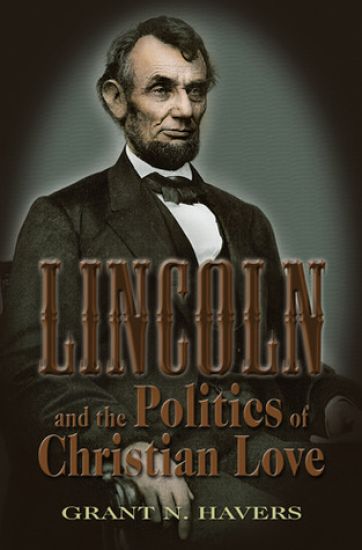
Lincoln and the Politics of Christian Love
Grant N. Havers
University of Missouri Press
2009
sidottu
America has seen faith-based initiatives and 'the audacity of hope' in twenty-first-century politics, but few participants in our political scene have invoked the other Christian virtue of charity as a guiding principle. Abraham Lincoln extolled the merit of 'loving thy neighbor as thyself', but a discussion of Christian love is noticeably absent from today's debates about religion and democracy. In this provocative book, Grant Havers argues that charity is a central tenet of what Lincoln once called America's 'political religion'. He explores the implications of making Christian love the highest moral standard for American democracy, showing how Lincoln's legacy demands that a true democracy be charitable toward all - and that only a people who lived according to such ideals could succeed in building democracy as Lincoln understood it. Havers argues that it is simplistic to conflate Lincoln's invocation of 'with charity for all' with his abiding support for the ideal of human equality. The ethic of charity in his view also brought a uniquely Christian realism to the universalism of democracy. He also describes how, since World War I, intellectuals and political leaders have denied that there exists a necessary relation between democracy and Christian love while proposing that democracy is sufficiently ethical without reliance on a specific religious tradition. Today's neoconservatives and liberals instead posit a universal yearning for democracy that requires no foundation in the ethic of charity. Havers shows that this democratic universalism, espoused by those who believe a 'chosen people' should uphold the natural rights of humanity, is alien to the sober thought of both the Founders and Lincoln. This carefully argued work defends Lincoln's understanding of charity as essential to democracy while emphasizing the difficulty of conflating this ethic with the desire to spread democracy to people not of Christian heritage. In considering the prospect of America's leaders rediscovering a moral foreign policy based on charity rather than the costly idolization of democracy, ""Lincoln and the Politics of Christian Love"" contributes to the wider debate over both the meaning of religion in American politics and the mission of America in the world - and opens a new window on Lincoln's lasting legacy.
Review of the Scientific Literature as it Pertains to Gulf War Illnesses
Grant N. Marshall; etc.
RAND
1999
nidottu
The authors of this series report on their literature review, summarize what is known about the range of actual exposures in the Gulf, and assess the plausibility of the risk factor at hand as a cause of illness. The authors caution that more research on health effects remains to be completed.
A Review of the Scientific Literature As It Pertains to Gulf War Illnesses
Grant N. Marshall; Lois M. Davis; Cathy D. Sherbourne
Rand Corp
2000
pokkari
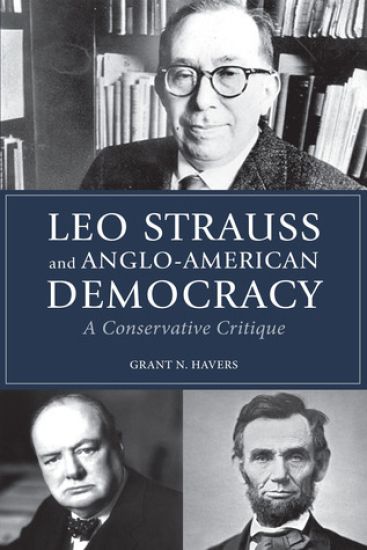
Leo Strauss and Anglo-American Democracy
Grant N. Havers
Northern Illinois University Press
2013
sidottu
Leo Strauss and Anglo-American Democracy critically interprets Strauss's political philosophy from a conservative perspective. Most mainstream readers of Strauss have either condemned him from the Left as an extreme right-wing opponent of liberal democracy or celebrated him from the Right as a traditional defender of Western civilization. Rejecting both portrayals, Grant N. Havers shifts the debate beyond the conventional parameters stating that Strauss was neither a man of the Far Right nor a conservative but. in fact a secular Cold War liberal. In Leo Strauss and Anglo-American Democracy Havers contends that the most troubling implication of Straussianism is that it provides an ideological rationale for the aggressive spread of democratic values on a global basis while ignoring the preconditions that make these values possible. Concepts such as the rule of law, constitutional government, Christian morality, and the separation of church and state are not easily transplanted beyond the historic confines of Anglo-American civilization, as recent wars to spread democracy have demonstrated.
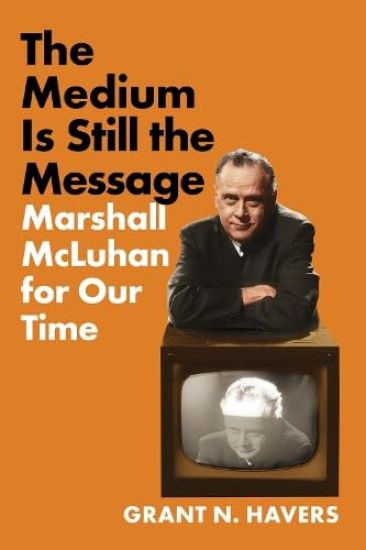
The Medium Is Still the Message presents Marshall McLuhan, history's foremost philosopher of media, as the indispensable guide for understanding the impact of technologies. McLuhan (1911–1980) shows that media are not simply tools of communication: they create new environments with transformational effects on politics, economics, culture, identity, religion, and nature. Grant N. Havers argues that McLuhan's key insight—"the medium is the message"—is even more relevant today as humanity grapples with the unintended effects of new media. As McLuhan demonstrated, a lack of understanding about the power of media technologies allows these entities to become idols that enslave their makers. At the same time, they encourage human beings to act like gods who can reinvent reality itself, all the while leading to the decline of literacy, the weakening of democracy, the resurgence of tribalism within the global village, and the elusive search for identity in cyberspace. The Medium Is Still the Message ultimately offers good news: using McLuhan's insights, human beings can escape the technological cave that they have fashioned for themselves.
She Married Kevin. I Am Fine Now: A Novella
Grant N. Kniefel
Createspace Independent Publishing Platform
2015
nidottu
Collaborative Care of the Facial Injury Patient, An Issue of Oral and Maxillofacial Surgery Clinics
Vivek Shetty; Grant N. Marshall
W B Saunders Co Ltd
2010
sidottu
Articles include: The Problem of Orofacial Injury, Acute and Chronic Psychological Reactions to Orofacial Injury, Technological Advances to Foster Collaborative Care, Screening for Psychological Problems in the Trauma Setting, Barriers to Collaborative Care: Patient and Provider Perceptions, Substance Use Problems and Correlates of Facial Injury, Facial Injury as a Marker of Domestic Violence, Social Support and Resource Needs as Mediators of Recovery After Facial Injury, and Integrated Care in General Trauma.
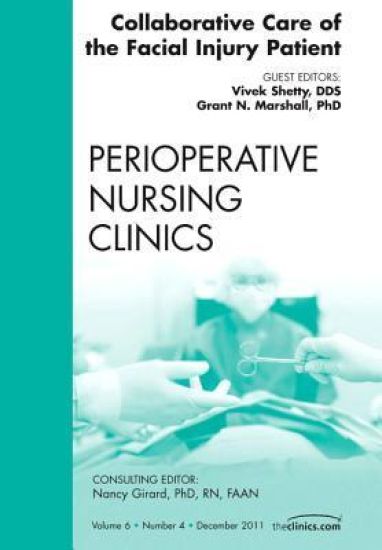
Collaborative Care of the Facial Injury Patient, An Issue of Perioperative Nursing Clinics
Vivek Shetty; Grant N. Marshall
W B Saunders Co Ltd
2012
sidottu
This issue of Perioperative Nursing Clinics, Guest Edited by Vivek Shetty and Grant Marshall, will focus on Collaborative Care of the Facial Injury Patient, with topics such as: Psychosocial issues; Substance Use and Injury; Intimate Partner Violence, and Barriers to Collaborative Care.
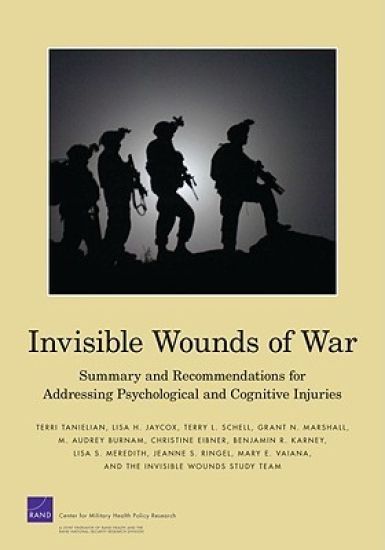
Invisible Wounds of War
Terri Tanielian; Lisa H. Jaycox; Terry L. Schell; Grant N. Marshall; M. Audrey Burnam; Christine Eibner; Benjamin R. Karney; Lisa S. Meredith; Jeanne S. Ringel; Mary E. Vaiana
RAND
2008
pokkari
This book summarizes key findings and recommendations from "Invisible Wounds of War: Psychological and Cognitive Injuries, Their Consequences, and Services to Assist Recovery" (Tanielian and Jaycox [Eds.], MG-720-CCF, 2008), a comprehensive study of the post-deployment health-related needs associated with post-traumatic stress disorder, major depression, and traumatic brain injury among veterans of Operations Enduring Freedom/Iraqi Freedom.
Identifying the Wrights in the Goochland County, Virginia, Tithe Lists, 1732-84
Robert N Grant
Heritage Books
2009
pokkari
Wright Family Census Records, Franklin County, Virginia, 1810-1900
Robert N Grant
Heritage Books
2013
pokkari
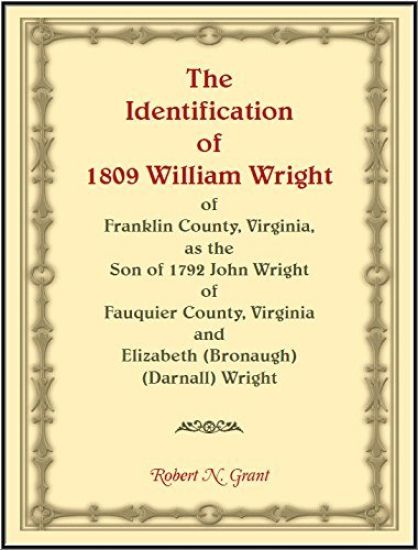
The Identification of 1809 William Wright of Franklin County, Virginia, as the Son of 1792 John Wright of Fauquier County, Virginia and Elizabeth (Bronaugh) (Darnall) Wright
Robert N Grant
Heritage Books
2018
pokkari
Because of the numerous persons with the surname Wright and similar given names, and to keep track of these different people, the author has adopted the convention of distinguishing Wrights by listing them with their date of death and place of death, the two most commonly available pieces of information. Thus the William Wright who died in 1809 at Franklin County, Virginia, is identified as 1809 William Wright of Franklin County, Virginia. Evidence identifying William Wright is presented in this ten-part analysis which reviews some of the information known about William and John Wright, William's wife Mary (Grant) Wright, documentary evidence, handwriting, suggestive evidence, family naming evidence, and contrary identifications and why they are probably not correct. Additionally, there is a summary in chronological order of the information known about William Wright of Franklin County and Mary (Grant) Wright in northern Virginia.
Wright Family Birth Records, 1853 to 1896, and Marriage Records, 1782 to 1900, Campbell County, Virginia
Robert N Grant
Heritage Books
2013
pokkari
Wright Family Death Records (1853-1920), Cemetery Records by Cemetery, and Probate Records (1782-1900), Campbell County, Virginia
Robert N Grant
Heritage Books
2013
pokkari