Kirjojen hintavertailu. Mukana 11 244 527 kirjaa ja 12 kauppaa.

Kirjahaku

Etsi kirjoja tekijän nimen, kirjan nimen tai ISBN:n perusteella.

1000 tulosta hakusanalla Greg Woolf

Rome: An Empire's Story

Rome: An Empire's Story

Greg Woolf

Oxford University Press
2021
nidottu
Rome in the archaic age was a minor satellite between the Etruscan and Greek world. This book traces the expansion of Roman influence first within Italy, then around the Mediterranean world and finally, at breakneck speed, deep into Europe, out to the Atlantic, along the edge of the Sahara and down the Red Sea. But there had been other empires that had expanded rapidily: what made Rome remarkable was that it managed to sustain its position for so long. Rome's Fall poses less of a mystery than its survival. Understanding how this happens involves understanding the building blocks of imperial society -- slavery, cities, the economy -- and also the chaotic narrative of growth, civil war, stability, near disaster and then a managed downsizing. Rome. An empire's story tells the story of Rome in chapters that alternate with examination of key features of Roman society. This new edition is based on the very latest research, including studies of climate change and ecology, and deals at greater length than the first edition did with the later Roman empire, and with the material culture of empire.
Rome

Rome

Greg Woolf

Oxford University Press
2022
nidottu
The complete history of the Roman Empire - how it was created, how it was sustained in crisis, and how it shaped the world of its rulers and subjects, from the eighth century BCE to the dawn of the Middle Ages. Rome in the archaic age was a minor satellite between the Etruscan and Greek world. This book traces the expansion of Roman influence first within Italy, then around the Mediterranean world and finally, at breakneck speed, deep into Europe, out to the Atlantic, along the edge of the Sahara and down the Red Sea. There had been other empires that had expanded rapidly; what made Rome remarkable was that it managed to sustain its position for so long. Rome's fall poses less of a mystery than its survival. Understanding this happened involves understanding the building blocks of imperial society - slavery, cities, the economy - and also the chaotic narrative of growth, civil war, stability, near disaster and then a managed downsizing. Rome: An Empire's Story tells the tale of the great ancient city in chapters that alternate with examination of key features of Roman society. This second edition has been fully revised and updated to take account of all the major new developments in the field since the publication of the first edition. Many of the chapters have been expanded, there is an expanded section on late antiquity, a new thematic chapter looking back from Constantinople to Rome, and a greater focus on material culture throughout.
The Life and Death of Ancient Cities: A Natural History
The dramatic story of the rise and collapse of Europe's first great urban experiment The growth of cities around the world in the last two centuries is the greatest episode in our urban history, but it is not the first. Three thousand years ago most of the Mediterranean basin was a world of villages; a world without money or writing, without temples for the gods or palaces for the mighty. Over the centuries that followed, however, cities appeared in many places around the Inland Sea, built by Greeks and Romans, and also by Etruscans and Phoenicians, Tartessians and Lycians, and many others. Most were tiny by modern standards, but they were the building blocks of all the states and empires of antiquity. The greatest--Athens and Corinth, Syracuse and Marseilles, Alexandria and Ephesus, Persepolis and Carthage, Rome and Byzantium--became the powerhouses of successive ancient societies, not just political centers but also the places where ancient art and literatures were created and accumulated. And then, half way through the first millennium, most withered away, leaving behind ruins that have fascinated so many who came after. Based on the most recent historical and archaeological evidence, The Life and Death of Ancient Cities provides a sweeping narrative of one of the world's first great urban experiments, from Bronze Age origins to the demise of cities in late antiquity. Greg Woolf chronicles the history of the ancient Mediterranean city, against the background of wider patterns of human evolution, and of the unforgiving environment in which they were built. Richly illustrated, the book vividly brings to life the abandoned remains of our ancient urban ancestors and serves as a stark reminder of the fragility of even the mightiest of cities.
The Life and Death of Ancient Cities

The Life and Death of Ancient Cities

Greg Woolf

Oxford University Press
2020
sidottu
The human race is on a 10,000 year urban adventure. Our ancestors wandered the planet or lived scattered in villages, yet by the end of this century almost all of us will live in cities. But that journey has not been a smooth one and urban civilizations have risen and fallen many times in history. The ruins of many of them still enchant us. This book tells the story of the rise and fall of ancient cities from the end of the Bronze Age to the beginning of the Middle Ages. It is a tale of war and politics, pestilence and famine, triumph and tragedy, by turns both fabulous and squalid. Its focus is on the ancient Mediterranean: Greeks and Romans at the centre, but Phoenicians and Etruscans, Persians, Gauls, and Egyptians all play a part. The story begins with the Greek discovery of much more ancient urban civilizations in Egypt and the Near East, and charts the gradual spread of urbanism to the Atlantic and then the North Sea in the centuries that followed. The ancient Mediterranean, where our story begins, was a harsh environment for urbanism. So how were cities first created, and then sustained for so long, in these apparently unpromising surroundings? How did they feed themselves, where did they find water and building materials, and what did they do with their waste and their dead? Why, in the end, did their rulers give up on them? And what it was like to inhabit urban worlds so unlike our own - cities plunged into darkness every night, cities dominated by the temples of the gods, cities of farmers, cities of slaves, cities of soldiers. Ultimately, the chief characters in the story are the cities themselves. Athens and Sparta, Persepolis and Carthage, Rome and Alexandria: cities that formed great families. Their story encompasses the history of the generations of people who built and inhabited them, whose short lives left behind monuments that have inspired city builders ever since - and whose ruins stand as stark reminders to the 21st century of the perils as well as the potential rewards of an urban existence.
The Life and Death of Ancient Cities

The Life and Death of Ancient Cities

Greg Woolf

Oxford University Press
2022
nidottu
The human race is on a 10,000 year urban adventure. Our ancestors wandered the planet or lived scattered in villages, yet by the end of this century almost all of us will live in cities. But that journey has not been a smooth one and urban civilizations have risen and fallen many times in history. The ruins of many of them still enchant us. This book tells the story of the rise and fall of ancient cities from the end of the Bronze Age to the beginning of the Middle Ages. It is a tale of war and politics, pestilence and famine, triumph and tragedy, by turns both fabulous and squalid. Its focus is on the ancient Mediterranean: Greeks and Romans at the centre, but Phoenicians and Etruscans, Persians, Gauls, and Egyptians all play a part. The story begins with the Greek discovery of much more ancient urban civilizations in Egypt and the Near East, and charts the gradual spread of urbanism to the Atlantic and then the North Sea in the centuries that followed. The ancient Mediterranean, where our story begins, was a harsh environment for urbanism. So how were cities first created, and then sustained for so long, in these apparently unpromising surroundings? How did they feed themselves, where did they find water and building materials, and what did they do with their waste and their dead? Why, in the end, did their rulers give up on them? And what it was like to inhabit urban worlds so unlike our own - cities plunged into darkness every night, cities dominated by the temples of the gods, cities of farmers, cities of slaves, cities of soldiers. Ultimately, the chief characters in the story are the cities themselves. Athens and Sparta, Persepolis and Carthage, Rome and Alexandria: cities that formed great families. Their story encompasses the history of the generations of people who built and inhabited them, whose short lives left behind monuments that have inspired city builders ever since - and whose ruins stand as stark reminders to the 21st century of the perils as well as the potential rewards of an urban existence.
The Life and Death of Ancient Cities: A Natural History
The dramatic story of the rise and collapse of Europe's first great urban experiment The growth of cities around the world in the last two centuries is the greatest episode in our urban history, but it is not the first. Three thousand years ago most of the Mediterranean basin was a world of villages; a world without money or writing, without temples for the gods or palaces for the mighty. Over the centuries that followed, however, cities appeared in many places around the Inland Sea, built by Greeks and Romans, and also by Etruscans and Phoenicians, Tartessians and Lycians, and many others. Most were tiny by modern standards, but they were the building blocks of all the states and empires of antiquity. The greatest--Athens and Corinth, Syracuse and Marseilles, Alexandria and Ephesus, Persepolis and Carthage, Rome and Byzantium--became the powerhouses of successive ancient societies, not just political centers but also the places where ancient art and literatures were created and accumulated. And then, half way through the first millennium, most withered away, leaving behind ruins that have fascinated so many who came after. Based on the most recent historical and archaeological evidence, The Life and Death of Ancient Cities provides a sweeping narrative of one of the world's first great urban experiments, from Bronze Age origins to the demise of cities in late antiquity. Greg Woolf chronicles the history of the ancient Mediterranean city, against the background of wider patterns of human evolution, and of the unforgiving environment in which they were built. Richly illustrated, the book vividly brings to life the abandoned remains of our ancient urban ancestors and serves as a stark reminder of the fragility of even the mightiest of cities.
Becoming Roman

Becoming Roman

Greg Woolf

Cambridge University Press
1998
sidottu
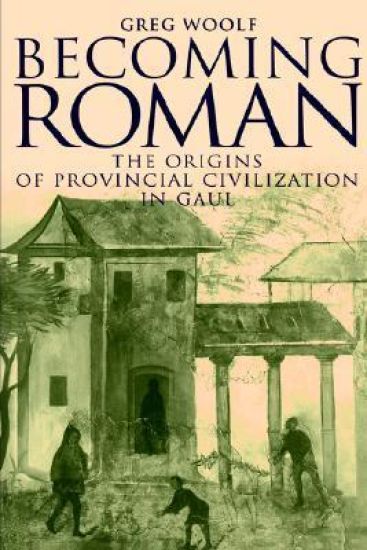
This book is a study of the process conventionally termed ‘Romanization’ through an investigation of the experience of Rome’s Gallic provinces in the late Republic and early empire. Beginning with a rejection of the concept of ‘Romanization’ it describes the nature of Roman power in Gaul and the Romans’ own understanding of these changes. Successive chapters then map the chronology and geography of change and offer new interpretations of urbanism, rural civilization, consumption and cult, before concluding with a synoptic view of Gallo-Roman civilization and of the origins of provincial cultures in general. The work draws on literary and archaeological material to make a contribution to the cultural history of the empire which will be of interest to ancient historians, classical archaeologists and all interested in cultural change.
Becoming Roman

Becoming Roman

Greg Woolf

Cambridge University Press
2000
pokkari
This book is a study of the process conventionally termed ‘Romanization’ through an investigation of the experience of Rome’s Gallic provinces in the late Republic and early empire. Beginning with a rejection of the concept of ‘Romanization’ it describes the nature of Roman power in Gaul and the Romans’ own understanding of these changes. Successive chapters then map the chronology and geography of change and offer new interpretations of urbanism, rural civilization, consumption and cult, before concluding with a synoptic view of Gallo-Roman civilization and of the origins of provincial cultures in general. The work draws on literary and archaeological material to make a contribution to the cultural history of the empire which will be of interest to ancient historians, classical archaeologists and all interested in cultural change.
Et Tu, Brute?: A Short History of Political Murder

Et Tu, Brute?: A Short History of Political Murder

Greg Woolf

HARVARD UNIVERSITY PRESS
2007
sidottu
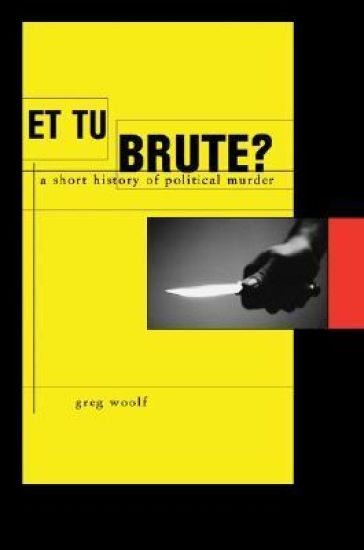
Why did Caesar have to die--and why did his death solve nothing? The plot was confused, the execution bungled, and within hours different versions of the event were circulating. It was the end of republican Rome and the beginning of the Roman Empire--and yet everything about it remains somewhat mysterious. Beginning with this legendary political assassination, immortalized in art and literature through the ages, Greg Woolf delivers a remarkable meditation on Caesar's murder as it echoes down the corridors of history, affecting notions and acts of political violence to our day. Assassins Brutus and Cassius dined with their fiercest enemies within days of the murder--and were then hunted down and killed. After the murder neither conspirators nor Caesar's partisans knew how to react. From these beginnings this book follows the normalization of assassination at Rome, cataloguing the murder of Caesar after Caesar and recording the means, methods, and motives of the perpetrators. How was the Roman Empire so untouched by these events? And how had the Republic contained such violence between friends for so long? Woolf shows how Caesar's death--and the puzzled reactions to it--points back to older ethics of tyrannicide. When is it justified to kill a head of state? Does extra-judicial execution provide answers worth the cost of the ensuing chaos? Ranging among texts by Cicero, Suetonius, and Seneca, plays by Shakespeare and Corneille, and the ideas of Michel Foucault and Francis Fukuyama, Woolf pursues these questions through the ages. His book tells us not only how, but why, Caesar's Vast Ghost still holds us spellbound.
Tales of the Barbarians

Tales of the Barbarians

Greg Woolf

John Wiley Sons Inc
2014
nidottu
Tales of the Barbarians traces the creation of new mythologies in the wake of Roman expansion westward to the Atlantic, and offers the first application of modern ethnographic theory to ancient material. Investigates the connections between empire and knowledge at the turn of the millennia, and the creation of new histories in the Roman WestExplores how ancient geography, local histories and the stories of wandering heroes were woven together by Greek scholars and local expertsOffers a fresh perspective by examining passages from ancient writers in a new light
Tales of the Barbarians

Tales of the Barbarians

Greg Woolf

Wiley-Blackwell (an imprint of John Wiley Sons Ltd)
2011
sidottu
Tales of the Barbarians traces the creation of new mythologies in the wake of Roman expansion westward to the Atlantic, and offers the first application of modern ethnographic theory to ancient material. Investigates the connections between empire and knowledge at the turn of the millennia, and the creation of new histories in the Roman WestExplores how ancient geography, local histories and the stories of wandering heroes were woven together by Greek scholars and local expertsOffers a fresh perspective by examining passages from ancient writers in a new light
Greg

Greg

Richard G. Yates Jr

Independently Published
2019
nidottu
I believe I first met Greg in March of 1999. He was on crutches and healing from severe frostbite. That had resulted in the amputation of three toes. The story he provided me was that he was found nearly frozen to death in an abandoned shed in Beaver County. He had been in Jameson Hospital for some weeks.
Greg

Greg

Kathleen Ball

Createspace Independent Publishing Platform
2018
pokkari
A naive gold-digger. A world-weary miner. Will a tragic twist of fate become a rich vein of love? California, 1848. Greg Settler's golden ambitions have hit stony ground. Forced to rely on his neighbor Hugo and Hugo's feisty daughter for mining help, he's had about enough of the woman's condescending attitude. But when his neighbor's dying words demand Greg take care of his headstrong daughter, he's not sure his fortunes have improved...Mercy Watkins believed in her father's dreams. Now burdened with a man who doesn't know the first thing about mining, her world collapses further when Greg is accused of murder. With the hanging hours away, Mercy's only solution to save her former neighbor may be marriage. As claim jumpers and unscrupulous outlaws threaten their new life together, can the stubborn couple strike it rich in love?Greg is a standalone sweet Western romance in The Settlers series. If you like gold rush settings, unconventional marriages, and determined heroes, then you'll love Kathleen Ball's enticing adventure. Buy Greg to stake your claim on love today
Greg

Greg

Tektime
2023
pokkari
The Guardians Angels no longer trust me. Worse still, they distrust me, to say nothing of Sam who doesn t want to talk to me any more. I have got to redeem myself. I must prove to them I can be of use to the pack or I will lose my place in it before I ve as much as gained it and my entry ticket could well be the wolf they brought back from their descent amongst the Tanks
Greg Dyke

Greg Dyke

Greg Dyke

HarperPerennial
2005
nidottu
‘“How did a short bald, man with a speech impediment have such an impact?” How indeed? Like his life, “Inside Story” is a pacy romp. Honest and heartfelt, it should be required reading.’ Observer On 28 January 2004, four years to the day after becoming a much-loved Director-General of the BBC, Greg Dyke left his post and entered the public eye after the publication of the Hutton Report. But Greg Dyke’s story started long before he reached the BBC. Written off as a failure at school, unemployed at thirty, his big break came as a current affairs researcher at London Weekend Television in 1977. From there he rose through the ranks of independent television, becoming the person responsible for briefly saving TV-am, thanks to Roland Rat, before running LWT, Channel Four and Pearson Television. In his riveting and frank autobiography, Dyke charts his astonishing and unconventional rise to the top, his unwavering determination and courage in improving the BBC and his defiant stand against Downing Street’s campaign of harassment. His autobiography is the story of a man of our times and of the power of television: entertaining, funny and explosively revealing.
Greg's Microscope

Greg's Microscope

Millicent E. Selsam

Harpercollins
1990
nidottu
Greg makes fascinating discoveries about things he finds at home when he looks at them through his new microscope. 'An accurate and entertaining book for beginning independent readers.' 'BL.