

Kirjahaku
Etsi kirjoja tekijän nimen, kirjan nimen tai ISBN:n perusteella.
1000 tulosta hakusanalla Guillermo Matta




The Spanish Civil War (1936-1939) was one of the major conflicts of the 20th century, with repercussions that spread beyond its time and place, but not all its heroes were combatants. Guillermo s ideology ensured that he spent the entire war as a political prisoner first in his native Tenerife, and subsequently in a labour camp near Tetuan, in what was then Spanish Morocco thus pre-empting what would have been his natural inclination to volunteer to join the Republican army and fight against Franco s Nationalists. Embodying history, politics and socio-economics, this story shows how war affects ordinary people. It provides a vivid insight into both the everyday life of Tenerife and the exoticism of Tetuan, where the reader is immersed in the sights, sounds and aromas of the Medina. This is a modern historical novel that includes elements of courtroom drama, action thriller and romance, which will repay the engagement of a wide readership.

A native Cuban who has lived in London since 1966, Guillermo Cabrera Infante is, in every sense, a multilingual and multicultural author. Equally at ease in both Spanish and English, he has distinguished himself with daring and innovative novels, essays, short stories, and film scripts written in both languages. His work has won major literary awards in France, Italy, and Spain, as well as a Guggenheim fellowship in the United States.This biography is the first comprehensive exploration of the life and works of Guillermo Cabrera Infante. Drawing on wide-ranging interviews with the author and his family and friends, as well as extensive study of both published and unpublished works, Raymond D. Souza creates an intimate portrait of Cabrera Infante and the cultural and political milieus that shaped his writing, including Three Trapped Tigers (Tres tristes tigres), View of Dawn in the Tropics (Vista del amanecer en el trópico), Infante's Inferno (La Habana para un Infante difunto), Holy Smoke, A Twentieth Century Job (Un oficio del siglo XX), Writes of Passage (Así en la paz como en la guerra), and Mea Cuba.

Guillermo del Toro is a complete and intimate study of the life and work of one of modern cinema's most truly unique directors, whose distinct aesthetic and imagination are unmatched in contemporary film. Widely regarded as one of the most imaginative directors working in cinema today, Guillermo del Toro has built up a body of work that has enthralled movie fans with its dark beauty and edge-of-the-seat set pieces. In this book, acclaimed author Ian Nathan charts the progression of a career that has produced some of contemporary cinema’s most revered scenes and idiosyncratic characters. This detailed examination looks at how the strands of del Toro’s career have woven together to create one of modern cinema’s most ground-breaking bodies of work. Delving deep into del Toro's psyche, the book starts by examining his beginnings in Mexico, the creative but isolated child surrounded by ornate catholicism and monster magazines, filming stop motion battles between his toys on a Super-8 film camera. It follows him to film school, where we learn of his influences, from Kafka to Bunuel, and explores his 1993 debut Cronos, the independent horror debut which draws on the religious and occult themes which would recur throughout del Toro's work. It goes on to cover his development as a director with 1997's Mimic, his blockbuster success with the Hellboy films and goes on to study the films which have cemented his status as a legendary auteur, Oscar award winners Pan's Labrynth and The Shape of Water, as well as his sci-fi masterpiece Pacific Rim, as well as looking at his exciting upcoming projects Nightmare Alley and Pinocchio. An enlightening look into the mind of an auteur blessed with a singular creative vision, Guillermo del Toro analyses the processes, themes and narratives that have come to be recognised as distinctly del Toro, from practical effects to an obsession with folklore and paganism. It looks into the narrative techniques, stylistic flourishes and creative decisions which have made him a true master of modern cinema. Presented in a slipcase with 8-page gatefold section, with scores of illuminating photographs of the director at work on set as well as iconic stills from his films and examples of his influences, this stunning package will delight all Guillermo del Toro devotees and movie lovers in general.Unauthorised and Unofficial.

In 1912, Guillermo Calles (1893-1958) became the first Mexican actor to appear in films made in California. Despite limited resources, he began directing and producing his own movies, and in 1929 pioneered production of Spanish-language sound films. His major works, among them the long-unavailable El indio yaqui and Raza de bronce (both 1927), represented Calles' tireless crusade to restore the image of Mexicans and Indians in an era dominated by Hollywood stereotypes. This biography traces Calles' career from his earliest Hollywood days through the 1950s. Included are the only surviving images of the filmmaker's silent productions, a closing commentary on his intimate circle of relatives, and an appendix featuring two fascinating letters written by Calles during a filming trip.

Guillermo Kuitca: Diarios
Drawing Center, U.S.
2013
pokkari
This publication accompanies the first U.S. museum exhibition of a selection of paintings by the Argentinean artist Guillermo Kuitca, made from 2005 to the present. Since 1994, Kuitca has taken failed and discarded canvases, stretched them over an abandoned table from his parents' garden, and then spent periods of time ranging from three to six months creating intentional and accidental doodles, drawings and recordings on their surfaces. The" Diarios," as the artist calls them, are the most transparently personal works in his oeuvre, as they gather residue like phone numbers, titles of paintings, email addresses, blank spots where books sat, lists and collaged elements that record the ebb and flow of life inside and outside the studio. This volume includes full-color plates and large-scale details of the 18 works in the exhibition, an introduction by curator Brett Littman and a specially commissioned essay by acclaimed German author Daniel Kehlmann.

Formulario De La Facultad Medica Mexicana Formado Por El Doc Tor Guillermo Parra
Guillermo Parra
Hutson Street Press
2025
sidottu

Formulario De La Facultad Medica Mexicana Formado Por El Doc Tor Guillermo Parra
Guillermo Parra
Hutson Street Press
2025
pokkari

Guillermo's Little Black Book: The Perfect Dating Companion for a Handsome Man Named Guillermo. A secret place for names, phone numbers, and addresse
Wingman Publishing
Independently Published
2019
nidottu
Keep a record of all the girls that catch your eye


Guillermo de Ockham, Punto de Partida del Pensamiento Moderno
Juan Luis Lemaitre del Campo
Lulu.com
2025
pokkari
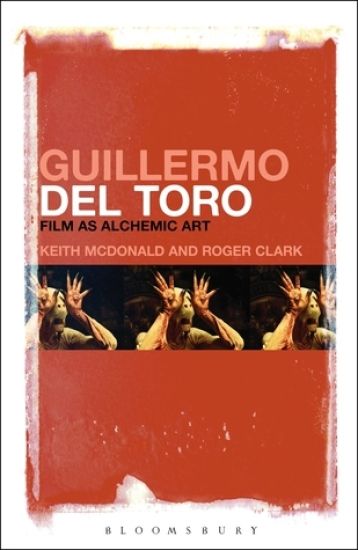
A critical exploration of one of the most exciting, original and influential figures to emerge in contemporary film, Guillermo del Toro: Film as Alchemic Art is a major contribution to the analysis of Guillermo del Toro's cinematic output. It offers an in-depth discussion of del Toro's oeuvre and investigates key ideas, recurrent motifs and subtle links between his movies. The book explores the sources that del Toro draws upon and transforms in the creation of his rich and complex body of work. These include the literary, artistic and cinematic influences on films such as Pan's Labyrinth, The Devil's Backbone, Cronos and Mimic, and the director’s engagement with comic book culture in his two Hellboy films, Blade II and Pacific Rim. As well as offering extensive close textual analysis, the authors also consider del Toro's considerable impact on wider popular culture, including a discussion of his role as producer, ambassador for ‘geek' culture and figurehead in new international cinema.

Guillermo Tell (Wilhelm Tell en alem n) es un drama en cinco actos y en verso, perteneciente a la poca cl sica de la literatura alemana y escrito por el intelectual alem n Federico Schiller. Este drama est basado en una leyenda que encarn los ideales de lucha por la libertad e independencia de Suiza primero, y m s tarde los de amor paterno y la lucha por la justicia. El drama de Schiller sirvi de inspiraci n a numerosos autores posteriores. Rossini utiliz la obra de teatro de Schiller, para componer la pera que lleva el mismo nombre en 1829, que se estren en Par s. La obertura de dicha opera es mundialmente conocida y popular.
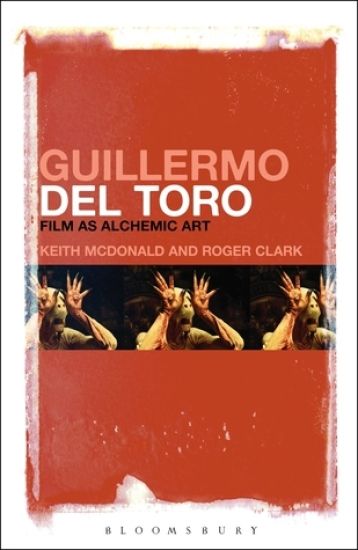
A critical exploration of one of the most exciting, original and influential figures to emerge in contemporary film, Guillermo del Toro: Film as Alchemic Art is a major contribution to the analysis of Guillermo del Toro's cinematic output. It offers an in-depth discussion of del Toro's oeuvre and investigates key ideas, recurrent motifs and subtle links between his movies. The book explores the sources that del Toro draws upon and transforms in the creation of his rich and complex body of work. These include the literary, artistic and cinematic influences on films such as Pan's Labyrinth, The Devil's Backbone, Cronos and Mimic, and the director’s engagement with comic book culture in his two Hellboy films, Blade II and Pacific Rim. As well as offering extensive close textual analysis, the authors also consider del Toro's considerable impact on wider popular culture, including a discussion of his role as producer, ambassador for ‘geek' culture and figurehead in new international cinema.