Kirjojen hintavertailu. Mukana 12 016 292 kirjaa ja 12 kauppaa.

Kirjahaku

Etsi kirjoja tekijän nimen, kirjan nimen tai ISBN:n perusteella.

1000 tulosta hakusanalla Harry Partch

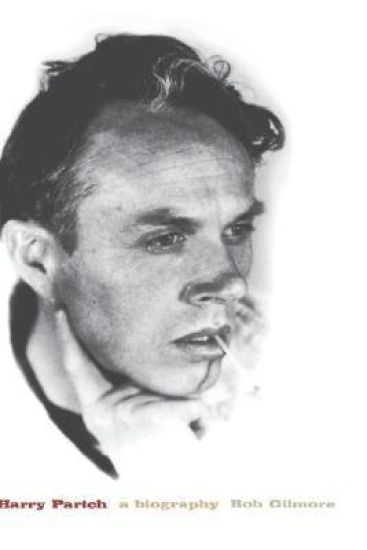
Harry Partch

Harry Partch

Bob Gilmore

Yale University Press
1998
sidottu
Visionary composer, theorist, and creator of musical instruments, Harry Partch (1901–1974) was a leading figure in the development of an indigenously American contemporary music. A pioneer in his explorations of new instruments and new tunings, Partch created multimedia theater works that combine sight and sound in a compelling synthesis. He is acknowledged as a major inspiration to postwar experimental composers as diverse as György Ligeti, Lou Harrison, Philip Glass, and Laurie Anderson, and his book Genesis of a Music, first published in 1949, is now considered a classic. This book is the first to tell the complete story of Partch’s life and work. Drawing on interviews with many of Partch’s associates and on the complete archives of the Harry Partch Estate, Bob Gilmore provides a full and sympathetic portrait of this extraordinary creative artist. He describes Partch’s complicated relationships with friends, patrons, the musical establishment, and the world at large. He traces Partch’s upbringing in the remote desert towns of the Southwest, his explosive encounter with formal music education in Los Angeles, and his revolutionary course as a composer that began with an interest in the musicality of speech patterns. After immersing himself in hobo subculture during the Depression, Partch came to occupy a lonely and uncompromising position as a cultural outsider. Richly fascinating in themselves, Partch’s compositions, writings, and life also have much to reveal about American society and the creative impulses of the artistic avant-garde.
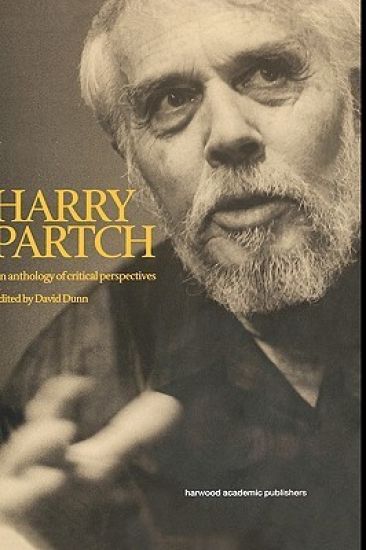
Harry Partch

Harry Partch

Routledge
2000
sidottu
This anthology of writings about the American experimental composer Harry Partch is the most comprehensive collection of commentaries about the composer and his work ever assembled. Eleven major figures of contemporary music voice their views on Partch (1901-1974) and his radical contributions to twentieth-century music. These include composers and theorists who worked closely with him and important comments from his contemporaries and musical inheritors.
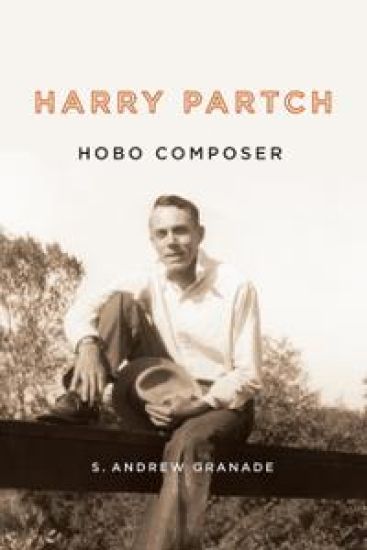
Harry Partch, Hobo Composer

Harry Partch, Hobo Composer

S. Andrew Granade

University of Rochester Press
2014
sidottu
Examines the impact of Harry Partch's hobo years from a variety of perspectives, exploring how the composer both engaged and frustrated popular conceptions of the hobo. Harry Partch (1901-74) was one of the most distinctive and influential American composers of the mid-twentieth century. During the Great Depression, Partch rode the railways, following the fruit harvest across the country. Although he is renowned for his immense stage works, such as Delusion of the Fury, and his use of highly sophisticated instruments of his own creation, Partch is still regularly called a "hobo composer." Yet few have questioned this label's impact on his musical output, compositional life, and reception. Focusing on Partch the person alongside the cultural icon he represented, this study examines Partch from historical, cultural, political, and musical perspectives. It outlines the cultural history of the hobo from the mid-1800s through the 1960s, as well as those figures associated with the hobo's image. It explores how Partch's music, which chronicled a disappearing subculture, was received, and how the composer ultimately engaged and frustrated popular conceptions of the hobo. And it follows Partch's later years to question his response to the hobo label and the ways in which others used it to define and contain him for over thirty years S. Andrew Granade is Associate Professor of Musicology in the Conservatory of Music and Dance, University of Missouri-Kansas City.
The Musical Identities of Harry Partch

The Musical Identities of Harry Partch

S. Andrew Granade

BOYDELL BREWER LTD
2026
sidottu
A vivid exploration of Harry Partch's visionary music, instruments, and identities, revealing how his singular sound-world challenges conventions, reshapes performance conventions, and continues to redefine the possibilities of musical expression. Harry Partch (1901-74) stood apart in twentieth-century music. A visionary composer, theorist, and builder of over fifty visually and aurally astonishing instruments, he rejected the confines of Western tuning and performance to forge an art that fused sound, movement, and ritual. His music grew from his life, which included hobo journeys, explorations of alternative tunings, and a fierce commitment to individuality. These experiences resulted in a body of work as theatrical as it was sonically adventurous. In recent decades, scholarship has flourished, performances and recordings have become more numerous, yet Partch's legacy remains a challenge, largely because his identities as composer, instrument builder, philosopher, and provocateur resist easy categorization. This collection gathers leading voices to expand present-day understanding of the diverse elements that defined Partch's multiple musical identities. Essays trace the entanglement of his instruments with his creative vision, reconsider his sexuality and self-mythologizing, link his microtonal theories to both ancient Greek thought and contemporary composition, and examine the practical and interpretive challenges of performing his music today. Contributors reveal a figure whose work speaks to questions of identity, community, and the very purpose of musical creation. Richly interdisciplinary and vividly written, The Musical Identities of Harry Partch: History, Theory, Performanceoffers new perspectives for scholars, performers, and listeners alike, and invites all to step into Partch's singular sound-world and discover its continuing resonance.
Bitter Music

Bitter Music

Harry Partch

University of Illinois Press
2000
nidottu
Bitter Music collects writings by one of the twentieth century's great musical iconoclasts. Rejecting the equal temperament and concert traditions that have dominated western music, Harry Partch adopted the pure intervals of just intonation and devised a 43-tone-to-the-octave scale, which in turn forced him into inventing numerous musical instruments. His compositions realize his ideal of a corporeal music that unites music, dance, and theater. Winner of the ASCAP-Deems Taylor Award, Bitter Music includes two journals kept by Partch, one while wandering the West Coast during the Depression and the other as he hiked the rugged northern California coastline. It also includes Partch's essays on and discussions of his own compositions, as well as librettos and scenarios for six major narrative/dramatic works.
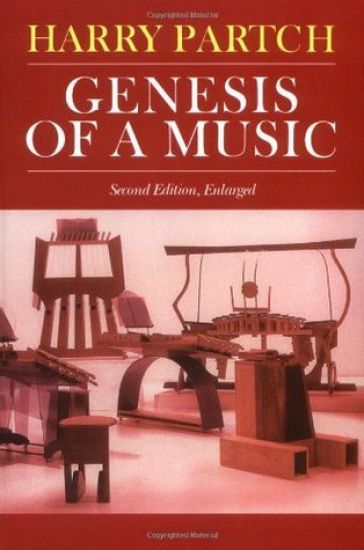
Genesis Of A Music

Genesis Of A Music

Harry Partch

Da Capo Press Inc
1979
pokkari
Among the few truly experimental composers in our cultural history, Harry Partch's life (1901-1974) and music embody most completely the quintessential American rootlessness, isolation, pre-civilized cult of experience, and dichotomy of practical invention and transcendental visions. Having lived mostly in the remote deserts of Arizona and New Mexico with no access to formal training, Partch naturally created theatrical ritualistic works incorporating Indian chants, Japanese kabuki and Noh, Polynesian microtones, Balinese gamelan, Greek tragedy, dance, mime, and sardonic commentary on Hollywood and commercial pop music of modern civilization. First published in 1949, Genesis of a Music is the manifesto of Partch's radical compositional practice and instruments (which owe nothing to the 300-year-old European tradition of Western music.) He contrasts Abstract and Corporeal music, proclaiming the latter as the vital, emotionally tactile form derived from the spoken word (like Greek, Chinese, Arabic, and Indian musics) and surveys the history of world music at length from this perspective. Parts II, III, and IV explain Partch's theories of scales, intonation, and instrument construction with copious acoustical and mathematical documentation. Anyone with a musically creative attitude, whether or not familiar with traditional music theory, will find this book revelatory.
Harry

Harry

Laurie Dicker

Dicker Books
2023
pokkari
Winter, 1948, country town dunny.The body of a young man was found with a deep branding mark on his backand a broad red streak down his forehead.Detective Harry Taylor is sent to investigate.He recognises the mark as that of a red raddle, a crayon used by farmers on livestock.Four days later another body was found with a similar branding and raddle mark.Were the victims chosen at random?Was there more than one killer?Would they kill again?Were the public safe?What was the motivation behind these gruesome deaths?
Harry

Harry

Fanny Wheeler Hart

Anson Street Press
2025
pokkari
"Harry" by Fanny Wheeler Hart offers a poignant glimpse into American domestic life through verse. This collection of biographical poetry explores themes of childhood and family, painted with the delicate brushstrokes of personal experience. Hart's work provides a window into a specific time, yet the emotions and experiences it captures resonate across generations. A testament to the enduring power of poetry to preserve and convey the essence of human connection, "Harry" is a celebration of life's simple moments and the profound bonds that shape us. A notable contribution to American poetry, meticulously prepared for republication, this volume invites readers to reflect on their own histories and appreciate the universality of human experience.This work has been selected by scholars as being culturally important, and is part of the knowledge base of civilization as we know it.This work is in the public domain in the United States of America, and possibly other nations. Within the United States, you may freely copy and distribute this work, as no entity (individual or corporate) has a copyright on the body of the work.Scholars believe, and we concur, that this work is important enough to be preserved, reproduced, and made generally available to the public. We appreciate your support of the preservation process, and thank you for being an important part of keeping this knowledge alive and relevant.