

Kirjahaku
Etsi kirjoja tekijän nimen, kirjan nimen tai ISBN:n perusteella.
1000 tulosta hakusanalla Hart


Hart's Postscript
Oxford University Press
2001
sidottu
Published posthumously, the second edition of The Concept of Law contains one important addition to the first edition, a substantial Postscript, in which Hart reflects upon some of the central concerns that have been expressed about the book since its publication in 1961. The Postscript is especially noteworthy because it contains Hart's only sustained response to the objections pressed by his foremost critic, Ronald Dworkin, who succeeded him to the Chair of Jurisprudence at Oxford. The Postscript focuses on a range of issues covering both Hart's substantive view and his methodological commitments. In particular, Hart endorses Inclusive Legal Positivism, asserts that his is a methodology of descriptive jurisprudence which he contrasts with Dworkin's normative jurisprudence or interpretivism, while denying that his theory of law has a semantic underpinning. The essays in this collection address each of these issues in a sustained way. The book contains discussions of Hart's semantic commitments, his rejection of a normative jurisprudence as well as the extent to which he can embrace Inclusive Legal Positivism in a way that is consistent with his other stated positions. The book's contributors include the leading advocates of alternative schools of Positivist jurisprudence, important contributors to the methodogical disputes in jurisprudence and noted experts on the relationship of philosophy of language to jurisprudence. Among the contributors of note are: Joseph Raz, Jules L. Coleman, Stephen Perry , Brian Leiter, Scott Shapiro and Andrei Marmor.

Hart's Postscript
Oxford University Press
2001
nidottu
Published posthumously, the second edition of The Concept of Law contains one important addition to the first edition, a substantial Postscript, in which Hart reflects upon some of the central concerns that have been expressed about the book since its publication in 1961. The Postscript is especially noteworthy because it contains Hart's only sustained response to the objections pressed by his foremost critic, Ronald Dworkin, who succeeded him to the Chair of Jurisprudence at Oxford. The Postscript focuses on a range of issues covering both Hart's substantive view and his methodological commitments. In particular, Hart endorses Inclusive Legal Positivism, asserts that his is a methodology of descriptive jurisprudence which he contrasts with Dworkin's normative jurisprudence or interpretivism, while denying that his theory of law has a semantic underpinning. The essays in this collection address each of these issues in a sustained way. The book contains discussions of Hart's semantic commitments, his rejection of a normative jurisprudence as well as the extent to which he can embrace Inclusive Legal Positivism in a way that is consistent with his other stated positions. The book's contributors include the leading advocates of alternative schools of Positivist jurisprudence, important contributors to the methodogical disputes in jurisprudence and noted experts on the relationship of philosophy of language to jurisprudence. Among the contributors of note are: Joseph Raz, Jules L. Coleman, Stephen Perry , Brian Leiter, Scott Shapiro and Andrei Marmor.
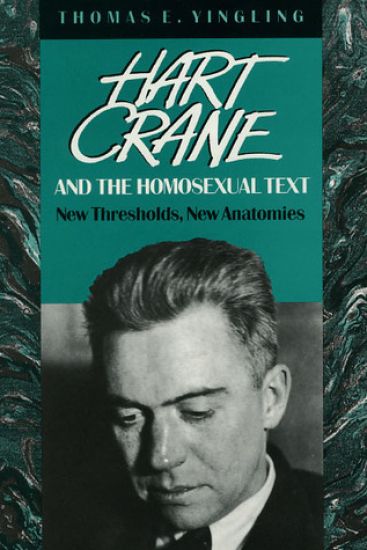
"Canonized for being insufficiently American although he took America as his subject, chastised for obscurity by readers who would not allow or would not read homosexual meanings, Crane embodies many understandings of America, and of the predicament of the gay writer."—Voice Literary Supplement"A brilliant critical model for understanding how textuality and sexuality can produce pervasive effects on each other in the writing of a figure like Crane."—Michael Moon, Duke University
Hart Island has served as a potter’s field for more than a century, holding over a million indigent, unclaimed, or unknown New Yorkers’ bodies—and yet it is little-known even among locals. In this absorbing and elegiac story, on this island shaped like a miniature boot of Italy, Gary Zebrun explores overlapping connections of sexuality, family, criminality, and morality. Driven out of the Coast Guard during the days of “Don’t Ask, Don’t Tell,” Sal Cusumano hauls coffins to Hart Island with a burial crew of Rikers Island inmates and guards. Only there can he fully leave his family troubles on Staten Island behind: Justin, his adopted brother and lover; his mother, Ida, slipping rapidly into dementia; the memory of Francesco, his father, a bookie gunned down on his stoop; and his brother Antony, a Manhattan homicide detective moonlighting with the mob. But the island ceases to be his sanctuary after Antony ensnares him—and others—in a crime that involves a nocturnal visit to the potter’s field. This compelling and intricately plotted novel moves through the shadows as its characters yearn for belonging and forgiveness. Set on the eve of the COVID pandemic, it is part love story, part crime novel, and part mystery.
Back in England following his heroics in the Zulu Wars, George Hart is summoned to a new adventure when Prime Minister Disraeli asks him to go on a secret mission to Afghanistan, where the British fear Muslim extremists are poised to overthrow the local ruler and threaten the jewel in the Imperial crown, India. Hart has severe misgivings. Always an outsider in British society, he doesn't like Whitehall's arrogant way of meddling in other people's religious and political affairs, but desperate for money, he takes the job and descends the Khyber Pass into a strange and violent land. When his warnings are ignored by the pompous British Resident in Kabul, a terrible massacre occurs and soon Hart is on the run with a beautiful Afghan princess, in a race to prevent an uprising and head off a catastrophic British invasion.

Hart Crane and Yvor Winters: Their Literary Correspondence delves into the profound yet contrasting relationship between two towering figures in 20th-century American poetry. Hart Crane, known for his bold, emotionally charged poetry and turbulent life, and Yvor Winters, a disciplined poet and critic, might seem like antithetical figures: the bohemian versus the scholar, the restless creative versus the stable family man. Yet their correspondence reveals a deeper connection through shared passion for poetry, mutual respect for each other’s work, and a significant exchange of ideas. This book explores their relationship, spanning Crane’s effusive gratitude for Winters’s critiques of The Bridge to the tensions that ultimately fractured their bond. Crane’s letters, preserved by Winters, offer an invaluable glimpse into his evolving poetics and his creative process, as well as the ways in which Winters influenced and challenged him. The book situates this correspondence within the broader literary context of their time, illustrating how their dialogue reflects larger trends and tensions in American poetry. Crane's visionary and often chaotic approach contrasts sharply with Winters's insistence on precision and restraint, illuminating their divergent poetic philosophies. Despite their differences, both men were deeply committed to their craft, pushing the boundaries of American poetry in their own ways. Crane’s vivid, risk-taking style often verged on collapse but offered moments of breathtaking brilliance, while Winters’s disciplined, ethical poetry exuded intellectual rigor and formal mastery. By juxtaposing their lives, letters, and works, the book not only enriches our understanding of these two remarkable poets but also sheds light on the complex interplay of personality, ideology, and artistry that shapes poetic expression. This title is part of UC Press's Voices Revived program, which commemorates University of California Press’s mission to seek out and cultivate the brightest minds and give them voice, reach, and impact. Drawing on a backlist dating to 1893, Voices Revived makes high-quality, peer-reviewed scholarship accessible once again using print-on-demand technology. This title was originally published in 1978.

Hart Crane and Yvor Winters: Their Literary Correspondence delves into the profound yet contrasting relationship between two towering figures in 20th-century American poetry. Hart Crane, known for his bold, emotionally charged poetry and turbulent life, and Yvor Winters, a disciplined poet and critic, might seem like antithetical figures: the bohemian versus the scholar, the restless creative versus the stable family man. Yet their correspondence reveals a deeper connection through shared passion for poetry, mutual respect for each other’s work, and a significant exchange of ideas. This book explores their relationship, spanning Crane’s effusive gratitude for Winters’s critiques of The Bridge to the tensions that ultimately fractured their bond. Crane’s letters, preserved by Winters, offer an invaluable glimpse into his evolving poetics and his creative process, as well as the ways in which Winters influenced and challenged him. The book situates this correspondence within the broader literary context of their time, illustrating how their dialogue reflects larger trends and tensions in American poetry. Crane's visionary and often chaotic approach contrasts sharply with Winters's insistence on precision and restraint, illuminating their divergent poetic philosophies. Despite their differences, both men were deeply committed to their craft, pushing the boundaries of American poetry in their own ways. Crane’s vivid, risk-taking style often verged on collapse but offered moments of breathtaking brilliance, while Winters’s disciplined, ethical poetry exuded intellectual rigor and formal mastery. By juxtaposing their lives, letters, and works, the book not only enriches our understanding of these two remarkable poets but also sheds light on the complex interplay of personality, ideology, and artistry that shapes poetic expression. This title is part of UC Press's Voices Revived program, which commemorates University of California Press’s mission to seek out and cultivate the brightest minds and give them voice, reach, and impact. Drawing on a backlist dating to 1893, Voices Revived makes high-quality, peer-reviewed scholarship accessible once again using print-on-demand technology. This title was originally published in 1978.

When Hart Crane's epic poem The Bridge was published in 1930, it was generally judged a failure. Critics said the poet had unwisely attempted to create a mystical synthesis of modern America out of inadequate materials. Crane himself, who committed suicide in 1932, did little to correct this impression; and although the poet's reputation has fluctuated over the past fifty years, many people still find The Bridge unsatisfactory. In this analysis of Crane's long poem, Paul Giles demonstrates that the author was consciously constructing his Bridge out of a huge number of puns and paradoxes, most of which have never been noticed by Crane's readers. Dr Giles shows how Crane was directly influenced by the early work of James Joyce; how the composition of The Bridge ran parallel to the first serialisation of Finnegans Wake in Paris; and how The Bridge is the first great work of the 'Revolution of the Word' movement, predating the final published version of Finnegans Wake by nine years.

When Hart Crane's epic poem The Bridge was published in 1930, it was generally judged a failure. Critics said the poet had unwisely attempted to create a mystical synthesis of modern America out of inadequate materials. Crane himself, who committed suicide in 1932, did little to correct this impression, and many people still find the poem unsatisfactory. In this startling and exhaustive analysis of The Bridge Paul Giles shows that Crane was consciously constructing his poem out of a huge number of puns and paradoxes, most of which have until now never been noticed. He also shows how. Crane was directly influenced by James Joyce (the composition of The Bridge ran parallel to the first serialisation of Finnegans Wake) and he suggests a number of other contexts which illuminate the poem: Einstein and relativity, Freud and psychoanalysis, bootlegging, burlesque theatre, Hollywood cinema.

Harold Hart Crane was born in Ohio in 1899. In 1923 he became a copy-writer in New York. White Buildings, his first collection, appeared in 1926, and in 1930 his most famous work, The Bridge, was published. A reaction against the pessimism in T. S. Eliot's The Waste Land, The Bridge was a love song to the myth of America and its optimism a much needed boon to post-Wall Street Crash America. Hart Crane committed suicide in 1932.
Focusing on the vexed friendship between Hart Crane and Allen Tate, this book examines twentieth-century American poetry's progress toward institutional sanction and professional organization, a process in which sexual identities, poetic traditions, and literary occupations were in question and at stake. Langdon Hammer combines biography and formalist analysis to argue that American modernism was a Janus-faced phenomenon, at once emancipatory and elitist, which simultaneously attacked traditional cultural authority and reconstructed it in new forms. Hammer shows how Crane and Tate, working in relation to each other and to T. S. Eliot, created for themselves the competing roles of "genius" and "poet-critic." Crane embraced the self-authorizing powers of the individual talent at the cost of standing outside the emerging consensus of high modernist literary culture, an aesthetic isolation which converged with his social isolation as a gay man. Tate, turning against Crane, linked the modernist defense of tradition to an embattled heterosexual masculinity, while he adapted Eliot's stance to a career sustained by criticism and teaching. Ending his book with a discussion of Robert Lowell's career, Hammer maintains that Lowell's "confessional" poetry recapitulates the conflict enacted by Crane and Tate. Originally published in 1993. The Princeton Legacy Library uses the latest print-on-demand technology to again make available previously out-of-print books from the distinguished backlist of Princeton University Press. These editions preserve the original texts of these important books while presenting them in durable paperback and hardcover editions. The goal of the Princeton Legacy Library is to vastly increase access to the rich scholarly heritage found in the thousands of books published by Princeton University Press since its founding in 1905.
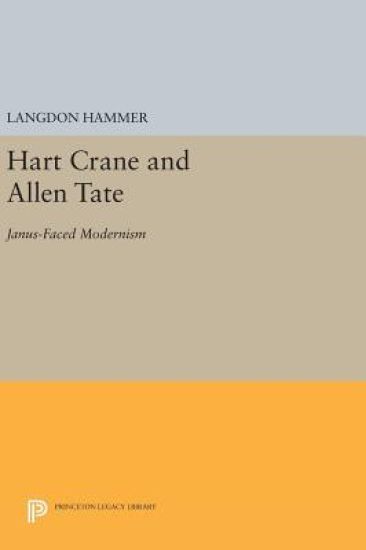
Focusing on the vexed friendship between Hart Crane and Allen Tate, this book examines twentieth-century American poetry's progress toward institutional sanction and professional organization, a process in which sexual identities, poetic traditions, and literary occupations were in question and at stake. Langdon Hammer combines biography and formalist analysis to argue that American modernism was a Janus-faced phenomenon, at once emancipatory and elitist, which simultaneously attacked traditional cultural authority and reconstructed it in new forms. Hammer shows how Crane and Tate, working in relation to each other and to T. S. Eliot, created for themselves the competing roles of "genius" and "poet-critic." Crane embraced the self-authorizing powers of the individual talent at the cost of standing outside the emerging consensus of high modernist literary culture, an aesthetic isolation which converged with his social isolation as a gay man. Tate, turning against Crane, linked the modernist defense of tradition to an embattled heterosexual masculinity, while he adapted Eliot's stance to a career sustained by criticism and teaching. Ending his book with a discussion of Robert Lowell's career, Hammer maintains that Lowell's "confessional" poetry recapitulates the conflict enacted by Crane and Tate. Originally published in 1993. The Princeton Legacy Library uses the latest print-on-demand technology to again make available previously out-of-print books from the distinguished backlist of Princeton University Press. These editions preserve the original texts of these important books while presenting them in durable paperback and hardcover editions. The goal of the Princeton Legacy Library is to vastly increase access to the rich scholarly heritage found in the thousands of books published by Princeton University Press since its founding in 1905.

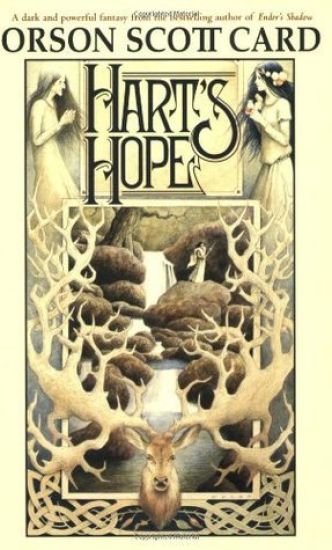
Years after she is forced to marry the usurper who killed her tyrannical father, the exiled dark queen Asineth endeavors to reclaim her throne from the rebellious lord Palicrovol. Reprint. 20,000 first printing.

During the last half of the twentieth century, legal philosophy (or legal theory or jurisprudence) has grown significantly. It is no longer the domain of a few isolated scholars in law and philosophy. Hundreds of scholars from diverse fields attend international meetings on the subject. In some universities, large lecture courses of five hundred students or more study it. The primary aim of the Law and Philosophy Library is to present some of the best original work on legal philosophy from both the Anglo-American and European traditions. Not only does it help make some of the best work available to an international audience, but it also encourages increased aware ness of, and interaction between, the two major traditions. The primary focus is on full-length scholarly monographs, although some edited volumes of original papers are also included. The Library editors are assisted by an Editorial Advisory Board of internationally renowned scholars. Legal philosophy should not be considered a narrowly circumscribed field. Insights into law and legal institutions can come from diverse disciplines on a wide range of topics. Among the relevant disciplines or perspectives contributing to legal philosophy, besides law and philosophy, are anthropol ogy, economics, political science, and sociology. Among the topics included in legal philosophy are theories of law; the concepts of law and legal institu tions; legal reasoning and adjudication; epistemological issues of evidence and procedure; law and justice, economics, politics, or morality; legal ethics; and theories of legal fields such as criminal law, contracts, and property.
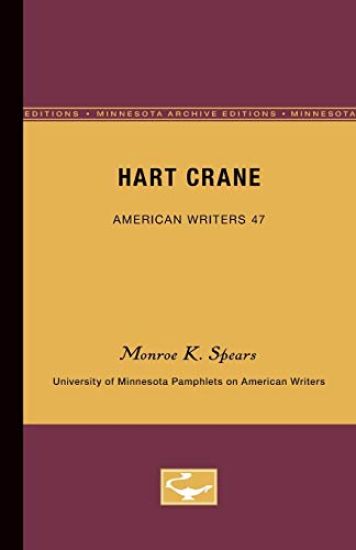
Hart Crane - American Writers 47
UNIVERSITY OF MINNESOTA PRESS
1965
nidottu
Hart Crane - American Writers 47 was first published in 1965. Minnesota Archive Editions uses digital technology to make long-unavailable books once again accessible, and are published unaltered from the original University of Minnesota Press editions.The University of Minnesota Pamphlets on American Writers series provides concise, stimulating introductions to American writers of all periods. The pamphlet authors are critics and writers recognized for their competence in their particular fields. Each pamphlet devoted to a single writer contains biographical information, a discussion and critical evaluation of his work, and a selected bibliography. Teachers of American literature, both in the United States and abroad, in colleges, universities, and secondary schools find the pamphlets ideal for their students' use. For general readers and librarians they are equally useful and interesting.