Kirjojen hintavertailu. Mukana 11 699 587 kirjaa ja 12 kauppaa.

Kirjahaku

Etsi kirjoja tekijän nimen, kirjan nimen tai ISBN:n perusteella.

1000 tulosta hakusanalla Herman Cappelen

Philosophy without Intuitions

Philosophy without Intuitions

Herman Cappelen

Oxford University Press
2014
nidottu
The claim that contemporary analytic philosophers rely extensively on intuitions as evidence is almost universally accepted in current meta-philosophical debates and it figures prominently in our self-understanding as analytic philosophers. No matter what area you happen to work in and what views you happen to hold in those areas, you are likely to think that philosophizing requires constructing cases and making intuitive judgments about those cases. This assumption also underlines the entire experimental philosophy movement: only if philosophers rely on intuitions as evidence are data about non-philosophers' intuitions of any interest to us. Our alleged reliance on the intuitive makes many philosophers who don't work on meta-philosophy concerned about their own discipline: they are unsure what intuitions are and whether they can carry the evidential weight we allegedly assign to them. The goal of this book is to argue that this concern is unwarranted since the claim is false: it is not true that philosophers rely extensively (or even a little bit) on intuitions as evidence. At worst, analytic philosophers are guilty of engaging in somewhat irresponsible use of 'intuition'-vocabulary. While this irresponsibility has had little effect on first order philosophy, it has fundamentally misled meta-philosophers: it has encouraged meta-philosophical pseudo-problems and misleading pictures of what philosophy is.
Fixing Language

Fixing Language

Herman Cappelen

Oxford University Press
2018
sidottu
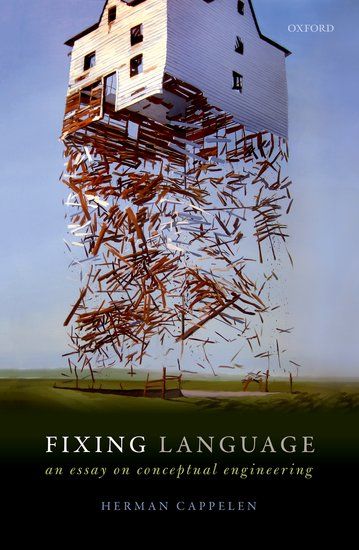
Herman Cappelen investigates ways in which language (and other representational devices) can be defective, and how they can be improved. In all parts of philosophy there are philosophers who criticize the concepts we have and propose ways to improve them. Once one notices this about philosophy, it's easy to see that revisionist projects occur in a range of other intellectual disciplines and in ordinary life. That fact gives rise to a cluster of questions: How does the process of conceptual amelioration work? What are the limits of revision? (How much revision is too much?) How does the process of revision fit into an overall theory of language and communication? Fixing Language aims to answer those questions. In so doing, it aims also to draw attention to a tradition in 20th- and 21st-century philosophy that isn't sufficiently recognized. There's a straight intellectual line from Frege and Carnap to a cluster of contemporary work that isn't typically seen as closely related: much work on gender and race, revisionism about truth, revisionism about moral language, and revisionism in metaphysics and philosophy of mind. These views all have common core commitments: revision is both possible and important. They also face common challenges about the methods, assumptions, and limits of revision.
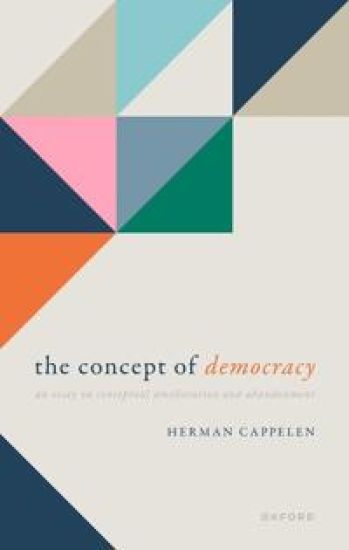
The Concept of Democracy

The Concept of Democracy

Herman Cappelen

Oxford University Press
2023
sidottu
This is an open access title available under the terms of a CC BY-NC-ND 4.0 International licence. It is free to read on Oxford Academic and offered as a free PDF download from OUP and selected open access locations. If we don't know what the words 'democracy' and 'democratic' mean, then we don't know what democracy is. This book defends a radical view: these words mean nothing and should be abandoned. The argument for Abolitionism is simple: those terms are defective and we can easily do better, so let's get rid of them. According to the abolitionist, the switch to alternative devices would be a significant communicative, cognitive, and political advance. The first part of the book presents a general theory of abandonment: the conditions under which language should be abandoned. The rest of the book applies this general theory to the case of 'democracy' and 'democratic'. Cappelen shows that 'democracy' and 'democratic' are semantically, pragmatically, and communicatively defective. Abolitionism is not all gloom and doom. It also contains a message of good cheer: we have easy access to conceptual devices that are more effective than 'democracy'. We can do better. These alternative linguistic devices will enable us to ask better questions, provide genuinely fruitful answers, and have more rational discussions. Moreover, those questions and answers better articulate the communicative and cognitive aims of those who use empty terms like 'democracy' and 'democratic'.
Philosophy without Intuitions

Philosophy without Intuitions

Herman Cappelen

Oxford University Press
2012
sidottu
The claim that contemporary analytic philosophers rely extensively on intuitions as evidence is almost universally accepted in current meta-philosophical debates and it figures prominently in our self-understanding as analytic philosophers. No matter what area you happen to work in and what views you happen to hold in those areas, you are likely to think that philosophizing requires constructing cases and making intuitive judgments about those cases. This assumption also underlines the entire experimental philosophy movement: only if philosophers rely on intuitions as evidence are data about non-philosophers' intuitions of any interest to us. Our alleged reliance on the intuitive makes many philosophers who don't work on meta-philosophy concerned about their own discipline: they are unsure what intuitions are and whether they can carry the evidential weight we allegedly assign to them. The goal of this book is to argue that this concern is unwarranted since the claim is false: it is not true that philosophers rely extensively (or even a little bit) on intuitions as evidence. At worst, analytic philosophers are guilty of engaging in somewhat irresponsible use of 'intuition'-vocabulary. While this irresponsibility has had little effect on first order philosophy, it has fundamentally misled meta-philosophers: it has encouraged meta-philosophical pseudo-problems and misleading pictures of what philosophy is.
Making AI Intelligible

Making AI Intelligible

Herman Cappelen; Josh Dever

Oxford University Press
2021
sidottu
Can humans and artificial intelligences share concepts and communicate? Making AI Intelligible shows that philosophical work on the metaphysics of meaning can help answer these questions. Herman Cappelen and Josh Dever use the externalist tradition in philosophy to create models of how AIs and humans can understand each other. In doing so, they illustrate ways in which that philosophical tradition can be improved. The questions addressed in the book are not only theoretically interesting, but the answers have pressing practical implications. Many important decisions about human life are now influenced by AI. In giving that power to AI, we presuppose that AIs can track features of the world that we care about (for example, creditworthiness, recidivism, cancer, and combatants). If AIs can share our concepts, that will go some way towards justifying this reliance on AI. This ground-breaking study offers insight into how to take some first steps towards achieving Interpretable AI.
Context and Communication

Context and Communication

Herman Cappelen; Josh Dever

Oxford University Press
2016
nidottu
Context and Communication offers an introduction to a central theme in the study of language: the various ways in which what we say (or ask, or think) depends on the context of speech and thought. The period since 1970 has produced a vast literature on this topic, both by philosophers and by linguists. It is one of the areas of philosophy (and linguistics) where most progress has been made over the last few decades. This book explores some of the central data, questions, concepts, and theories of context sensitivity. It is written to be accessible to someone with no prior knowledge of the material or, indeed, any prior knowledge of philosophy, and is ideal for use as part of a philosophy of language course by students of philosophy or linguistics. Context and Communication is the first in the series Contemporary Introductions to Philosophy of Language. Each book in the series provides an introduction to an important topic in philosophy of language. Three more volumes are in preparation, on reference, the metaphysics of meaning, and conceptual analysis and philosophical methodology. These textbooks can be used as a module in a philosophy of language course, for either undergraduate or graduate students.
The Inessential Indexical

The Inessential Indexical

Herman Cappelen; Josh Dever

Oxford University Press
2015
nidottu
When we represent the world in language, in thought, or in perception, we often represent it from a perspective. We say and think that the meeting is happening now, that it is hot here, that I am in danger and not you; that the tree looks larger from my perspective than from yours. The Inessential Indexical is an exploration and defense of the view that perspectivality is a philosophically shallow aspect of the world. Cappelen and Dever oppose one of the most entrenched and dominant trends in contemporary philosophy: that perspective (and the perspective of the first person in particular) is philosophically deep and that a proper understanding of it is important not just in the philosophies of language and mind, but throughout philosophy. They argue that there are no such things as essential indexicality, irreducibly de se attitudes, or self-locating attitudes. Their goal is not to show that we need to rethink these phenomena, to explain them in different ways. Their goal is to show that the entire topic is an illusion--there's nothing there. The Context and Content series is a forum for outstanding original research at the intersection of philosophy, linguistics, and cognitive science. The general editor is François Recanati (Institut Jean-Nicod, Paris).
Context and Communication

Context and Communication

Herman Cappelen; Josh Dever

Oxford University Press
2016
sidottu
Context and Communication offers an introduction to a central theme in the study of language: the various ways in which what we say (or ask, or think) depends on the context of speech and thought. The period since 1970 has produced a vast literature on this topic, both by philosophers and by linguists. It is one of the areas of philosophy (and linguistics) where most progress has been made over the last few decades. This book explores some of the central data, questions, concepts, and theories of context sensitivity. It is written to be accessible to someone with no prior knowledge of the material or, indeed, any prior knowledge of philosophy, and is ideal for use as part of a philosophy of language course by students of philosophy or linguistics. Context and Communication is the first in the series Contemporary Introductions to Philosophy of Language. Each book in the series provides an introduction to an important topic in philosophy of language. The second volume on reference is currently in preparation. These textbooks can be used as a module in a philosophy of language course, for either undergraduate or graduate students.
Puzzles of Reference

Puzzles of Reference

Herman Cappelen; Josh Dever

Oxford University Press
2018
sidottu
It is a fundamental feature of language that words refer to things. Much attention has been devoted to the nature of reference, both in philosophy and in linguistics. Puzzles of Reference is the first book to give a comprehensive accessible survey of the fascinating work on this topic from the 1970s to the present day. Written by two eminent philosophers of language, Puzzles of Reference offers an up-to-date introduction to reference in philosophy and linguistics, summarizing ideas such as Kripke's revolutionary theory and presenting the various challenges in a clear and accessible manner. As the text does not assume prior training in philosophy or linguistics, it is ideal for use as part of a philosophy of language course for philosophy students or for linguistics students. Puzzles of Reference belongs to the series Contemporary Introductions to Philosophy of Language, in which each book provides an introduction to an important area of the philosophy of language, suitable for students at any level.
Puzzles of Reference

Puzzles of Reference

Herman Cappelen; Josh Dever

Oxford University Press
2018
nidottu
It is a fundamental feature of language that words refer to things. Much attention has been devoted to the nature of reference, both in philosophy and in linguistics. Puzzles of Reference is the first book to give a comprehensive accessible survey of the fascinating work on this topic from the 1970s to the present day. Written by two eminent philosophers of language, Puzzles of Reference offers an up-to-date introduction to reference in philosophy and linguistics, summarizing ideas such as Kripke's revolutionary theory and presenting the various challenges in a clear and accessible manner. As the text does not assume prior training in philosophy or linguistics, it is ideal for use as part of a philosophy of language course for philosophy students or for linguistics students. Puzzles of Reference belongs to the series Contemporary Introductions to Philosophy of Language, in which each book provides an introduction to an important area of the philosophy of language, suitable for students at any level.
Bad Language

Bad Language

Herman Cappelen; Josh Dever

Oxford University Press
2019
sidottu
When theorizing about language, we tend to assume that speakers are cooperative, honest, helpful, and so on. This, of course, isn't remotely true of a lot of real-world language use. Bad Language is the first textbook to explore non-idealized language use, the linguistic behaviour of those who exploit language for malign purposes. Two eminent philosophers of language present a lively and accessible introduction to a wide range of topics including lies and bullshit, slurs and insults, coercion and silencing: Cappelen and Dever offer theoretical frameworks for thinking about these all too common linguistic behaviours. As the text does not assume prior training in philosophy or linguistics, it is ideal for use as part of a philosophy of language course for philosophy students or for linguistics students. Bad Language belongs to the series Contemporary Introductions to Philosophy of Language, in which each book introduces an important area of the philosophy of language, suitable for students at any level.
Bad Language

Bad Language

Herman Cappelen; Josh Dever

Oxford University Press
2019
nidottu
When theorizing about language, we tend to assume that speakers are cooperative, honest, helpful, and so on. This, of course, isn't remotely true of a lot of real-world language use. Bad Language is the first textbook to explore non-idealized language use, the linguistic behaviour of those who exploit language for malign purposes. Two eminent philosophers of language present a lively and accessible introduction to a wide range of topics including lies and bullshit, slurs and insults, coercion and silencing: Cappelen and Dever offer theoretical frameworks for thinking about these all too common linguistic behaviours. As the text does not assume prior training in philosophy or linguistics, it is ideal for use as part of a philosophy of language course for philosophy students or for linguistics students. Bad Language belongs to the series Contemporary Introductions to Philosophy of Language, in which each book introduces an important area of the philosophy of language, suitable for students at any level.
Language Turned on Itself

Language Turned on Itself

Herman Cappelen; Ernest Lepore

Oxford University Press
2007
sidottu
Language Turned on Itself examines what happens when language becomes self-reflexive; when language is used to talk about language. Those who think, talk, and write about language are habitual users of various metalinguistic devices, but reliance on these devices begins early: kids are told, 'That's called a "rabbit"'. It's not implausible that a primitive capacity for the meta-linguistic kicks in at the beginning stages of language acquisition. But no matter when or how frequently these devices are invoked, one thing is clear: they present theorists of language with a complex data pattern. Herman Cappelen and Ernest Lepore show that the study of these devices and patterns not only represents an interesting and neglected project in the philosophy of language, but also carries important consequences for other parts of philosophy. Part I is devoted to presenting data about various aspects of our metalinguistic practices. In Part II, the authors examine and reject the four leading metalinguistic theories, and offer a new account of our use of quotation in a variety of different contexts. But the primary goal of this book is not to promote one theory over another. Rather, it is to present a deeply puzzling set of problems and explain their significance
Relativism and Monadic Truth

Relativism and Monadic Truth

Herman Cappelen; John Hawthorne

Oxford University Press
2009
sidottu
Relativism has dominated many intellectual circles, past and present, but the twentieth century saw it banished to the fringes of mainstream analytic philosophy. Of late, however, it is making something of a comeback within that loosely configured tradition, a comeback that attempts to capitalize on some important ideas in foundational semantics. Relativism and Monadic Truth aims not merely to combat analytic relativism but also to combat the foundational ideas in semantics that led to its revival. Doing so requires a proper understanding of the significance of possible worlds semantics, an examination of the relation between truth and the flow of time, an account of putatively relevant data from attitude and speech act reporting, and a careful treatment of various operators. Throughout, Herman Cappelen and John Hawthorne contrast relativism with a view according to which the contents of thought and talk are propositions that instantiate the fundamental monadic properties of truth simpliciter and falsity simpliciter. Such propositions, they argue, are the semantic values of sentences (relative to context), the objects of illocutionary acts, and, unsurprisingly, the objects of propositional attitudes.
Language Turned on Itself

Language Turned on Itself

Herman Cappelen; Ernest Lepore

Oxford University Press
2009
nidottu
Language Turned on Itself examines what happens when language becomes self-reflexive; when language is used to talk about language. Those who think, talk, and write about language are habitual users of various metalinguistic devices, but reliance on these devices begins early: kids are told, 'That's called a "rabbit"'. It's not implausible that a primitive capacity for the meta-linguistic kicks in at the beginning stages of language acquisition. But no matter when or how frequently these devices are invoked, one thing is clear: they present theorists of language with a complex data pattern. Herman Cappelen and Ernest Lepore show that the study of these devices and patterns not only represents an interesting and neglected project in the philosophy of language, but also carries important consequences for other parts of philosophy. Part I is devoted to presenting data about various aspects of our metalinguistic practices. In Part II, the authors examine and reject the four leading metalinguistic theories, and offer a new account of our use of quotation in a variety of different contexts. But the primary goal of this book is not to promote one theory over another. Rather, it is to present a deeply puzzling set of problems and explain their significance
Relativism and Monadic Truth

Relativism and Monadic Truth

Herman Cappelen; John Hawthorne

Oxford University Press
2010
nidottu
Relativism has dominated many intellectual circles, past and present, but the twentieth century saw it banished to the fringes of mainstream analytic philosophy. Of late, however, it is making something of a comeback within that loosely configured tradition, a comeback that attempts to capitalize on some important ideas in foundational semantics. Relativism and Monadic Truth aims not merely to combat analytic relativism but also to combat the foundational ideas in semantics that led to its revival. Doing so requires a proper understanding of the significance of possible worlds semantics, an examination of the relation between truth and the flow of time, an account of putatively relevant data from attitude and speech act reporting, and a careful treatment of various operators. Throughout, Herman Cappelen and John Hawthorne contrast relativism with a view according to which the contents of thought and talk are propositions that instantiate the fundamental monadic properties of truth simpliciter and falsity simpliciter. Such propositions, they argue, are the semantic values of sentences (relative to context), the objects of illocutionary acts, and, unsurprisingly, the objects of propositional attitudes.
Liberating Content

Liberating Content

Herman Cappelen; Ernie Lepore

Oxford University Press
2015
sidottu
This volume brings together two series of papers: one began with Herman Cappelen and Ernie Lepore's 1997 paper 'On an Alleged Connection Between the Theory of Meaning and Indirect Speech'. The other series started with their 1997 paper 'Varieties of Quotation'. The central theme throughout is that only when communicative content is liberated from semantic content will we make progress in understanding language, communication, contexts, and their interconnection. These are the papers in which Cappelen and Lepore introduced speech act pluralism and semantic minimalism, and they provide the foundation for one of the most powerful attacks on contextualism in contemporary philosophy.
The Inessential Indexical

The Inessential Indexical

Herman Cappelen; Josh Dever

Oxford University Press
2013
sidottu
When we represent the world in language, in thought, or in perception, we often represent it from a perspective. We say and think that the meeting is happening now, that it is hot here, that I am in danger and not you; that the tree looks larger from my perspective than from yours. The Inessential Indexical is an exploration and defense of the view that perspectivality is a philosophically shallow aspect of the world. Cappelen and Dever oppose one of the most entrenched and dominant trends in contemporary philosophy: that perspective (and the perspective of the first person in particular) is philosophically deep and that a proper understanding of it is important not just in the philosophies of language and mind, but throughout philosophy. They argue that there are no such things as essential indexicality, irreducibly de se attitudes, or self-locating attitudes. Their goal is not to show that we need to rethink these phenomena, to explain them in different ways. Their goal is to show that the entire topic is an illusion--there's nothing there. The Context and Content series is a forum for outstanding original research at the intersection of philosophy, linguistics, and cognitive science. The general editor is François Recanati (Institut Jean-Nicod, Paris).
Insensitive Semantics

Insensitive Semantics

Herman Cappelen; Ernest Lepore

Wiley-Blackwell (an imprint of John Wiley Sons Ltd)
2004
sidottu
Insensitive Semantics is an overview of and contribution to the debates about how to accommodate context sensitivity within a theory of human communication, investigating the effects of context on communicative interaction and, as a corollary, what a context of utterance is and what it is to be in one. Provides detailed and wide-ranging overviews of the central positions and arguments surrounding contextualismAddresses broad and varied aspects of the distinction between the semantic and non-semantic content of languageDefends a distinctive and explanatorily powerful combination of semantic minimalism and speech act pluralismConfronts core problems which not only run to the heart of philosophy of language and linguistics, but which arise in epistemology, metaphysics, and moral philosophy as well
Insensitive Semantics

Insensitive Semantics

Herman Cappelen; Ernest Lepore

Wiley-Blackwell (an imprint of John Wiley Sons Ltd)
2004
nidottu
Insensitive Semantics is an overview of and contribution to the debates about how to accommodate context sensitivity within a theory of human communication, investigating the effects of context on communicative interaction and, as a corollary, what a context of utterance is and what it is to be in one. Provides detailed and wide-ranging overviews of the central positions and arguments surrounding contextualismAddresses broad and varied aspects of the distinction between the semantic and non-semantic content of languageDefends a distinctive and explanatorily powerful combination of semantic minimalism and speech act pluralismConfronts core problems which not only run to the heart of philosophy of language and linguistics, but which arise in epistemology, metaphysics, and moral philosophy as well