Kirjojen hintavertailu. Mukana 12 397 010 kirjaa ja 12 kauppaa.

Kirjahaku

Etsi kirjoja tekijän nimen, kirjan nimen tai ISBN:n perusteella.

1000 tulosta hakusanalla Herman Narula

Virtual Society

Virtual Society

Herman Narula

PENGUIN BOOKS LTD
2022
pokkari
Is the metaverse a brave new world? An immersive digital playground? The next generation of online gaming? Or just the latest manifestation of our human tendency to create other realities?Herman Narula argues that it is all of these things. His vision of the metaverse, deeply rooted in history and psychology, looks to the Egyptians, whose conception of death inspired them to build the pyramids, to modern-day sports fans whose fantasy leagues are as competitive as the real thing, and finds that humanity has always sought to supplement our day-to-day lives with a rich diversity of alternative immersive experiences. Rigorously researched, passionately argued, and written by a tech founder and creator of digital worlds, Virtual Society reveals why the metaverse offers a new universe of ideas that offers users unprecedented opportunities to create, explore and find meaning. It's an essential guide for anyone who wants to get beyond superficial headlines and understand the true shape of our virtual future.
Virtual Society

Virtual Society

Herman Narula

PENGUIN BOOKS LTD
2023
pokkari
A definitive guide to the metaverse: why it's important, why it matters to society, and how to create a metaverse that works for all of us---------------'Brimming with big and convincing arguments about where human life is heading' Arianna Huffington---------------The metaverse is a vision of how the next generation of the internet will operate. Many people believe it is the future. But what will that future look like? An immersive digital playground? The next generation of online gaming? Or just the latest manifestation of our human tendency to create other realities?Herman Narula argues that it is all of these things and more. His vision of the metaverse, deeply rooted in history and psychology, looks to the Egyptians, whose concept of death inspired them to build the pyramids, to modern-day sports fans whose fantasy leagues are as competitive as the real thing, and finds that humanity has always sought ways to supplement our day-to-day lives with a rich diversity of alterative immersive experiences.Virtual Society reveals why the metaverse offers a new universe of ideas that gives everyone the chance to create, explore and find meaning. It's an essential guide for anyone who wants to understand the true shape of our virtual future.---------------Reader reviews'This book unlocked my understanding of the Metaverse in a completely new refreshing way. This is a must read book which needs to be introduced in every school curriculum globally for our upcoming metaversial society and "fulfilment economy".' *****'I've been trying to follow what tech professionals and commentators mean when talking about the metaverse over the last two years. Herman's description of what the metaverse may become, however, is by the far the most compelling. What makes it compelling is the fact that it is routed in human history. The metaverse is not a new concept; and you don't need a degree from Cambridge to understand it.' *****
Virtual Society

Virtual Society

Herman Narula

Random House US
muu
The concept of "the metaverse" has exploded in the public consciousness, but its contours remain elusive. Is it merely an immersive virtual reality playground, one that Facebook and other platforms will angle to control? Is it simply the next generation of massive multiplayer online games? Or is it something more revolutionary?As Herman Narula shows, the metaverse is the latest manifestation of an ancient human tendency: the act of worldbuilding. From the Egyptians, whose conception of death inspired them to build the pyramids, to modern-day sports fans, whose passion for a game inspires extreme behavior, humans have long sought to supplement their day-to-day lives with a rich diversity of alternative experiences.Rooting his vision in history and psychology, Narula argues that humans' intrinsic need for autonomy, accomplishment, and connection can best be met in virtual "worlds of ideas," where users have the chance to create and exchange meaning and value. The metaverse is both the growing set of fulfilling digital experiences-ranging from advanced gaming to concerts and other entertainment events and even to virtual employment-and the empowering framework that allows these spaces to become "networks of useful meaning."Bloomberg Intelligence recently predicted that the metaverse will become an $800 billon industry by 2024. But its implications, argues Narula, are far more awe-inspiring than as a spigot of cash. The arrival of the metaverse marks the beginning of a new age of exploration-not outward, but inward-with the potential to reshape society and open the door to a new understanding of the human species and its capabilities.Rigorously researched and passionately argued, Virtual Society will be a provocative and essential guide for anyone who wants to go beyond superficial headlines to understand the true contours and potential of our virtual future.
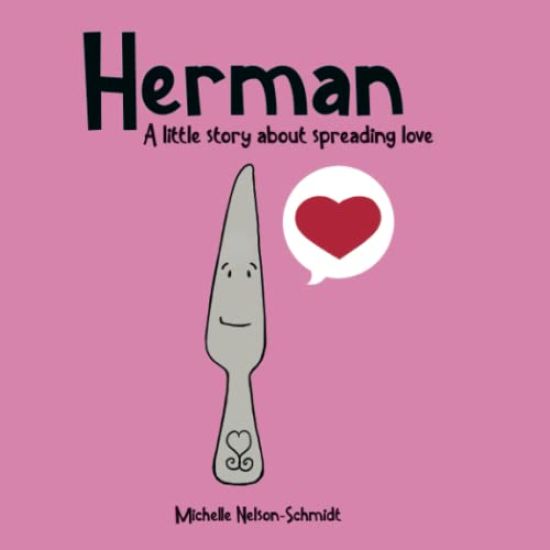
Herman

Herman

Michelle Nelson-Schmidt

Mns Creative LLC
2022
sidottu
When Herman spread things, he noticed that it made people very happy. They smiled and said very happy words. That, Herman decided, was just like spreading love. Spreading love was Herman's purpose. He was very proud of his purpose. But one day, Stanley, a brand new as-seen-on-tv blender shows up and disrupts Herman's whole world. Herman hardly gets used anymore. He loses his whole purpose in life. A book about learning that we have many purposes in this life. And maybe, our most important purpose of all, is spreading love.
Herman

Herman

Lars Saabye Christensen

Cappelen Damm
2008
mp3 cd-levyllä
På skolen er Ruby med det store håret, som noen påstår at det er fem fuglereder i. Hjemme er moren til Herman, som arbeider i Jacobsens kolonial, og som kan le slik at Nesoddbåten går på grunn og klokka i Rådhustårnet stanser. Dessuten er hun ganske gord til å kaste langt med matpakke. Faren til Herman kjører heisekran, og derfra kan han se til Amerika og enda lengre.Bestefar ligger i en himmelseng i fjerde etasje og kan ikke gå og er frisk som en fisk. Det er Herman også helt til den dagen frisøren ber om å få snakke med moren hans.
Herman

Herman

Lars Saabye Christensen

Cappelen Damm
2017
pokkari
På skolen er Ruby med det store røde håret, som noen påstår at det er fem fuglereder i. Hjemme er moren til Herman som arbeider i Jacobsens kolonial, og som kan le slik at Nesoddbåten går på grunn og klokka i Rådhustårnet stanser. Dessuten er hun ganske god til å kaste langt med matpakke. Faren til Herman kjører heisekran, og derfra kan han se til Amerika og enda lenger. Bestefar ligger i en himmelseng i fjerde etasje og kan ikke gå og er frisk som en fisk. Det er Herman også, helt til den dagen frisøren ber om å få snakke med moren hans.
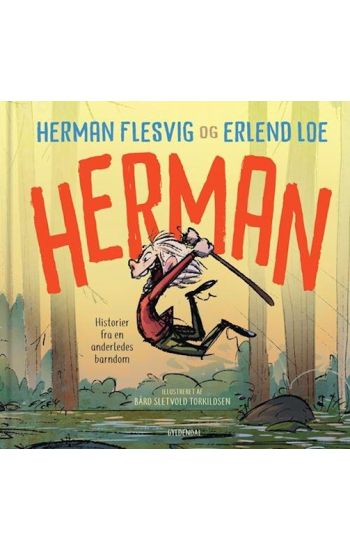
Herman

Herman

Herman Flesvig; Erlend Loe

Gyldendal Trade
2024
sidottu
Sprudlende illustreret og fortalt billedbog om drengen Herman, der ikke er helt som de andre børn. Tekst og billeder giver en fin og indlevet indsigt i, hvad der foregår inde i et hoved på et barn ”der ikke kan sidde stille”. Vi følger Herman igennem hans opvækst og forskellige situationer og ser, hvordan han oplever verden. Bogen udfylder et hul, da der ikke findes så meget skønlitteratur for børn om at leve med en diagnose. Den anmelderroste billedbog er blevet til i et samarbejde mellem forfatter Erlend Loe og komiker og skuespiller Herman Flesvig og bygger delvist på sidstnævntes egne oplevelser. Illustreret i farver af Bård Sletvold Torkildsen.
Herman Melville A Very Short Introduction
Best known as the author of Moby-Dick (1851), Herman Melville is one of America's greatest writers. His achievements range from popular novels and experimental fiction to powerful poetry. His works are tragic and funny, impassioned and ironic, obsessed with philosophical seeking and attuned to the details of everyday life. Melville engaged the pressing issues of his day, from economic inequality and the American slavery crisis to the rise of science and the fragility of democracy. He dwelled on timeless questions about loneliness and intimacy, moral and political responsibility, the limits of our knowledge and agency, and the place of human beings within nature and the cosmos. Melville's life was dramatic, and his career improbable. He was born into privilege, fell into poverty as an adolescent, hunted whales and lived with the Tai Pi people of Polynesia, served in the United States Navy, skyrocketed to fame as a novelist, ruined his career by challenging religious, political, sexual, and artistic conventions, reinvented himself as a poet, and died in relative obscurity just as readers began to appreciate his genius. The scope and diversity of Melville's literature reflects an artist of restless ambition. Herman Melville: A Very Short Introduction helps readers explore the richness of his work.
Herman the Archdeacon and Goscelin of Saint-Bertin
St Edmund was medieval England's patron saint, and at his abbey, two major Latin miracle collections were compiled: one in the 1090s by Herman the Archdeacon, an historian trained in the schools of Lorraine; the other c. 1100 by an anonymous hagiographer who rewrote and expanded Herman's work. Herman's Miracles, an important text for the history of the realm and East Anglia in particular, is edited and translated here in its full fifty chapters for the first time, along with a shorter version intended for wider circulation. The second miracle collection, never before in print, is also presented for the first time and attributed to the Flemish hagiographer Goscelin of Saint-Bertin. Together the collections illustrate a rapid turnover of hagiography, connected to a change of leadership at the abbey of Bury St Edmunds. These works illustrate the evolution of historical writing, applied to the affairs of an exceptional international cult. The introduction revises the history of Bury St Edmunds from its foundations to c. 1100, rejecting old assumptions, adding to our knowledge of Herman's background, and proposing a context and attribution for the second collection which will alter the debate on Goscelin's career. A poem attacking Bishop Herbert Losinga (1091-1119) for simony is also included, edited from previously undiscovered textual witnesses, and linked to Herman and the factional divisions behind the two miracle collections. This volume makes the subject accessible to the full range of scholars interested in Edmund and Anglo-Norman England by providing editions and translations for the first time. Its arguments clear up much of the confusion surrounding the history of the cult and the abbey. It will remain invaluable to literary scholars and historians alike.
Herman Melville: Moby-Dick

Herman Melville: Moby-Dick

Columbia University Press
1999
pokkari
The huge range of critical and academic debate about this monster of a novel confirms "Moby-Dick"'s status as a vital and exhilarating exploration of the role of American ideology in defining modern consciousness. This "Columbia Critical Guide" starts with extracts from Melville's own letters and essays and from early reviews of "Moby-Dick" that set the terms for later critical evaluations. Subsequent chapters deal with the "Melville Revival" of the 1920s and the novel's central place in the establishment, growth, and reassessment of American Studies in the 1940s and 1950s. The final chapters examine postmodern New Americanist readings of the text, and how these provide new models for thinking about American culture.
Herman van Veen

Herman van Veen

Alexander P M Van Den Bosch

Lulu.com
2017
pokkari
Deze liedjes: Ik heb daar geen breiwerk aan, Laatst zag ik haar weer, Maar ik ga gewoon mijn goddelijke gang, Loer, Doe mij maar een stroganoff, Liederen voor de zieren, Zo ver het zicht toestaat, Bijna de laatste kans gehad, Ook ik had dat kunnen zijn, Doe de zaken dan ook nu, Toeren, Sterrestof, Ik ben mijn eigen beste vrind, Zo veel ik gaan kan, Maart, Loslaten met struweel
Herman Wells Stories

Herman Wells Stories

Indiana University Press
1992
pokkari
Everyone who has been associated with Indiana University and Herman Wells has a favorite story or two about this great man. Some of his friends thought collecting a few of these stories in a little volume and presenting them to him, and to his many friends and associates throughout the University community, on his 90th birthday would be an excellent way to celebrate the occasion. There are a lot of good ones here, some funny, some serious, all very human—and all of them revealing different facets of a warm human being and a brilliant college president. The Enema Bandit The late Paul Klinge, long-time associate of Herman B Wells, told the story of a meeting involving campus security officials and other members of the administration back in the late '60s where the activities of one particular character were discussed. The Bloomington campus had been alerted by the Urbana-Champaign authorities—who had been notified by the police at another midwestern university farther west—to be on the lookout for a fellow who was making his way east from the plains states. His modus operandi was to force entry into a co-ed's room and, instead of violently assaulting her, he would (simply) give her an enema—and leave. Much discussion resulted pertaining to some strategies the campus could use to prevent an incident here. HBW sat silent, until—with that customary twinkle in his eye—he slowly said, " . . . I wish he would have caught me last Thursday!" —Richard E. Bishop The Wells Touch Late one hot summer afternoon I found myself crammed into a window seat at the back of a 727 jetliner at New York's LaGuardia Airport awaiting departure to Louisville. The last passenger in was Dr. Wells. He came down the long aisle and plopped down next to me. He said not a word and promptly went to sleep. An hour or so later he woke up with a snort, turned to me and said: "George, the older you get the more you look like your father." This happened at least 15 years after my graduation from I.U. and I had not seen Dr. Wells in the interim. He had indeed been a friend of my father's, but hadn't seen him for many years. The nap? He explained that a heavy lunch and spirits at his favorite oyster bar in New York had temporarily dulled his alertness. —George N. Gill