Kirjojen hintavertailu. Mukana 11 239 951 kirjaa ja 12 kauppaa.

Kirjahaku

Etsi kirjoja tekijän nimen, kirjan nimen tai ISBN:n perusteella.

1000 tulosta hakusanalla Hermann Bendix

Vier Miniaturen op. 54

Vier Miniaturen op. 54

Hermann Bendix

Books on Demand
2021
pokkari
Die Miniaturen op. 54 vereinen vier kurze Klavierst cke unterschiedlichen Charakters, die sowohl als Lehrst cke wie auch zur Spielliteratur taugen. Sie sollten den Anspr chen einer breiten Mehrheit der musizierenden Bev lkerungsschichten ihrer Entstehungszeit gerecht werden, wobei der Komponist diesem Kalk l aber trotzdem nicht die Eigenheiten seines Personalstils opferte. Seine Miniaturen op. 54 wurden im Dezember 1898, im Februar und im April 1899 in Musikbeilagen einer p dagogischen Tageszeitung ver ffentlicht, die seinerzeit weite Verbreitung fanden. Die Titel der vier Klavierst cke - "Einsamer Gang", "Walzer-Capriccietto", "Meeresabend" und "Mazurka" - klingen in der Musik an: es sind echt empfundene Charakterst cke, die auch heutige Musizierende ansprechen und eine gute Bereicherung des Repertoires darstellen.
Herman Bendixen

Herman Bendixen

Dora Bendixen

Messel Forlag
2019
sidottu
Herman Bendixen var født i Reine i Lofoten i 1919. Han reiste tidlig til Oslo og utdannet seg ved Kunst- og håndverkskolen og Statens Kunstakademi. Men landskapet i Lofoten satte tydelige spor i hans maleri. Han var aktiv i Kunstnerforbundet og Bildende Kunstneres Styre, hadde store dekorasjonsarbeider og var aktiv som teatermaler og scenograf ved alle de store teatrene og Fjernsynsteateret. Han drev selv malerskole sammen med andre kunstnere i Asker, samtidig som han hadde en betydelig produksjon av egne arbeider. I Asker dannet det seg et aktivt kunstnermiljø rundt ham. Han var en "malernes maler" med en stor vennekrets.
Hermann Lotze's Philosophy of Mind

Hermann Lotze's Philosophy of Mind

Mark Textor

Oxford University Press
2026
sidottu
This book introduces and assesses the main contributions of Hermann Lotze (1817-1881) to philosophy of psychology and philosophy of mind. Lotze was the most influential thinker of his time; he revitalised German philosophy after Hegel's death, inspiring American pragmatists as well as British idealists. He brought medical research, metaphysics, and psychology together in his work to argue for an approach to psychology in which the soul is central. Lotze defended the soul, the irreducibility of the mental, and the interaction between soul and body; in doing so, he proposed views of feeling, attention, self-consciousness, and the unity of consciousness. While Lotze's views were widely discussed at the end of the nineteenth and the beginning of the twentieth century, they are now unjustly neglected. In this volume, Mark Textor provides a rational reconstruction of Lotze's philosophy of psychology. He examines in detail Lotze's affective theory of self-consciousness and his account of comparing, the activity in which we attain awareness of relations. The latter fuels an original argument for the existence of the soul and its importance for psychology. This argument is also seen as a refutation of panpsychism, the view that fundamental reality is made of 'mind-stuff'. The book pays close attention to the historical background of Lotze's thought, as well as discussions of his work in American and British philosophy, and thereby sheds light on how his thought shaped American Pragmatism and British Idealism.
Hermann Cohen

Hermann Cohen

Frederick C. Beiser

Oxford University Press
2018
sidottu
This book is the first complete intellectual biography of Hermann Cohen (1842-1918) and the only work to cover all his major philosophical and Jewish writings. Frederick C. Beiser pays special attention to all phases of Cohen's intellectual development, its breaks and its continuities, throughout seven decades. The guiding goal behind Cohen's intellectual career, he argues, was the development of a radical rationalism, one committed to defending the rights of unending enquiry and unlimited criticism. Cohen's philosophy was therefore an attempt to defend and revive the Enlightenment belief in the authority of reason; his critical idealism an attempt to justify this belief and to establish a purely rational worldview. According to this interpretation, Cohen's thought is resolutely opposed to any form of irrationalism or mysticism because these would impose arbitrary and artificial limits on criticism and enquiry. It is therefore critical of those interpretations which see Cohen's philosophy as a species of proto-existentialism (Rosenzweig) or Jewish mysticism (Adelmann and Köhnke). Hermann Cohen: An Intellectual Biography attempts to unify the two sides of Cohen's thought, his philosophy and his Judaism. Maintaining that Cohen's Judaism was not a limit to his radical rationalism but a consistent development of it, Beiser contends that his religion was one of reason. He concludes that most critical interpretations have failed to appreciate the philosophical depth and sophistication of his Judaism, a religion which committed the believer to the unending search for truth and the striving to achieve the cosmopolitan ideals of reason.
Hermann Cohen and the Crisis of Liberalism

Hermann Cohen and the Crisis of Liberalism

Paul Egan Nahme

Indiana University Press
2019
sidottu
Hermann Cohen (1842–1918) is often held to be one of the most important Jewish philosophers of the nineteenth century. Paul E. Nahme, in this new consideration of Cohen, liberalism, and religion, emphasizes the idea of enchantment, or the faith in and commitment to ideas, reason, and critique—the animating spirits that move society forward. Nahme views Cohen through the lenses of the crises of Imperial Germany—the rise of antisemitism, nationalism, and secularization—to come to a greater understanding of liberalism, its Protestant and Jewish roots, and the spirits of modernity and tradition that form its foundation. Nahme's philosophical and historical retelling of the story of Cohen and his spiritual investment in liberal theology present a strong argument for religious pluralism and public reason in a world rife with populism, identity politics, and conspiracy theories.
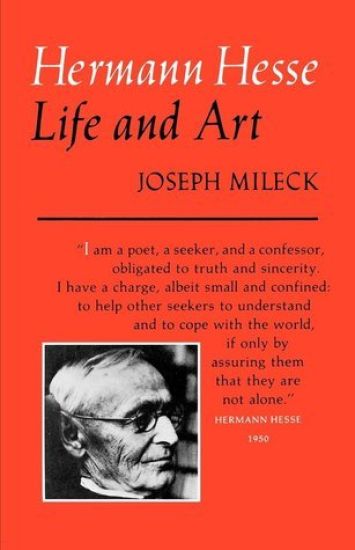
Hermann Hesse

Hermann Hesse

Joseph Mileck

University of California Press
1981
pokkari
"A critical biography far surpassing the previous ones." (Times Higher Education Supplement). "There are to be sure many writers whose biographies are more interesting than their fiction but Hesse is not one of these. He led a long and sometimes eventful life with marital tensions, travel controversy, crises, even some thoughts of suicide and a period of time as a student in a home for retarded and unmanageable. In addition, there was his search which led him through the culture and arts of West and East, his views of politics and society, of psychology and philosophy. The difference between Hesse and other writers is that virtually every shred and patch of his life was brought into his writing, his fiction particularly. 'He had to write about himself and there is little of what he wrote that is not confessional in form and therapeutic in function.' Autobiography is the very matter of his work. Mileck's contribution is to extend and fill out the evidence of his life, his psychoanalysis, his drive toward self-realization which was the very engine of his being, to show the raw material and thus to invite readers to see how it was transmuted, transfigured, fantasized, poeticized, symbolized." (Los Angeles Times). "Hesse was a prolific author for some 60 years, and his mind drew everything it contemplated into his private wars between flesh and spirit. objectivity and subjectivity, the longings for society and isolation. No one is better qualified to disentangle this abundance than Mileck, compiler of the huge two-volume Hesse bibliography. For completeness, then, no biography in English compares." (Kirkus Reviews). "Mileck provides his own translations of the German quotations from Hesse's works, and the eight interpretive chapters are thoroughly indexed, making the work readily accessible to researchers and students concerned with specific Hesse questions and themes. This very readable book also contains a number of exceptional photographs, which, together with Mileck's fervor and understanding of the author, help create a living image of Hesse the man and the artist." (Choice). "Professor Mileck ...brings to his task an acquaintanceship with Hesse's published and unpublished writings ...which borders on omniscience. This is a literary biography which concentrates on the works and looks at the life of its subject briefly and always in relation to its involvement with the works ...[This] is true scholarship, which does not make the book less readable and accessible to the general public...a solid and valuable book which should make it easier ...to bring [Hesse] back into the orbit of serious appreciation in the English-speaking world." (Books and Bookmen).
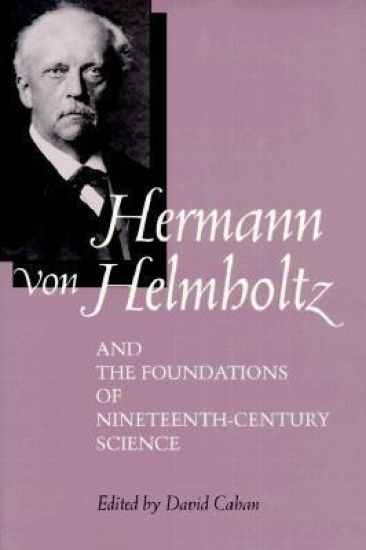
Hermann von Helmholtz and the Foundations of Nineteenth-Century Science
Hermann von Helmholtz (1821-1894) was a polymath of dazzling intellectual range and energy. Renowned for his co-discovery of the second law of thermodynamics and his invention of the ophthalmoscope, Helmholtz also made many other contributions to physiology, physical theory, philosophy of science and mathematics, and aesthetic thought. During the late nineteenth century, Helmholtz was revered as a scientist-sage - much like Albert Einstein in this century. David Cahan has assembled an outstanding group of European and North American historians of science and philosophy for this intellectual biography of Helmholtz, the first ever to critically assess both his published and unpublished writings. It represents a significant contribution not only to Helmholtz scholarship but also to the history of nineteenth-century science and philosophy in general.