
Kirjahaku
Etsi kirjoja tekijän nimen, kirjan nimen tai ISBN:n perusteella.
921 tulosta hakusanalla Howarth Troy
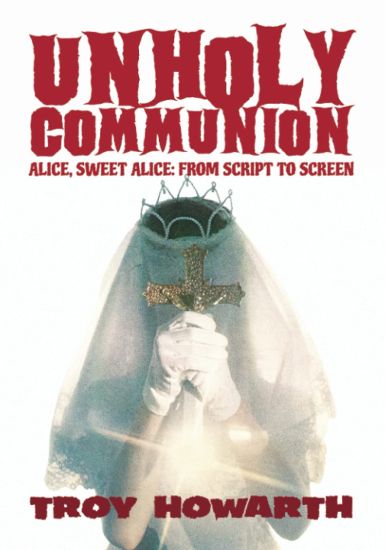
Paterson, New Jersey-March 1961. A joyous day of celebration turns into a waking nightmare when a young girl is brutally murdered. With the police making slow progress, the child's grief-stricken parents decide to launch their own investigation and uncover some ugly secrets about their family, friends, and neighbors. Among the many possible suspects, the most likely culprit proves to be the girl's own sister... but could an angelic-looking child be capable of such a ghastly crime?Originally titled Communion but also known by such monikers as Alice, Sweet Alice and Holy Terror, Alfred Sole's Catholic-themed horror-thriller has gone on to attract a well-deserved cult following. Though mostly ignored on its original, checkered theatrical release, the film is now revered among devotees of the offbeat. Architect-turned-filmmaker Alfred Sole brought a distinctive, artistic eye to bear on what could have been yet another routine potboiler. Working well outside the confines of Hollywood, he used his connections to secure atmospheric locations, while scouring the New York theater scene for the right actors to bring his quirky characters to life. The road to realizing his vision was not without complications, however. Here you will learn about his ill-fated foray into the then-profitable "porno chic" market by making his own "blue movie" in his home town; the fallout was immense and he found himself facing the possibility of jail time as well as absolute professional disgrace. Once the dust settled, he decided to try for something equally commercial but far more palatable for mainstream consumption. At a time when the likes of Tobe Hooper, George A. Romero, John Carpenter, Wes Craven, and David Cronenberg were emerging as the great new auteurs of North American horror, Alfred Sole seemed poised to join their ranks; sadly, some bad breaks ensured that lightning would not strike twice. No matter what disappointments came in its wake, Sole's "respectable" mainstream debut scaled artistic heights that leave no doubts as to his singular talents. Troy Howarth, the award-nominated author of such books as The Haunted World of Mario Bava and Assault on the System: The Nonconformist Cinema of John Carpenter, explores the genesis, production, and reception of one of the key horror films of the 1970s. In addition to a brand new, in-depth career-encompassing interview with co-writer/director Alfred Sole, Unholy Communion: Alice, Sweet Alice from Script to Screen also reproduces the complete original shooting screenplay. There's also ample analysis of the state of the genre during the counter-culture boom of the late 1960s and '70s and of the film itself, giving readers insight into what makes this such a special, stand-out piece of independent filmmaking.
Paterson, New Jersey-March 1961. A joyous day of celebration turns into a waking nightmare when a young girl is brutally murdered. With the police making slow progress, the child's grief-stricken parents decide to launch their own investigation and uncover some ugly secrets about their family, friends, and neighbors. Among the many possible suspects, the most likely culprit proves to be the girl's own sister... but could an angelic-looking child be capable of such a ghastly crime?Originally titled Communion but also known by such monikers as Alice, Sweet Alice and Holy Terror, Alfred Sole's Catholic-themed horror-thriller has gone on to attract a well-deserved cult following. Though mostly ignored on its original, checkered theatrical release, the film is now revered among devotees of the offbeat. Architect-turned-filmmaker Alfred Sole brought a distinctive, artistic eye to bear on what could have been yet another routine potboiler. Working well outside the confines of Hollywood, he used his connections to secure atmospheric locations, while scouring the New York theater scene for the right actors to bring his quirky characters to life. The road to realizing his vision was not without complications, however. Here you will learn about his ill-fated foray into the then-profitable "porno chic" market by making his own "blue movie" in his home town; the fallout was immense and he found himself facing the possibility of jail time as well as absolute professional disgrace. Once the dust settled, he decided to try for something equally commercial but far more palatable for mainstream consumption. At a time when the likes of Tobe Hooper, George A. Romero, John Carpenter, Wes Craven, and David Cronenberg were emerging as the great new auteurs of North American horror, Alfred Sole seemed poised to join their ranks; sadly, some bad breaks ensured that lightning would not strike twice. No matter what disappointments came in its wake, Sole's "respectable" mainstream debut scaled artistic heights that leave no doubts as to his singular talents. Troy Howarth, the award-nominated author of such books as The Haunted World of Mario Bava and Assault on the System: The Nonconformist Cinema of John Carpenter, explores the genesis, production, and reception of one of the key horror films of the 1970s. In addition to a brand new, in-depth career-encompassing interview with co-writer/director Alfred Sole, Unholy Communion: Alice, Sweet Alice from Script to Screen also reproduces the complete original shooting screenplay. There's also ample analysis of the state of the genre during the counter-culture boom of the late 1960s and '70s and of the film itself, giving readers insight into what makes this such a special, stand-out piece of independent filmmaking.
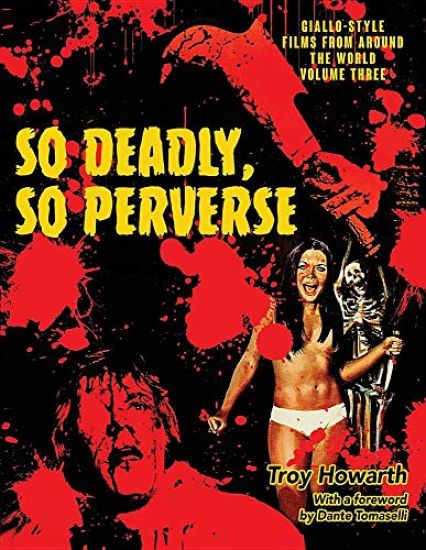
So Deadly, So Perverse: Giallo-Style Films From Around the World, Vol. 3
Troy Howarth
Midnight Marquee Press, Inc.
2019
nidottu
The giallo--a specifically Italian brand of lurid thriller--emerged in the 1960s and became a commercial force to be reckoned with throughout the 1970s. While not all of these films achieved the success and notoriety as the most popular efforts by the likes of Mario Bava, Dario Argento or Lucio Fulci, they nevertheless proved to be immensely popular--with latter-day entries emerging well into the 21st century. They also proved to be influential on films from across the globe; for instance, they helped to set the stage for the slasher movie boom of the late 70s and early 80s, and they would go on to inspire contemporary filmmakers looking to pay homage to their baroque excesses. So Deadly, So Perverse: Volume 3 shines a light on some of these films, some of which are well-known for capturing the off-kilter vibe of these beloved cult classics, and some of which display an influence in more surprising ways. Covering titles produced everywhere from America and Great Britain to Turkey and Japan, this final volume in the So Deadly, So Perverse trilogy offers a final summation of the genre and its lasting cult popularity and appeal. In addition to in-depth coverage of an eclectic range of titles, there are also a number of deliciously sensational and exploitative images, many in full color.The giallo--a specifically Italian brand of lurid thriller--emerged in the 1960s and became a commercial force to be reckoned with throughout the 1970s. While not all of these films achieved the success and notoriety as the most popular efforts by the likes of Mario Bava, Dario Argento or Lucio Fulci, they nevertheless proved to be immensely popular--with latter-day entries emerging well into the 21st century. They also proved to be influential on films from across the globe; for instance, they helped to set the stage for the slasher movie boom of the late 70s and early 80s, and they would go on to inspire contemporary filmmakers looking to pay homage to their baroque excesses. So Deadly, So Perverse: Volume 3 shines a light on some of these films, some of which are well-known for capturing the off-kilter vibe of these beloved cult classics, and some of which display an influence in more surprising ways. Covering titles produced everywhere from America and Great Britain to Turkey and Japan, this final volume in the So Deadly, So Perverse trilogy offers a final summation of the genre and its lasting cult popularity and appeal. In addition to in-depth coverage of an eclectic range of titles, there are also a number of deliciously sensational and exploitative images, many in full color.


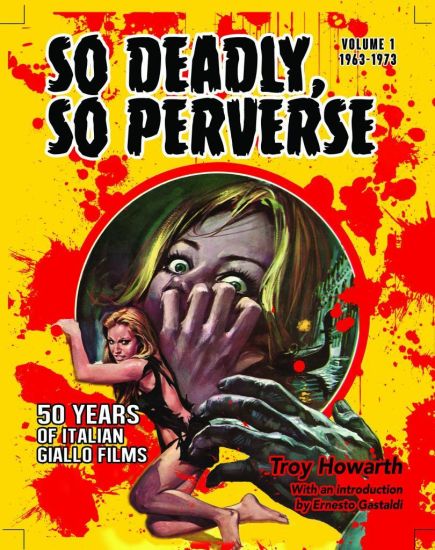
So Deadly, So Perverse 50 Years of Italian Giallo Films
Troy Howarth
Midnight Marquee Press, Inc.
2015
pokkari

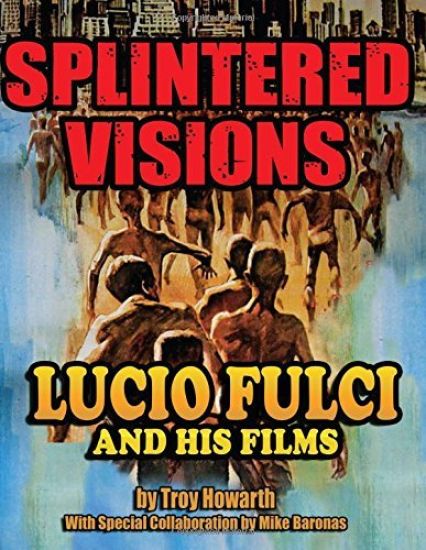
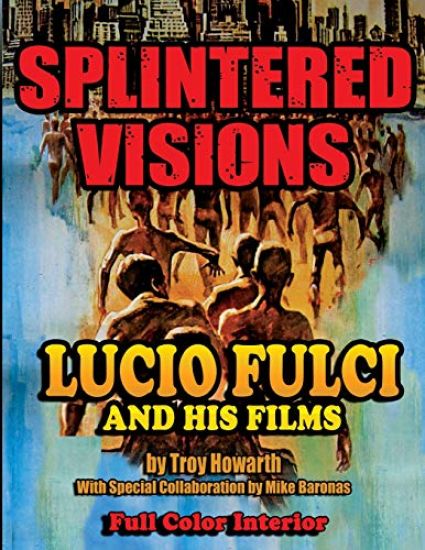
For many horror film fans, the name Lucio Fulci conjures images of gore and depravity. Derided by critics as a hack and an imitator and lionized by others as the "Godfather of Gore," Fulci remains a polarizing and controversial figure. However, many fans are unaware of the scope and breadth of his filmography. From his early days writing material for popular comics like Tot and Franco and Ciccio to directing films in such genres as the musical and the Spaghetti Western, Lucio Fulci was a filmmaker of great diversity. When he attained international notoriety with the release of his gory epic ZOMBIE, Fulci already had years of experience in the film industry; that film's success established him as one of Italy's premier masters of the macabre and he would continue to shock and delight fans until shrinking budgets and failing health began to compromise some of his later work. When he died in 1996, he was on the cusp of a major comeback, but in the years following his death the cult surrounding his legacy has continued to grow. Unfortunately, most studies of Fulci and his work have elected to focus only on a small part of his career. SPLINTERED VISIONS changes all of that by providing an in-depth exploration of Fulci's filmography, beginning with his work as a screenwriter and extending through all of his films as a director. The popular horror films and thrillers are given ample coverage, but the lesser-known works are finally put into their proper context. Author Howarth provides a detailed portrait of a complex man using newly conducted interviews with actors such as Richard Johnson and Franco Nero, which allows the reader a sense of who the director was and how he worked. The end result is the most comprehensive overview of Fulci, the man and Fulci, the filmmaker that has been published in English--making SPLINTERED VISIONS a cause for celebration among serious Fulci fans. The book is also lavishly illustrated with a number of rare stills, posters and advertising materials.
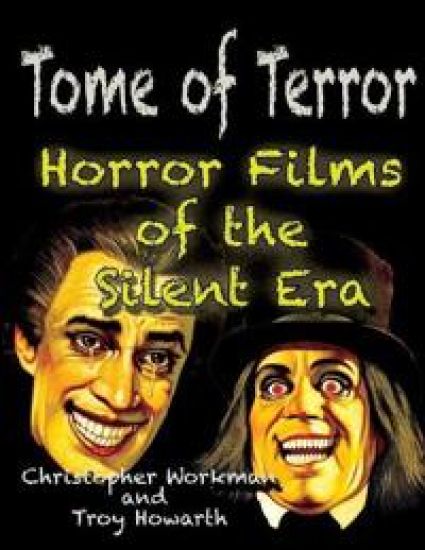
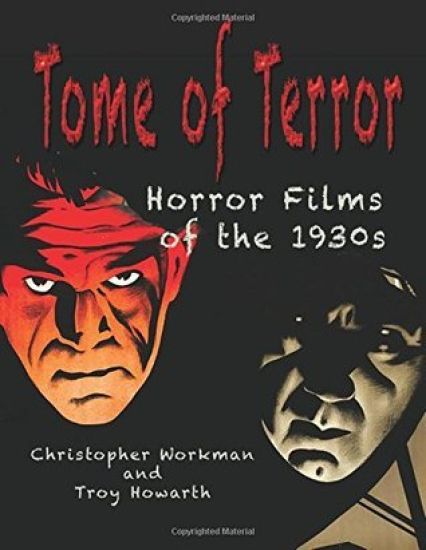
With Universal's release of Dracula on Valentine's Day 1931, the horror film as we know it was born. The following decade saw first a horror boom and then a horror ban. And while fans of classic horror films are well-versed on the productions of major Hollywood studios, they may not be familiar with the numerous horror films produced elsewhere in the world, from North America to Asia. Ghostly cats avenging their mistresses' murders, clay monstrosities brought to life to defend the oppressed, old dark houses stalked by unseen killers: These are just a few of the terrors that will greet you as you enter TOME OF TERROR: HORROR FILMS OF THE 1930s. TOME OF TERROR is a series of books detailing the history of the horror genre, from the mid-1890s to the modern day. Never before has such a series been attempted ... or been so comprehensive. The first entry, HORROR FILMS OF THE 1930s, covers more than 350 films, beginning with Alraune in 1930 and concluding with Die unheimlichen W nsche in 1939. In addition to well-known horror classics from the United States and Great Britain, authors Christopher Workman and Troy Howarth also review films from Germany, France, Japan, and Mexico, among other nations. The series is lavishly illustrated with original stills, lobby cards and poster art.
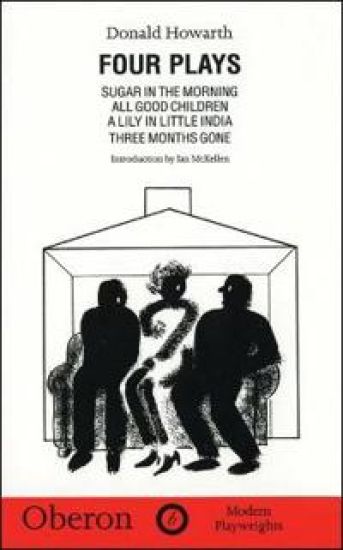
Includes the plays Sugar in the Morning, A Lily in Little India, All Good Children, Three Months Gone With an introduction by Sir Ian McKellen. Includes the first publication of Sugar in the Morning, performed in 1959 at the Royal Court Theatre. The others in this collection form a trilogy that rail against the conservative austerity and claustrophobia of the post-war years. They recommend self-mockery and celebrate the liberating influence of flower power, the permissive society and the rise of the more 'feminine' man. The trilogy enjoyed high-profile performances in the West End from Sir Ian McKellen, Jill Bennett and the late Diana Dors.

Tod Howarth
VDM Publishing House
2010
nidottu
Observera att förlaget som ger ut denna produkt baserar innehållet i sina produkter på fria källor som Wikipedia. Boken är med stor sannolikhet endast ett utdrag ur dessa informationskällor, alltså inte en vanlig bok i den bemärkelsen.
Alan Howarth, Baron Howarth of Newport
OmniScriptum
2026
pokkari
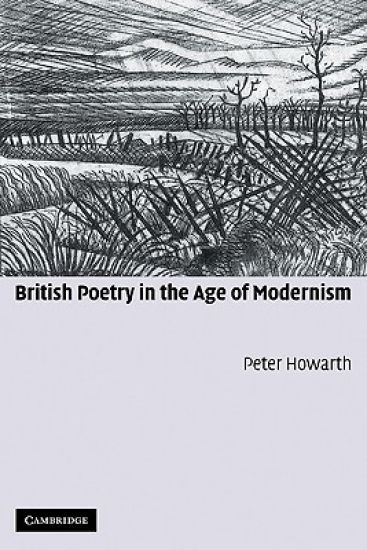
If Modernist poetry dominated the early twentieth century, what did it mean for British poets like Thomas Hardy, Edward Thomas and Wilfred Owen not to be Modernist? This is the first critical account of how non-Modernist poetry responded to the Modernist revolution. Peter Howarth uncovers the origins of the battles over poetic style still being fought today, and connects the early twentieth-century controversy about poetic form with contemporary social and political developments and the trauma of the First World War. Howarth argues that at the heart of the division between modern and traditional poetic form are different ideas of freedom, power and individuality. Scholars and students of twentieth-century poetry will find this an informative and inspiring account of the themes and debates that have shaped British poetry of the last hundred years.
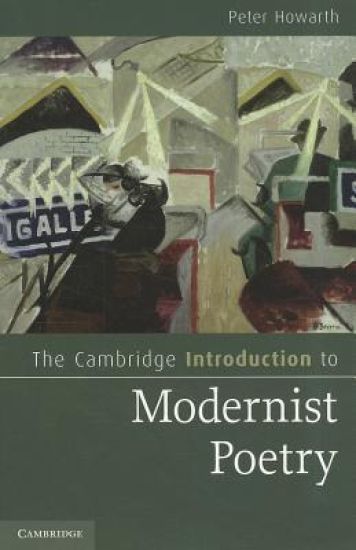
The Cambridge Introduction to Modernist Poetry
Howarth Peter
Cambridge University Press
2011
pokkari
Modernist poems are some of the twentieth-century's major cultural achievements, but they are also hard work to read. This wide-ranging introduction takes readers through modernism's most famous poems and some of its forgotten highlights to show why modernists thought difficulty and disorientation essential for poetry in the modern world. In-depth chapters on Pound, Eliot, Yeats and the American modernists outline how formal experiments take on the new world of mass media, democracies, total war and changing religious belief. Chapters on the avant-gardes and later modernism examine how their styles shift as they try to re-make the community of readers. Howarth explains in a clear and enjoyable way how to approach the forms, politics and cultural strategies of modernist poetry in English.
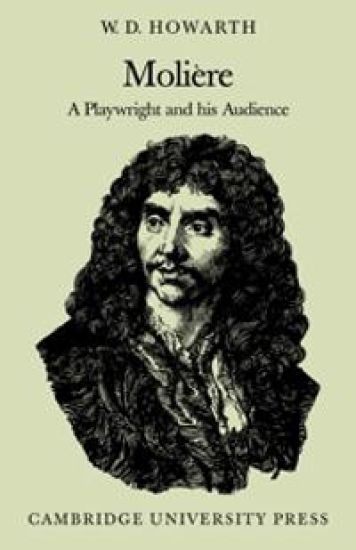
Up until the last century there was a tendency, among directors in the theatre and academic critics alike, to stress the philosophical and satirical content of Molière's comedy and to overlook the fact that he was a professional man of the theatre. More recently, certain influential critics have tended to go to the other extreme and to emphasise the theatrical and aesthetic qualities of his plays at the expense of what they may have to offer as plays of ideas. This study seeks to reconcile the two approaches: while exploring the evolution of Molière's comedy as a vehicle for his own talents as an actor and for the resources of his company, the author also seeks to define the composition of the original audiences, both in the public theatre and at Court, and to assess the taste and attitudes of the spectators for whom the plays were written.

The millennium has sharpened perspectives on the history of women in twentieth-century Britain. Many features of the contemporary gender order date only from the last decades of the century – the expectation of equal opportunities in education and the work-place, sexual autonomy for the individual and tolerance of a variety of family forms. The years dominated by the two World Wars saw real advances towards equal citizenship and legal rights, and a growing sense of the impact on women of ‘modernity’ in its various forms, including consumerism and the mass media. But values inherited from the Victorians were still reflected in the class hierarchy, the policing of sexuality and the male-breadwinner family. This anthology of original sources, accompanied by a state-of-the-art bibliography, illustrates patterns of continuity and change in women’s experience and their place in national life. An introductory survey provides an accessible overview and analysis of controversial issues, such as the relationship between ‘first’, ‘second’ and ‘third’ wave feminism.