Kirjojen hintavertailu. Mukana 11 244 527 kirjaa ja 12 kauppaa.

Kirjahaku

Etsi kirjoja tekijän nimen, kirjan nimen tai ISBN:n perusteella.

176 tulosta hakusanalla Isenberg N.

Between Redemption and Doom

Between Redemption and Doom

Isenberg N.

University of Nebraska Press
1999
sidottu
'The complex tensions inherent in the so-called 'German-Jewish dialogue,' located in the murky intersection of literature, art, history, and memory, are brilliantly illuminated in Noah Isenberg's rich and thoughtful interpretation' - Michael Berkowitz, author of "Zionist Culture and West European Jewry before the First World War". 'This book provides a basis from which to explore the 'borderlands' of Jewish life and experience in the Germany of the Weimar Republic and their memory in the Germany of today' - Karen Remmler, coauthor of "Reemerging Jewish Culture in Germany. "Between Redemption and Doom" is a revelatory exploration of the evolution of German-Jewish modernism. Through an examination of selected works in literature, theory, and film, Noah Isenberg investigates the ways in which Jewish identity was represented in German culture from the eve of the First World War through the rise of National Socialism. He argues that various responses to modernity - particularly to its social, cultural, and aesthetic currents - converge around the discourse on community: its renaissance, its crisis, and its dissolution. Isenberg opens with a general discussion of German modernism - its primary forms, movements, and manifestations. Subsequent chapters on Franz Kafka and Arnold Zweig deal with particular instances of the modern, and often ambivalent, search for forms of German-Jewish identity based on cultural and ethnic community. Discussions of Paul Wegener's film Der Golem and Walter Benjamin's childhood memoirs explore the culmination of German modernism and the modes through which Jews were identified in mass society. Throughout, Isenberg shows how Jewish authors and figures confronted the dilemma of self-understanding - the exigencies of community in the modern world - in language, culture, memory, and representation. Noah Isenberg is an assistant professor of German studies at Wesleyan University.
The Existentialist Critique of Freud

The Existentialist Critique of Freud

Gerald N. Izenberg

Princeton University Press
2015
pokkari
Although largely sympathetic to Freud's clinical achievement, the existentialists criticized Freudian metapsychology as inappropriate to a truly humanistic psychology. Gerald Izenberg evaluates the critique of Freud in the work of two existential philosophers, Martin Heidegger and Jean-Paul Sartre, and two existential psychiatrists, Ludwig Binswanger and Medard Boss. His book interprets the relationship of psychoanalysis and existentialism and traces the history of a crisis in the European rationalist tradition. The author unveils the positivist foundations of Freud's theory of meaning and discusses the reactions it provoked in the work of Binswanger, Boss, and Sartre. Probing beneath the methodological dispute, he shows that the argument involved a challenge to the conception of the self that had dominated European thought since the Enlightenment. Existentialism, reflecting the turmoil of the inter-war and post-war years, furnished a theory of motivation better able to account for Freud's clinical data than his own rationalist metapsychology. This theory made problematic the existentialist idea of authenticity and freedom, however, and so the attempt to provide a substitute ethic and concept of mental health ended in failure, although in the process the basic questions were posed that must be answered in any modern social theory. Originally published in 1976. The Princeton Legacy Library uses the latest print-on-demand technology to again make available previously out-of-print books from the distinguished backlist of Princeton University Press. These editions preserve the original texts of these important books while presenting them in durable paperback and hardcover editions. The goal of the Princeton Legacy Library is to vastly increase access to the rich scholarly heritage found in the thousands of books published by Princeton University Press since its founding in 1905.
The Existentialist Critique of Freud

The Existentialist Critique of Freud

Gerald N. Izenberg

Princeton University Press
2016
sidottu
Although largely sympathetic to Freud's clinical achievement, the existentialists criticized Freudian metapsychology as inappropriate to a truly humanistic psychology. Gerald Izenberg evaluates the critique of Freud in the work of two existential philosophers, Martin Heidegger and Jean-Paul Sartre, and two existential psychiatrists, Ludwig Binswanger and Medard Boss. His book interprets the relationship of psychoanalysis and existentialism and traces the history of a crisis in the European rationalist tradition. The author unveils the positivist foundations of Freud's theory of meaning and discusses the reactions it provoked in the work of Binswanger, Boss, and Sartre. Probing beneath the methodological dispute, he shows that the argument involved a challenge to the conception of the self that had dominated European thought since the Enlightenment. Existentialism, reflecting the turmoil of the inter-war and post-war years, furnished a theory of motivation better able to account for Freud's clinical data than his own rationalist metapsychology. This theory made problematic the existentialist idea of authenticity and freedom, however, and so the attempt to provide a substitute ethic and concept of mental health ended in failure, although in the process the basic questions were posed that must be answered in any modern social theory. Originally published in 1976. The Princeton Legacy Library uses the latest print-on-demand technology to again make available previously out-of-print books from the distinguished backlist of Princeton University Press. These editions preserve the original texts of these important books while presenting them in durable paperback and hardcover editions. The goal of the Princeton Legacy Library is to vastly increase access to the rich scholarly heritage found in the thousands of books published by Princeton University Press since its founding in 1905.
Journals of the Rev. Messrs Isenberg and Krapf, Missionaries of the Church Missionary Society

Journals of the Rev. Messrs Isenberg and Krapf, Missionaries of the Church Missionary Society

Charles William Isenberg; Johann Ludwig Krapf; James MacQueen

Cambridge University Press
2011
pokkari
In 1829 the Church Missionary Society began operations in the African kingdom of Abyssinia (Ethiopia). The Anglican clergyman Charles Isenberg (1806–64) joined the mission there in 1835, followed by Johann Ludwig Krapf (1810–81) in 1837. Soon afterwards, opposition to the Society's presence in Abyssinia caused them to leave. However, they were determined to establish a base in the central Ethiopian kingdom of Shoa (Shewa), and did so in 1839, entering from the Yemeni port of Mocha. Isenberg stayed in the capital, Ankobar, from 7 June until 6 November 1839, while Krapf remained until 1842 and travelled to other, lesser-known parts of the country. This work, published in 1843, is an account of their period of missionary activity, told through their journals. It begins with a geographical account of the region by the leading specialist of the time, James MacQueen (1778–1870), widely considered one of his most important works.
The Daughters of Isenberg: A Bavarian Romance: 3

The Daughters of Isenberg: A Bavarian Romance: 3

Alicia Tindal Palmer

Palala Press
2018
nidottu
This work has been selected by scholars as being culturally important, and is part of the knowledge base of civilization as we know it. This work was reproduced from the original artifact, and remains as true to the original work as possible. Therefore, you will see the original copyright references, library stamps (as most of these works have been housed in our most important libraries around the world), and other notations in the work.This work is in the public domain in the United States of America, and possibly other nations. Within the United States, you may freely copy and distribute this work, as no entity (individual or corporate) has a copyright on the body of the work.As a reproduction of a historical artifact, this work may contain missing or blurred pages, poor pictures, errant marks, etc. Scholars believe, and we concur, that this work is important enough to be preserved, reproduced, and made generally available to the public. We appreciate your support of the preservation process, and thank you for being an important part of keeping this knowledge alive and relevant.
The Daughters of Isenberg

The Daughters of Isenberg

Alicia Tindal Palmer

Palala Press
2018
pokkari
This work has been selected by scholars as being culturally important, and is part of the knowledge base of civilization as we know it. This work was reproduced from the original artifact, and remains as true to the original work as possible. Therefore, you will see the original copyright references, library stamps (as most of these works have been housed in our most important libraries around the world), and other notations in the work.This work is in the public domain in the United States of America, and possibly other nations. Within the United States, you may freely copy and distribute this work, as no entity (individual or corporate) has a copyright on the body of the work.As a reproduction of a historical artifact, this work may contain missing or blurred pages, poor pictures, errant marks, etc. Scholars believe, and we concur, that this work is important enough to be preserved, reproduced, and made generally available to the public. We appreciate your support of the preservation process, and thank you for being an important part of keeping this knowledge alive and relevant.
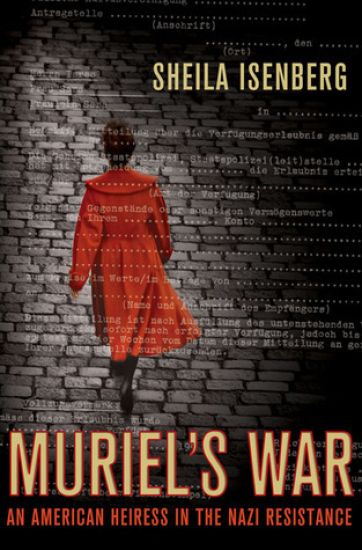
Muriel's War

Muriel's War

Isenberg Sheila

Palgrave Macmillan
2010
sidottu
An American heiress turned resistance hero, Muriel Gardiner was an electrifying woman who impressed everyone she met with her beauty, intelligence, and powerful personality. Her adventurous life led her from Chicago's high society to a Viennese medical school, from Sigmund Freud's inner circle to the Austrian underground. Over the years, she saved countless Jews and anti-fascists, providing shelter and documents ensuring their escape. This remarkable woman's life as a legend of the Austrian Resistance was captured in the movie Julia with Vanessa Redgrave and remains an inspiration to all those who believe that one individual can change the world. Gardiner's astonishing story is told here for the first time in all its variety and unanticipated twists and turns.
Sex and Citizenship in Antebellum America

Sex and Citizenship in Antebellum America

Isenberg Nancy

The University of North Carolina Press
1998
nidottu
With this book, Nancy Isenberg illuminates the origins of the women's rights movement. Rather than herald the singular achievements of the 1848 Seneca Falls convention, she examines the confluence of events and ideas--before and after 1848--that, in her view, marked the real birth of feminism. Drawing on a wide range of sources, she demonstrates that women's rights activists of the antebellum era crafted a coherent feminist critique of church, state, and family. In addition, Isenberg shows, they developed a rich theoretical tradition that influenced not only subsequent strains of feminist thought but also ideas about the nature of citizenship and rights more generally. By focusing on rights discourse and political theory, Isenberg moves beyond a narrow focus on suffrage. Democracy was in the process of being redefined in antebellum America by controversies over such volatile topics as fugitive slave laws, temperance, Sabbath laws, capital punishment, prostitution, the Mexican War, married women's property rights, and labor reform--all of which raised significant legal and constitutional questions. These pressing concerns, debated in women's rights conventions and the popular press, were inseparable from the gendered meaning of nineteenth-century citizenship. |Illuminates the origins of American feminism by showing how antebellum feminists moved beyond suffrage to influence thinking about the nature of citizenship and rights more generally.
Telling Silence

Telling Silence

Isenberg

Northwestern University Press
1994
sidottu
Isenberg discusses frame narrative and its relation to genre in one set of Russian short classics on the theme of erotic renunciation. Drawing on rich critical tradition and on contemporary work in narratology, Isenberg analyzes Turgenev's First Love, Dostoevsky's gentle Creature, Tolstoy's Kreutzer Sonata, and works by Chekhov, Kharms, and Makanin to provide new insight into the frame narrative of passion.
The GigaLaw Guide to Internet Law

The GigaLaw Guide to Internet Law

Isenberg Doug

RANDOM HOUSE USA INC
2002
pokkari
Advance praise for The GigaLaw Guide to Internet Law "I read this book from cover to cover. The examples of case law are of enormous illustrative value. Some of them will raise your blood pressure (well, mine went up several notches, anyway). Well worth the time to read " --Vint Cerf, chairman, Internet Corporation for Assigned Names and Numbers (ICANN) "Doug Isenberg pulls off the toughest hat trick in legal writing--he and his contributing authors map out the legal landscape of cyberspace in language accessible and friendly to lay readers, providing a comprehensive guide for lawyers who want to gain a quick grasp of cyberlaw, and they do all this with scholarly care for accuracy and precision." --Mike Godwin, author of Cyber Rights: Defending Free Speech in the Digital Age "A treasure trove of information that is a relief to find, a pleasure to read, and a snap to apply to dozens of your most pressing Internet legal questions."--Carol Darr, director of the Institute for Politics, Democracy and the Internet "Doug Isenberg is the authority on all issues regarding Internet law. His insight is exceptional, his experience unsurpassed. This book is both a reference work and a bible, enlightening and showing the way--a quintessential, all-encompassing work for both the novice and the veteran." --Marc Adler, chairman and CEO, Macquarium Intelligent Communications Doug Isenberg is an attorney and the founder of GigaLaw.com, an award-winning website about Internet law. He writes regularly as a columnist for The Wall Street Journal Online and CNET News.com and has represented numerous high-tech and Internet clients. For more information about The GigaLaw Guide to Internet Law, visit: http: //GigaLaw.com/guide
Worthless, Impossible and Stupid

Worthless, Impossible and Stupid

Isenberg Daniel

Harvard Business Review Press
2013
sidottu
Introducing the global mind-set changing the way we do business. In this fascinating book, global entrepreneurship expert Daniel Isenberg presents a completely novel way to approach business building--with the insights and lessons learned from a worldwide cast of entrepreneurial characters. Not bound by a western, Silicon Valley stereotype, this group of courageous and energetic doers has created a global and diverse mix of companies destined to become tomorrow's leading organizations. Worthless, Impossible, and Stupid is about how enterprising individuals from around the world see hidden value in situations where others do not, use that perception to develop products and services that people initially don't think they want, and ultimately go on to realize extraordinary value for themselves, their customers, and society as a whole. What these business builders have in common is a contrarian mind-set that allows them to create opportunities and succeed where others see nothing. Amazingly, this process repeats itself in one form or another countless times a day all over the world. From Albuquerque to Islamabad, you will travel with Isenberg to discover unusual yet practical insights that you can use in your own business. Meet the founders of Grameenphone in Bangladesh, PACIV in Puerto Rico, Sea to Table in New York, Actavis in Iceland, Studio Moderna in Slovenia, Hartwell Metals in Hong Kong and Southeast Asia, Given Imaging in Israel, WildChina in China, and many others. You'll be moved by the stories of these plucky start-ups--many of them fueled by adversity and, more often than not, by necessity. Great stories, stunning successes, crushing failures--they're all here. What can we, in the East and West, learn from them? What can you learn--and what will these entrepreneurial stories, so compellingly told, inspire you to do? Let this book open doors for you where you once saw only walls. If you've ever felt the urge to turn a glimmer of an idea into something extraordinary, these stories are for you.
Detour

Detour

Isenberg Noah

BFI Publishing
2008
nidottu
Long considered an unpolished gem of film noir, the private treasure of film buffs, cinephiles and critics, Edgar G. Ulmer's Detour (1945) has recently earned a new wave of recognition. In the words of film critic David Thomson, it is simply 'beyond remarkable.' The only B-picture to make it into the National Film Registry of the Library of Congress, Detour has outrun its fate as the bastard child of one of Hollywood's lowliest studios. Ulmer's film follows, in flashback, the journey of Al Roberts (Tom Neal), a pianist hitching from New York to California to join his girlfriend Sue (Claudia Drake), a singer gone to seek her fortune in Hollywood. In classic noir style, Detour features mysterious deaths, changes of identity, an unforgettable femme fatale called Vera (Ann Savage), and, in Roberts, a wretched, masochistic antihero. Noah Isenberg's study of Detour draws on a vast array of archival sources, unpublished letters and interviews, to provide an animated and thorough account of the film's production history, its critical reception, its afterlife (including various remakes) and the different ways in which the film has been understood since its release. He devotes significant attention to each of the key players in the film – the crew as well as the principal actors – while charting the uneasy transformation of Martin Goldsmith's pulp novel into Ulmer's signature film, the disagreements between the director and writer, and the severe financial and formal limitations with which Ulmer grappled. The story that Isenberg tells, rich in historical and critical insight, replicates the briskness of a B-movie.