30,000 years ago a unknown civilization, colonized Australia. A fantasy novel, will lead you, to discovery its in a extraordinary sequence of unbelievable and never expected events.
The proceedings of the conference "Barcelona Postgrad Encounters on Fundamental Physics", held from October 17th - 19th, 2012, at the University of Barcelona, Spain.
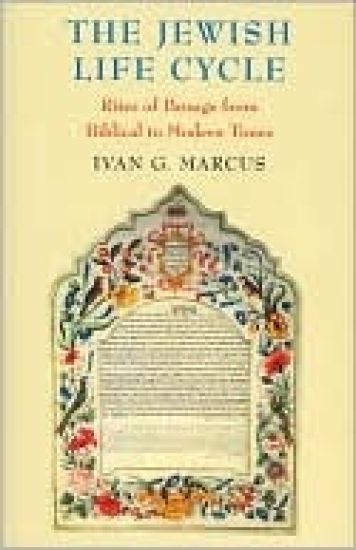
In this original and sweeping review of Jewish culture and history, Ivan Marcus examines how and why various rites and customs celebrating stages in the life cycle have evolved through the ages and persisted to this day. For each phase of life--from childhood and adolescence to adulthood and the advanced years—the book traces the origin and development of specific rites associated with the events of birth, circumcision, and schooling; bar and bat mitzvah and confirmation; engagement, betrothal, and marriage; and aging, dying, and remembering. Customs in Jewish tradition, such as the presence of godparents at a circumcision, the use of a four-poled canopy at a wedding, and the placing of small stones on tombstones, are discussed. In each chapter, detailed descriptions walk the reader through such ceremonies as early modern and contemporary circumcision, weddings, and funerals.In a comparative framework, Marcus illustrates how Jewish culture has negotiated with the majority cultures of the ancient Near East, Greco-Roman antiquity, medieval European Christianity, and Mediterranean Islam, as well as with modern secular and religious movements and social trends, to renew itself through ritual innovation.In his extensive research on the Jewish life cycle, Marcus draws from documents on various customs and ritual practices, offering reassessments of original sources and scholarly literature.Marcus’s survey is the first comprehensive study of the rites of the Jewish life cycle since Hayyim Schauss's The Lifetime of the Jew was published in 1950, written for Jewish readers. Marcus’s book addresses a broader audience and is designed to appeal to scholars and interested readers.
In this original and sweeping review of Jewish culture and history, Ivan Marcus examines how and why various rites and customs celebrating stages in the life cycle have evolved through the ages and persisted to this day. For each phase of life--from childhood and adolescence to adulthood and the advanced years—the book traces the origin and development of specific rites associated with the events of birth, circumcision, and schooling; bar and bat mitzvah and confirmation; engagement, betrothal, and marriage; and aging, dying, and remembering. Customs in Jewish tradition, such as the presence of godparents at a circumcision, the use of a four-poled canopy at a wedding, and the placing of small stones on tombstones, are discussed. In each chapter, detailed descriptions walk the reader through such ceremonies as early modern and contemporary circumcision, weddings, and funerals.In a comparative framework, Marcus illustrates how Jewish culture has negotiated with the majority cultures of the ancient Near East, Greco-Roman antiquity, medieval European Christianity, and Mediterranean Islam, as well as with modern secular and religious movements and social trends, to renew itself through ritual innovation.In his extensive research on the Jewish life cycle, Marcus draws from documents on various customs and ritual practices, offering reassessments of original sources and scholarly literature.Marcus's survey is the first comprehensive study of the rites of the Jewish life cycle since Hayyim Schauss's The Lifetime of the Jew was published in 1950, written for Jewish readers. Marcus's book addresses a broader audience and is designed to appeal to scholars and interested readers.
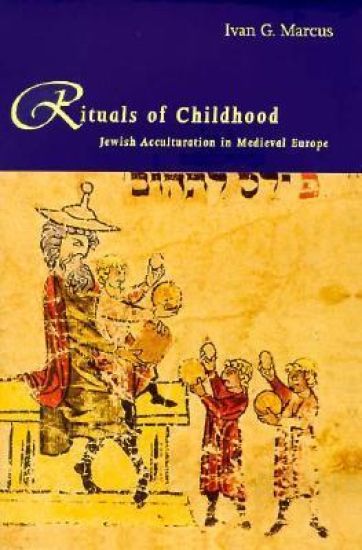
In medieval times, when a Jewish boy of five began religious schooling, he was carried from home to a teacher and placed on the teacher's lap. He was then asked to recite the Hebrew alphabet and lick honey from the slate on which it was written, to eat magically inscribed cooked peeled eggs and cakes, to recite an incantation against a demon of forgetfulness, and then to go down to the riverbank with the teacher, where he was told that his future study of the Torah, like the rushing river, would never end. This book--Ivan Marcus's erudite and novel interpretation of this rite of passage--presents a new anthropological historical approach to Jewish culture and acculturation in medieval Christian Europe.Marcus traces ancient Jewish and Greco-Roman elements in the rite and then analyzes it from different perspectives, making use of narrative, legal, poetic, ethnographic, and pictorial sources, as well as firsthand accounts. He then describes contemporary medieval Christian images and initiation rites--including the eucharist and the Madonna and child--as contexts within which to understand the ceremony. He is the first to investigate how medieval Jews were aware of, drew upon, and polemically transformed Christian religious symbols into Jewish counterimages in order to affirm the truth of Judaism and to make sense of living as Jews in an intensely Christian culture.
These studies explore the history of the Jewish minority of Ashkenaz (northern France and the German Empire) during the High Middle Ages. Although the Jews in medieval Europe are usually thought to have been isolated from the Christian majority, they actually were part of a 'Jewish-Christian symbiosis.' A number of studies in the collection focus on Jewish-Christian cultural and social interactions, the foundations of the community ascribed to Charlemagne, and especially on the fashioning of a martyrological collective identity in 1096. Even when Jews resisted Christian pressures they often did so by internalizing Christian motifs and turning them on their heads to argue for the truth of Judaism alone. This may be seen especially in the formation of Jews as martyrs, a trope that places Jews as collective Christ figures whose suffering brings about vicarious atonement. The remainder of the studies delve into the lives and writings of a group of Jewish ascetic pietists, Hasidei Ashkenaz, which shaped the religious culture of most European Jews before modernity. In Sefer Hasidim (Book of the Pietists), attributed to Rabbi Judah the Pietist of Regensburg (d. 1217), one finds a mirror of everyday Jewish-Christian interactions even while the author advances a radical view of Jewish religious pietism.
An examination of how the Jews—real and imagined—so challenged the Christian majority in medieval Europe that it became a society that was religiously and culturally antisemitic in new ways In medieval Europe, Jews were not passive victims of the Christian community, as is often assumed, but rather were startlingly assertive, forming a Jewish civilization within Latin Christian society. Both Jews and Christians considered themselves to be God’s chosen people. These dueling claims fueled the rise of both cultures as they became rivals for supremacy. In How the West Became Antisemitic, Ivan Marcus shows how Christian and Jewish competition in medieval Europe laid the foundation for modern antisemitism.Marcus explains that Jews accepted Christians as misguided practitioners of their ancestral customs, but regarded Christianity as idolatry. Christians, on the other hand, looked at Jews themselves—not Judaism—as despised. They directed their hatred at a real and imagined Jew: theoretically subordinate, but sometimes assertive, an implacable “enemy within.” In their view, Jews were permanently and physically Jewish—impossible to convert to Christianity. Thus Christians came to hate Jews first for religious reasons, and eventually for racial ones. Even when Jews no longer lived among them, medieval Christians could not forget their former neighbors. Modern antisemitism, based on the imagined Jew as powerful and world dominating, is a transformation of this medieval hatred.A sweeping and well-documented history of the rivalry between Jewish and Christian civilizations during the making of Europe, How the West Became Antisemitic is an ambitious new interpretation of the medieval world and its impact on modernity.
An examination of how the Jews—real and imagined—so challenged the Christian majority in medieval Europe that it became a society that was religiously and culturally antisemitic in new ways In medieval Europe, Jews were not passive victims of the Christian community, as is often assumed, but rather were startlingly assertive, forming a Jewish civilization within Latin Christian society. Both Jews and Christians considered themselves to be God’s chosen people. These dueling claims fueled the rise of both cultures as they became rivals for supremacy. In How the West Became Antisemitic, Ivan Marcus shows how Christian and Jewish competition in medieval Europe laid the foundation for modern antisemitism.Marcus explains that Jews accepted Christians as misguided practitioners of their ancestral customs, but regarded Christianity as idolatry. Christians, on the other hand, looked at Jews themselves—not Judaism—as despised. They directed their hatred at a real and imagined Jew: theoretically subordinate, but sometimes assertive, an implacable “enemy within.” In their view, Jews were permanently and physically Jewish—impossible to convert to Christianity. Thus Christians came to hate Jews first for religious reasons, and eventually for racial ones. Even when Jews no longer lived among them, medieval Christians could not forget their former neighbors. Modern antisemitism, based on the imagined Jew as powerful and world dominating, is a transformation of this medieval hatred.A sweeping and well-documented history of the rivalry between Jewish and Christian civilizations during the making of Europe, How the West Became Antisemitic is an ambitious new interpretation of the medieval world and its impact on modernity.
Composed in Germany in the early thirteenth century by Judah ben Samuel he-hasid, Sefer Hasidim, or "Book of the Pietists," is a compendium of religious instruction that portrays the everyday life of Jews as they lived together with and apart from Christians in towns such as Speyer, Worms, Mainz, and Regensburg. A charismatic religious teacher who recorded hundreds of original stories that mirrored situations in medieval social living, Judah's messages advocated praying slowly and avoiding honor, pleasure, wealth, and the lures of unmarried sex. Although he failed to enact his utopian vision of a pietist Jewish society, his collected writings would help shape the religious culture of Ashkenazic Judaism for centuries. In "Sefer Hasidim" and the Ashkenazic Book in Medieval Europe, Ivan G. Marcus proposes a new paradigm for understanding how this particular book was composed. The work, he contends, was an open text written by a single author in hundreds of disjunctive, yet self-contained, segments, which were then combined into multiple alternative versions, each equally authoritative. While Sefer Hasidim offers the clearest example of this model of composition, Marcus argues that it was not unique: the production of Ashkenazic books in small and easily rearranged paragraphs is a literary and cultural phenomenon quite distinct from anything practiced by the Christian authors of northern Europe or the Sephardic Jews of the south. According to Marcus, Judah, in authoring Sefer Hasidim in this manner, not only resisted Greco-Roman influences on Ashkenazic literary form but also extended an earlier Byzantine rabbinic tradition of authorship into medieval European Jewish culture.
These studies explore the history of the Jewish minority of Ashkenaz (northern France and the German Empire) during the High Middle Ages. Although the Jews in medieval Europe are usually thought to have been isolated from the Christian majority, they actually were part of a 'Jewish-Christian symbiosis.' A number of studies in the collection focus on Jewish-Christian cultural and social interactions, the foundations of the community ascribed to Charlemagne, and especially on the fashioning of a martyrological collective identity in 1096. Even when Jews resisted Christian pressures they often did so by internalizing Christian motifs and turning them on their heads to argue for the truth of Judaism alone. This may be seen especially in the formation of Jews as martyrs, a trope that places Jews as collective Christ figures whose suffering brings about vicarious atonement. The remainder of the studies delve into the lives and writings of a group of Jewish ascetic pietists, Hasidei Ashkenaz, which shaped the religious culture of most European Jews before modernity. In Sefer Hasidim (Book of the Pietists), attributed to Rabbi Judah the Pietist of Regensburg (d. 1217), one finds a mirror of everyday Jewish-Christian interactions even while the author advances a radical view of Jewish religious pietism.
This book introduces the main theoretical findings related to copulas and shows how statistical modeling of multivariate continuous distributions using copulas can be carried out in the R statistical environment with the package copula (among others). Copulas are multivariate distribution functions with standard uniform univariate margins. They are increasingly applied to modeling dependence among random variables in fields such as risk management, actuarial science, insurance, finance, engineering, hydrology, climatology, and meteorology, to name a few.In the spirit of the Use R! series, each chapter combines key theoretical definitions or results with illustrations in R. Aimed at statisticians, actuaries, risk managers, engineers and environmental scientists wanting to learn about the theory and practice of copula modeling using R without an overwhelming amount of mathematics, the book can also be used for teaching a course on copula modeling.
Adam Nicolson; Gracy Olmstead; Christian Wiman; Kelsey Osgood; John Kempf; Leah Libresco Sargeant; Ian Marcus Corbin; Iván Bernal Marín; Phil Klay; Edmund Waldstein; Alfred Nicol
When we read the book of nature, what do we read there? “All things bright and beautiful, all creatures great and small, all things wise and wonderful, the Lord God made them all,” says a well-known hymn. This issue of Plough celebrates the creatures of our planet – plant, animal, and human – and the implications of humankind’s relationship to nature. But if nature can be read as a book that reveals the wisdom of its Creator, it also reveals things less lovely than stars and singing birds – a world of desperate competition for survival, mass extinctions, and deadly viruses. Is such a world a convincing argument for the Creator’s goodness? Turns out Christians and skeptics alike have been asking such questions since long before Darwin added a twist. Are we moderns out of practice at reading the book of nature? And if we forget how, will we fail to read human nature as well – what rights or purposes our Creator may have endowed us with? What then is there to limit the bounds of technological manipulation of humankind? This issue of Plough explores these and other fascinating questions about the natural world and our place in it. In this issue: - Sussex farmer Adam Nicholson evokes centuries of handwork that shaped the landscape of the Weald. - Gracy Olmstead revisits the land her forebears farmed in Idaho. - Ian Marcus Corbin tries walking phoneless to better note the beauty of the natural world. - Amish farmer John Kempf, a leader in regenerative agriculture, foresees a healthier future for farming. - Leah Libresco Sargeant offers a feminist critique of society’s war on women’s bodies. - Iván Bernal Marín visits Panama City’s traditional fishermen. - Maureen Swinger recalls to triumphs of second grade in forest school. - Edmund Waldstein questions head transplants and the limits of medical science. - Kelsey Osgood says it’s natural to fear death, and to transcend that fear through faith. - Tim Maendel lifts the veil on urban beekeeping along the Manhattan skyline. You’ll also find: - An essay by Christian Wiman on the poetry of doubt and faith - New poems by Alfred Nicol - A profile of Amazon activist nun Dorothy Stang - An appreciation of Keith Green’s songs - Insights on creation from Blaise Pascal, Julian of Norwich, Francis of Assisi, Mechthild of Magdeburg, Christopher Smart, Augustine of Hippo, The Book of Job, and Sadhu Sundar Singh - Reviews of The Opening of the American Mind, and Kazuo Ishiguro’s Klara and the Sun Plough Quarterly features stories, ideas, and culture for people eager to put their faith into action. Each issue brings you in-depth articles, interviews, poetry, book reviews, and art to help you put Jesus’ message into practice and find common cause with others.
iVAN e un furgone per viaggiare nei mondi accanto. A bordo ci sono quattro ragazzi. Ma non sono loro a possedere iVAN,. E iVAN a possedere loro. I quattro non sanno come funziona il furgone, non hanno idea di chi l'abbia costruito e non ne controllano gli spostamenti lungo gli universi paralleli. Qual'e il segreto di iVAN? E chi sono i misteriosi cavalieri Ellive che cercano di prendere il potere negli universi paralleli?
A story of hope, love and purpose for anyone who has ever loved a rescue dog. With wry wit, deep insight, and vivid anecdotes, Tim McHugh gives voice to the family pet and delves into the place where the canine and human hearts become one. Ivan, a mixed-breed dog-philosopher with an extreme underbite and various other deformities, chronicles his life story with keen observations about his adopted family and the people he loves, covering the life events that touch us all. Throughout his life Ivan keeps plugging forward with optimism and faith, always striving to learn from his mistakes, believing that even as he is ultimately facing old age, disease, and death, life is all the more wonderful. To Ivan, love and relationships with people are what matters most, and that if a deformed pound dog like him can find love and acceptance, anyone can. His is a lively, humorous story of hope and perseverance.
Desperate to find her sister, Erin goes to the only man in Houston who can help her--Ivan Markovic.The intimidating, tattooed Russian operates one of the most elite mixed-martial arts training centers in the world but it's his shadowy past and reputed connections with Houston's underworld that interest her most. To find her sister, she'll need the help of her big, scary Russian protector-but asking for help from a man like Ivan carries a steep price, one that might just include her heart.