Kirjojen hintavertailu. Mukana 11 342 296 kirjaa ja 12 kauppaa.

Kirjahaku

Etsi kirjoja tekijän nimen, kirjan nimen tai ISBN:n perusteella.

1000 tulosta hakusanalla J. Edwards

Homilies: Scriptural Commentary and Talks by J. Samuel Edwards

Homilies: Scriptural Commentary and Talks by J. Samuel Edwards

J. Samuel Edwards

Createspace Independent Publishing Platform
2013
nidottu
Scriptural Commentary and Talks by J. Samuel Edwards.The word "homilies" comes from the Greek word "homilia" which means an informal scriptural sermon. These writings are all either notes on scriptural passages or doctrinal presentations of certain spiritual themes but should also be considered informal because I am only a faithful member of Christ's Church not one of its leaders. I have taken from the scriptures and the words of the Prophets of God to help others see the special lessons that can be learned from both the Bible and the Book of Mormon alongside other books of God but I want it to be clearly understood that what I have said are true to the best of my knowledge or perception but they do not take precedence over the words of Heaven's duly appointed servants.

J.J.E. Jessie Jane Edwards

J.J.E. Jessie Jane Edwards

Matthew Imes

Authorhouse
2021
pokkari
Kidnapping, rape, murder ... Jessie Jane Edwards has seen it all. When the criminal court system fails however, Jessie uses her job as a private investigator, along with her unique talents, to bring the scales of justice back into balance. With the culture of south Louisiana as the backdrop, JJE is the story of a woman with a tragic childhood looking to right the kinds of wrongs that changed her life, all while trying to maintain her sanity and humanity.
J.D.Edwards OneWorld Xe

J.D.Edwards OneWorld Xe

Steve Hester; Allen Jacot

Osborne/McGraw-Hill
2001
pokkari
This text has been written for the new and experienced OneWorld professionals who need to use and get the most from the Object Management Workbench (OMW). It provides the fundamentals and details behind the business and technical information about OMW, alongside practical advice and special sections containing proven tips and recommendations for successful usage of OMW.
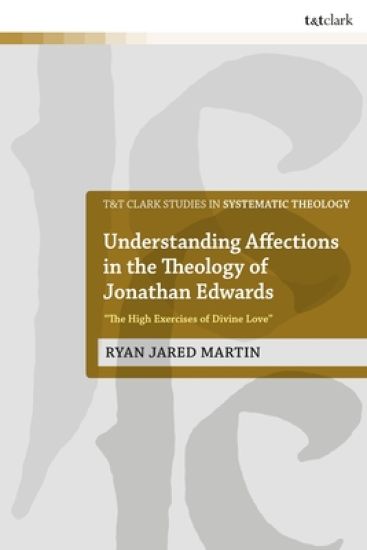
Understanding Affections in the Theology of Jonathan Edwards
This volume argues that the notion of “affections” discussed by Jonathan Edwards (and Christian theologians before him) means something very different from what contemporary English speakers now call “emotions.” and that Edwards’s notions of affections came almost entirely from traditional Christian theology in general and the Reformed tradition in particular. Ryan J. Martin demonstrates that Christian theologians for centuries emphasized affection for God, associated affections with the will, and distinguished affections from passions; generally explaining affections and passions to be inclinations and aversions of the soul. This was Edwards’s own view, and he held it throughout his entire ministry. Martin further argues that Edwards’s view came not as a result of his reading of John Locke, or the pressures of the Great Awakening (as many Edwardsean scholars argue), but from his own biblical interpretation and theological education. By analysing patristic, medieval and post-medieval thought and the journey of Edwards’s psychology, Martin shows how, on their own terms, pre-modern Christians historically defined and described human psychology.
Understanding Affections in the Theology of Jonathan Edwards
This volume argues that the notion of “affections” discussed by Jonathan Edwards (and Christian theologians before him) means something very different from what contemporary English speakers now call “emotions.” and that Edwards’s notions of affections came almost entirely from traditional Christian theology in general and the Reformed tradition in particular. Ryan J. Martin demonstrates that Christian theologians for centuries emphasized affection for God, associated affections with the will, and distinguished affections from passions; generally explaining affections and passions to be inclinations and aversions of the soul. This was Edwards’s own view, and he held it throughout his entire ministry. Martin further argues that Edwards’s view came not as a result of his reading of John Locke, or the pressures of the Great Awakening (as many Edwardsean scholars argue), but from his own biblical interpretation and theological education. By analysing patristic, medieval and post-medieval thought and the journey of Edwards’s psychology, Martin shows how, on their own terms, pre-modern Christians historically defined and described human psychology.