Kirjojen hintavertailu. Mukana 12 390 323 kirjaa ja 12 kauppaa.

Kirjahaku

Etsi kirjoja tekijän nimen, kirjan nimen tai ISBN:n perusteella.

1000 tulosta hakusanalla J.David Logan

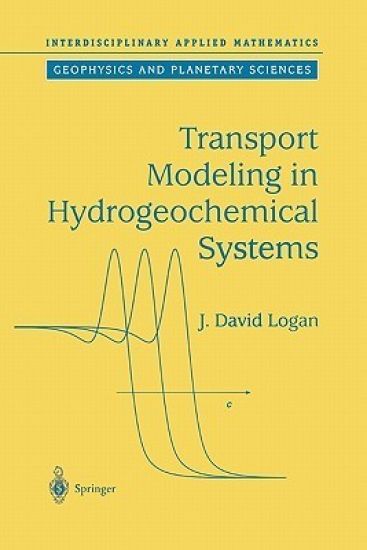
Transport Modeling in Hydrogeochemical Systems

Transport Modeling in Hydrogeochemical Systems

J.David Logan

Springer-Verlag New York Inc.
2001
sidottu
The subject of this monograph lies in the joint areas of applied mathematics and hydrogeology. The goals are to introduce various mathematical techniques and ideas to applied scientists while at the same time to reveal to applied math­ ematicians an exciting catalog of interesting equations and examples, some of which have not undergone the rigors of mathematical analysis. Of course, there is a danger in a dual endeavor-the applied scientist may feel the mathematical models lack physical depth and the mathematician may think the mathematics is trivial. However, mathematical modeling has established itself firmly as a tool that can not only lead to greater understanding of the science, but can also be a catalyst for the advancement of science. I hope the presentation, written in the spirit of mathematical modeling, has a balance that bridges these two areas and spawns some cross-fertilization. Notwithstanding, the reader should fully understand the idea of a mathe­ matical model. In the world of reality we are often faced with describing and predicting the results of experiments. A mathematical model is a set of equa­ tions that encapsulates reality; it is a caricature of the real physical system that aids in our understanding of real phenomena. A good model extracts the essen­ tial features of the problem and lays out, in a simple manner, those processes and interactions that are important. By design, mathematical models should have predictive capability.
Transport Modeling in Hydrogeochemical Systems

Transport Modeling in Hydrogeochemical Systems

J.David Logan

Springer-Verlag New York Inc.
2010
nidottu
The subject of this monograph lies in the joint areas of applied mathematics and hydrogeology. The goals are to introduce various mathematical techniques and ideas to applied scientists while at the same time to reveal to applied math­ ematicians an exciting catalog of interesting equations and examples, some of which have not undergone the rigors of mathematical analysis. Of course, there is a danger in a dual endeavor-the applied scientist may feel the mathematical models lack physical depth and the mathematician may think the mathematics is trivial. However, mathematical modeling has established itself firmly as a tool that can not only lead to greater understanding of the science, but can also be a catalyst for the advancement of science. I hope the presentation, written in the spirit of mathematical modeling, has a balance that bridges these two areas and spawns some cross-fertilization. Notwithstanding, the reader should fully understand the idea of a mathe­ matical model. In the world of reality we are often faced with describing and predicting the results of experiments. A mathematical model is a set of equa­ tions that encapsulates reality; it is a caricature of the real physical system that aids in our understanding of real phenomena. A good model extracts the essen­ tial features of the problem and lays out, in a simple manner, those processes and interactions that are important. By design, mathematical models should have predictive capability.
A First Course in Differential Equations

A First Course in Differential Equations

J. David Logan

Springer-Verlag New York Inc.
2005
nidottu
Therearemanyexcellenttextsonelementarydi?erentialequationsdesignedfor the standard sophomore course. However, in spite of the fact that most courses are one semester in length, the texts have evolved into calculus-like pres- tations that include a large collection of methods and applications, packaged with student manuals, and Web-based notes, projects, and supplements. All of this comes in several hundred pages of text with busy formats. Most students do not have the time or desire to read voluminous texts and explore internet supplements. The format of this di?erential equations book is di?erent; it is a one-semester, brief treatment of the basic ideas, models, and solution methods. Itslimitedcoverageplacesitsomewherebetweenanoutlineandadetailedte- book. I have tried to write concisely, to the point, and in plain language. Many worked examples and exercises are included. A student who works through this primer will have the tools to go to the next level in applying di?erential eq- tions to problems in engineering, science, and applied mathematics. It can give some instructors, who want more concise coverage, an alternative to existing texts.
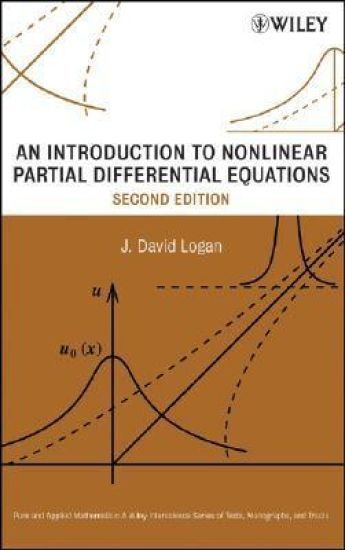
An Introduction to Nonlinear Partial Differential Equations
Praise for the First Edition: "This book is well conceived and well written. The author has succeeded in producing a text on nonlinear PDEs that is not only quite readable but also accessible to students from diverse backgrounds." —SIAM Review A practical introduction to nonlinear PDEs and their real-world applications Now in a Second Edition, this popular book on nonlinear partial differential equations (PDEs) contains expanded coverage on the central topics of applied mathematics in an elementary, highly readable format and is accessible to students and researchers in the field of pure and applied mathematics. This book provides a new focus on the increasing use of mathematical applications in the life sciences, while also addressing key topics such as linear PDEs, first-order nonlinear PDEs, classical and weak solutions, shocks, hyperbolic systems, nonlinear diffusion, and elliptic equations. Unlike comparable books that typically only use formal proofs and theory to demonstrate results, An Introduction to Nonlinear Partial Differential Equations, Second Edition takes a more practical approach to nonlinear PDEs by emphasizing how the results are used, why they are important, and how they are applied to real problems. The intertwining relationship between mathematics and physical phenomena is discovered using detailed examples of applications across various areas such as biology, combustion, traffic flow, heat transfer, fluid mechanics, quantum mechanics, and the chemical reactor theory. New features of the Second Edition also include: Additional intermediate-level exercises that facilitate the development of advanced problem-solving skills New applications in the biological sciences, including age-structure, pattern formation, and the propagation of diseases An expanded bibliography that facilitates further investigation into specialized topics With individual, self-contained chapters and a broad scope of coverage that offers instructors the flexibility to design courses to meet specific objectives, An Introduction to Nonlinear Partial Differential Equations, Second Edition is an ideal text for applied mathematics courses at the upper-undergraduate and graduate levels. It also serves as a valuable resource for researchers and professionals in the fields of mathematics, biology, engineering, and physics who would like to further their knowledge of PDEs.
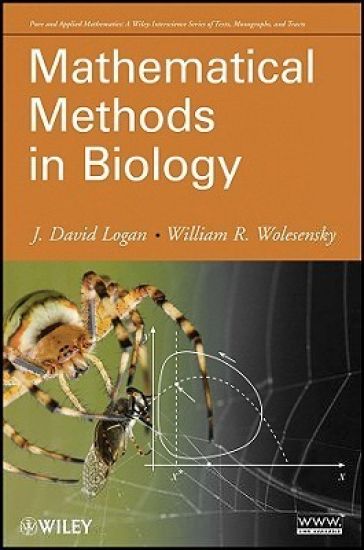
Mathematical Methods in Biology

Mathematical Methods in Biology

J. David Logan; William Wolesensky

John Wiley Sons Inc
2009
nidottu
A one-of-a-kind guide to using deterministic and probabilistic methods for solving problems in the biological sciences Highlighting the growing relevance of quantitative techniques in scientific research, Mathematical Methods in Biology provides an accessible presentation of the broad range of important mathematical methods for solving problems in the biological sciences. The book reveals the growing connections between mathematics and biology through clear explanations and specific, interesting problems from areas such as population dynamics, foraging theory, and life history theory. The authors begin with an introduction and review of mathematical tools that are employed in subsequent chapters, including biological modeling, calculus, differential equations, dimensionless variables, and descriptive statistics. The following chapters examine standard discrete and continuous models using matrix algebra as well as difference and differential equations. Finally, the book outlines probability, statistics, and stochastic methods as well as material on bootstrapping and stochastic differential equations, which is a unique approach that is not offered in other literature on the topic. In order to demonstrate the application of mathematical methods to the biological sciences, the authors provide focused examples from the field of theoretical ecology, which serve as an accessible context for study while also demonstrating mathematical skills that are applicable to many other areas in the life sciences. The book's algorithms are illustrated using MATLAB®, but can also be replicated using other software packages, including R, Mathematica®, and Maple; however, the text does not require any single computer algebra package. Each chapter contains numerous exercises and problems that range in difficulty, from the basic to more challenging, to assist readers with building their problem-solving skills. Selected solutions are included at the back of the book, and a related Web site features supplemental material for further study. Extensively class-tested to ensure an easy-to-follow format, Mathematical Methods in Biology is an excellent book for mathematics and biology courses at the upper-undergraduate and graduate levels. It also serves as a valuable reference for researchers and professionals working in the fields of biology, ecology, and biomathematics.
Applied Mathematics

Applied Mathematics

J. David Logan

John Wiley Sons Inc
2013
sidottu
Praise for the Third Edition “Future mathematicians, scientists, and engineers should find the book to be an excellent introductory text for coursework or self-study as well as worth its shelf space for reference.” —MAA Reviews Applied Mathematics, Fourth Edition is a thoroughly updated and revised edition on the applications of modeling and analyzing natural, social, and technological processes. The book covers a wide range of key topics in mathematical methods and modeling and highlights the connections between mathematics and the applied and natural sciences. The Fourth Edition covers both standard and modern topics, including scaling and dimensional analysis; regular and singular perturbation; calculus of variations; Green’s functions and integral equations; nonlinear wave propagation; and stability and bifurcation. The book provides extended coverage of mathematical biology, including biochemical kinetics, epidemiology, viral dynamics, and parasitic disease. In addition, the new edition features: Expanded coverage on orthogonality, boundary value problems, and distributions, all of which are motivated by solvability and eigenvalue problems in elementary linear algebraAdditional MATLAB® applications for computer algebra system calculationsOver 300 exercises and 100 illustrations that demonstrate important conceptsNew examples of dimensional analysis and scaling along with new tables of dimensions and units for easy referenceReview material, theory, and examples of ordinary differential equationsNew material on applications to quantum mechanics, chemical kinetics, and modeling diseases and viruses Written at an accessible level for readers in a wide range of scientific fields, Applied Mathematics, Fourth Edition is an ideal text for introducing modern and advanced techniques of applied mathematics to upper-undergraduate and graduate-level students in mathematics, science, and engineering. The book is also a valuable reference for engineers and scientists in government and industry.
Applied Partial Differential Equations

Applied Partial Differential Equations

J. David Logan

Springer International Publishing AG
2014
sidottu
This textbook is for the standard, one-semester, junior-senior course that often goes by the title "Elementary Partial Differential Equations" or "Boundary Value Problems". The audience consists of students in mathematics, engineering, and the sciences. The topics include derivations of some of the standard models of mathematical physics and methods for solving those equations on unbounded and bounded domains, and applications of PDE's to biology. The text differs from other texts in its brevity; yet it provides coverage of the main topics usually studied in the standard course, as well as an introduction to using computer algebra packages to solve and understand partial differential equations.For the 3rd edition the section on numerical methods has been considerably expanded to reflect their central role in PDE's. A treatment of the finite element method has been included and the code for numerical calculations is now written for MATLAB. Nonetheless the brevity of the text has been maintained. To further aid the reader in mastering the material and using the book, the clarity of the exercises has been improved, more routine exercises have been included, and the entire text has been visually reformatted to improve readability.
A First Course in Differential Equations

A First Course in Differential Equations

J. David Logan

Springer International Publishing AG
2015
sidottu
The third edition of this concise, popular textbook on elementary differential equations gives instructors an alternative to the many voluminous texts on the market. It presents a thorough treatment of the standard topics in an accessible, easy-to-read, format. The overarching perspective of the text conveys that differential equations are about applications. This book illuminates the mathematical theory in the text with a wide variety of applications that will appeal to students in physics, engineering, the biosciences, economics and mathematics. Instructors are likely to find that the first four or five chapters are suitable for a first course in the subject.This edition contains a healthy increase over earlier editions in the number of worked examples and exercises, particularly those routine in nature. Two appendices include a review with practice problems, and a MATLAB® supplement that gives basic codes and commands for solving differential equations. MATLAB® is not required; students are encouraged to utilize available software to plot many of their solutions. Solutions to even-numbered problems are available on springer.com.
Applied Partial Differential Equations

Applied Partial Differential Equations

J. David Logan

Springer International Publishing AG
2014
nidottu
This textbook is for the standard, one-semester, junior-senior course that often goes by the title "Elementary Partial Differential Equations" or "Boundary Value Problems". The audience consists of students in mathematics, engineering, and the sciences. The topics include derivations of some of the standard models of mathematical physics and methods for solving those equations on unbounded and bounded domains, and applications of PDE's to biology. The text differs from other texts in its brevity; yet it provides coverage of the main topics usually studied in the standard course, as well as an introduction to using computer algebra packages to solve and understand partial differential equations.For the 3rd edition the section on numerical methods has been considerably expanded to reflect their central role in PDE's. A treatment of the finite element method has been included and the code for numerical calculations is now written for MATLAB. Nonetheless the brevity of the text has been maintained. To further aid the reader in mastering the material and using the book, the clarity of the exercises has been improved, more routine exercises have been included, and the entire text has been visually reformatted to improve readability.
A First Course in Differential Equations

A First Course in Differential Equations

J. David Logan

Springer International Publishing AG
2016
nidottu
The third edition of this concise, popular textbook on elementary differential equations gives instructors an alternative to the many voluminous texts on the market. It presents a thorough treatment of the standard topics in an accessible, easy-to-read, format. The overarching perspective of the text conveys that differential equations are about applications. This book illuminates the mathematical theory in the text with a wide variety of applications that will appeal to students in physics, engineering, the biosciences, economics and mathematics. Instructors are likely to find that the first four or five chapters are suitable for a first course in the subject.This edition contains a healthy increase over earlier editions in the number of worked examples and exercises, particularly those routine in nature. Two appendices include a review with practice problems, and a MATLAB® supplement that gives basic codes and commands for solving differential equations. MATLAB® is not required; students are encouraged to utilize available software to plot many of their solutions. Solutions to even-numbered problems are available on springer.com.
Human Sectional Anatomy

Human Sectional Anatomy

Bari M Logan; Harold Ellis; Adrian K Dixon; David J Bowden

TAYLOR FRANCIS LTD
2026
sidottu
First published in 1991, Human Sectional Anatomy set new standards for the quality of cadaver sections and accompanying radiological images. Now in its fifth edition, this unsurpassed quality remains and is further enhanced by additional new material.As with the previous editions, the superb full-colour cadaver sections are compared with CT and MRI images, with accompanying, labelled, line diagrams. The detailed dissections have been carefully selected to assist the reader in observing and interpreting human anatomy in cross-sectional dimension. Radiological images and explanatory diagrams captured using the most up-to date imaging technologies, including some new examples for this latest edition, ensure excellent visualization of the anatomy. The photographic material is enhanced by useful notes with details of important anatomical and radiological features while the introductory material has also been expanded, providing additional guidance to help readers interpret the atlas pages that follow.Key Features:· Superbly photographed cadaver sections showing realistic colour, with additional examples across many body regions· Comprehensive labelling updated with the latest terminology· Invaluable additional notes giving extra detail on anatomical and radiological features· New for this edition – separate coverage of breast and kidney with accompanying notes and imaging where applicable; osteology of the skull, vertebral column, foot and hand; additional dissections of the ear, lung, heart, and male and female pelvisBeautifully presented in a generous format, Human Sectional Anatomy continues to be an invaluable resource for all radiologists, radiographers, surgeons and medics, in training and in practice, and an essential component of departmental and general medical library collections.
Human Sectional Anatomy

Human Sectional Anatomy

Bari M Logan; Harold Ellis; Adrian K Dixon; David J Bowden

Productivity Press
2015
sidottu
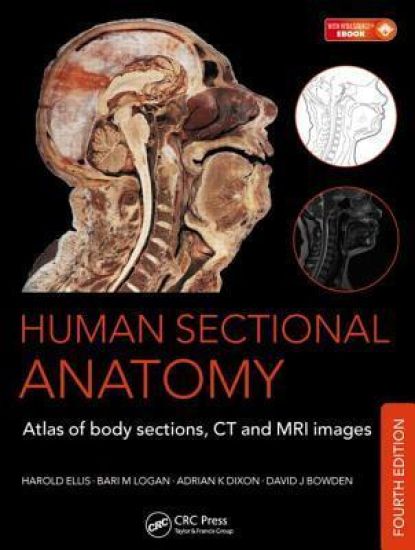
First published in 1991, Human Sectional Anatomy set new standards for the quality of cadaver sections and accompanying radiological images. Now in its fourth edition, this unsurpassed quality remains and is further enhanced by the addition of new material. The superb full-colour cadaver sections are compared with CT and MRI images, with accompanying, labelled, line diagrams. Many of the radiological images have been replaced with new examples for this latest edition, captured using the most up-to date imaging technologies to ensure excellent visualization of the anatomy. The photographic material is enhanced by useful notes with details of important anatomical and radiological features.Beautifully presented in a generous format, Human Sectional Anatomy continues to be an invaluable resource for all radiologists, radiographers, surgeons and medics, in training and in practice, and an essential component of departmental and general medical library collections.
Human Sectional Anatomy

Human Sectional Anatomy

Bari M. Logan; Harold Ellis; Adrian Kendal Dixon; David J. Bowden

Productivity Press
2017
nidottu
First published in 1991, Human Sectional Anatomy set new standards for the quality of cadaver sections and accompanying radiological images. Now in its fourth edition, this unsurpassed quality remains and is further enhanced by the addition of new material. The superb full-colour cadaver sections are compared with CT and MRI images, with accompanying, labelled, line diagrams. Many of the radiological images have been replaced with new examples for this latest edition, captured using the most up-to date imaging technologies to ensure excellent visualization of the anatomy. The photographic material is enhanced by useful notes with details of important anatomical and radiological features.Beautifully presented in a convenient and portable format, the fourth edition of this popular pocket atlas continues to be an essential textbook for medical and allied health students and those taking postgraduate qualifications in radiology, surgery and medicine, and an invaluable ready-reference for all practising anatomists, radiologists, radiographers, surgeons and medics.
Psykopati

Psykopati

Henrik Andershed; Henrik Belfrage; Sune Bo Hansen; David J. Cooke; Linda Gröning; Stephen D. Hart; Helge Andreas Hoff; Mickey Toftkjær Kongerslev; Mette K. F. Kreis; Caroline Logan; Liselotte Pedersen; Knut Rypdal; Erik Simonsen; Catherine Tuvblad

Gyldendal
2016
nidottu
Psykopati er i daglig tale blevet synonymt med mennesker, der begår koldblodige og grusomme handlinger som fx seriemord, terror og finansielt underslæb i millionklassen. Denne bog går bag om de sensationelle fremstillinger og giver en faglig, men alment tilgængelig introduktion til psykopati – hvad er det, og hvad vi kan gøre ved det? Bogen er skrevet og redigeret af eksperter i psykopati med tilknytning til Skandinavien. Med udgangspunkt i aktuel videnskabelig forskning undersøger forfatterne centrale spørgsmål om psykopati, som bl.a. hvordan psykopatiske personlighedstræk kommer til udtryk, og hvordan og hvorfor denne personlighedsforstyrrelse udvikles. Kapitlerne afdækker også praktiske spørgsmål, som hvordan psykopati differentieres fra andre psykiske lidelser, hvordan man laver en klinisk vurdering og udredning, hvilken rolle psykopati spiller i retlige sammenhænge, samt hvordan man håndterer og behandler mennesker med psykopati. Bogen henvender sig til studerende og fagfolk inden for psykologi, psykiatri, kriminologi, jura, socialt arbejde og kriminalforsorgen, men også til den interesserede læser, som gerne vil vide mere om mennesker med psykopati.
Inner Lives

Inner Lives

Paula Johnson; Joyce A. Logan; Angela J. Davis

New York University Press
2004
pokkari
An intimate collection of African American women's voices on their lives in prison The rate of women entering prison has increased nearly 400 percent since 1980, with African American women constituting the largest percentage of this population. However, despite their extremely disproportional representation in correctional institutions, little attention has been paid to their experiences within the criminal justice system. Inner Lives provides readers the rare opportunity to intimately connect with African American women prisoners. By presenting the women's stories in their own voices, Paula C. Johnson captures the reality of those who are in the system, and those who are working to help them. Johnson offers a nuanced and compelling portrait of this fastest-growing prison population by blending legal history, ethnography, sociology, and criminology. These striking and vivid narratives are accompanied by equally compelling arguments by Johnson on how to reform our nation's laws and social policies, in order to eradicate existing inequalities. Her thorough and insightful analysis of the historical and legal background of contemporary criminal law doctrine, sentencing theories, and correctional policies sets the stage for understanding the current system.
Essays and Texts in Honor of J David Thomas

Essays and Texts in Honor of J David Thomas

T. Gagos; Roger S. Bagnall

American Society of Papyrologists
2001
sidottu
A collection of nine essays focused on military and administrative institutions in the ancient world, and supplemented by a presentation of thirty texts in Greek and Latin written on papyrus and wooden fragments, some previously unpublished. The essays and textual editions are contributed by a host of distinguished international scholars in honour of Professor J David Thomas seventieth birthday. Professor Thomas (formerly at the University of Durham) has edited a large number of ancient texts over the last 50 years, and his work has been important to our understanding of subjects as diverse as the military strength on Hadrians Wall and the chain of command in the Egyptian civil service.
America Illustrated. Edited by J. D. Williams.

America Illustrated. Edited by J. D. Williams.

J David Williams

British Library, Historical Print Editions
2011
pokkari
Title: America Illustrated. Edited by J. D. Williams.Publisher: British Library, Historical Print EditionsThe British Library is the national library of the United Kingdom. It is one of the world's largest research libraries holding over 150 million items in all known languages and formats: books, journals, newspapers, sound recordings, patents, maps, stamps, prints and much more. Its collections include around 14 million books, along with substantial additional collections of manuscripts and historical items dating back as far as 300 BC.The HISTORY OF COLONIAL NORTH AMERICA collection includes books from the British Library digitised by Microsoft. This collection refers to the European settlements in North America through independence, with emphasis on the history of the thirteen colonies of Britain. Attention is paid to the histories of Jamestown and the early colonial interactions with Native Americans. The contextual framework of this collection highlights 16th century English, Scottish, French, Spanish, and Dutch expansion. ++++The below data was compiled from various identification fields in the bibliographic record of this title. This data is provided as an additional tool in helping to insure edition identification: ++++ British Library Williams, J David; 1876. 121 p.; 4 . 10411.i.20.