Kirjojen hintavertailu. Mukana 11 244 527 kirjaa ja 12 kauppaa.

Kirjahaku

Etsi kirjoja tekijän nimen, kirjan nimen tai ISBN:n perusteella.

1000 tulosta hakusanalla James M. Hutchisson

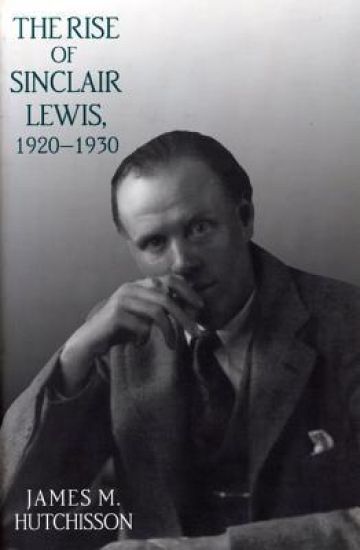
The Rise of Sinclair Lewis, 1920–1930

The Rise of Sinclair Lewis, 1920–1930

James M. Hutchisson

Pennsylvania State University Press
1996
sidottu
The Rise of Sinclair Lewis examines the making of Lewis’ s best-selling novels Main Street, Babbitt, Arrowsmith, and Elmer Gantry—their sources, composition, publication, and subsequent critical reception. Drawing on thousands of pages of material from Lewis’s notes, outlines, and drafts—most of it never before published—James M. Hutchisson shows how Lewis selected usable materials and shaped them, through his unique vision, into novels that reached and remained part of the American literary imagination. Hutchisson also describes for the first time how large a role was played by Lewis’s wives, assistants, and publishers in determining the final shape of his books.
The Rise of Sinclair Lewis, 1920–1930

The Rise of Sinclair Lewis, 1920–1930

James M. Hutchisson

Pennsylvania State University Press
2002
pokkari
The Rise of Sinclair Lewis examines the making of Lewis’ s best-selling novels Main Street, Babbitt, Arrowsmith, and Elmer Gantry—their sources, composition, publication, and subsequent critical reception. Drawing on thousands of pages of material from Lewis’s notes, outlines, and drafts—most of it never before published—James M. Hutchisson shows how Lewis selected usable materials and shaped them, through his unique vision, into novels that reached and remained part of the American literary imagination. Hutchisson also describes for the first time how large a role was played by Lewis’s wives, assistants, and publishers in determining the final shape of his books.
Ernest Hemingway

Ernest Hemingway

James M. Hutchisson

Pennsylvania State University Press
2016
sidottu
To many, the life of Ernest Hemingway has taken on mythic proportions. From his romantic entanglements to his legendary bravado, the elements of Papa’s persona have fascinated readers, turning Hemingway into such an outsized figure that it is almost impossible to imagine him as a real person. James Hutchisson’s biography reclaims Hemingway from the sensationalism, revealing the life of a man who was often bookish and introverted, an outdoor enthusiast who revered the natural world, and a generous spirit with an enviable work ethic.This is an examination of the writer through a new lens—one that more accurately captures Hemingway’s virtues as well as his flaws. Hutchisson situates Hemingway’s life and art in the defining contexts of the women he loved and lost, the places he held dear, and the specter of mental illness that haunted his family. This balanced portrait examines for the first time in full detail the legendary writer’s complex medical history and his struggle against clinical depression. The first major biography of Hemingway in over twenty years, this monumental achievement provides readers with a fresh, comprehensive look at one of the most acclaimed authors of the twentieth century.
DuBose Heyward

DuBose Heyward

James M. Hutchisson

University Press of Mississippi
2017
nidottu
In 1924 DuBose Heyward (1885-1940) was a businessman absorbed in his Charleston heritage. One year later he was the world-famous author of Porgy, the first major southern novel to portray blacks without condescension. Just a decade later George Gershwin had transformed Heyward’s book into an opera that would become one of the most enduring masterworks of American music.As a young man Heyward was immersed in the Gullah culture of his city. Especially through his mother, a performer and interpreter of Gullah life in folktale and song, he discovered the gateway into the fascinating world he would immortalize in the characters of Porgy, Bess, Maria, and other denizens of Charleston’s Catfish Row. In this full-dress biography Heyward is seen for the first time as a southerner who overcame social restrictions to perceive humanity beyond the class and color lines. Drawing on nearly fifty years of private papers and on previously untapped personal correspondence, this book places Heyward in the social and cultural framework of his time and marks the power and empathy of his extraordinary achievement.Until now, Heyward’s role in the writing of George Gershwin’s acclaimed opera Porgy and Bess has remained almost unknown. He wrote the libretto singlehandedly, and nearly half the arias are by him. Long thought to have been merely an assistant to Gershwin, he actually was involved in most phases of the production. Although the opera eclipsed Heyward’s book, it was Gershwin’s foundation stone.Mainly known today as the author of Porgy, Heyward was a versatile artist equally at ease with verse, short fiction, novels, plays, and Hollywood screenwriting. He and his wife Dorothy helped to energize the nascent black theater movement in New York. A cofounder of the Poetry Society of South Carolina, the first regional poetry circle in America, Heyward became a vigorous promoter of southern writing that was to peak in the great southern literary renaissance.Pulled by tradition into a way of life he did not completely accept, he developed a growing social conscience through writing. He began as a social conservative but ended his life as a staunch progressive committed to the advancement of African Americans.
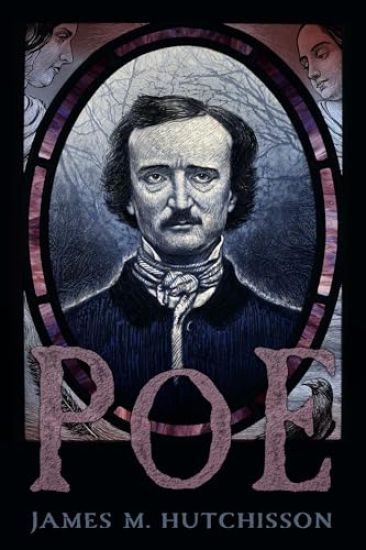
Poe

Poe

James M. Hutchisson

UNIVERSITY PRESS OF MISSISSIPPI
2025
nidottu
Edgar Allan Poe (1809–1849) was an American original—a luminous literary theorist, an erratic genius, and an analyst par excellence of human obsession and compulsion. The scope of his literary achievements and the dramatic character of Poe’s life have drawn readers and critics to him in droves. And yet, upon his death, one obituary penned by a literary enemy in the New York Daily Tribune cascaded into a lasting stain on Poe’s character, leaving a historic misunderstanding. Many remember Poe as a difficult, self-pitying, troubled drunkard often incapable of caring for himself. Poe reclaims the Baltimore and Virginia writer’s reputation and power, retracing Poe’s life and career. Biographer and critic James M. Hutchisson captures the boisterous worlds of literary New York and Philadelphia in the 1800s to understand why Poe wrote the way he did and why his achievement was so important to American literature. The biography presents a critical overview of Poe’s major works and his main themes, techniques, and imaginative preoccupations. This portrait of the writer emphasizes Poe’s southern identity; his existence as a workaday journalist in the burgeoning magazine era; his authority as a literary critic and cultural arbiter; his courtly demeanor and sense of social propriety; his advocacy of women writers; his adaptation of art forms as diverse as the so-called "gutter press" and the haunting rhythms of African American spirituals; his borrowing of imagery from such popular social movements as temperance and freemasonry; and his far-reaching, posthumous influence.
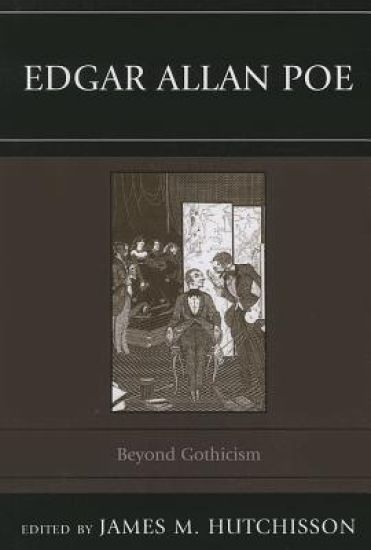
Edgar Allan Poe

Edgar Allan Poe

James M. Hutchisson

University of Delaware Press
2011
sidottu
Most frequently regarded as a writer of the supernatural, Poe was actually among the most versatile of American authors, writing social satire, comic hoaxes, mystery stories, science fiction, prose poems, literary criticism and theory, and even a play. As a journalist and editor, Poe was closely in touch with the social, political, and cultural trends of nineteenth-century America. Recent scholarship has linked Poe's imaginative writings to the historical realities of nineteenth-century America, including to science and technology, wars and politics, the cult of death and bereavement, and, most controversially, to slavery and stereotyped attitudes toward women. Edgar Allan Poe: Beyond Gothicism presents a systematic approach to topical criticism of Poe, revealing a new portrait of Poe as an author who blended topics of intellectual and social importance and returned repeatedly to these ideas in different works and using different aesthetic strategies during his brief but highly productive career. Twelve essays point readers toward new ways of considering Poe's themes, techniques, and aesthetic preoccupations by looking at Poe in the context of landscapes, domestic interiors, slavery, prosody, Eastern cultures, optical sciences, Gothicism, and literary competitions, clubs, and reviewing.
Edgar Allan Poe

Edgar Allan Poe

James M. Hutchisson

University of Delaware Press
2013
nidottu
Most frequently regarded as a writer of the supernatural, Poe was actually among the most versatile of American authors, writing social satire, comic hoaxes, mystery stories, science fiction, prose poems, literary criticism and theory, and even a play. As a journalist and editor, Poe was closely in touch with the social, political, and cultural trends of nineteenth-century America. Recent scholarship has linked Poe's imaginative writings to the historical realities of nineteenth-century America, including to science and technology, wars and politics, the cult of death and bereavement, and, most controversially, to slavery and stereotyped attitudes toward women. Edgar Allan Poe: Beyond Gothicism presents a systematic approach to topical criticism of Poe, revealing a new portrait of Poe as an author who blended topics of intellectual and social importance and returned repeatedly to these ideas in different works and using different aesthetic strategies during his brief but highly productive career. Twelve essays point readers toward new ways of considering Poe's themes, techniques, and aesthetic preoccupations by looking at Poe in the context of landscapes, domestic interiors, slavery, prosody, Eastern cultures, optical sciences, Gothicism, and literary competitions, clubs, and reviewing.
Porgy

Porgy

DuBose Heyward; James M. Hutchisson

University Press of Mississippi
2001
nidottu
The fictional characters of Porgy, Bess, Black Maria, Sportin' Life, and the other Gullah denizens of Catfish Row have attained a mythic status and have become inextricably identified with Charleston. This novel is the story of Porgy, a crippled street-beggar in the black tenement. Unwashed and un-wanted, he lives just on the edge of subsistence and trusts his fate to the gods and chance. His one shining moment is his pursuit of Bess, whom he wins and then loses during one summer of passion and violence. This story by DuBose Heyward is, of course, the origin of George Gershwin's acclaimed folk opera Porgy and Bess. Heyward created Porgy with such sympathy, honesty, and insight that Porgy has ascended into the pantheon of the universal. This Banner Books edition includes an afterword by James M. Hutchisson, Heyward's biographer, who places Porgy in its social and historical context and shows how the novel revolutionized American literature. Heyward had no literary training, and he wrote Porgy while working as an insurance agent. It is ironic that this deeply feeling author was a member of the Charleston aristocracy which regarded African Americans as little more than servants. Indeed, the tightly knit black community is celebrated in the novel and is contrasted with Charleston's white culture, which in Heyward's view lacked the vitality and rich social ethos of the Gullahs. In 1927, even before Gershwin transformed the novel with a musical score, the book was successfully dramatized for the New York stage. The production revolutionized the black theater movement with its casting of black actors. Porgy, published in 1925, proved to be on the leading edge of the great southern renaissance, in which works by William Faulkner, Eudora Welty, and others would depict black characters of increasing emotional and psychological complexity. The novel has gone through seven editions and has been translated into French, Gullah, and German, among other languages and dialects. DuBose Heyward (1885-1940) published Porgy to tremendous critical acclaim and financial success. He wrote poetry, short fiction, plays, and screenplays. James M. Hutchisson is a professor of English at The Citadel in Charleston.
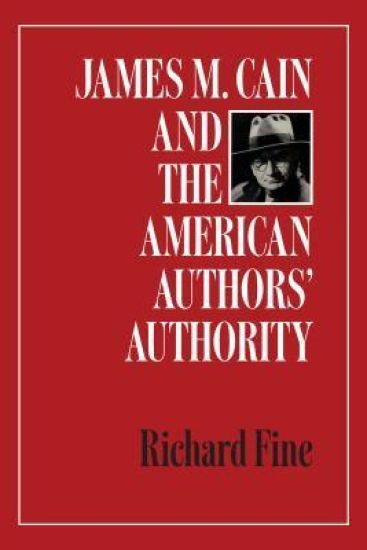
James M. Cain and the American Authors' Authority

James M. Cain and the American Authors' Authority

Richard Fine

University of Texas Press
2013
nidottu
The 1940s offered ever-increasing outlets for writers in book publishing, magazines, radio, film, and the nascent television industry, but the standard rights arrangements often prevented writers from collecting a fair share of the profits made from their work. To remedy this situation, novelist and screenwriter James M. Cain (The Postman Always Rings Twice,Double Indemnity, Mildred Pierce) proposed that all professional writers, including novelists, playwrights, poets, and screenwriters, should organize into a single cartel that would secure a fairer return on their work from publishers and producers. This organization, conceived and rejected within one turbulent year (1946), was the American Authors' Authority (AAA).In this groundbreaking work, Richard Fine traces the history of the AAA within the cultural context of the 1940s. After discussing the profession of authorship as it had developed in England and the United States, Fine describes how the AAA, which was to be a central copyright repository, was designed to improve the bargaining position of writers in the literary marketplace, keep track of all rights and royalty arrangements, protect writers' interests in the courts, and lobby for more favorable copyright and tax legislation.Although simple enough in its design, the AAA proposal ignited a firestorm of controversy, and a major part of Fine's study explores its impact in literary and political circles. Among writers, the AAA exacerbated a split between East and West Coast writers, who disagreed over whether writing should be treated as a money-making business or as an artistic (and poorly paid) calling. Among politicians, a move to unite all writers into a single organization smacked of communism and sowed seeds of distrust that later flowered in the Hollywood blacklists of the McCarthy era.Drawing insights from the fields of American studies, literature, and Cold War history, Fine's book offers a comprehensive picture of the development of the modern American literary marketplace from the professional writer's perspective. It uncovers the effect of national politics on the affairs of writers, thus illuminating the cultural context in which literature is produced and the institutional forces that affect its production.
James M. H. Gregg

James M. H. Gregg

James M H Gregg

iUniverse
2005
pokkari
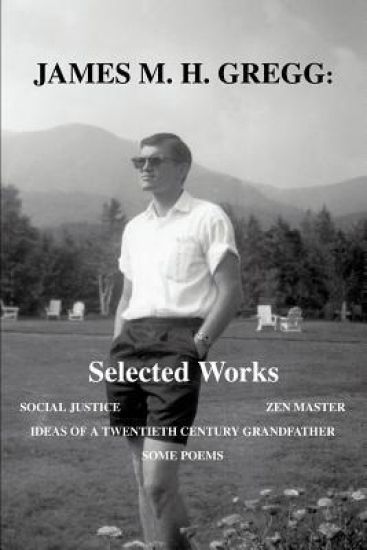
The James M. H. Gregg Selected Works includes four books. Each book was written to inspire future generations to think and act in ways to improve themselves and society. Mr. Gregg's most recent work, Social Justice (A Blueprint), explores a new set of ideas and strategies for moving humans to a higher cultural plane on which all can live to their full potential. In Ideas of a Twentieth Century Grandfather the author reveals to his grandchildren his knowledge and insight that he may not otherwise get a chance to tell them. Zen Master is a dialogue between a Zen Master and students. The students ask him questions about many subjects to include the meaning of life and living, death, the essences of Zen, and peace of mind. Finally, Some Poems is a compilation of poems that the author has written over the years about loving, living, being, and love.
James M. H. Gregg

James M. H. Gregg

James M H Gregg

iUniverse
2005
sidottu
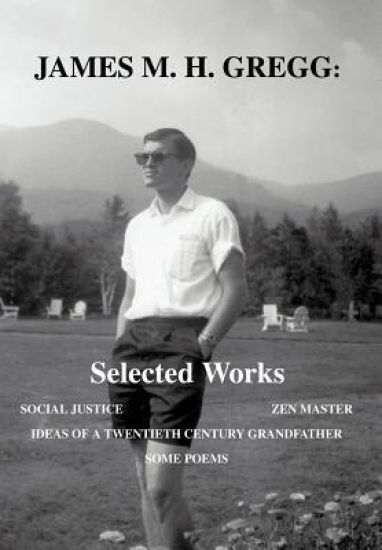
The James M. H. Gregg Selected Works includes four books. Each book was written to inspire future generations to think and act in ways to improve themselves and society. Mr. Gregg's most recent work, Social Justice (A Blueprint), explores a new set of ideas and strategies for moving humans to a higher cultural plane on which all can live to their full potential. In Ideas of a Twentieth Century Grandfather the author reveals to his grandchildren his knowledge and insight that he may not otherwise get a chance to tell them. Zen Master is a dialogue between a Zen Master and students. The students ask him questions about many subjects to include the meaning of life and living, death, the essences of Zen, and peace of mind. Finally, Some Poems is a compilation of poems that the author has written over the years about loving, living, being, and love.
James M. Cain

James M. Cain

David Madden; Kristopher Mecholsky

Scarecrow Press
2011
sidottu
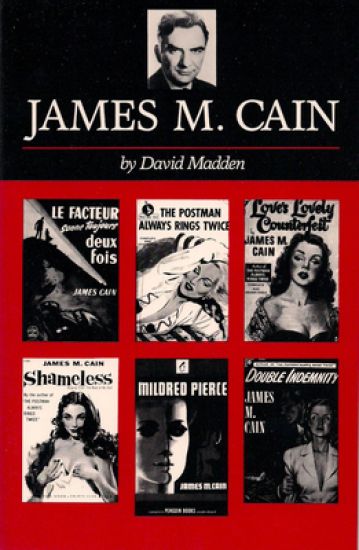
James M. Cain wrote some of the grittiest novels in American literature, including such classics as The Postman Always Rings Twice, Double Indemnity, and Mildred Pierce. James M. Cain: Hard-Boiled Mythmaker is a critical overview of the author's life, work, and legacy. An updated and expanded edition of two of David Madden's scholarly works on Cain, this new book improves upon the previous works by collecting the most essential writing on Cain by Madden into one volume. In addition to melding existing material, this work contains updated and new material, including fresh commentaries on later books, such as Rainbow's End, Cloud Nine, and The Enchanted Isle, as well as later film adaptations, including Butterfly. It also responds to 40 years' worth of criticism on Cain and reevaluates his influence. Providing an overview of all of Cain's fiction, including an analysis of the major themes of his entire literary career, the book also describes Cain's impact on and importance in 20th-century culture, film in particular. In addition to a biographical summary and thematic outline of Cain's nearly 50-year career, Madden and Mecholsky examine how Cain's works explore the nightmare consequences of the persistent American dream. Finally, Madden and Mecholsky consider Cain's technical innovations of the novel and survey the major film adaptations of Cain's novels. With its significant in-depth analysis and a foreword by Edgar-award winning author Max Allan Collins, this volume will be of interest to Cain scholars as well as anyone interested in 20th century American literature and film.
James M. Buchanan

James M. Buchanan

John Meadowcroft

Continuum Publishing Corporation
2011
sidottu
This is volume 17 in the "Major Conservative and Libertarian Thinkers" series. James McGill Buchanan (B. 1919) is an American economist best known for his public choice theory. The founder of a new Virginia school of political economy, he has written extensively on subjects including public finance, macroeconomics, and libertarian theory. Buchanan's theory offered a basis for conservative political endeavors such as a constitutional amendment to balance the federal budget. He was awarded the Nobel Prize in Economics in 1986. "Major Conservative and Libertarian Thinkers" provides comprehensive accounts of the works of seminal conservative thinkers from a variety of periods, disciplines, and traditions - the first series of its kind. Even the selection of thinkers adds another aspect to conservative thinking, including not only theorists but also writers and practitioners. The series comprises twenty volumes, each including an intellectual biography, historical context, critical exposition of the thinker's work, reception and influence, contemporary relevance, bibliography including references to electronic resources, and an index.