Kirjojen hintavertailu. Mukana 12 390 323 kirjaa ja 12 kauppaa.

Kirjahaku

Etsi kirjoja tekijän nimen, kirjan nimen tai ISBN:n perusteella.

1000 tulosta hakusanalla James Hutton

A Dissertation Upon the Philosophy of Light, Heat, and Fire. In Seven Parts. By James Hutton,
The 18th century was a wealth of knowledge, exploration and rapidly growing technology and expanding record-keeping made possible by advances in the printing press. In its determination to preserve the century of revolution, Gale initiated a revolution of its own: digitization of epic proportions to preserve these invaluable works in the largest archive of its kind. Now for the first time these high-quality digital copies of original 18th century manuscripts are available in print, making them highly accessible to libraries, undergraduate students, and independent scholars.The Age of Enlightenment profoundly enriched religious and philosophical understanding and continues to influence present-day thinking. Works collected here include masterpieces by David Hume, Immanuel Kant, and Jean-Jacques Rousseau, as well as religious sermons and moral debates on the issues of the day, such as the slave trade. The Age of Reason saw conflict between Protestantism and Catholicism transformed into one between faith and logic -- a debate that continues in the twenty-first century.++++The below data was compiled from various identification fields in the bibliographic record of this title. This data is provided as an additional tool in helping to insure edition identification: ++++British LibraryT053109With a half-title.Edinburgh: printed for Messrs Cadell, Junior, and Davies, London, 1794. 4], xxiv,326p.; 8
Considerations on the Nature, Quality, and Distinctions, of Coal and Culm, With Inquiries, Philosophical and Political, Into the Present State of the Laws, ... Contained in a Letter From Doctor James Hutton,
The 18th century was a wealth of knowledge, exploration and rapidly growing technology and expanding record-keeping made possible by advances in the printing press. In its determination to preserve the century of revolution, Gale initiated a revolution of its own: digitization of epic proportions to preserve these invaluable works in the largest archive of its kind. Now for the first time these high-quality digital copies of original 18th century manuscripts are available in print, making them highly accessible to libraries, undergraduate students, and independent scholars.Delve into what it was like to live during the eighteenth century by reading the first-hand accounts of everyday people, including city dwellers and farmers, businessmen and bankers, artisans and merchants, artists and their patrons, politicians and their constituents. Original texts make the American, French, and Industrial revolutions vividly contemporary.++++The below data was compiled from various identification fields in the bibliographic record of this title. This data is provided as an additional tool in helping to insure edition identification: ++++British LibraryT013165Edinburgh: printed for, and sold by C. Elliot, and Richardson and Urquhart, London, 1777. 2],37, 1]p.; 8
Theory of the Earth, With Proofs and Illustrations. In Four Parts. By James Hutton, ... of 2; Volume 1
The 18th century was a wealth of knowledge, exploration and rapidly growing technology and expanding record-keeping made possible by advances in the printing press. In its determination to preserve the century of revolution, Gale initiated a revolution of its own: digitization of epic proportions to preserve these invaluable works in the largest archive of its kind. Now for the first time these high-quality digital copies of original 18th century manuscripts are available in print, making them highly accessible to libraries, undergraduate students, and independent scholars.Medical theory and practice of the 1700s developed rapidly, as is evidenced by the extensive collection, which includes descriptions of diseases, their conditions, and treatments. Books on science and technology, agriculture, military technology, natural philosophy, even cookbooks, are all contained here.++++The below data was compiled from various identification fields in the bibliographic record of this title. This data is provided as an additional tool in helping to insure edition identification: ++++British LibraryT053063Two volumes only: no more published.Edinburgh: printed for Messrs Cadell, junior, and Davies, London; and William Creech, Edinburgh, 1795. 2v., plates; 8
Theory of the Earth, With Proofs and Illustrations. In Four Parts. By James Hutton, ... of 2; Volume 2
The 18th century was a wealth of knowledge, exploration and rapidly growing technology and expanding record-keeping made possible by advances in the printing press. In its determination to preserve the century of revolution, Gale initiated a revolution of its own: digitization of epic proportions to preserve these invaluable works in the largest archive of its kind. Now for the first time these high-quality digital copies of original 18th century manuscripts are available in print, making them highly accessible to libraries, undergraduate students, and independent scholars.Medical theory and practice of the 1700s developed rapidly, as is evidenced by the extensive collection, which includes descriptions of diseases, their conditions, and treatments. Books on science and technology, agriculture, military technology, natural philosophy, even cookbooks, are all contained here.++++The below data was compiled from various identification fields in the bibliographic record of this title. This data is provided as an additional tool in helping to insure edition identification: ++++British LibraryT053063Two volumes only: no more published.Edinburgh: printed for Messrs Cadell, junior, and Davies, London; and William Creech, Edinburgh, 1795. 2v., plates; 8
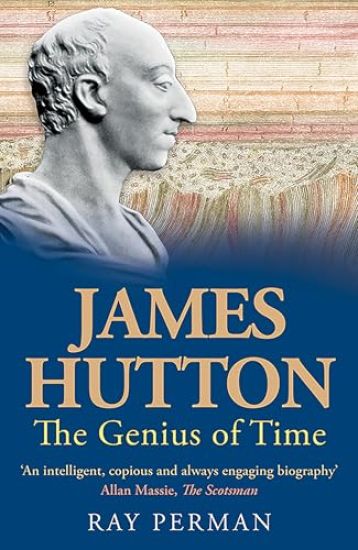
James Hutton

James Hutton

Ray Perman

BIRLINN GENERAL
2022
sidottu
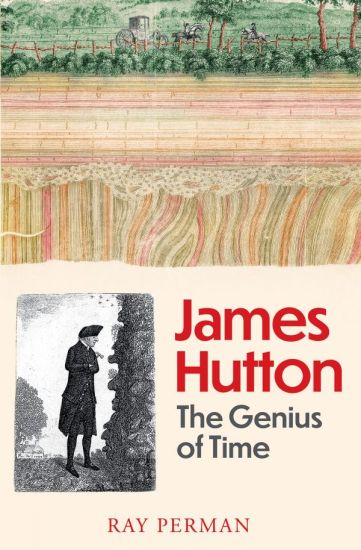
Discover one of the Scottish Enlightenment's brightest stars. Among the giants of the Scottish Enlightenment, the name of James Hutton is overlooked. Yet his Theory of the Earth revolutionised the way we think about how our planet was formed and laid the foundation for the science of geology. He was in his time a doctor, a farmer, a businessman, a chemist yet he described himself as a philosopher – a seeker after truth. A friend of James Watt and of Adam Smith, he was a polymath, publishing papers on subjects as diverse as why it rains and a theory of language. He shunned status and official position, refused to give up his strong Scots accent and vulgar speech, loved jokes and could start a party in an empty room. Yet much of his story remains a mystery. His papers, library and mineral collection all vanished after his death and only a handful of letters survive. He seemed to be a lifelong bachelor, yet had a secret son whom he supported throughout his life. This book uses new sources and original documents to bring Hutton the man to life and places him firmly among the geniuses of his time.
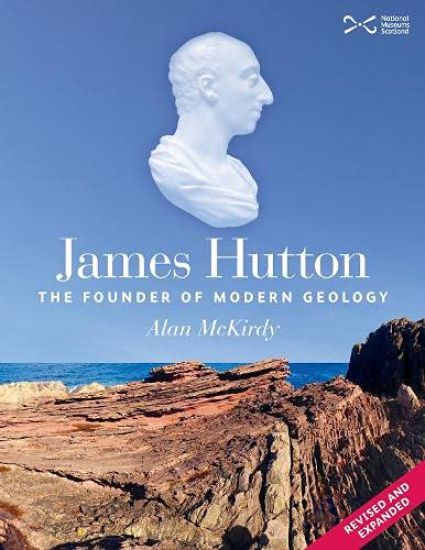
James Hutton

James Hutton

Alan McKirdy

NMSE - PUBLISHING LTD
2022
nidottu
Thoroughly revised and expanded from the 2012 edition (twice the number of pages, almost double the number of illustrations) this book pays tribute to the man and his diverse works and achievements. James Hutton (1726-1797) was one of the first environmentalists, a man ahead of his time. He developed a grand theory of the Earth in which he tried to make sense of a lifetime of observation and deduction about the way in which our planet functions. For example, he connected temperature with latitude. His measurements, with rudimentary thermometers, of temperature changes between the base and summit of Arthur’s Seat, were remarkably accurate and he studied climate data from other parts of the world. A leading figure in the eighteenth-century Scottish Enlightenment, he was also an innovative farmer, successful entrepreneur and a man with endless intellectual curiosity. The year 2026 will be the tercentenary of his birth. There will be many special events leading up to and in that year organised by The James Hutton Institute, Scotland’s premier environmental and agricultural research organisation.
James Hutton

James Hutton

Ray Perman

BIRLINN GENERAL
2026
nidottu
Discover one of the Scottish Enlightenment's brightest stars. Among the giants of the Scottish Enlightenment, the name of James Hutton is overlooked. Yet his Theory of the Earth revolutionised the way we think about how our planet was formed and laid the foundation for the science of geology. He was in his time a doctor, a farmer, a businessman, a chemist yet he described himself as a philosopher – a seeker after truth. A friend of James Watt and of Adam Smith, he was a polymath, publishing papers on subjects as diverse as why it rains and a theory of language. He shunned status and official position, refused to give up his strong Scots accent and vulgar speech, loved jokes and could start a party in an empty room. Yet much of his story remains a mystery. His papers, library and mineral collection all vanished after his death and only a handful of letters survive. He seemed to be a lifelong bachelor, yet had a secret son whom he supported throughout his life. This book uses new sources and original documents to bring Hutton the man to life and places him firmly among the geniuses of his time.
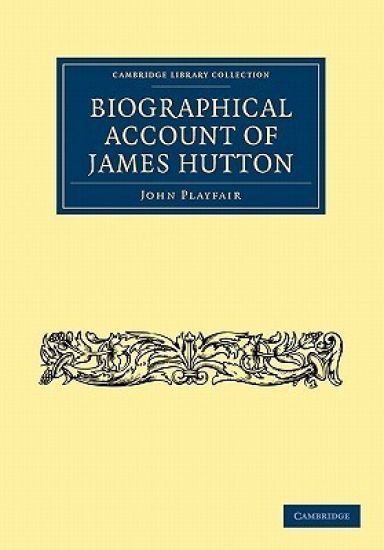
Biographical Account of James Hutton, M.D. F.R.S. Ed.

Biographical Account of James Hutton, M.D. F.R.S. Ed.

John Playfair

Cambridge University Press
2011
pokkari
James Hutton (1726–1797) was an eminent Scottish scientist known chiefly for his work in geology. Educated at Edinburgh University, Hutton then travelled to Europe to study medicine before going into industry. He spent over a decade farming his family property in Scotland before returning to academic and commercial life. Hutton became an established geologist who also published on chemistry, meteorology and philosophy as an active member of the Edinburgh Royal Society. This volume, first published in 1805, is a detailed and affectionate chronicle of Hutton's life by his close friend, geologist and mathematician John Playfair. The author recounts Hutton's academic career, speculates on the motivation behind his foray into farming and includes a detailed discussion of his main geological theories. With little of Hutton's correspondence and papers surviving, this account by an intimate contemporary is the key resource for studying the life of an intriguing figure in scientific history.