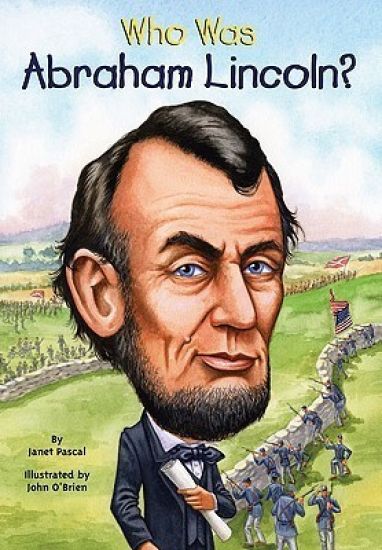
Born to a family of farmers, Lincoln stood out from an early age--literally (He was six feet four inches tall.) As sixteenth President of the United States, he guided the nation through the Civil War and saw the abolition of slavery. But Lincoln was tragically shot one night at Ford's Theater--the first President to be assassinated. Over 100 black-and-white illustrations and maps are included.
Ted Geisel loved to doodle from the time he was a kid. He had an offbeat, fun-loving personality. He often threw dinner parties where guests wore outrageous hats And he donned quirky hats when thinking up ideas for books- like his classic The Cat in the Hat. This biography, with black-and-white illustrations throughout, brings an amazingly gifted author/illustrator to life.
Isaac Newton was always a loner, preferring to spend his time contemplating the mysteries of the universe. When the plague broke out in London in 1665 he was forced to return home from college. It was during this period of so much death, that Newton gave life to some of the most important theories in modern science, including gravity and the laws of motion.
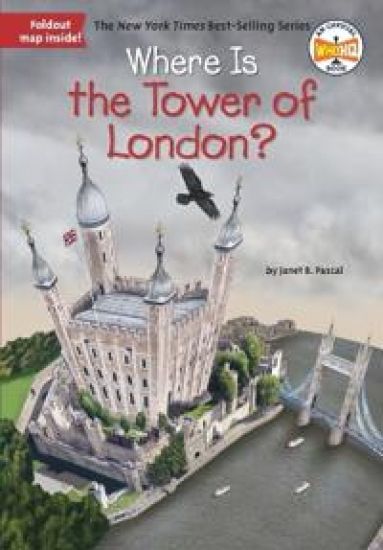
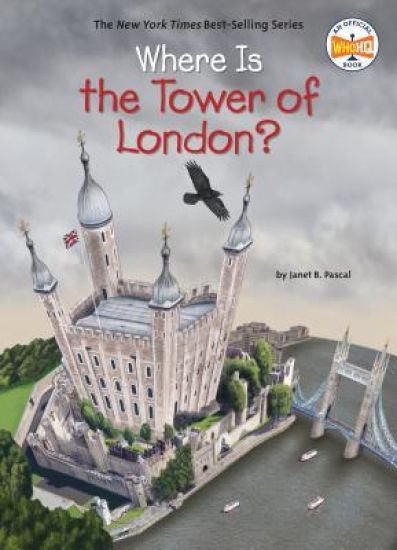
The Tower of London holds almost a thousand years' worth of secrets!The Tower of London draws more than 2 million visitors a year! Almost 1,000 years old and first built by William the Conqueror in 1066, the tower has been a fortress, a palace, a zoo, and an exhibit site for the amazing Crown Jewels. But the tower's reputation as a prison is probably what accounts for its popularity! Two young princes in the time of King Richard III were never again heard from after entering the castle, and two of King Henry VIII's wives were held captive here. Author Janet B. Pascal brings to life one of the most fascinating landmarks in the world.
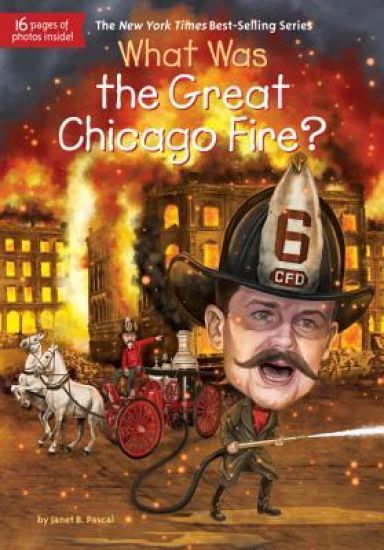
Did the Great Chicago Fire really start after a cow kicked over a lantern in a barn? Find out the truth in this addition to the What Was? series. On Sunday, October 8, 1871, a fire started on the south side of Chicago. A long drought made the neighborhood go up in flames. And practically everything that could go wrong did. Firemen first went to the wrong location. Fierce winds helped the blaze jump the Chicago River twice. The Chicago Waterworks burned down, making it impossible to fight the fire. Finally after two days, Mother Nature took over, with rain smothering the flames. This overview of a stupendous disaster not only covers the fire but explores the whole history of fire fighting.
The west was at its wildest from 1865 to 1895, when territories west of the Mississippi River remained untamed and lawless. Famous for cowboys, American Indians, lawmen, gunslingers, pioneers, and prospectors, this period in US history captures the imagination of all kids and now is brought vividly to life. Series Overview: A natural expansion of the exceptional Who Was? series, What Was? focuses on compelling historical events, great battles, protests and discoveries.
It seems entirely fitting that Maurice Sendak was born on the same day that Mickey Mouse first made his cartoon debut--June 10, 1928. Sendak was crazy about cartoons and comic books, and at twelve, after seeing Disney's Fantasia, he decided that he was going to become an illustrator. His love of childrens books began early: often sick and confined to bed, little Maurice read and read and read. Though many of his own stories were light and funny, the most important ones--Where the Wild Things Are, In the Night Kitchen, Outside Over There--dealt with anger, jealousy, abandonment, content that had never before been the subject of picture books. As well as covering career highlights, this easy to read, illustrated biography also describes the personal life of this genius. Who Was Maurice Sendak is perfect for kids wild about one of the most influential children's book artists of the twentieth century
Before 1914, traveling from the East Coast to the West Coast meant going by land across the entire United States. To go by sea involved a long journey around South America and north along the Pacific Coast. But then, in a dangerous and amazing feat of engineering, a 48-mile-long channel was dug through Panama, creating the world's most famous shortcut: the Panama Canal
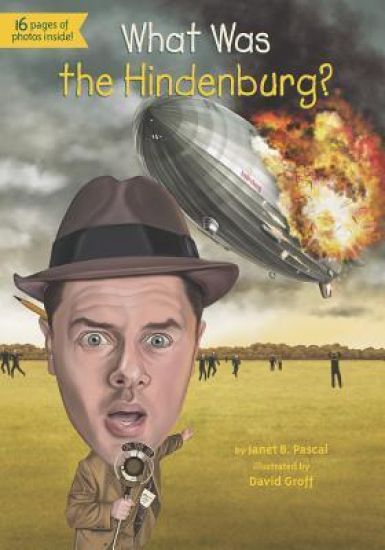
At 800-feet long, the Hindenburg was the largest airship ever built--just slightly smaller than the Titanic! Also of a disastrous end, the zeppelin burst into flame as spectators watched it attempt to land in Lakehurst, New Jersey on May 6, 1937. In under a minute, the Hindenburg was gone, people jumping from windows to escape. However, only 62 of the 97 crew members and passengers onboard survived. The exact cause of the disaster is still unknown and remains a fascinating historical mystery perfect for this series.
On October 29, 1929, life in the United States took a turn for the worst. The stock market - the system that controls money in America - plunged to a record low. But this event was only the beginning of many bad years to come. By the early 1930s, one out of three people was not working. People lost their jobs, their houses, or both and ended up in shantytowns called "Hoovervilles" named for the president at the time of the crash. By 1933, many banks had gone under. Though the U.S. has seen other times of struggle, the Great Depression remains one of the hardest and most widespread tragedies in American history. Now it is represented clearly and with 80 illustrations in our What Was...? series.
The Tower of London holds almost a thousand years' worth of secrets!The Tower of London draws more than 2 million visitors a year! Almost 1,000 years old and first built by William the Conqueror in 1066, the tower has been a fortress, a palace, a zoo, and an exhibit site for the amazing Crown Jewels. But the tower's reputation as a prison is probably what accounts for its popularity! Two young princes in the time of King Richard III were never again heard from after entering the castle, and two of King Henry VIII's wives were held captive here. Author Janet B. Pascal brings to life one of the most fascinating landmarks in the world.
Having participated in the First World War, and having seen two of his sons serve in the Second, Tolkien was concerned with many of the same themes that interested other writers in the post-war period. The rhythm of war flows through his writings, but his own interpretation of the themes, symbols, and motifs of war, however, were influenced by his religious views and his interest in fantasy, which add another layer of meaning and a sense of timelessness to his writing. Croft explores the different aspect of Tolkien's relationship with war both in his life and in his work from the early Book of Lost Tales to his last story Smith of Wootten Major, and concentrating on his greatest and most well-known works The Hobbit and The Lord of the Rings. This timely addition to the critical literature on Tolkien sheds new light on the author's life and works. Tolkien, one of the world's most beloved authors, was a World War I signaling officer who survived the Battle of the Somme, and two of his sons served during World War II. Such experiences and events lead Tolkien to a complex attitude toward war and military leadership, the themes of which find their way into his most important writings. His fiction, criticism, and letters demonstrate a range of attitudes that would change over the course of his life. In the end, his philosophy on human nature and evil, and the inevitability of conflict, would appear to be pragmatic and rational, if regretful and pessimistic. Still, Croft is able to uncover a strain of hopefulness, as befitted his Catholicism, about the ultimate fate of the human soul. She concludes that his personal life and values informed his reading and his writing and the way in which he interpreted his own experiences. This valuable consideration of war in the life of Tolkien is essential reading for all readers interested in deepening their understanding of this great writer.
For early childhood classrooms – where curriculum is increasingly shaped by standards and teachers are pressed for time – Beyond Early Literacy offers a literacy method that goes beyond simply developing language arts skills. Known as Shared Journal, this process promotes young children’s learning across content areas – including their communication and language abilities, writing skills, sense of community, grasp of diverse social and cultural worlds, and understanding of history, counting, numeracy, and time. Pairing interactive talk with individual writing in the classroom community, this rich method develops the whole child.Special features include: sample lesson plans, rubrics, and templates throughout the book children’s artifacts, including examples of oral and written work teacher accounts examining the use of Shared Journal in the classroom, including strategies and suggestions a Companion Website with templates, additional resources, and video clips of in-classroom teaching and examples of exciting ways to use new technologies.This two-part book is first framed by current theory and research about children’s cognitive, language, and literacy development, and an extensive body of research and case studies on the efficacy of the method. The second part features strategies from on-the-ground teachers who have used the process with their students and explores how Shared Journal can be used with new technologies, can meet standards, and can be appropriate for diverse populations of children. This is a fantastic resource for use in early childhood education courses in emergent literacy, language arts, and curriculum.
For early childhood classrooms – where curriculum is increasingly shaped by standards and teachers are pressed for time – Beyond Early Literacy offers a literacy method that goes beyond simply developing language arts skills. Known as Shared Journal, this process promotes young children’s learning across content areas – including their communication and language abilities, writing skills, sense of community, grasp of diverse social and cultural worlds, and understanding of history, counting, numeracy, and time. Pairing interactive talk with individual writing in the classroom community, this rich method develops the whole child.Special features include: sample lesson plans, rubrics, and templates throughout the book children’s artifacts, including examples of oral and written work teacher accounts examining the use of Shared Journal in the classroom, including strategies and suggestions a Companion Website with templates, additional resources, and video clips of in-classroom teaching and examples of exciting ways to use new technologies.This two-part book is first framed by current theory and research about children’s cognitive, language, and literacy development, and an extensive body of research and case studies on the efficacy of the method. The second part features strategies from on-the-ground teachers who have used the process with their students and explores how Shared Journal can be used with new technologies, can meet standards, and can be appropriate for diverse populations of children. This is a fantastic resource for use in early childhood education courses in emergent literacy, language arts, and curriculum.
Police culture is often considered as both a cause of police deviance and an obstacle for police reform. In this case study of police racism and police reform in Australia, the author provides a critical assessment of police initiative in response to the problem of police/minorities relations. The book examines the dynamics of change and resistance within a police organisation and captures the complexity and unpredictability of the change process. It questions the utility of the traditional conception of police culture and proposes a new framework for understanding the inter-relationships between the structural conditions of police work, police cultural knowledge, and police practice. A highly original and valuable contribution to policing studies, this book is both empirically rich and theoretically informed.
Forward Falcons documents the history of Bowling Green State University women's sports from 1914 to 1982, the year that BG's women's intercollegiate sports were incorporated into the NCAA. During these earlier years, women coached most of the teams, and organizations composed primarily of women set the program standards. The first chapter provides an overview of women's collegiate sport in the 20th century, both nationally and at BGSU. This chapter is followed by separate chapters about the 13 BGSU teams that enjoyed varsity status at any time through 1982. Other chapters highlight memories and legacies of former participants, as well as the 2005 Leadership Years Celebration and Title IX conference held at BGSU. Reminiscences from athletes, coaches, officials and administrators are woven throughout all chapters, along with numerous photographs and clippings. Forward Falcons is also available on CD on this site.
Police forces everywhere have been undergoing major social and organizational changes. In this, one of the few longitudinal studies of police socialization, Janet Chan, Christopher Devery, and Sally Doran present the complexity of police socialization under these changing conditions. Following 150 new police recruits through two years of training and apprenticeship, the authors question the traditional model of socialization that assumes a degree of stability and homogeneity in the organizational culture. They suggest that recruits' developmental paths can be much more varied and police culture is increasingly vulnerable to change. Drawing on interviews, observations, and questionnaires, the authors depict the complex processes by which recruits adapt, redefine, cope with, and make sense of the positive and negative aspects of their training and apprenticeship. Bringing together rigorous quantitative analyses with rich ethnographic description, Fair Cop provides new empirical data and theoretical understanding about the reproduction and change of police culture.