
Kirjahaku
Etsi kirjoja tekijän nimen, kirjan nimen tai ISBN:n perusteella.
1000 tulosta hakusanalla Janet Jacobs


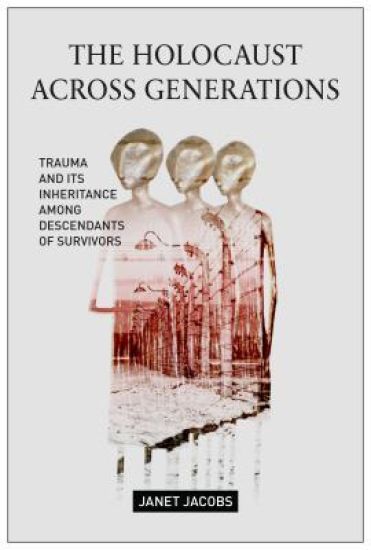
Winner of the 2017 Outstanding Book Award for the Peace, War, and Social Conflict Section presented by the American Sociological Association Brings together the study of post-Holocaust family culture with the study of collective memory Over the last two decades, the cross-generational transmission of trauma has become an important area of research within both Holocaust studies and the more broad study of genocide. The overall findings of the research suggest that the Holocaust informs both the psychological and social development of the children of survivors who, like their parents, suffer from nightmares, guilt, fear, and sadness. The impact of social memory on the construction of survivor identities among succeeding generations has not yet been adequately explained. Moreover, the importance of gender to the intergenerational transmission of trauma has, for the most part, been overlooked. In The Holocaust across Generations, Janet Jacobs fills these significant gaps in the study of traumatic transference. The volume brings together the study of post-Holocaust family culture with the study of collective memory. Through an in-depth study of 75 children and grandchildren of survivors, the book examines the social mechanisms through which the trauma of the Holocaust is conveyed by survivors to succeeding generations. It explores the social structures—such as narratives, rituals, belief systems, and memorial sites—through which the collective memory of trauma is transmitted within families, examining the social relations of traumatic inheritance among children and grandchildren of Holocaust survivors. Within this analytic framework, feminist theory and the importance of gender are brought to bear on the study of traumatic inheritance and the formation of trauma-based identities among Holocaust carrier groups.
Winner of the 2017 Outstanding Book Award for the Peace, War, and Social Conflict Section presented by the American Sociological Association Brings together the study of post-Holocaust family culture with the study of collective memory Over the last two decades, the cross-generational transmission of trauma has become an important area of research within both Holocaust studies and the more broad study of genocide. The overall findings of the research suggest that the Holocaust informs both the psychological and social development of the children of survivors who, like their parents, suffer from nightmares, guilt, fear, and sadness. The impact of social memory on the construction of survivor identities among succeeding generations has not yet been adequately explained. Moreover, the importance of gender to the intergenerational transmission of trauma has, for the most part, been overlooked. In The Holocaust across Generations, Janet Jacobs fills these significant gaps in the study of traumatic transference. The volume brings together the study of post-Holocaust family culture with the study of collective memory. Through an in-depth study of 75 children and grandchildren of survivors, the book examines the social mechanisms through which the trauma of the Holocaust is conveyed by survivors to succeeding generations. It explores the social structures—such as narratives, rituals, belief systems, and memorial sites—through which the collective memory of trauma is transmitted within families, examining the social relations of traumatic inheritance among children and grandchildren of Holocaust survivors. Within this analytic framework, feminist theory and the importance of gender are brought to bear on the study of traumatic inheritance and the formation of trauma-based identities among Holocaust carrier groups.

Religion clearly remains a powerful social and political force in Western society. Freudian-based theory continues to inform psychoanalytic investigations into personality development, gender relations, and traumatic disorders. Using a historical framework, this collection of new essays brings together contemporary scholarship on religion and psych
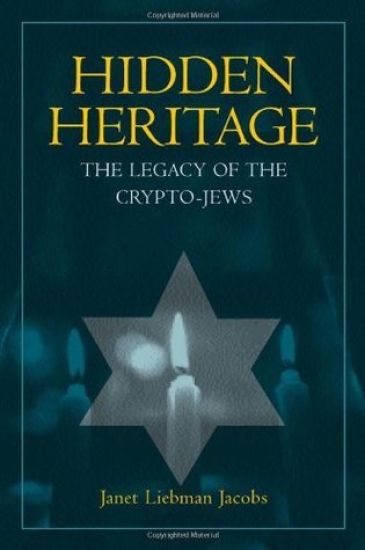
This study of contemporary crypto-Jews--descendants of European Jews forced to convert to Christianity during the Spanish Inquisition--traces the group's history of clandestinely conducting their faith and their present-day efforts to reclaim their past. Janet Liebman Jacobs masterfully combines historical and social scientific theory to fashion a brilliant analysis of hidden ancestry and the transformation of religious and ethnic identity.

Religion clearly remains a powerful social and political force in Western society. Freudian-based theory continues to inform psychoanalytic investigations into personality development, gender relations, and traumatic disorders. Using a historical framework, this collection of new essays brings together contemporary scholarship on religion and psychoanalysis. These various yet related psychoanalytic interpretations of religious symbolism and commitment offer a unique social analysis on the meaning of religion.Beginning with Freud's views on religion and mystical experience and continuing with those of Horney, Winnicott, Kristeva, Miller, and others, this volume surveys the work of three generations of psychoanalytic theorists. Special attention is given to objects relations theory and ego psychology, as well as to the recent work from the European tradition. Distinguished contributors provide a basic overview of a given theorist's scholarship and discuss its place in the evolution of psychoanalytic thought as it relates to the role that religion plays in modern culture.Religion, Society, and Psychoanalysis marks a major, interdisciplinary step forward in filling the void in the social-psychology of religion. It is an extremely useful handbook for students and scholars of psychology and religion.
Life on the Tundra: A Strange and Quirky Existence
Janet Marie Jacobs
Dorrance Publishing Co.
2020
nidottu
Jacobs' book shares stories of her coming of age amidst quirky family & friends. It will make you laugh & tug at your heart strings.About the AuthorI've had a love of travel all my life. However, it's a little challenging now, due to early on-set Parkinson's, so I'm working on an altered bucket list. I love to play the piano and violin and sew quilts for my family and friends. I retired in 2016 to Southern California after 37 years in the San Francisco Bay Area, and live with my wife, Jill of 26 years and our Pomsky puppy, Izzy.

Oh No, Not Another 'Growth' Opportunity! an Inspirational Cancer Journey with Humor, Heart, and Healing
Janet Lee Jacobsen
Growth-Ink Publishing
2012
nidottu
Janet Jacobsen writes with candor, compassion, and refreshing humor about her adventure with cancer. The book reveals her holistic healing approach, which includes calming emotional and spiritual practices, as well as the diet and alternative treatments that have extended her life, and possibly even cured her cancer. It is a compelling journey of physical, emotional, and spiritual healing. On this journey she faced her worst fears and discovered the surprising gifts inherent in adversity. When it seems that life has turned on us, it has instead turned us ON, turning up the light and volume of our aliveness. This book is a valuable guide for anyone with life challenges who wants to be uplifted, touched, encouraged, informed, and even amused. Yes, it's true...we can find humor in ANYTHING After the initial shock of her cancer diagnosis, she realized that it was the ultimate personal growth opportunity and was determined to get the most growth she could from it. It was also an opportunity to do the inspirational writing she always said she'd do someday. Cancer kicked her 'someday' into 'write now' She began writing about her cancer journey and sharing it with others in a newsletter. When the cancer returned as a tumor the size of a lemon, her first reaction was, "Oh no, not another 'growth' opportunity " Being given a lemon-a really sour, potentially lethal lemon-she was determined to turn it into sweet lemonade. If time was short, as her doctor predicted, she wanted to get as much juice as she could out of it-to live, love, learn, and grow fully, and share it all with others. This book contains the inspiring essays she wrote on her journey and reveals the gold she mined along the way. Here are some responses to the essays in this book: "What a wonderful essay So clear and deep, an inner ocean of knowing - beautiful " -Mary-Margaret Moore, Author of I Come As A Brother (by Bartholomew) "I am delighted each time I read another one of these essays - so rich - so inspiring - so reminding " -Dale Figtree, Author of Beyond Cancer Treatment "What a fabulous set of insights and learnings expressed in a right-now way." -Kathlyn Hendricks, Co-Author of Conscious Loving "I love and am deeply touched by these insights. I have often wondered how people feel when they go through the 'cancer experience.' Now I know how a very aware person feels, and how they handle it." -Pamala Oslie, Author of Life Colors "Such an inspirational message. I enjoyed it and smiled often while reading it, and actually said 'wow' out loud twice." -Walter Witkowski, Teacher "Each essay captivates me with its rawness, honesty, insight, and inspiration. I gain so much from each one of them and apply it to my own journey with cancer." -Martha McVay
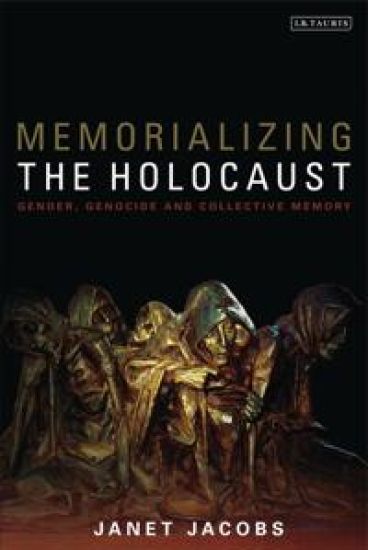
How do collective memories of histories of violence and trauma in war and genocide come to be created? Janet Jacobs offers new understandings of this crucial issue in her examination of the representation of gender in the memorial culture of Holocaust monuments and museums, from synagogue memorials and other historical places of Jewish life, to the geographies of Auschwitz, Majdanek and Ravensbruck. Jacobs travelled to Holocaust sites across Europe to explore representations of women. She reveals how these memorial cultures construct masculinity and femininity, as well as the Holocaust's effect on stereotyping on grounds of race or gender. She also uncovers the wider ways in which images of violence against women have become universal symbols of mass trauma and genocide. This feminist analysis of Holocaust memorialization brings together gender and collective memory with the geographies of genocide to fill a significant gap in our understanding of genocide and national remembrance.

The purpose of The Pastor's House manual is to advise and assist clergy to take advantage of the great housing allowance provision which could be considered one of the biggest tax-saving benefits in the tax code for pastoring clergy up through retirement. The savings and benefits can be phenomenal Ms. Kennedy-Jacobs is registered with the USA Patent and Trademark Office as "The Church Business Consultant" designated to provide print publications, namely books and manuals in the field of compliance with federal regulations for clergy and churches. Reg No.:6 285 0203, Registered March 2, 2021, Trademark Supplemental Register, Ser. No. 88-689,271. www.thepastorshouse.com I felt the manual was insightful and informational, particularly the integration of the housing allowance and retirement. I believe this publication will be beneficial to all clergy regardless of church size. Rev. Dr. Dyheim T. Watson, Sr. Pastor First Nazarene Baptist Church, Camden, NJ The Pastor's House focuses on benefits available through the housing allowance and is a fundamental tool for every pastor. Janet's years of experience have been distilled into an indispensable resource for seasoned pastors, as well as pastors just beginning their ministry. Joseph Powers, EA, Powers Tax Service, Marlton, NJ Janet V. Kennedy-Jacobs has been my personal tax preparer and church financial consultant for more than half my pastoral ministry of 50 years at the Calvary Baptist Church of North Jersey at Garfield. She has served pastors and churches throughout New Jersey and the United States per my leadership as President of the General Baptist Convention of New Jersey and as General Secretary of the National Baptist Convention, USA, Inc. Her work has been of great benefit to pastors grappling with tax issues, retirement plans, compensation packages and financial concerns in general. This prepared booklet titled, "The Pastor's House" will serve not only new pastors, but pastors of active tenures and those of us contemplating retirement. Rev. Dr. Calvin McKinney, Garfield, NJ

Humanistisk palliation
Anne Elsebet Overgaard; Bo Jacobsen; Christine E. Swane; Jan Brødslev Olsen; Lars Ole Bonde; Mette Hartlev; Mogens Pahuus; Ole Johannes Hartling; Karen Marie Dalgaard; Michael Hviid Jacobsen; Mette Raunkiær; Helle Timm; Marianne Bode; Peter Øhrstrøm; Hanne Bess Boelsbjerg; Mai-Britt Guldin; Christian Juul Busch; Janet Ferrari Wanseele; Mariann Bjerregaard Sørensen; Ole Raakjær; Kate Runge Nielsen; Janni Poort; Lisbeth Langkilde; Louise Lund Thomsen; Michael C. Kearl; Lisbeth B. Knudsen
Gyldendal
2011
sidottu
Humanistisk Palliation er en antologi og en introduktion til den del af det palliative felt, der er optaget af at forstå de sociale, kulturelle, socialpsykologiske, psykologiske og mere åndelige aspekter af omsorg for og pleje af syge og døende i vores samfund. Bogen ønsker således at tilbyde en bredt anlagt introduktion til det humanistisk palliative felt samt præsentere en lang række specifikke kapitler, der hver især indfanger særlige tematikker/perspektiver i relation til dette felt. Samtidig er det ikke bogens hensigt at introducere til de kliniske eller medicinske aspekter af det palliative virke. Bogens bidragydere repræsenterer en bredt sammensat gruppe og skriver ind de forskellige faglige perspektiver, de etiske udfordringer eller ind i et mere terapeutisk- filosofisk- trøstende perspektiv. Bogen henvender sig til professionelle og studerende inden for det sundhedsfaglige og sociale område og kan læses i sin helhed (fx på kurser eller moduler i palliation), men de enkelte kapitler kan også læses enkeltvis.
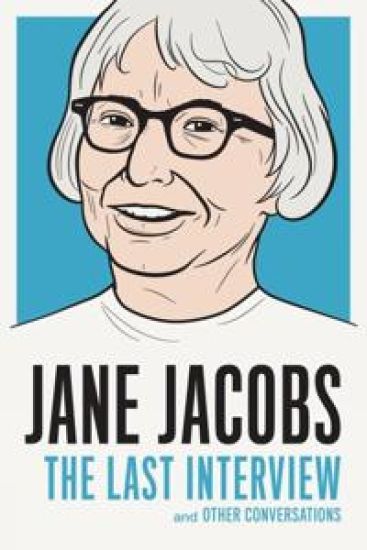
"Jane Jacobs is the kind of writer who produces in her readers such changed ways of looking at the world that she becomes an oracle, or final authority." --The New York SunHailed by the New York Times Book Review as "perhaps the single most influential work in the history of town planning," Jane Jacobs's The Death and Life of Great American Cities was instantly recognized as a masterpiece upon its publication in 1961. In the decades that followed, Jacobs remained a brilliant and revered commentator on architecture, urban life, and economics until her death in 2006. These interviews capture Jacobs at her very best and are an essential reminder of why Jacobs was--and remains--unrivaled in her analyses and her ability to cut through cant and received wisdom.
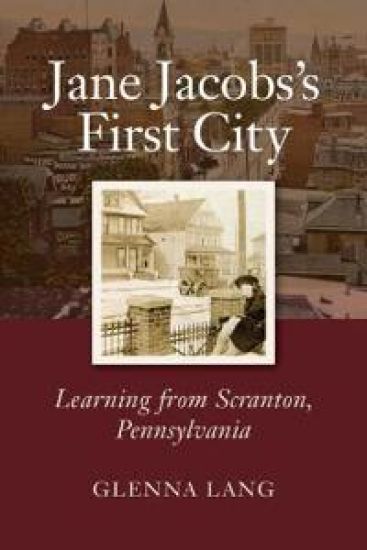
A thorough investigation of how Jane Jacobs's ideas about the life and economy of great cities grew from her home city, Scranton Jane Jacobs's First City vividly reveals how this influential thinker and writer's classic works germinated in the once vibrant, mid-size city of Scranton, Pennsylvania, where Jane spent her initial eighteen years. In the 1920s and 1930s, Scranton was a place of enormous diversity and opportunity. Small businesses of all kinds abounded and flourished, quality public education was available to and supported by all, and even recent immigrants could save enough to buy a house. Opposing political parties joined forces to tackle problems, and citizens worked together for the public good. Through interviews with contemporary Scrantonians and research of historic newspapers, city directories, and vital records, author Glenna Lang has uncovered Scranton as young Jane experienced it and shows us the lasting impact of her growing up in this thriving and accessible environment. Readers can follow the development of Jane's acute observational abilities from childhood through her passion in early adulthood to understand and write about what she saw. Reflecting Jane's belief in trusting one's own direct observation above all, this volume has been richly illustrated with historic and modern color images that help bring alive a lost Scranton. The book demonstrates why, at the end of Jacobs's life, her thoughts and conversations increasingly returned to Scranton and the potential for cohesion and inclusiveness in all cities.
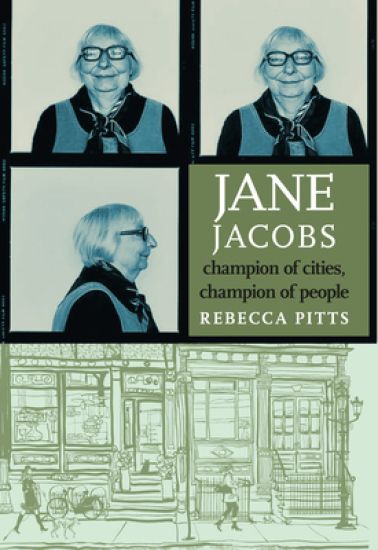
Jane Jacobs: Champion Of Cities, Champion Of People
Rebecca Pitts
SEVEN STORIES PRESS,U.S.
2023
nidottu
The first biography of Jane Jacobs for young people, the visionary activist, urbanist, and thinker who transformed the way we inhabit and develop our cities. Jane Jacobs was born more than a hundred years ago, yet the ideas shepopularized--about cities, about people, about making a better world--remain hugely relevant today. Now, in Jane Jacobs: Champion of Cities, Champion of People, we have the first biography for young people of the visionary activist, urbanist, and thinker. Debut author Rebecca Pitts draws on archives and Jacobs's own writings to paint a vivid picture of a headstrong and principled young girl who grew into one of the most important advocates of her time, and whose impact on the city of New York in particular can still be seen today. Jacobs went against the conventional wisdom of the time that said cities should be designed by so-called experts, "cleaned up," and separated by use, arguing that such pie-in-the-sky visions paid very little attention to the wants and needs of people who actually live in cities. Jane instead championed diversity, community, "the life of the street," and the power of grassroots movements to make cities better and more equitable for all. She never backed down, even when it meant going up against the most powerful man in New York, Robert Moses. Here is a story of standing up for what you know is right, with real-world takeaways for young activists. Jane Jacobs: Champion of Cities, Champion of People emphasizes how today's teens can take inspiration from Jane's own activism "playbook," promoting change by focusing on local issues and community organizing.

Jane Jacobs is universally recognized as one of the key figures in American urbanism. The author of The Death and Life of Great American Cities, she uncovered the complex and intertwined physical and social fabric of the city and excoriated the urban renewal policies of the 1950s. As the legend goes, Jacobs, a housewife, single-handedly stood up to Robert Moses, New York City's powerful master builder, and other city planners who sought first to level her Greenwich Village neighborhood and then to drive a highway through it. Jacobs's most effective weapons in these David-versus-Goliath battles, and in writing her book, were her powers of observation and common sense. What is missing from such discussions and other myths about Jacobs, according to Peter L. Laurence, is a critical examination of how she arrived at her ideas about city life. Laurence shows that although Jacobs had only a high school diploma, she was nevertheless immersed in an elite intellectual community of architects and urbanists. Becoming Jane Jacobs is an intellectual biography that chronicles Jacobs's development, influences, and writing career, and provides a new foundation for understanding Death and Life and her subsequent books. Laurence explains how Jacobs's ideas developed over many decades and how she was influenced by members of the traditions she was critiquing, including Architectural Forum editor Douglas Haskell, shopping mall designer Victor Gruen, housing advocate Catherine Bauer, architect Louis Kahn, Philadelphia city planner Edmund Bacon, urban historian Lewis Mumford, and the British writers at The Architectural Review. Rather than discount the power of Jacobs's critique or contributions, Laurence asserts that Death and Life was not the spontaneous epiphany of an amateur activist but the product of a professional writer and experienced architectural critic with deep knowledge about the renewal and dynamics of American cities.

Reconsidering Jane Jacobs
American Planning Association
2011
sidottu
This volume begins with the premise that the deepest respect is shown through honest critique. One of the greatest problems in understanding the influence of the author on cities and planning is that she has for much of the past five decades been "Saint Jane, the housewife" who upended urban renewal and gave us back our cities. Over time, she has become a saintly stick figure, a font of simple wisdom for urban health that allows many to recite her ideas and few to understand their complexity. The author has been the victim of her own success. This book gives this important thinker the respect she deserves, reminding planning professionals of the full range and complexity of her ideas and offering thoughtful critiques on the unintended consequences of her ideas on cities and planning today. It also looks at the international relevance – or lack thereof – of her work, with essays on urbanism in Abu Dhabi, Argentina, China, the Netherlands, and elsewhere.
Reconsidering Jane Jacobs
American Planning Association
2011
nidottu
This volume begins with the premise that the deepest respect is shown through honest critique. One of the greatest problems in understanding the influence of the author on cities and planning is that she has for much of the past five decades been "Saint Jane, the housewife" who upended urban renewal and gave us back our cities. Over time, she has become a saintly stick figure, a font of simple wisdom for urban health that allows many to recite her ideas and few to understand their complexity. The author has been the victim of her own success. This book gives this important thinker the respect she deserves, reminding planning professionals of the full range and complexity of her ideas and offering thoughtful critiques on the unintended consequences of her ideas on cities and planning today. It also looks at the international relevance – or lack thereof – of her work, with essays on urbanism in Abu Dhabi, Argentina, China, the Netherlands, and elsewhere.
The Urban Wisdom of Jane Jacobs
Routledge
2012
sidottu
Here for the first time is a thoroughly interdisciplinary and international examination of Jane Jacobs’s legacy. Divided into four parts: I. Jacobs, Urban Philosopher; II. Jacobs, Urban Economist; II. Jacobs, Urban Sociologist; and IV. Jacobs, Urban Designer, the book evaluates the impact of Jacobs’s writings and activism on the city, the professions dedicated to city-building and, more generally, on human thought. Together, the editors and contributors highlight the notion that Jacobs’s influence goes beyond planning to philosophy, economics, sociology and design. They set out to answer such questions as: What explains Jacobs’s lasting appeal and is it justified? Where was she right and where was she wrong? What were the most important themes she addressed? And, although Jacobs was best known for her work on cities, is it correct to say that she was a much broader thinker, a philosopher, and that the key to her lasting legacy is precisely her exceptional breadth of thought?

With the publication of The Death and Life of Great American Cities (1961), Jane Jacobs (1916-2006) changed the way urban planners, architects, politicians, and ordinary citizens understood the city and its challenges. Less attention has been paid to her six subsequent works on cities and economies; Exploring the Thought of Jane Jacobs: The Conversation of Cities seeks to remedy that neglect. With careful attention to context, the book explores Jacobs’s understanding of streets and neighborhoods in cities great and small; her vision of the city as an organism, extended through generations, not an artifact; the dynamics of economic development; the ethics of the workplace and the difficulties of ethical business practice and the need for a politics of place crossing generations. It reveals what Jacobs saw as crucial to education and concludes with suggestions of what Jacobs would see as necessary actions for our fraught times. The book should be of interest to any reader concerned about cities and their future and to students of urban planning, architecture, and economics.