Kirjojen hintavertailu. Mukana 12 595 353 kirjaa ja 12 kauppaa.

Kirjahaku

Etsi kirjoja tekijän nimen, kirjan nimen tai ISBN:n perusteella.

1000 tulosta hakusanalla Janet McIntosh

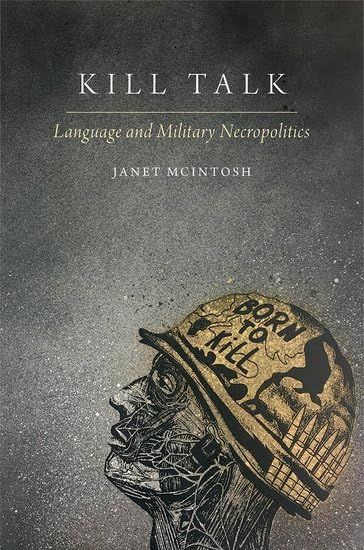
Kill Talk

Kill Talk

Janet McIntosh

OXFORD UNIVERSITY PRESS INC
2025
sidottu
The language used by American military personnel can be intense and confrontational, yet the relationship between language and military violence is rarely examined in depth. This groundbreaking book offers a unique perspective on how language facilitates the work of combat infantry-the state's killable killers. Through vivid ethnographic research, Janet McIntosh meticulously traces the nuances of military “kill talk” as it permeates the vast nervous system of the military, from the first exposure to yelling in Marine Corps basic training to the dark humor and nihilistic expressions found in war zones in Vietnam and the Middle East. McIntosh reveals how military trainers use language to deindividuate, toughen, and masculinize recruits, while infantry soldiers develop distinct linguistic repertoires and attitudes to suppress empathy, dehumanize and racialize the enemy, cope with loss, and dwell in a moral gray zone. Kill Talk also addresses national debates over language use in a diverse world, exploring tensions between calls for sensitivity and restraint in military speech and the perception that these can threaten national security. The book highlights the contradictions between the rhetoric of military honor and moral integrity and the harsh, sometimes depraved, language of combatants, suggesting that these paradoxes enable military violence yet contribute to moral injury. It concludes with an exploration of veteran poets and artists who have found innovative ways to use language and other forms of expression to critique military institutions and begin the process of demilitarizing their psyches.
Kill Talk

Kill Talk

Janet McIntosh

OXFORD UNIVERSITY PRESS INC
2025
nidottu
The language used by American military personnel can be intense and confrontational, yet the relationship between language and military violence is rarely examined in depth. This groundbreaking book offers a unique perspective on how language facilitates the work of combat infantry-the state's killable killers. Through vivid ethnographic research, Janet McIntosh meticulously traces the nuances of military “kill talk” as it permeates the vast nervous system of the military, from the first exposure to yelling in Marine Corps basic training to the dark humor and nihilistic expressions found in war zones in Vietnam and the Middle East. McIntosh reveals how military trainers use language to deindividuate, toughen, and masculinize recruits, while infantry soldiers develop distinct linguistic repertoires and attitudes to suppress empathy, dehumanize and racialize the enemy, cope with loss, and dwell in a moral gray zone. Kill Talk also addresses national debates over language use in a diverse world, exploring tensions between calls for sensitivity and restraint in military speech and the perception that these can threaten national security. The book highlights the contradictions between the rhetoric of military honor and moral integrity and the harsh, sometimes depraved, language of combatants, suggesting that these paradoxes enable military violence yet contribute to moral injury. It concludes with an exploration of veteran poets and artists who have found innovative ways to use language and other forms of expression to critique military institutions and begin the process of demilitarizing their psyches.
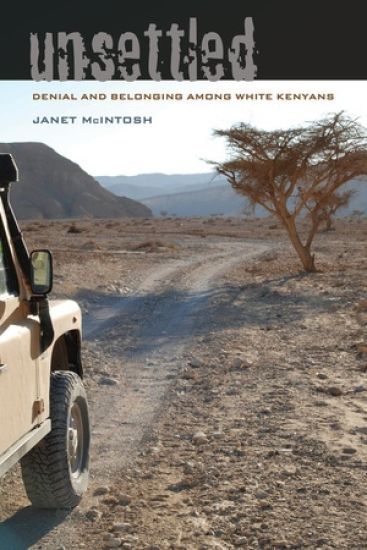
Unsettled

Unsettled

Janet McIntosh

University of California Press
2016
sidottu
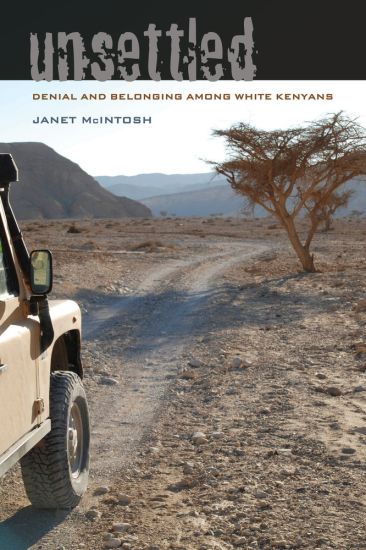
In 1963, Kenya gained independence from Britain, ending decades of white colonial rule. While tens of thousands of whites relocated in fear of losing their fortunes, many stayed. But over the past decade, protests, scandals, and upheavals have unsettled families with colonial origins, reminding them that their belonging is tenuous. In this book, Janet McIntosh looks at the lives and dilemmas of settler descendants living in post-independence Kenya. From clinging to a lost colonial identity to pronouncing a new Kenyan nationality, the public face of white Kenyans has undergone changes fraught with ambiguity. Drawing on fieldwork and interviews, McIntosh focuses on their discourse and narratives to ask: What stories do settler descendants tell about their claim to belong in Kenya? How do they situate themselves vis-a-vis the colonial past and anti-colonial sentiment, phrasing and re-phrasing their memories and judgments as they seek a position they feel is ethically acceptable? McIntosh explores contradictory and diverse responses: moral double consciousness, aspirations to uplift the nation, ideological blind-spots, denials, and self-doubt as her respondents strain to defend their entitlements in the face of mounting Kenyan rhetorics of ancestry.
Unsettled

Unsettled

Janet McIntosh

University of California Press
2016
pokkari
In 1963, Kenya gained independence from Britain, ending decades of white colonial rule. While tens of thousands of whites relocated in fear of losing their fortunes, many stayed. But over the past decade, protests, scandals, and upheavals have unsettled families with colonial origins, reminding them that their belonging is tenuous. In this book, Janet McIntosh looks at the lives and dilemmas of settler descendants living in post-independence Kenya. From clinging to a lost colonial identity to pronouncing a new Kenyan nationality, the public face of white Kenyans has undergone changes fraught with ambiguity. Drawing on fieldwork and interviews, McIntosh focuses on their discourse and narratives to ask: What stories do settler descendants tell about their claim to belong in Kenya? How do they situate themselves vis-a-vis the colonial past and anti-colonial sentiment, phrasing and re-phrasing their memories and judgments as they seek a position they feel is ethically acceptable? McIntosh explores contradictory and diverse responses: moral double consciousness, aspirations to uplift the nation, ideological blind-spots, denials, and self-doubt as her respondents strain to defend their entitlements in the face of mounting Kenyan rhetorics of ancestry.
The Edge of Islam

The Edge of Islam

Janet McIntosh

Duke University Press
2009
sidottu
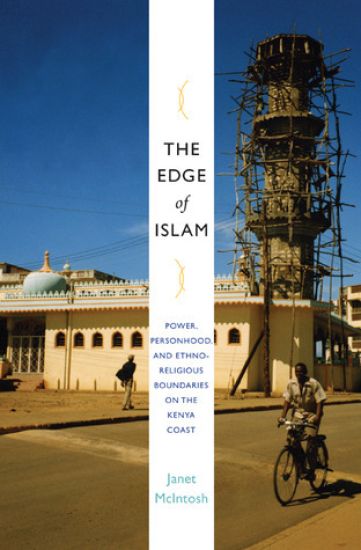
In this theoretically rich exploration of ethnic and religious tensions, Janet McIntosh demonstrates how the relationship between two ethnic groups in the bustling Kenyan town of Malindi is reflected in and shaped by the different ways the two groups relate to Islam. While Swahili and Giriama peoples are historically interdependent, today Giriama find themselves literally and metaphorically on the margins, peering in at a Swahili life of greater social and economic privilege. Giriama are frustrated to find their ethnic identity disparaged and their versions of Islam sometimes rejected by Swahili. The Edge of Islam explores themes as wide-ranging as spirit possession, divination, healing rituals, madness, symbolic pollution, ideologies of money, linguistic code-switching, and syncretism and its alternatives. McIntosh shows how the differing versions of Islam practiced by Swahili and Giriama, and their differing understandings of personhood, have figured in the growing divisions between the two groups. Her ethnographic analysis helps to explain why Giriama view Islam, a supposedly universal religion, as belonging more deeply to certain ethnic groups than to others; why Giriama use Islam in their rituals despite the fact that so many do not consider the religion their own; and how Giriama appropriations of Islam subtly reinforce a distance between the religion and themselves. The Edge of Islam advances understanding of ethnic essentialism, religious plurality, spirit possession, local conceptions of personhood, and the many meanings of “Islam” across cultures.
The Edge of Islam

The Edge of Islam

Janet McIntosh

Duke University Press
2009
pokkari
In this theoretically rich exploration of ethnic and religious tensions, Janet McIntosh demonstrates how the relationship between two ethnic groups in the bustling Kenyan town of Malindi is reflected in and shaped by the different ways the two groups relate to Islam. While Swahili and Giriama peoples are historically interdependent, today Giriama find themselves literally and metaphorically on the margins, peering in at a Swahili life of greater social and economic privilege. Giriama are frustrated to find their ethnic identity disparaged and their versions of Islam sometimes rejected by Swahili. The Edge of Islam explores themes as wide-ranging as spirit possession, divination, healing rituals, madness, symbolic pollution, ideologies of money, linguistic code-switching, and syncretism and its alternatives. McIntosh shows how the differing versions of Islam practiced by Swahili and Giriama, and their differing understandings of personhood, have figured in the growing divisions between the two groups. Her ethnographic analysis helps to explain why Giriama view Islam, a supposedly universal religion, as belonging more deeply to certain ethnic groups than to others; why Giriama use Islam in their rituals despite the fact that so many do not consider the religion their own; and how Giriama appropriations of Islam subtly reinforce a distance between the religion and themselves. The Edge of Islam advances understanding of ethnic essentialism, religious plurality, spirit possession, local conceptions of personhood, and the many meanings of “Islam” across cultures.
Handbook to Life in Prehistoric Europe

Handbook to Life in Prehistoric Europe

Jane McIntosh

Oxford University Press
2009
nidottu
For most of Europe's long past we have no writing, no named individuals, no recorded deeds. This means that its history is almost entirely that of the ordinary individual--the hunger-gatherer, farmer, or metallurgist--rather than the king. Evidence of privileged elites and material splendor is not lacking, however. The skills and expertise of prehistoric Europeans were often employed in the production of exquisite jewelry, elaborately woven cloth, beautifully made tools, and finely wrought weapons. Though the palaces that have attracted excavators in other lands are absent, there are few monuments elsewhere in the world to rival Europe's massive megalithic tombs or great stone circles. And though individuals preserve their anonymity and many of their secrets, modern technology has made it possible to reveal parts of their life history in astonishing detail. Handbook to Life in Prehistoric Europe gathers the results of recent archaeological discoveries and scholarly research into a single accessible volume. Organized thematically, the handbook covers all aspects of life in prehistoric Europe, including the geography of the continent, settlement, trade and transport, industry and crafts, religion, death and burial, warfare, language, the arts, and more. Complemented with more than 75 illustrations and maps, the result is a fascinating introduction to the 7,000-year period that immediately preceded the Roman Empire.
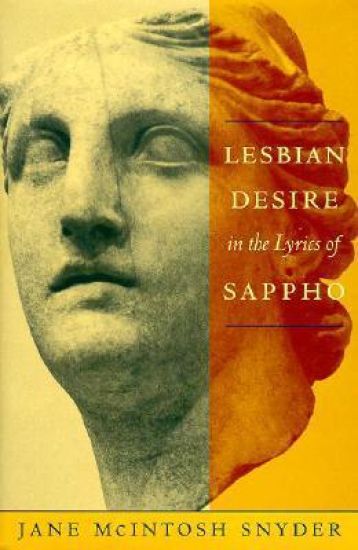
Lesbian Desire in the Lyrics of Sappho

Lesbian Desire in the Lyrics of Sappho

Jane McIntosh Snyder

Columbia University Press
1997
sidottu
The lyrics of Sappho are the earliest surviving examples of explicitly homoerotic literature and have often been analyzed in terms of their revelations about the island society of Lesbos. This volume examines Sappho's poetry through the lens of lesbian desire. It focuses on the active female gaze in the texts and the narrative voice - one that describes female experience and desires as primary, not secondary to the dominant (male) culture. The book provides close readings of the surviving examples of Sappho's poetry, occasionally presenting comparative material from other ancient Greek poets. In addition, a complete transliteration of the Greek verse is intended to enhance the reader's understanding of the original sound and rhythm of the texts. Sappho's influence on a number of lesbian poets, including Amy Lowell, H.D. and Olga Broumas. The text includes an appendix of the original Greek poetry.
Lesbian Desire in the Lyrics of Sappho

Lesbian Desire in the Lyrics of Sappho

Jane McIntosh Snyder

Columbia University Press
1998
pokkari
The lyrics of Sappho are the earliest surviving examples of explicitly homoerotic literature and have often been analyzed in terms of their revelations about the island society of Lesbos. This volume examines Sappho's poetry through the lens of lesbian desire. It focuses on the active female gaze in the texts and the narrative voice - one that describes female experience and desires as primary, not secondary to the dominant (male) culture. The book provides close readings of the surviving examples of Sappho's poetry, occasionally presenting comparative material from other ancient Greek poets. In addition, a complete transliteration of the Greek verse is intended to enhance the reader's understanding of the original sound and rhythm of the texts. Sappho's influence on a number of lesbian poets, including Amy Lowell, H.D. and Olga Broumas. The text includes an appendix of the original Greek poetry.
The Woman and the Lyre

The Woman and the Lyre

Jane McIntosh Snyder

Southern Illinois University Press
2017
nidottu
Faint though the voices of the women of Greek and Roman antiquity may be in some cases, their sound, if we listen carefully enough, can fill many of the gaps and silences of women s past.From the beginning with Sappho in the seventh century B.C. and ending with Hypatia and Egeria in the fifth century A.D., Jane McIntosh Snyder listens carefully to the major women writers of classical Greece and Rome, piecing together the surviving fragments of their works into a coherent analysis that places them in their literary, historical, and intellectual contexts.While relying heavily on modern classical scholarship, Snyder refutes some of the arguments that implicitly deny the power of women's written words the idea that women's experience is narrow or trivial and therefore automatically inferior as subject matter for literature, the notion that intensity in a woman is a sign of neurotic imbalance, and the assumption that women s work should be judged according to some externally imposed standard.The author studies the available fragments of Sappho, ranging from poems on mythological themes to traditional wedding songs and love poems, and demonstrates her considerable influence on Western thought and literature. An overview of all of the authors Snyder discusses shows that ancient women writers focused on such things as emotions, lovers, friendship, folk motifs, various aspects of daily living, children, and pets, in distinct contrast to their male contemporaries concern with wars and politics. Straightforwardness and simplicity are common characteristics of the writers Snyder examines. These women did not display allusion, indirection, punning and elaborate rhetorical figures to the extent that many male writers of the ancient world did. Working with the sparse records available, Snyder strives to place these female writers in their proper place in our heritage.
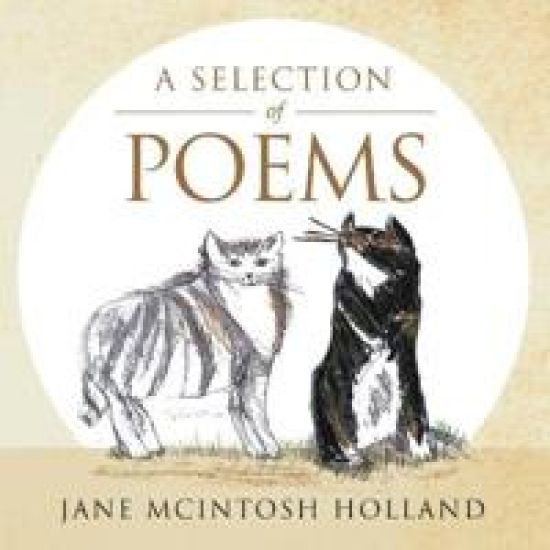
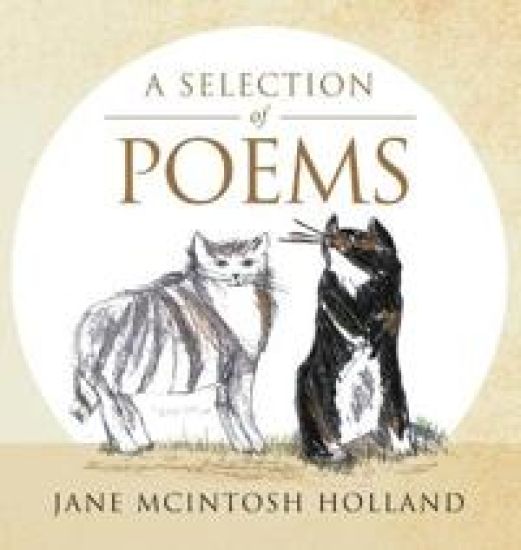
A Selection of Poems

A Selection of Poems

Jane McIntosh Holland

Urlink Print Media, LLC
2019
pokkari
A selection of poems that I wrote so that they could be read by all ages of people for them to enjoy. I am an animal lover so I like to write animals stories and adventures as I know a lot of people also love animals. ¬ e out of tune poem, is based on a piano that lived in my parents' house, Time in which we share, is also based on my family and the what we shared together. I am one of seven siblings and we all grew up in Australia to loving parents and a big extended family. ¬The sea shells and the sunflower is a poem I wrote for the blue fringe writers festival in the Blue mountains. ¬ The Two Mytstiff Cats is about my two cats pickles and Lizzie and the mystfis they got up to. ¬ e endless road is a poem I wrote when I first left school I attended a creative writers course in the city.