The lives of children during the Victorian era differed dramatically between the rich and the poor. The children of the wealthy lived in comfort with good education, while the poorest children grew up with little food or care, no education, and were often exploited for work. Janet Sacks explores the world of Victorian children, and how their experiences changed as laws were introduced to stop child employment, and education became compulsory, how holidays became possible by train, and the introduction of mass-produced toys. Using archive photographs and illustrations, she paints a picture of what it was like to grow up in Victorian Britain, and how changing attitudes towards children led to a very different upbringing by the end of the period.
During the reign of Queen Victoria, industrialisation changed every aspect of rural life. Industrial diversification led to a decline in agriculture and mass migration from country to town and city – in 1851 half the population lived in the countryside, but by 1901 only a quarter did so. This book outlines the changes and why they occurred. It paints a picture of country life as it was when Victoria came to the throne and shows how a recognisably modern version of the British countryside had established itself by the end of her reign. Cheap food from overseas meant that Britain was no longer self-sufficient but it freed up money to be spent on other goods: village industries and handcrafts were undercut by the new industrial technology that brought about mass production, and markets were replaced by shops that grew into department stores.
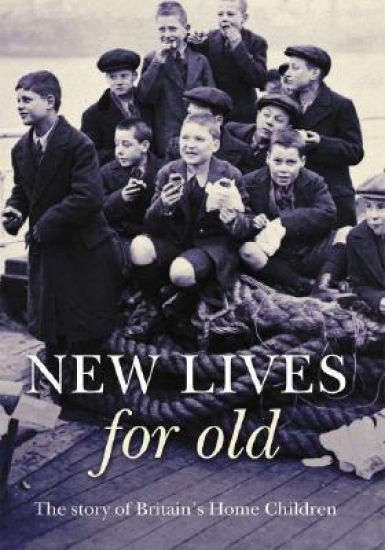
Over 100,000 children were sent across the seas to Canada between 1869 and the late 1930s. Thousands of others were dispatched to Australia as well as to New Zealand, South Africa and Rhodesia up to and even after the Second World War. These young migrants came from charitable organizations or children's homes, and were sent to find a better life as agricultural workers and servants, mechanics and skilled artisans. They were the superfluous thousands of Britain's cities, including workhouse paupers, reformatory inmates, children from industrial schools and those rescued from slums and the streets. Ranging from five- and six-year olds to teenagers, all were thrust into an alien world from which there was little chance of return. This compelling book tells the story of this controversial practice, from the accounts of those involved and the authentic records of the time. It traces the people behind the migrations exploring their beliefs and aspirations for the children in their care. It considers the roles that different organizations (including the Childrens Society, National Childrens Home and the Catholic Nugent Society Care Homes) played as well as the shipping lines that carried the children from Liverpool, Glasgow and other ports and the centers that received them overseas. Most importantly, it describes the experiences of the children themselves. Clear-sighted and objective, this is a gripping tale of the good, the bad and the ugly based on original documents from The National Archives and other sources. Above all, it celebrates those who welcomed the migrants and the children who managed, against all the odds, to adapt to their new lives.
When an environmental news story breaks, the first place to turn for background on the issue is The Reporter's Environmental Handbook, now available in an updated and expanded third edition. Here, journalists can find the fast facts they need to accurately cover complex and controversial environmental stories ranging from indoor and outdoor air quality to sprawl and bioterrorism.
This Therapist Guide outlines a 30-session cognitive-behavioural treatment for bipolar depression. It provides session-by-session instructions for helping clients decrease and prevent relapse. Bipolar disorder is extremely hard to manage and this program will help clients better prepare themselves for dealing with problems and high-risk situations. Treatment is comprised of four stages: a depression-focused phase (9 sessions), a treatment-contract phase, (4-sessions), a problem-list phase (13 sessions), and a well-being phase (4 sessions). This treatment also includes a component for families to help them understand the disorder and work together with both the therapist and the patient to get the best results from treatment.
Intended for use in conjunction with formal cognitive-behavioural therapy (CBT), this Workbook provides patients and their families with a wealth of information on bipolar disorder, as well as strategies for reducing the likelihood of episodes of depression or mania. In addition to educational materials that define the disorder and show the effectiveness of CBT, it includes exercises that patients can use to reinforce what they learn in their therapy sessions. It also provides information on adhering to medications, as well as forms for charting stress and strategies for managing mood. Divided into four phases like its corresponding Therapist Guide, this Workbook teaches patients the skills they need to effectively manage bipolar disorder and reduce the risk of relapse.
Recent years have brought a striking increase in the number of psychosocial treatment studies of bipolar disorder and cognitive-behavioural approaches have been prominent among these studies with clear evidence that interest in this approach is rising among experts in bipolar disorder. Studies of CBT treatment of bipolar disorder have shown dramatic effects with relapse rates significantly lower (44% vs. 75%) than with comparison treatments. This book is a self-directed, relapse prevention for individuals living with bipolar disorder. It uses the collaborative care model to allow individuals living with bipolar disorder to take control of their wellness. It provides self-directed questionnaires and monitoring forms to reinforce skills and practices learned in therapy, gives information about the details of living with bipolar forms disorder, advice for best practices to avoid relapses, and teaches how to anticipate problems. Collaborative care is a way for patients and their family or friends to work together with clinicians to get the best results from treatment. Living with bipolar disorder requires the help and support of a network of people who are able to recognise potential problems, provide encouragement, practice new coping skills, and understand the disorder. This workbook provides information and instructions for friends and family so they feel equipped to participate in the therapeutic process. Emphasis is placed on defining the disorder and identifying areas where the patient is most at risk for relapse.
Drawing on research documenting the strength of combining drug treatments with behavioral interventions for fighting bipolar disorder, Living with Bipolar Disorder takes a skill-based approach to managing the ups and downs commonly experienced with the disorder. With this book, readers can learn how to better recognize mood shifts before they happen, minimize their impact, and move on with their lives. Written by the authors of Managing Bipolar Disorder: A Cognitive Behavioral Treatment Program, this helpful guide teaches individuals with bipolar disorder how to take charge of their illness and get the most out of professional treatment. The authors stress the importance of an active partnership in treatment, while providing information and strategies to help patients and their families enhance their independence and their management of bipolar disorder. In addition to the strategies directed to individuals suffering from bipolar disorder, this book also provides information and instructions for friends and family members so they'll have the tools to help their loved ones. Family members will learn how to recognize potential problems, provide encouragement, practice new coping skills, and understand what the patient is going through. The book also provides worksheets and forms to help the patient reinforce skills and practices learned in therapy. It includes information about the details of living with bipolar disorder, gives advice on the best ways to avoid relapses, and teaches how to anticipate problems. Here then is a wealth of information on bipolar disorder partnered with effective strategies to reduce the likelihood of episodes of depression or mania and maximize the enjoyment of life.
Nils Anthes; Ralph Bergmüller; Wolf Blanckenhorn; H. Jane Brockmann; Claudia Fichtel; Lutz Fromhage; Joachim Frommen; Wolfgang Goymann; Juergen Heinze; Katharina Hirschenhauser; Heribert Hofer; Sylvia Kaiser; Peter M. Kappeler; Bart Kempenaers; Gerald Kerth; Judith Ingrid Korb; Kurt M. Kotrschal; Cornelila Kraus; Martha Manser; Nico Michiels; Robin F. A. Moritz; Mario Pahl; Dustin Penn; Norbert Sachser; Martin Schaefer; Carel P. van Schaik; Jutta M. Schneider; Isabella Schreiber; Michael Taborsky; Jürgen Tautz; Fritz Trillmich
The study of animal behaviour has become one of the fastest growing b- logical disciplines in recent decades. This development can be easily - ferred, for example, from the steady increase in the total number of pub- cations on any aspect of animal behaviour, in particular also in journals with a more general readership (e. g. Nature, Proceedings of the Royal - ciety or Current Biology), the ever-increasing number of participants at - ternational conferences (e. g. IEC or ISBE), and from the growing numbers of students choosing courses in this field. This development has several causes, of which I find three particularly compelling. First, it is incre- ingly being appreciated that behaviour is the crucial level at which an in- vidual s genotype and phenotype interface with the environment. Rec- nising behaviour as the main mechanism animals employ to ascertain their homeostasis, growth, survival and reproduction therefore provides a deep understanding of organismal integration and adaptation. Second, the ast- ishing success of the study of animal behaviour also has importantly to do with the intellectual flexibility and methodological inter-disciplinarity - quired for comprehensive analyses of behaviour. Today, students of beh- iour are jacks-of-all-trades; importing, applying and improving methods from many neighbouring disciplines, such as molecular genetics, physi- ogy or micro-electronics, as well as concepts and theories from less ob- ous sources, such as economics or sociology, for example."