Kirjojen hintavertailu. Mukana 11 384 008 kirjaa ja 12 kauppaa.

Kirjahaku

Etsi kirjoja tekijän nimen, kirjan nimen tai ISBN:n perusteella.

1000 tulosta hakusanalla Jason M. Colby

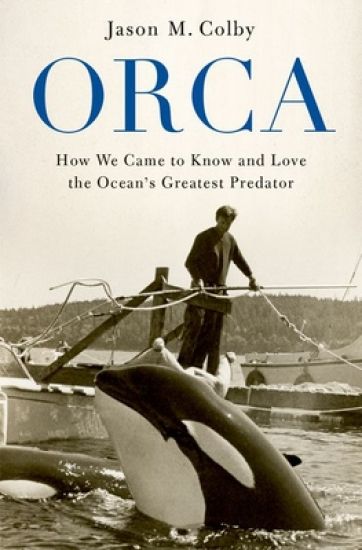
Orca

Orca

Jason M. Colby

Oxford University Press Inc
2020
nidottu
Since the release of the documentary Blackfish in 2013, millions around the world have focused on the plight of the orca, the most profitable and controversial display animal in history. Yet, until now, no historical account has explained how we came to care about killer whales in the first place. Drawing on interviews, official records, private archives, and his own family history, Jason M. Colby tells the exhilarating and often heartbreaking story of how people came to love the ocean's greatest predator. Historically reviled as dangerous pests, killer whales were dying by the hundreds, even thousands, by the 1950s--the victims of whalers, fishermen, and even the US military. In the Pacific Northwest, fishermen shot them, scientists harpooned them, and the Canadian government mounted a machine gun to eliminate them. But that all changed in 1965, when Seattle entrepreneur Ted Griffin became the first person to swim and perform with a captive killer whale. The show proved wildly popular, and he began capturing and selling others, including Sea World's first Shamu. Over the following decade, live display transformed views of Orcinus orca. The public embraced killer whales as charismatic and friendly, while scientists enjoyed their first access to live orcas. In the Pacific Northwest, these captive encounters reshaped regional values and helped drive environmental activism, including Greenpeace's anti-whaling campaigns. Yet even as Northwesterners taught the world to love whales, they came to oppose their captivity and to fight for the freedom of a marine predator that had become a regional icon. This is the definitive history of how the feared and despised "killer" became the beloved "orca"--and what that has meant for our relationship with the ocean and its creatures.

The Business of Empire

The Business of Empire

Jason M. Colby

Cornell University Press
2013
pokkari
"Jason M. Colby has researched and analyzed his topic-the business of empire-well. He exposes the intertwining of imperialism, expansion, racism, and corporate power. The Business of Empire is an insightful story about the interaction of U.S. overseas business and the U.S. and Central American governments. It will prove useful to scholars of U.S. imperialism, international business history, and U.S.–Central American relations for generations." - Journal of American History The link between private corporations and U.S. world power has a much longer history than most people realize. Transnational firms such as the United Fruit Company represent an earlier stage of the economic and cultural globalization now taking place throughout the world. Drawing on a wide range of archival sources in the United States, Great Britain, Costa Rica, and Guatemala, Colby combines "top-down" and "bottom-up" approaches to provide new insight into the role of transnational capital, labor migration, and racial nationalism in shaping U.S. expansion into Central America and the greater Caribbean. The Business of Empire places corporate power and local context at the heart of U.S. imperial history. In the early twentieth century, U.S. influence in Central America came primarily in the form of private enterprise, above all United Fruit. Founded amid the U.S. leap into overseas empire, the company initially depended upon British West Indian laborers. When its black workforce resisted white American authority, the firm adopted a strategy of labor division by recruiting Hispanic migrants. This labor system drew the company into increased conflict with its host nations, as Central American nationalists denounced not only U.S. military interventions in the region but also American employment of black immigrants. By the 1930s, just as Washington renounced military intervention in Latin America, United Fruit pursued its own Good Neighbor Policy, which brought a reduction in its corporate colonial power and a ban on the hiring of black immigrants. The end of the company's system of labor division in turn pointed the way to the transformation of United Fruit as well as the broader U.S. empire.
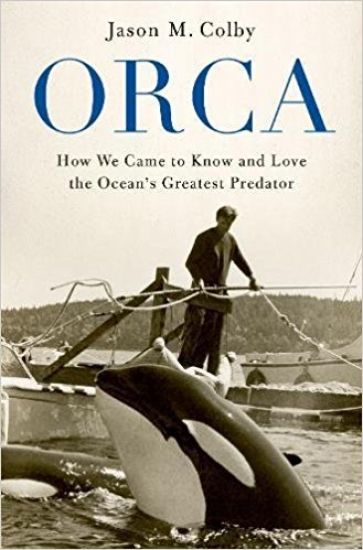
Orca

Orca

Jason M. Colby

Oxford University Press Inc
2018
sidottu
Orcas are the most profitable and controversial display animal in history, and since the release of the documentary Blackfish in 2013, millions around the world have focused on their plight. Yet no historical account has explored how we came to care about killer whales in the first place. In Orca, Jason Colby tells the exhilarating and often heartbreaking story of how people came to love the ocean's greatest predator. Historically reviled as dangerous pests, killer whales were dying by the hundreds, even thousands, by the 1950s--the victims of whalers, fishermen, and even the US military. In the Pacific Northwest, fishermen shot them, scientists harpooned them, and the Canadian government mounted a machine gun to eliminate them. But that all changed in 1965, when a Seattle entrepreneur named Ted Griffin became the first person to swim and perform with a captive killer whale. The show was a hit, and he began capturing and selling others, including Sea World's first "Shamu." Over the following decade, live display transformed popular and scientific views of Orcinus orca. The public embraced killer whales as charismatic and friendly while scientists enjoyed their first access to live orcas. In the Pacific Northwest, these captive encounters reshaped regional values and helped drive environmental activism, including Greenpeace's anti-whaling campaigns. Yet even as Northwesterners taught the world to love whales, they came to oppose their captivity. So when Sea World attempted to catch its own killer whales, Northwesterners would fight for the freedom of a marine predator that had become a regional icon. With access to previously unavailable documents and interviews, Colby offers the definitive history of how the feared and despised "killer" became the beloved "orca" and what that means for our relationship with the ocean and its creatures.
The Business of Empire

The Business of Empire

Colby Jason M.

Cornell University Press
2011
sidottu
The link between private corporations and U.S. world power has a much longer history than most people realize. Transnational firms such as the United Fruit Company represent an earlier stage of the economic and cultural globalization now taking place throughout the world. Drawing on a wide range of archival sources in the United States, Great Britain, Costa Rica, and Guatemala, Colby combines "top-down" and "bottom-up" approaches to provide new insight into the role of transnational capital, labor migration, and racial nationalism in shaping U.S. expansion into Central America and the greater Caribbean. The Business of Empire places corporate power and local context at the heart of U.S. imperial history. In the early twentieth century, U.S. influence in Central America came primarily in the form of private enterprise, above all United Fruit. Founded amid the U.S. leap into overseas empire, the company initially depended upon British West Indian laborers. When its black workforce resisted white American authority, the firm adopted a strategy of labor division by recruiting Hispanic migrants. This labor system drew the company into increased conflict with its host nations, as Central American nationalists denounced not only U.S. military interventions in the region but also American employment of black immigrants. By the 1930s, just as Washington renounced military intervention in Latin America, United Fruit pursued its own Good Neighbor Policy, which brought a reduction in its corporate colonial power and a ban on the hiring of black immigrants. The end of the company's system of labor division in turn pointed the way to the transformation of United Fruit as well as the broader U.S. empire.
Understanding Female Offenders

Understanding Female Offenders

Jason M. Smith; Carl B. Gacono; Ted B. Cunliffe

Academic Press Inc
2021
nidottu
According to the Sentencing Project, between 1980 and 2017, the number of incarcerated women increased by more than 750%, rising from a total of 26,378 in 1980 to 225,060 in 2017 and the number continues to rise. Dealing with incarcerated women and specifically psychopathic women can be challenging. Understanding Female Offenders: Psychopathy, Criminal Behavior, Assessment, and Treatment provides readers with a better conceptualization of the psychopathic/non-psychopathic female. This includes better ways of interviewing, assessing, and treating these women, and clinical caveats with case examples to assist with clinical applications. This is the only comprehensive resource that provides specific knowledge about female offenders, particularly on female psychopathy and assessment.
Building the Skyline

Building the Skyline

Jason M. Barr

Oxford University Press Inc
2018
nidottu
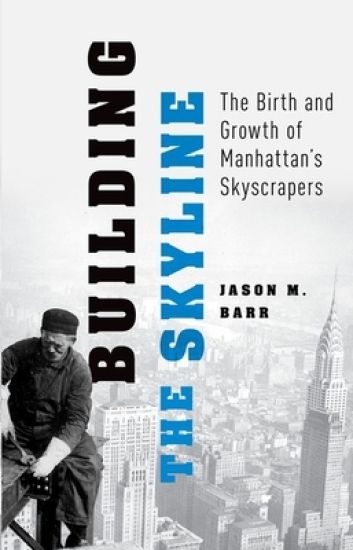
The Manhattan skyline is one of the great wonders of the modern world. In Building the Skyline, Jason Barr chronicles the history of the Manhattan skyscrapers and provides insights into the economic forces that have created its distinctive and iconic panorama. Bedrock is Manhattan's natural and geological history, which influenced early land use and the development of neighborhoods, including the dense tenement neighborhoods of Five Points and the Lower East Side. Barr sheds light on why skyscrapers emerged downtown and why they appeared three miles to the north in midtown--but not in between the two areas-and debunks myths that geology was the cause. Rather, the patterns of skyscraper construction reflected economic and demographic forces at the time, which in turn influenced subsequent developments. As the first rigorous investigation of innovative ways to accommodate as many people as possible on the same location, Building the Skyline is an important contribution to understanding the growth and life of cities.
A Cognitive-Behavioral Approach to the Beginning of the End of Life

A Cognitive-Behavioral Approach to the Beginning of the End of Life

Jason M. Satterfield

Oxford University Press Inc
2008
nidottu
Individuals with serious and incurable illnesses often require care that goes beyond the body. As they face the challenges of living with and eventually dying from their conditions, they may need to acquire new skills to cope and increase their quality of life. Even those at the beginning of the end of life can take an active role in their treatment. This skill-based program emphasizes flexibility and should be tailored to individual clients. The first module introduces stress management techniques, including cognitive restructuring, relaxation, and problem-focused and emotion-focused coping. The second module targets mood management, with sessions on depression, anxiety, and anger. Social support is addressed in the third module where clients learn communication and conflict resolution skills. Special attention is paid to supporting caregivers and working with medical providers. The fourth module focuses on quality of life and covers symptom management, goal setting, positive psychology, and spiritual issues. An adaptation chapter details how to run the program as a group and discusses other possible formats. Incorporating a wide variety of CBT techniques, this program can benefit patients suffering from a range of chronic and terminal diseases. The corresponding workbook helps clients personalize the content of sessions and practice new skills. The facilitator guide is invaluable to any mental health professional working in a medical or other palliative care setting.
Roman Virtue in the Early Christian Thought of Lactantius

Roman Virtue in the Early Christian Thought of Lactantius

Jason M. Gehrke

OXFORD UNIVERSITY PRESS INC
2025
sidottu
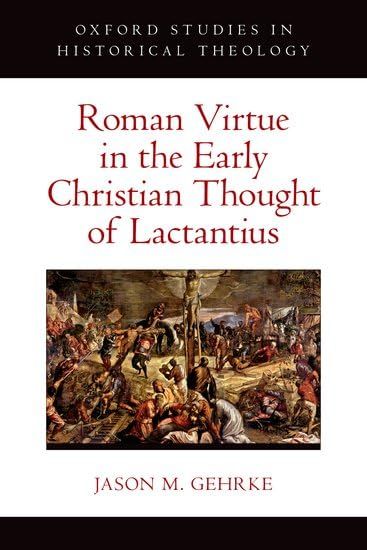
Known since the Renaissance as the "Christian Cicero," Lucius Caecilius Firmianus Lactantius was a professor of Latin rhetoric, Christian apologist, and theologian at the court of Emperor Constantine. In this historical study, Jason M. Gehrke examines the central notion ofvirtusin Lactantius's major work,The Divine Institutes of the Christian Religion. This book begins by tracing the reception of classical Roman political and philosophical arguments about divinevirtusfrom their classical sources into the apologetic, exegetical, and doctrinal writings of Lactantius's predecessors — Tertullian, Minucius Felix, and Cyprian. Recognition of their influence illuminates the fundamental notion ofvirtusthat animates Lactantius's doctrine of God and his Christology. In this context, Lactantius's account of divinevirtusrevealed in Christ indicates the profound influence of classical Roman literature, philosophy, and politics upon the development of Christian thought in the third-century Latin West. Lactantius's Christology provides the immediate basis for his attempt to correct and reform classical Roman thinking about moral and political order. Gehrke thus examines Lactantius's arguments about wealth, sexuality, and warfare to show their intimate connection to his Christology and scriptural exegesis. In this account, Gehrke argues, Lactantius attempts a comprehensive synthesis of third century Latin Christian thinking about Christ's revelation and its implications for ethics and politics. Roman Virtue in the Early Christian Thought of Lactantiusthus presentsTheDivine Institutesas the first programmatic expression of early Latin Christian political theology in the Constantinian era. By attending to the traditional character of his arguments, this work provides a new basis for historical accounts of Lactantius and his contributions to Christianity in the pivotal era of Constantine's rise. Foreword by Anthony Briggman.
Building the Skyline

Building the Skyline

Jason M. Barr

Oxford University Press Inc
2016
sidottu
The Manhattan skyline is one of the great wonders of the modern world. But how and why did it form? Much has been written about the city's architecture and its general history, but little work has explored the economic forces that created the skyline. This book chronicles the economic history of the Manhattan skyline. In the process, the book debunks some widely-held misconceptions about the city's history. Part I lays out the historical and environmental background that established Manhattan's real estate trajectory before the Skyscraper Revolution at the end of the 19th century. The book begins with Manhattan's natural and geological history and then moves on to how it influenced early land use and neighborhood formation, and how these early decisions eventually impacted the location of skyscrapers. Part II focuses specifically on the economic history of skyscrapers and the skyline, investigating the reasons for their heights, frequencies, locations, and shapes. The book discusses why skyscrapers emerged downtown and why they appeared three miles to the north in midtown, but not in between. Contrary to popular belief it was not due to the depths of Manhattan's bedrock, nor the presence of Grand Central Station. Rather midtown's emergence was a response to the economic and demographic forces that were taking place north of 14th Street after the Civil War. The book also presents the first rigorous investigation of the causes of the building boom during the Roaring Twenties. Contrary to conventional wisdom, the boom was largely a rational response to the economic growth of the nation and city. The last chapter investigates the value of Manhattan Island and the relationship between skyscrapers and land prices. Finally, an Epilogue offers policy recommendations for a resilient and robust future skyline.
Cultivating Professional Resilience in Direct Practice

Cultivating Professional Resilience in Direct Practice

Jason M. Newell

Columbia University Press
2017
sidottu
Overwhelming empirical evidence indicates that new social workers, particularly those going into child welfare or other trauma-related care, will discover emotional challenges including the indirect or secondary effects of the trauma work itself, professional burnout, and compassion fatigue. However, the newly revised CSWE Educational Policy and Accreditation Standards (EPAS) does not mandate the inclusion of content related to self-care in social work curriculum or field education. In a textbook that bridges the gap between theoretical and pragmatic approaches to this important issue in human service work, Jason M. Newell provides a potential resolution by conceptualizing self-care as an ongoing and holistic set of practice behaviors described as the key to professional resilience. To address the effects of trauma-related care on direct practitioners, Newell provides a comprehensive, competency-based model for professional resilience, examining four key constructs-stress, empathy, resilience, and self-care-from a range of theoretical dimensions. For those who work with vulnerable populations, the tendency to frame self-care solely within organizational context overlooks the importance of self-care in domains beyond the agency setting. Alternatively, he uses a framework grounded in the ecological-systems perspective conceptualizing self-care as a broader set of practice behaviors pertaining to the whole person, including the physical, interpersonal, organizational, familial, and spiritual domains of the psychosocial self. Alongside professional self-care practices at the organizational level, Newell makes a case for the pragmatic role of recreational activities, time with family and friends, physical health, spirituality, and mindfulness. The application of a comprehensive approach to self-care practice has potential to empower practitioners to remain resilient and committed to the values, mission, and spirit of the social work profession in the face of trauma.
Cultivating Professional Resilience in Direct Practice

Cultivating Professional Resilience in Direct Practice

Jason M. Newell

Columbia University Press
2017
pokkari
Overwhelming empirical evidence indicates that new social workers, particularly those going into child welfare or other trauma-related care, will discover emotional challenges including the indirect or secondary effects of the trauma work itself, professional burnout, and compassion fatigue. However, the newly revised CSWE Educational Policy and Accreditation Standards (EPAS) does not mandate the inclusion of content related to self-care in social work curriculum or field education. In a textbook that bridges the gap between theoretical and pragmatic approaches to this important issue in human service work, Jason M. Newell provides a potential resolution by conceptualizing self-care as an ongoing and holistic set of practice behaviors described as the key to professional resilience. To address the effects of trauma-related care on direct practitioners, Newell provides a comprehensive, competency-based model for professional resilience, examining four key constructs-stress, empathy, resilience, and self-care-from a range of theoretical dimensions. For those who work with vulnerable populations, the tendency to frame self-care solely within organizational context overlooks the importance of self-care in domains beyond the agency setting. Alternatively, he uses a framework grounded in the ecological-systems perspective conceptualizing self-care as a broader set of practice behaviors pertaining to the whole person, including the physical, interpersonal, organizational, familial, and spiritual domains of the psychosocial self. Alongside professional self-care practices at the organizational level, Newell makes a case for the pragmatic role of recreational activities, time with family and friends, physical health, spirituality, and mindfulness. The application of a comprehensive approach to self-care practice has potential to empower practitioners to remain resilient and committed to the values, mission, and spirit of the social work profession in the face of trauma.
Nietzsche and Other Buddhas

Nietzsche and Other Buddhas

Jason M. Wirth

Indiana University Press
2019
sidottu
In Nietzche and Other Buddhas, author Jason M. Wirth brings major East Asian Buddhist thinkers into radical dialogue with key Continental philosophers through a series of exercises that pursue what is traditionally called comparative or intercultural philosophy as he reflects on what makes such exercises possible and intelligible. The primary questions he asks are: How does this particular engagement and confrontation challenge and radicalize what is sometimes called comparative or intercultural philosophy? How does this task reconsider what is meant by philosophy? The confrontations that Wirth sets up between Dogen, Hakuin, Linji, Shinran, Nietzsche, and Deleuze ask readers to think more philosophically and globally about the nature of philosophy in general and comparative philosophy in particular. He opens up a new and challenging space of thought in and between the cutting edges of Western Continental philosophy and East Asian Buddhist practice.
Nietzsche and Other Buddhas

Nietzsche and Other Buddhas

Jason M. Wirth

Indiana University Press
2019
pokkari
In Nietzche and Other Buddhas, author Jason M. Wirth brings major East Asian Buddhist thinkers into radical dialogue with key Continental philosophers through a series of exercises that pursue what is traditionally called comparative or intercultural philosophy as he reflects on what makes such exercises possible and intelligible. The primary questions he asks are: How does this particular engagement and confrontation challenge and radicalize what is sometimes called comparative or intercultural philosophy? How does this task reconsider what is meant by philosophy? The confrontations that Wirth sets up between Dogen, Hakuin, Linji, Shinran, Nietzsche, and Deleuze ask readers to think more philosophically and globally about the nature of philosophy in general and comparative philosophy in particular. He opens up a new and challenging space of thought in and between the cutting edges of Western Continental philosophy and East Asian Buddhist practice.
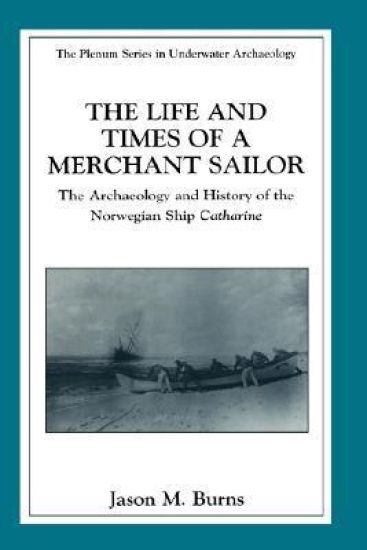
The Life and Times of a Merchant Sailor

The Life and Times of a Merchant Sailor

Jason M. Burns

Kluwer Academic/Plenum Publishers
2002
sidottu
Historical archaeologists are in a unique position to analyze both historical documents and archaeological data in order to generate hypotheses and draw conclusions. In this work, the data not only provided the history of the ship "Catharine" but also the economic, social and political environments in which the ship was built and employed. This work focuses not only on the shipwreck and the wrecking event, but on the history and archaeology of a single ship. With this expanded view, the research also delves into:*International shipbuilding; *The struggle for dominance in the ship trade in the 19th century.This book will be of interest to underwater, historical and cultural archaeologists, social historians, cultural heritage managers and archaeologists working in the southeastern United States.
Ultrasound, An Issue of Radiologic Clinics of North America

Ultrasound, An Issue of Radiologic Clinics of North America

Jason M. Wagner

Elsevier - Health Sciences Division
2019
sidottu
This issue of Radiologic Clinics of North America focuses on Ultrasound, and is edited by Dr. Jason M. Wagner. Articles will include: Thyroid Ultrasound; Ultrasound of Cervical Lymph Nodes; Ultrasound of Right Upper Quadrant Pain; Ultrasound of Diffuse Liver Disease; Liver Ultrasound in Patients at Risk for Hepatocellular Carcinoma; Ultrasound of Renal Masses; Ultrasound of Pelvic Pain in the Nonpregnant Woman; Ultrasound of the 1st Trimester Pregnant Woman; Scrotal Ultrasound; Carotid Ultrasound; Vertebral Artery Ultrasound; Ultrasound in Sports Medicine; Ultrasound of Lumps, Bumps, and Soft-tissue Fluid Collections; and more!
The Plague Forge

The Plague Forge

Jason M. Hough

Del Rey Books
2013
pokkari
The Plague Forge delivers an unbeatable combination of knockout action and kick-ass characters as the secrets to the ultimate alien mystery from The Darwin Elevator and The Exodus Towers are about to be unraveled. The hunt is on for the mysterious keys left by the alien Builders. While Skyler's team of immune scavengers scatters around the disease-ravaged globe in search of the artifacts, Skyler himself finds much more than he expected in the African desert, where he stumbles upon surprising Builder relics--and thousands of bloodthirsty subhumans. From the slums and fortresses of Darwin to the jungles of Brazil and beyond, Skyler and company are in for a wild ride, jam-packed with daunting challenges, run-and-gun adventure, and unexpected betrayals--all in a race against time to finally answer the great questions that have plagued humanity for decades: Who are the Builders, and what do they want with Earth? Praise for The Darwin Elevator "A hell of a fun book."--James S. A. Corey, New York Times bestselling author of Abaddon's Gate " Jason M.] Hough's first novel combines the rapid-fire action and memorable characters associated with Joss Whedon's short-lived Firefly TV series with the accessibility and scientific acumen of James S. A.] Corey's 'Expanse' series."--Library Journal (starred review) "The best part about alien stories is their mystery, and Jason Hough understands that like no other. Full of compelling characters and thick with tension, The Darwin Elevator delivers both despair and hope along with a gigantic dose of wonder. It's a brilliant debut, and Hough can take my money whenever he writes anything from now on."--Kevin Hearne, New York Times bestselling author of The Iron Druid Chronicles "Newcomer Hough displays a talent for imaginative plotting and realistic dialogue, and the brisk pacing and cliffhanger ending will keep readers enthralled and eagerly awaiting the next installment."--Publishers Weekly "Jason M. Hough does a great job with this huge story. The world of Darwin and the Elevator is deliciously complex and satisfying. Skyler, Tania, and all the other characters are delightfully drawn and fun to spend time with. . . . The story unfolds with just the right balance of high adventure, espionage, humor, and emotional truth. . . . As soon as you finish, you'll want more."--Analog "A debut novel unlike any other . . . This is something special. Something iconic. The Darwin Elevator is full of majesty and wonder, mystery and mayhem, colorful characters and insidious schemes."--SF Signal "Fun, action-packed and entertaining . . . a sure contender for science fiction debut of the year "--Pat's Fantasy Hotlist "Claustrophobic, intense, and satisfying . . . I couldn't put this book down. The Darwin Elevator depicts a terrifying world, suspends it from a delicate thread, and forces you to read with held breath as you anticipate the inevitable fall."--Hugh Howey, New York Times bestselling author of Wool
Repatriation of Indigenous Cultural Heritage

Repatriation of Indigenous Cultural Heritage

Jason M. Gibson

TAYLOR FRANCIS LTD
2023
sidottu
Repatriation of Indigenous Cultural Heritage examines how returned materials - objects, photographs, audio and manuscripts - are being received and reintegrated into the ongoing social and cultural lives of Aboriginal Australians. Combining a critical examination of the making of these collections with an assessment of their contemporary significance, the book exposes the opportunities and challenges involved in returning cultural heritage for the purposes of maintaining, preserving or reviving cultural practice. Drawing on ethnographic work undertaken with Aboriginal communities and the institutions that hold significant collections, the author reveals important new insights about the impact of return on communities. Technological advances, combined with the push towards decolonising methodologies in Indigenous research, have resulted in considerable interest in ensuring that collections of cultural value are returned to Indigenous communities. Gibson challenges the rhetoric of museum repatriation, arguing that, while it has been tremendously important to advancing Indigenous interest, it is too often over-simplified. Repatriation of Indigenous Cultural Heritage offers a timely, critical perspective on current museum practice and its place within processes of cultural production and transmission. The book is sure to resonate in other international contexts where questions about Indigenous re-engagement and decolonisation strategies are being debated and will be of interest to students and scholars of Museum Studies, Indigenous Studies and Anthropology.
Repatriation of Indigenous Cultural Heritage

Repatriation of Indigenous Cultural Heritage

Jason M. Gibson

TAYLOR FRANCIS LTD
2024
nidottu
Repatriation of Indigenous Cultural Heritage examines how returned materials - objects, photographs, audio and manuscripts - are being received and reintegrated into the ongoing social and cultural lives of Aboriginal Australians. Combining a critical examination of the making of these collections with an assessment of their contemporary significance, the book exposes the opportunities and challenges involved in returning cultural heritage for the purposes of maintaining, preserving or reviving cultural practice. Drawing on ethnographic work undertaken with Aboriginal communities and the institutions that hold significant collections, the author reveals important new insights about the impact of return on communities. Technological advances, combined with the push towards decolonising methodologies in Indigenous research, have resulted in considerable interest in ensuring that collections of cultural value are returned to Indigenous communities. Gibson challenges the rhetoric of museum repatriation, arguing that, while it has been tremendously important to advancing Indigenous interest, it is too often over-simplified. Repatriation of Indigenous Cultural Heritage offers a timely, critical perspective on current museum practice and its place within processes of cultural production and transmission. The book is sure to resonate in other international contexts where questions about Indigenous re-engagement and decolonisation strategies are being debated and will be of interest to students and scholars of Museum Studies, Indigenous Studies and Anthropology.
Counseling Widowers

Counseling Widowers

Jason M. Troyer

Routledge
2014
sidottu
Working with widowers can be one of the most challenging parts of a therapist’s career. Despite the need for better research and professional guidance, therapists have often been left alone to confront a group struggling with high rates of suicide, mortality, physical health problems, and depression. Counseling Widowers builds from the latest developments in grief research and men’s studies to bridge the gap between counseling practice and the needs of bereaved men. In these pages, therapists will find tools for adjusting their clinical strategies to work more effectively with these men. Through a more empathic understanding of widowers, therapists can help them build from their strengths as they face the loss of their partner.
Counseling Widowers

Counseling Widowers

Jason M. Troyer

Routledge
2014
nidottu
Working with widowers can be one of the most challenging parts of a therapist’s career. Despite the need for better research and professional guidance, therapists have often been left alone to confront a group struggling with high rates of suicide, mortality, physical health problems, and depression. Counseling Widowers builds from the latest developments in grief research and men’s studies to bridge the gap between counseling practice and the needs of bereaved men. In these pages, therapists will find tools for adjusting their clinical strategies to work more effectively with these men. Through a more empathic understanding of widowers, therapists can help them build from their strengths as they face the loss of their partner.