Kirjojen hintavertailu. Mukana 11 699 587 kirjaa ja 12 kauppaa.

Kirjahaku

Etsi kirjoja tekijän nimen, kirjan nimen tai ISBN:n perusteella.

1000 tulosta hakusanalla Jeff Hecht
The Laser Guidebook

The Laser Guidebook

Jeff Hecht

McGraw-Hill Professional
1999
nidottu
Publisher's Note: Products purchased from Third Party sellers are not guaranteed by the publisher for quality, authenticity, or access to any online entitlements included with the product.
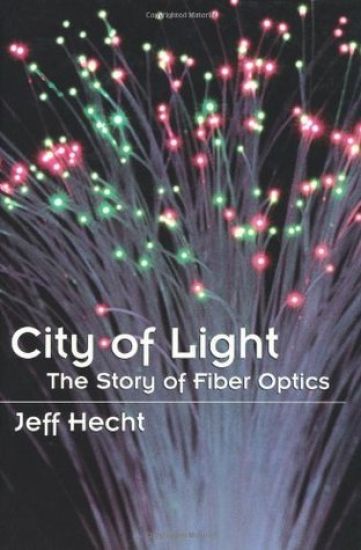
City of Light

City of Light

Jeff Hecht

Oxford University Press Inc
1999
sidottu
Fiber optic technology is revolutionizing telecommunications and thus our lives. Networks of opitcal fibers have spread around the world, opening the door to the possibility of a new information age, and spurring telephone and cable television companies into a billion-dollar race for control over the next generation of services and equipment. The story of this technology is fascinating complex, and largely untold. Hecht tells this story, from its beginning in 19th-century attempts to guide light, for purposes of illuminating the insides of the human body, to today's mysterious, ubiquitous communications technologies. We hear the crucial conversation in 1951 that led to the realization that optical fibers might conduct light if coated with a layer of transparent material. Hecht also describes the medical technologies developed in the 1960's, which allowed doctors to see inside patients' stomachs and better understand gastric disorders. And we learn of the race to develop fiber-optic technology that could control the laser, the brilliant concentrated beam that captured the imagination of the physics community. This history is meticulously detailed from beginning to end, allowing for explorations of experiments that now seem strange and even humorous, but nonetheless illuminate the origins of the technology. We get the whole story, including the huge range of contributing characters, accidents, and revolutionary ideas. The book is infused with the spirit of fascination and fun, and the reader will enjoy the story for its own sake, as well for the historical picture it provides of a technology on which we all depend.
Beam

Beam

Jeff Hecht

Oxford University Press Inc
2005
sidottu
In 1954, Charles Townes invented the laser's microwave cousin, the maser. The next logical step was to extend the same physical principles to the shorter wavelengths of light, but the idea did not catch fire until October 1957, when Townes asked Gordon Gould about Gould's research on using light to excite thallium atoms. Each took the idea and ran with it. The independent-minded Gould sought the fortune of an independent inventor; the professorial Townes sought the fame of scientific recognition. Townes enlisted the help of his brother-in-law, Arthur Schawlow, and got Bell Labs into the race. Gould turned his ideas into a patent application and a million-dollar defense contract. They soon had company. Ali Javan, one of Townes's former students, began pulling 90-hour weeks at Bell Labs with colleague Bill Bennett. And far away in California a bright young physicist named Ted Maiman became a very dark horse in the race. While Schawlow proclaimed that ruby could never make a laser, Maiman slowly convinced himself it would. As others struggled with recalcitrant equipment and military secrecy, Maiman built a tiny and elegant device that fit in the palm of his hand. His ruby laser worked the first time he tried it, on May 16, 1960, but afterwards he had to battle for acceptance as the man who made the first laser. Beam is a fascinating tale of a remarkable and powerful invention that has become a symbol of modern technology.
City of Light

City of Light

Jeff Hecht

Oxford University Press Inc
2004
nidottu
City of Light tells the story of fiber optics, tracing its transformation from 19th-century parlor trick into the foundation of our global communications network. Written for a broad audience by a journalist who has covered the field for twenty years, the book is a lively account of both the people and the ideas behind this revolutionary technology. The basic concept underlying fiber optics was first explored in the 1840s when researchers used jets of water to guide light in laboratory demonstrations. The idea caught the public eye decades later when it was used to create stunning illuminated fountains at many of the great Victorian exhibitions. The modern version of fiber optics--using flexible glass fibers to transmit light--was discovered independently five times through the first half of the century, and one of its first key applications was the endoscope, which for the first time allowed physicians to look inside the body without surgery. Endoscopes became practical in 1956 when a college undergraduate discovered how to make solid glass fibers with a glass cladding. With the invention of the laser, researchers grew interested in optical communications. While Bell Labs and others tried to send laser beams through the atmosphere or hollow light pipes, a small group at Standard Telecommunication Laboratories looked at guiding light by transparent fibers. Led by Charles K. Kao, they proposed the idea of fiber-optic communications and demonstrated that contrary to what many researchers thought glass could be made clear enough to transmit light over great distances. Following these ideas, Corning Glass Works developed the first low-loss glass fibers in 1970. From this point fiber-optic communications developed rapidly. The first experimental phone links were tested on live telephone traffic in 1977 and within half a dozen years long-distance companies were laying fiber cables for their national backbone systems. In 1988, the first transatlantic fiber-optic cable connected Europe with North America, and now fiber optics are the key element in global communications. The story continues today as fiber optics spread through the communication grid that connects homes and offices, creating huge information pipelines and replacing copper wires. The book concludes with a look at some of the exciting potential developments of this technology.
Beam

Beam

Jeff Hecht

Oxford University Press Inc
2010
nidottu
Beam is the story of the race to make the laser, the three intense years from the birth of the laser idea to its breakthrough demonstration in a California laboratory. The quest was a struggle against physics, established wisdom, and the establishment itself. In 1954, Charles Townes invented the laser's microwave cousin, the maser. The next logical step was to extend the same physical principles to the shorter wavelengths of light, but the idea did not catch fire until October 1957, when Townes asked Gordon Gould about Gould's research on using light to excite thallium atoms. Each took the idea and ran with it. The independent-minded Gould sought the fortune of an independent inventor; the professorial Townes sought the fame of scientific recognition. Townes enlisted the help of his brother-in-law, Arthur Schawlow, and got Bell Labs into the race. Gould turned his ideas into a patent borth ation and a million-dollar defense contract. They soon had company. Ali Javan, one of Townes's former students, began pulling 90-hour weeks at Bell Labs with colleague Bill Bennett. And far away in California a bright young physicist named Ted Maiman became a very dark horse in the race. While Schawlow proclaimed that ruby could never make a laser, Maiman slowly convinced himself it would. As others struggled with recalcitrant equipment and military secrecy, Maiman built a tiny and elegant device that fit in the palm of his hand. His ruby laser worked the first time he tried it, on May 16, 1960, but afterwards he had to battle for acceptance as the man who made the first laser. Beam is a fascinating tale of a remarkable and powerful invention that has become a symbol of modern technology.
Understanding Lasers

Understanding Lasers

Jeff Hecht

Wiley-Blackwell
2019
nidottu
The expanded fourth edition of the book that offers an essential introduction to laser technology and the newest developments in the field The revised and updated fourth edition of Understanding Lasers offers an essential guide and introduction that explores how lasers work, what they do, and how they are applied in the real world. The author—a Fellow of The Optical Society—reviews the key concepts of physics and optics that are essential for understanding lasers and explains how lasers operate. The book also contains information on the optical accessories used with lasers. Written in non-technical terms, the book gives an overview of the wide-variety laser types and configurations. Understanding Lasers covers fiber, solid-state, excimer, helium-neon, carbon dioxide, free-electron lasers, and more. In addition, the book also explains concepts such as the difference between laser oscillation and amplification, the importance of laser gain, and tunable lasers. The updated fourth edition highlights the most recent research and development in the field. This important resource: Includes a new chapter on fiber lasers and amplifiersReviews new topics on physics of optical fibers and fiber lasers, disk lasers, and Ytterbium lasersContains new sections on Laser Geometry and Implications, Diode Laser Structures, Optimal Parametric Sources, and 3D Printing and Additive ManufacturingPuts the focus on research and emerging developments in areas such as spectroscopy, slow light, laser cooling, and extremely precise measurementsContains appendices, glossary, and index that help make this book a useful reference Written for engineering and physics students, engineers, scientists, and technicians, the fourth edition of Understanding Lasers contains the basic concepts of lasers and the most recent advances in the technology.
Vanishing Life

Vanishing Life

Jeff Hecht

Atheneum Books for Young Readers
2009
pokkari
From the author of Optics and Shifting Shores comes a detailed and mesmerizing look into the mystery of mass extinctions. Vanishing Life takes readers into the fascinating phenomenon of mass extinction as Jeff Hecht bust myths with shocking facts in this spellbinding book. In clear and lucid style, Hecht explores the geological evidence of extinction and its interpretation, the evolution of species, fossilization, and the theories by which science attempts to explain various “dyings.”
Lasers, Death Rays, and the Long, Strange Quest for the Ultimate Weapon
The whole story of laser weapons with a focus on its many interesting characters and sometimes bizarre schemes The laser--a milestone invention of the mid-twentieth century--quickly captured the imagination of the Pentagon as the key to the ultimate weapon. Veteran science writer Jeff Hecht tells the inside story of the adventures and misadventures of scientists and military strategists as they exerted Herculean though often futile efforts to adapt the laser for military uses. From the 1950s' sci-fi vision of the "death ray," through the Reagan administration's "Star Wars" missile defense system, to more promising developments today, Hecht provides an entertaining history. As the author illustrates, there has always been a great deal of enthusiasm and false starts surrounding lasers. He describes a giant laser that filled a Boeing 747, lasers powered like rocket engines, plans for an orbiting fleet of robotic laser battle stations to destroy nuclear missiles, claims that nuclear bombs could produce intense X-ray laser beams, and a scheme to bounce laser beams off giant orbiting relay mirrors. Those far-out ideas remain science fiction. Meanwhile, in civilian sectors, the laser is already being successfully used in fiber optic cables, scanners, medical devices, and industrial cutting tools. Now those laser cutting tools are leading to a new generation of laser weapons that just might stop insurgent rockets. Replete with interesting characters, bizarre schemes, and wonderful inventions, this is a well-told tale about the evolution of technology and the reaches of human ambition.
Introduction to Laser Technology

Introduction to Laser Technology

C. Breck Hitz; James J. Ewing; Jeff Hecht
John Wiley Sons Inc
2012
sidottu
The only introductory text on the market today that explains the underlying physics and engineering applicable to all lasers Although lasers are becoming increasingly important in our high-tech environment, many of the technicians and engineers who install, operate, and maintain them have had little, if any, formal training in the field of electro-optics. This can result in less efficient usage of these important tools. Introduction to Laser Technology, Fourth Edition provides readers with a good understanding of what a laser is and what it can and cannot do. The book explains what types of laser to use for different purposes and how a laser can be modified to improve its performance in a given application. With a unique combination of clarity and technical depth, the book explains the characteristics and important applications of commercial lasers worldwide and discusses light and optics, the fundamental elements of lasers, and laser modification.? In addition to new chapter-end problems, the Fourth Edition includes new and expanded chapter material on: Material and wavelength Diode Laser Arrays Quantum-cascade lasers Fiber lasers Thin-disk and slab lasers Ultrafast fiber lasers Raman lasers Quasi-phase matching Optically pumped semiconductor lasers Introduction to Laser Technology, Fourth Edition is an excellent book for students, technicians, engineers, and other professionals seeking a fuller, more formal introduction to the field of laser technology.
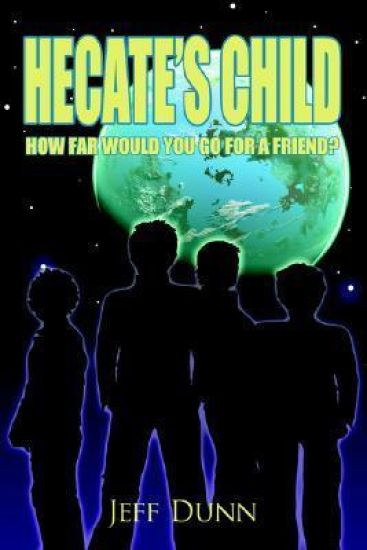
Hecate's Child

Hecate's Child

Jeff Dunn

Authorhouse UK
2006
pokkari
How far would you go for a friend? It is February 2203. Lonely and neglected, Joey haunts the underworld of Rainbow City, capital of the Moon. Here he befriends Diana, a girl with strange abilities but no memory of her past, except that she has escaped from somebody who terrifies her. As they try to uncover the secret of who she is and where she came from, they are joined by Kim, a champion virtual reality pilot, and Tycho, a boy genius. When Diana is recaptured and taken to Earth, Joey, Kim and Tycho must set out on the adventure of a lifetime to save her and expose the evil experiment from which she thought she had escaped.
Jeff Goes Wild

Jeff Goes Wild

Angela Rozelaar

Katherine Tegen Books
2022
sidottu
For rainy day reads or as motivation for the littlest readers, this adorable and affirming picture book adventure from author/illustrator Angie Rozelaar is perfect for fans of Lions Lessons and Max the Brave! Bursting with vibrant colors and adorable illustrations, this story follows one little cat named Jeff as he imagines himself as a ferocious tiger in the jungle where he can be free from the rules of indoors! Escaping in his imagination to exercise his wild side, Jeff meets other animals in the jungle. With their help, Jeff learns to appreciate himself for who he is: not a tiger, but a little kitty who can be just as wild. With an uplifting message for young readers and text with call-and-response, jaunty refrains, and rhyme throughout, Jeff Goes Wild is perfect for read-alouds and will have everyone roaring along with Jeff as he goes wild!
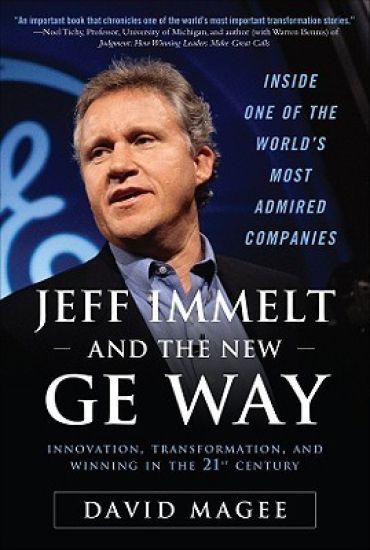
Jeff Immelt and the New GE Way: Innovation, Transformation and Winning in the 21st Century
When it was announced in late 2000 that Jeff Immelt would be taking the helm of GE, some skeptics were quick to voice their reservations about the future of the company after Jack Welch. Not only were Welch's shoes particularly large ones to fill, but the economy was dallying with recession, China and India were taking their first giant steps into the global economy, and just four days into Immelt's tenure came the biggest game changer of all: 9/11.The hand-wringing, it turned out, was all for nought. During Immelt's first seven years on the job, GE's revenues increased by more than 60%, its profits doubled, and the company solidified its status as the world leader in technological innovation.Written with the full cooperation of Immelt and GE senior executives, Jeff Immelt and the New GE Way tells the amazing story of how Immelt defied the skeptics and successfully reengineered one of the world's oldest and largest global conglomerates to meet the challenges of the 21st century. It offers an unparalleled opportunity to learn how it's done from a master, detailing the trendsetting innovations Immelt pioneered that have made his vision a reality, including:Mandating non-stop, company-wide innovationMaking customers partners in growth through Customer Dreaming Sessions Developing region-specific products and servicesPartnering with the most promising new-technology upstartsGoing green with a hugely successful Ecomagination initiativeFostering a non-stop learning environmentThe critics were right: Jeff Immelt is no Jack Welch. Just as Welch embodied corporate leadership for the closing decades of the 20th century, Immelt has come to personify the 21st century CEO. As Esquire magazine said when it named him one of The 75 Most Important People of the 21st Century: “The day will come, when GE chairman and CEO, Jeff Immelt, will be viewed as the prototypical leader for the new century.”
Jeff Koons

Jeff Koons

Scott Rothkopf

Yale University Press
2014
sidottu
A fresh and engaging look at the controversial work of Jeff Koons, with insightful analyses and illustrations of all of his iconic pieces alongside preparatory works and historical photographs Examining the breadth and depth of thirty-five years of work by Jeff Koons (b. 1955), one of the most influential and controversial artists of the 20th century, this highly anticipated volume features all of his most famous pieces. In an engaging overview essay, Scott Rothkopf carefully examines the evolution of Koons’ work and his development over the past thirty-five years, offering a fresh scholarly perspective on the artist’s multi-faceted career. In addition, short essays by a wide range of interdisciplinary contributors—from academics to novelists—probe provocative topics such as celebrity and media, markets and money, and technology and fabrication. Also included are preparatory sketches and plans for sculptures and paintings as well as installation photographs that shed light on Koons’ artistic process and trace the development of his work throughout his landmark career. Koons has risen to international fame making art that reimagines and recontextualizes images and objects from popular culture such as vacuum cleaners, basketballs, and balloon animals. Created with painstaking attention to detail by a team of fabricators, these objects raise questions about taste and popular culture, and position Koons as one of the most lauded and criticized artists working today. Distributed for the Whitney Museum of American ArtExhibition Schedule:Whitney Museum of American Art (06/27/14–10/19/14)Centre Pompidou (11/26/14–04/27/15)Guggenheim Museum, Bilbao (06/05/15–09/27/15)
Jeff Wall

Jeff Wall

YALE UNIVERSITY PRESS
2022
sidottu
A handsome volume of the renowned photographer’s work from 2005 to 2021 Best known for his large-scale photographs, carefully constructed “near documentaries” created in collaboration with the subjects, Jeff Wall (b. 1946) is one of the most influential photographers of the late twentieth and early twenty-first centuries. Often displayed as backlit color transparencies, Wall’s works have helped define the use of color and painterly sensibilities in contemporary art photography. This volume collects over fifteen years’ worth of new work from Jeff Wall in a lavish presentation that includes multiple gatefolds to better convey the scale of Wall’s work. As a collection of Wall’s most recent work, this volume will include numerous pieces that are as-yet unfamiliar to many of his fans. Chevrier’s essay deftly summarizes the varied directions of Wall’s recent work and contextualizes them within the body of work that precedes this volume; de Duve’s and Campany’s wide-ranging conversations with the artist cover the role of performance and the effects of spontaneity and scale, respectively.Distributed for Gagosian
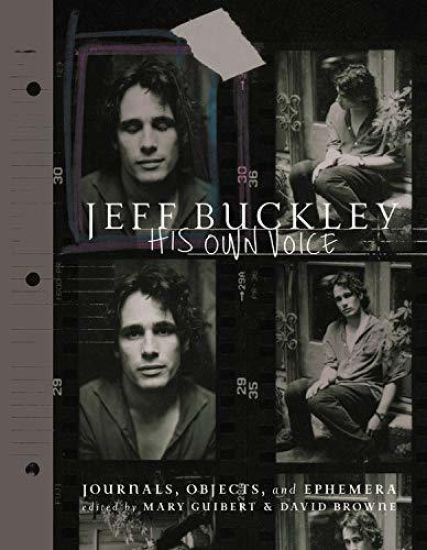
Jeff Buckley: His Own Voice
The journals, notebooks, musings, and early song drafts of Jeff Buckley, the late singer best-known for the definitive version of "Hallelujah" and his classic album Grace, including dozens of evocative photos of his personal effects and ephemera.After the release of his acclaimed debut album, Grace, in 1994, Jeff Buckley quickly established himself as one of the decade's most defining talents in pop music: a singer, guitarist, and songwriter with a multi-octave range whose tastes took in rock, blues, jazz, hardcore, Qawwali music, and even show tunes. Hailed by the likes of Bono, Jimmy Page, and Robert Plant, Grace showcased Buckley's voice, passion, and influences and pointed to an inordinately promising future. Three short years later, at the age of thirty, he tragically drowned in Memphis. But his legend and stature have only grown since; in recent years, everyone from Adele to Coldplay to Radiohead has spoken of the impact Buckley's music had on them.For much of his life, Buckley diligently kept journals recording his goals, inspirations, aspirations, and creative struggles. These diaries amount to one of the most insightful life chronicles any musical artist has left behind. Jeff Buckley: His Own Voice marks the first-ever publication of Buckley's handwritten account of his journey from his days in Los Angeles in the late '80s through shortly before his passing. Combined with reproductions of other memorabilia--including letters, notes, and unpublished lyrics--this book takes readers and fans deep into Buckley's mind and life.
Jeff in Venice, Death in Varanasi
A New York Times Notable Book A Best Book of the Year: The Economist, The New Yorker, San Francisco Chronicle, Slate.com, and TimeIn Venice, at the Biennale, a jaded, bellini-swigging journalist named Jeff Atman meets a beautiful woman and they embark on a passionate affair. In Varanasi, an unnamed journalist (who may or may not be Jeff) joins thousands of pilgrims on the banks of the holy Ganges. He intends to stay for a few days but ends up remaining for months. Their journey--as only the irrepressibly entertaining Geoff Dyer could conjure--makes for an uproarious, fiendishly inventive novel of Italy and India, longing and lust, and the prospect of neurotic enlightenment.