Kirjojen hintavertailu. Mukana 11 244 527 kirjaa ja 12 kauppaa.

Kirjahaku

Etsi kirjoja tekijän nimen, kirjan nimen tai ISBN:n perusteella.

1000 tulosta hakusanalla Johan Huizinga

Johan Huizinga 1872–1972

Johan Huizinga 1872–1972

W. R. H. Koops; E. H. Kossmann; Gees Van Der Plaat

Springer
2012
nidottu
From 11 to 15 December 1972 a group of historians from many European countries assembled in Groningen to commemorate the centenary of Johan Huizinga's birth in that city on 7 December 1872. The conference was not intended simply as a tribute to the memory of a great historian but also as an attempt to assess the sig­ nificance of his work for the present generation. It was supported by generous grants from the Stichting oud-studentenfonds van 1906 at Groningen, the Gro­ ninger Universiteitsfonds, and the Ministry of Education and Science. We are pleased to be able to publish all the papers read at the conference, together with Dr. Jansonius's study of Huizinga's style, written for another occasion. The material is presented in a roughly chronological order. The first three papers, which examine Huizinga's intellectual and literary points of departure, are followed by another three dealing with The Waning of the Middle Ages. A special paper is de­ voted to Huizinga's Erasmian studies. The next three authors investigate the prob­ lems which preoccupied Huizinga during the 1930s. Three final papers examine general aspects of his work.
Johan Huizinga 1872–1972

Johan Huizinga 1872–1972

W.R.H. Koops

Springer
1973
nidottu
From 11 to 15 December 1972 a group of historians from many European countries assembled in Groningen to commemorate the centenary of Johan Huizinga's birth in that city on 7 December 1872. The conference was not intended simply as a tribute to the memory of a great historian but also as an attempt to assess the sig­ nificance of his work for the present generation. It was supported by generous grants from the Stichting oud-studentenfonds van 1906 at Groningen, the Gro­ ninger Universiteitsfonds, and the Ministry of Education and Science. We are pleased to be able to publish all the papers read at the conference, together with Dr. Jansonius's study of Huizinga's style, written for another occasion. The material is presented in a roughly chronological order. The first three papers, which examine Huizinga's intellectual and literary points of departure, are followed by another three dealing with The Waning of the Middle Ages. A special paper is de­ voted to Huizinga's Erasmian studies. The next three authors investigate the prob­ lems which preoccupied Huizinga during the 1930s. Three final papers examine general aspects of his work.
Kultur und Gesellschaft in Johan Huizingas "Homo Ludens", Robert Pfallers "Die Illusionen der anderen" und Gunter Gebauers und Christoph Wulfs "Spiel, Ritual, Geste"
Hauptseminararbeit aus dem Jahr 2004 im Fachbereich Philosophie - Philosophie des 20. Jahrhunderts / Gegenwart, einseitig bedruckt, Note: 2,0, Universität zu Köln (Philosophisches Seminar), Veranstaltung: Kulturtheorie. Huinzinga : Homo Ludens, 5 Eintragungen im Literaturverzeichnis, Sprache: Deutsch, Abstract: Johan Huizinga hat in seinem erstmals 1938 erschienenen Essay Homo Ludens aufzuzeigen versucht, welch wichtige Rolle dem Spiel in der Entstehung der Kultur zugekommen sei. Unter dem Eindruck der Unkulturen des Faschismus und des Nationalsozialismus machte er sich Gedanken darüber, wann das Spiel begonnen hatte sich aus der von ihm begründeten Kultur zurückzuziehen. In dem historischen Abriss der Rolle des Spielfaktors von der römischen Kultur bis in seine eigene Zeit, der den Schlussteil von Huizingas Essay bildet, gelingt es dem Autor das Bild einer sich vom Spiel wegbewegenden Gesellschaft zu zeichnen. Einer Gesellschaft, die immer mehr von ihrer Kultur preisgibt, denn "[...] ohne einen gewissen Spielgehalt [...]", davon ist Huizinga überzeugt, kann echte Kultur nicht existieren. Robert Pfaller beklagt in der ihn umgebenden Gesellschaft ebenfalls einen fortschreitenden Verlust nicht nur des Spiel- sondern auch des Lustgehalts. Er macht sich unter anderem Huizingas Gedanken in Homo Ludens zu Nutze, um seine Theorie vom lustbejahenden, kulturtragenden Prinzip der Illusionen der anderen zu entwickeln. In seinem gleichnamigen Buch fordert Pfaller seine Leser auf sich ihren objektiven Illusionen zu stellen und nicht länger im lustfeindlichen Bekenntnis den Schlüssel zum Glück zu suchen. Gunter Gebauer und Christoph Wulf bevorzugen statt des normativen Zugangs, wie Huizinga und Pfaller es tun, einen deskriptiven Zugang zu Fragen der Kultur und Gesellschaft. In ihrem Buch mit dem Titel Spiel, Ritual, Geste beschreiben sie die Gesellschaft als ein kompliziertes Geflecht aus dem mimetischen Handeln ihrer Mitglieder. Die Mimesis, so die Autoren, sei nicht nur ein wichtiges Prinzip in der Ästhetik, sondern eine der Bedingungen für das Entstehen moderner Gesellschaften. Sie machen den Leser anhand verschiedener Bereiche der gesellschaftlichen Existenz mit ihrem Konzept eines durch sinnliche, körperliche Mechanismen strukturierten sozialen Lebens vertraut. Zunächst möchte ich die bisherige Behandlung der Begriffe Kultur und Gesellschaft in der Philosophie in knapper Form vorstellen. Im Anschluss daran werde ich anhand der Bereiche Spiel, Sport, Politik und Krieg, die Kultur- und Gesellschaftskonzeptionen der oben genannten Autoren vorstellen und sie schließlich kritisch gegeneinander abwägen. Ich habe drei Bereiche ausgewählt, die Huizinga in Homo Ludens untersucht, da ich diesen Essay als Hauptquelle der vorliegenden Arbeit zu Grunde lege.
The Works and Times of Johan Huizinga (1872–1945)
The lifetime of Johan Huizinga (1872-1945) was marked by dramatic transformations in Europe. Cityscapes, aesthetic codes, social orders, political cultures, international travel and means of warfare developed beyond recognition; entire catalogues of hopes and fears were torn asunder and replaced by new ones during not one but two wars. Amidst all these changes, Huizinga grew to become one of the most famous historians of his time. To this day, his works are treated as monuments in the cultural historical field. This book examines how these transformations and 'experiences of loss' affected and informed Huizinga's historical perspectives. Most centrally, this book contends that Huizinga's historical works helped to accommodate and give meaning to his own experiences of uncertainty and rupture, thus offering him a way of life in turbulent times. This project offers an original and comprehensive analysis of an iconic historian writing in the age of collapse.
The Works and Times of Johan Huizinga (1872–1945)

The Works and Times of Johan Huizinga (1872–1945)

Thor Rydin

AMSTERDAM UNIVERSITY PRESS
2024
sidottu
The lifetime of Johan Huizinga (1872–1945) was marked by dramatic transformations in Europe. Cityscapes, aesthetic codes, social orders, political cultures, international travel and means of warfare developed beyond recognition; entire catalogues of hopes and fears were torn asunder and replaced by new ones during not one but two wars. Amidst all these changes, Huizinga grew to become one of the most famous historians of his time. To this day, his works are treated as monuments in the cultural historical field. This book examines how these transformations and ‘experiences of loss’ affected and informed Huizinga’s historical perspectives. Most centrally, this book contends that Huizinga’s historical works helped to accommodate and give meaning to his own experiences of uncertainty and rupture, thus offering him a way of life in turbulent times. This project offers an original and comprehensive analysis of an iconic historian writing in the age of collapse
Spiel und Ernst. Johan Huizinga, George Herbert Mead und Helmuth Plessner - der Mensch in der (spielerischen) lebenslangen Sozialisation
Studienarbeit aus dem Jahr 2021 im Fachbereich Philosophie - Philosophie des 20. Jahrhunderts, Note: 1,7, Universit t Stuttgart (Institut f r Philosophie), Veranstaltung: Philosophie des Spiels, Sprache: Deutsch, Abstract: Zun chst wird sich diese Untersuchung, in Anlehnung an Huizinga, mit dem antagonistischen Begriffspaar des Spiels und des Ernstes auseinandersetzten. Es wird hervorgehoben, dass eine allzu strikte Trennung dieser Sph ren des menschlichen Seins keineswegs so klar voneinander zu unterscheiden sind, dass Spiel und Ernst sich bedingen und, dass, selbst wenn eine strikte Separation angenommen wird, es dennoch Verbindungen auf der konstitutionellen Ebene jener Begriffe gibt. Daran ankn pfend werden - gewisserma en den Kern dieser Untersuchung ausmachend - zum einen George Herbert Meads Mind, Self & Society und Helmuth Plessners Grenzen der Gemeinschaft im Fokus stehen. Meads Text pr sentiert eine Theorie, welche die Entstehung und Weiterentwicklung des 'Selbst', d.h. der eigenen Pers nlichkeit als einen sozialintegrativen Prozess beschreibt und, der zumindest in der j ngeren Forschung, Analog zum Konzept des 'lebenslangen Lernens' aufgefasst wird. Kontinuit t in der Weiterentwicklung der Pers nlichkeit ist ein zentraler Aspekt und wie zu zeigen sein wird, wei t diese Elemente eines Spiels auf. Auf einer st rker differenzierten Ebene ist Plessners Auseinandersetzung mit den Spielarten im sozialen Miteinander angesiedelt. Wenn Mead gewisserma en eine allgemeine Theorie zur Entstehung des Selbst formuliert, ist es bei Plessner der Erhalt und die Behauptung des Selbst in sozialen Interaktionen, d.h. der Sozialisation. Diese zeichnet sich einmal mehr durch berschneidungen mit spielerischen Elementen aus, sei es in spezifischen Rollen die bernommen werden, die sich aus Normen ergeben, aus Selbstschutz oder weil sie eine Frage der Empathie darstellen. Abschlie end und im R ckgriff auf Plessner und Mead und Wittpoth, sollen berlegungen angestellt werden, w
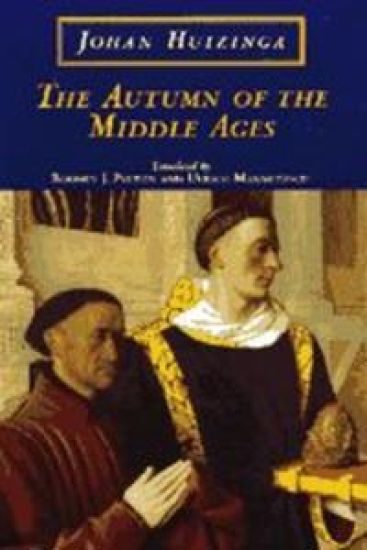
The Autumn of the Middle Ages

The Autumn of the Middle Ages

Johan Huizinga

University of Chicago Press
1996
sidottu
"Herfsttij der Middeluwen", or "The Autumn of the Middle Ages" - the original title - is a portrait of life thought, and art in 14th and 15th century France and the Netherlands. For Huizinga, this period marked not the birth of a dramatically new era in history, the Renaissance, but the fullest, ripest phase of medieval life and thought. Now, for the first time ever, the original version of this classic work has been translated into English. In the 1924 translation, Fritz Hopman adapted, reduced, and altered the Dutch edition - softening Huizinga's often passionate arguments, dulling his nuances, and eliminating passages. He also rearranged and redivided chapters, dropped references, and introduced mistranslations. This edition is free of such errors, recreating the second Dutch edition - which represents Huizinga's thinking at its most important stage - as closely as possible. Everything has been restored. Prose quotations appear in French, with translations printed at the bottom of the page. Mistranslations have been corrected. Payton and Mammitzsch also have added helpful material, including Huizinga's preface to the first and the second Dutch editions (1919 and 1921) and the one to the 1924 German translation. Several notes clarify Huizinga's references to things which would be common knowledge only to Dutch readers, Huizinga frequently refers to paintings, sculptures, and carvings, some little known; this edition also includes full range of illustrations.
Men and Ideas

Men and Ideas

Johan Huizinga

Princeton University Press
2014
pokkari
This collection by the distinguished Dutch historian Johan Huizinga (1872-1945) reflects the theme of its key essay, The Task of Cultural History," throughout its pages. Huizinga's conception of cultural history informs both his essays on historiographic questions and those on such figures as John of Salisbury, Abelard, Joan of Arc, Erasmus, and Grotius. Originally published in 1984. The Princeton Legacy Library uses the latest print-on-demand technology to again make available previously out-of-print books from the distinguished backlist of Princeton University Press. These editions preserve the original texts of these important books while presenting them in durable paperback and hardcover editions. The goal of the Princeton Legacy Library is to vastly increase access to the rich scholarly heritage found in the thousands of books published by Princeton University Press since its founding in 1905.
Erasmus and the Age of Reformation

Erasmus and the Age of Reformation

Johan Huizinga

Princeton University Press
2014
pokkari
Johan Huizinga had a special sympathy for the complex, withdrawn personality of Erasmus and for his advocacy of intellectual and spiritual balance in a quarrelsome age. This biography is a classic work on the sixteenth-century scholar/humanist. Originally published in 1984. The Princeton Legacy Library uses the latest print-on-demand technology to again make available previously out-of-print books from the distinguished backlist of Princeton University Press. These editions preserve the original texts of these important books while presenting them in durable paperback and hardcover editions. The goal of the Princeton Legacy Library is to vastly increase access to the rich scholarly heritage found in the thousands of books published by Princeton University Press since its founding in 1905.
Men and Ideas

Men and Ideas

Johan Huizinga

Princeton University Press
2016
sidottu
This collection by the distinguished Dutch historian Johan Huizinga (1872-1945) reflects the theme of its key essay, The Task of Cultural History," throughout its pages. Huizinga's conception of cultural history informs both his essays on historiographic questions and those on such figures as John of Salisbury, Abelard, Joan of Arc, Erasmus, and Grotius. Originally published in 1984. The Princeton Legacy Library uses the latest print-on-demand technology to again make available previously out-of-print books from the distinguished backlist of Princeton University Press. These editions preserve the original texts of these important books while presenting them in durable paperback and hardcover editions. The goal of the Princeton Legacy Library is to vastly increase access to the rich scholarly heritage found in the thousands of books published by Princeton University Press since its founding in 1905.
Erasmus and the Age of Reformation

Erasmus and the Age of Reformation

Johan Huizinga

PRINCETON UNIVERSITY PRESS
2016
sidottu
Johan Huizinga had a special sympathy for the complex, withdrawn personality of Erasmus and for his advocacy of intellectual and spiritual balance in a quarrelsome age. This biography is a classic work on the sixteenth-century scholar/humanist. Originally published in 1984. The Princeton Legacy Library uses the latest print-on-demand technology to again make available previously out-of-print books from the distinguished backlist of Princeton University Press. These editions preserve the original texts of these important books while presenting them in durable paperback and hardcover editions. The goal of the Princeton Legacy Library is to vastly increase access to the rich scholarly heritage found in the thousands of books published by Princeton University Press since its founding in 1905.
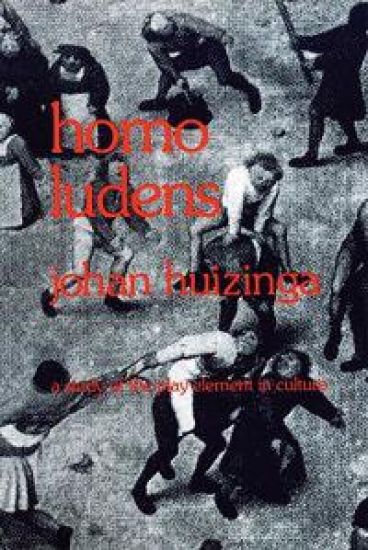
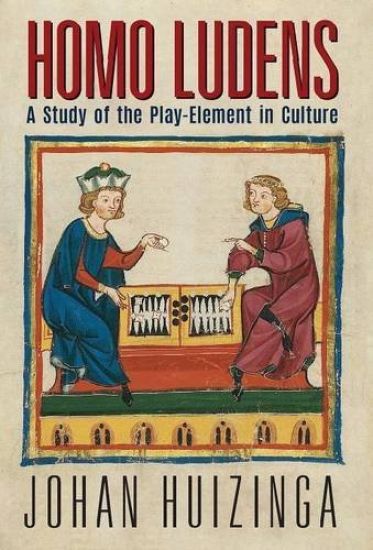
Homo Ludens: A Study of the Play-Element in Culture
An essential reference for all game designers, this 1938 classic is "a fascinating account of 'man the player' and the contribution of play to civilization" (Harper's). In this classic evaluation of play that has become a "must-read" for those in game design, Dutch philosopher Johan Huizinga defines play as the central activity in flourishing societies. Like civilization, play requires structure and participants willing to create within limits. Starting with Plato, Huizinga traces the contribution of Homo Ludens, or "man the player" through Medieval Times, the Renaissance, and into our modern civilization. Huizinga defines play against a rich theoretical background, using cross-cultural examples from the humanities, business, and politics. Homo Ludens defines play for generations to come.