Kirjojen hintavertailu. Mukana 11 244 527 kirjaa ja 12 kauppaa.

Kirjahaku

Etsi kirjoja tekijän nimen, kirjan nimen tai ISBN:n perusteella.

1000 tulosta hakusanalla John Cheever

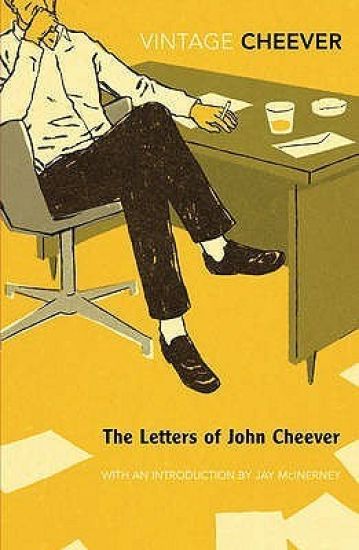
Letters of John Cheever

Letters of John Cheever

John Cheever

Vintage
2009
pokkari
WITH AN INTRODUCTION BY JAY MCINERNEYJohn Cheever's letters offer a tantalising glimpse into the life of a writer. They include correspondence with his contemporaries, such as Philip Roth, John Updike and Saul Bellow, his days as a young, aspiring writer and his battles with bisexuality and alcoholism.
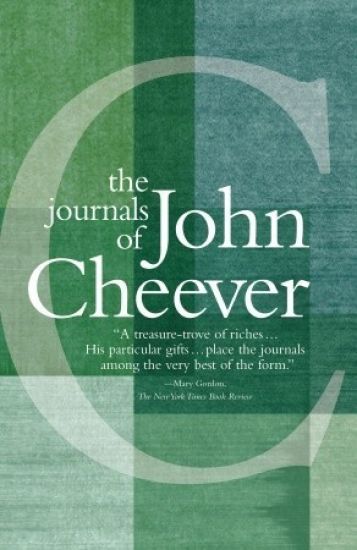
The Journals of John Cheever

The Journals of John Cheever

John Cheever

VINTAGE
2008
nidottu
In these journals, the experiences of one of the most renowned twentieth-century American writers come to life with fascinating, wholly revealing detail. - "A treasure-trove of riches." --The New York Times Book Review The Pulitzer Prize-winning author's journals provide peerless insights into the creation of his novels and stories. But they are equally the record of a complex, often dark, always closely observed inner world. No American writer of comparable stature has left such an unreservedly revealing and moving account of himself: his family life, his literary life, and his emotional life. The final word from one of modern America's great writers, The Journals of John Cheever provides a powerful and beautiful capstone to a towering oeuvre.
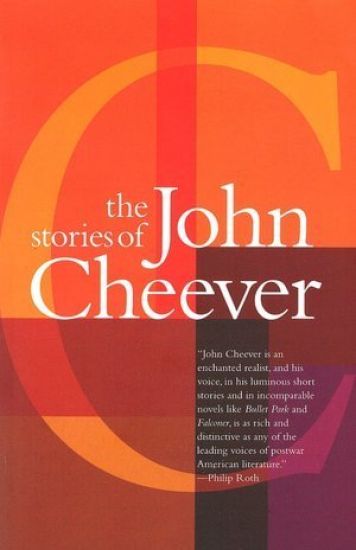
The Stories of John Cheever

The Stories of John Cheever

John Cheever

VINTAGE
2000
nidottu
PULITZER PRIZE WINNER - NATIONAL BESTSELLER - A seminal collection from one of the true masters of the short story. Spanning the duration of Cheever's long and distinguished career, these sixty-one stories chronicle and encapsulate the lives of what has been called "the greatest generation." From the early wonder and disillusionment of city life in "The Enormous Radio" to the surprising discoveries and common mysteries of suburbia in "The Housebreaker of Shady Hill" and "The Swimmer," these are tales that have helped define the form. Featuring a preface by the Pulizter Prize-winning author, The Stories of John Cheever brings together some of the finest short stories ever written. "Cheever's crowning achievement is the ability to be simultaneously generous and cynical, to see that the absurd and the profound can reside in the same moment, and to acknowledge both at the detriment of neither." --The Guardian
Letters of John Cheever

Letters of John Cheever

John Cheever

SIMON SCHUSTER
2009
nidottu
- A revealing self-portrait: In addition to his novels and short stories, John Cheever wrote a prodigious number of letters--sometimes thirty in a week. In The Letters of John Cheever, edited and annotated by his son Benjamin, Cheever reveals his most private thoughts to friends, famous writers, family, and lovers--all of whom he encouraged to discard what he wrote. "Saving letters is like trying to preserve a kiss," he said. As a result, these letters form a story that is even more candid than his journals, and as vivid and human as any he ever invented.. - An intriguing literary icon: Cheever, a complex and contradictory man, "was an adulterer who wrote eloquently in praise of monogamy ... a bisexual who detested any sign of sexual ambiguity." Cheever was a stranger to those closest to him and presented to the world what he thought it wanted to see. These letters display the stark contrast between his ambitions and weaknesses, while tracing his evolution as an artist. .
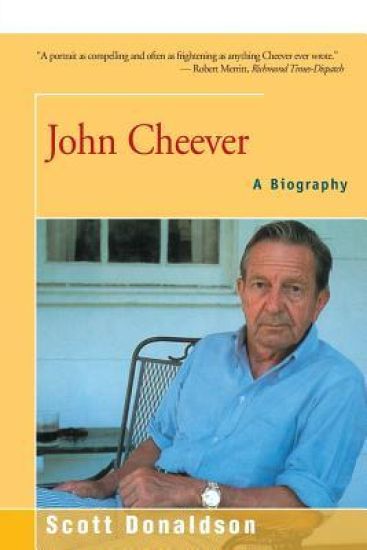
John Cheever

John Cheever

Scott Donaldson

Open Road Distribution
2016
pokkari
“A biography of great immediacy. . . . There are many sections of great poignancy, many funny things, many of electric intimacy and candor . . . there is spellbinding power, never more so than in describing Cheever’s death, pages that are both terrible and deeply moving; one is losing an old, beloved friend.” —James Salter, Los Angeles Times Book Review “John Cheever: A Biography is clearly an indispensable book. Donaldson moves gracefully from the personal to the literary. . . . Solidly researched and entirely readable, admiring of the writer and knowing about the man. Stuffed with fascinating anecdotes. It’s a gut-wrenching story. Donaldson tells it straight, without embellishment, and our attention never strays.” —Dan Cryer, Newsday “A coup of investigative reporting.” —Publishers Weekly “Both erudite and earthly. What emerges is a rich tapestry that gives the reader extraordinary insight into the workings of a master storyteller’s mind.” —Jean Graham, New York Daily News “John Cheever: A Biography by Scott Donaldson is as readable and ‘unputdownable’ as any thriller.” —T. Coraghessan Boyle “A revelation. What a triumph.” —Frederick Exley “Donaldson has set a high standard that other biographers will find difficult to equal.” —John Blades, Chicago Tribune
John Cheever

John Cheever

Salem Press Inc
2011
sidottu
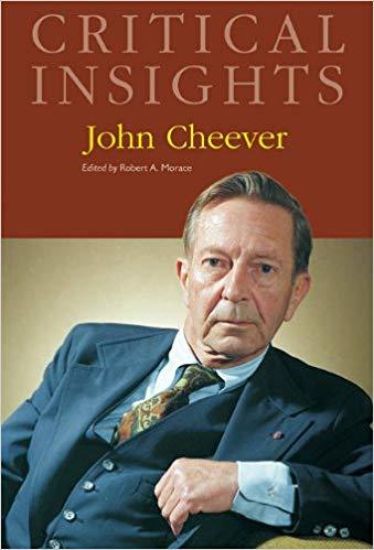
This collection provides broad coverage of Cheever and his work. Original essays discuss the basic facts of Cheever's life and critical reputation. The work explores his complicated personal life and discusses his decorous style and fragmented structure, and his fascination with language. This Critical Insights volume opens with essays that provide the basic facts of Cheever's life and critical reputation. Providing these facts is especially important in the case of the biography of a man who was prone to self-mythologizing. What's more, Cheever's version of his own life was long accepted as fact but, posthumously, has been complicated by unflattering revelations about his personal life in his daughter's memoirs, in his published journals and in two biographies. Establishing the basic facts of Cheever's critical reception is equally important and differently challenging. The critical response to his writing was a roller-coaster ride. Reviewers and critics consistently failed to reach a consensus on Cheever's importance. Suburbia is central to any analysis of Cheever. Here he is discussed as a suburban romancer rather than, as was more usually the case, a novelist of manners. Mixed with self-doubt, this approach ""may begin with allegorical ambitions but . . . then morphs into such tortuous interconnections, where superficial differences . . . become virtually synonymous with one another so that they are so entangled, one cannot decide where one ends and the other begins."" Cheever is described as ""an unfailingly surreal lyricist of disorientation . . . whose fictions are propelled by fear"" and who used imagination to mediate ""between senseless reality and an immensely coherent dreamworld."" Cheever's ""wariness"" toward modern life is treated in two essays that survey Cheever's entire career. In ""Supermarket and Superhighway,"" these two dominant symbols are representative of the ""nomadism and commercialism"" that characterise ""the modern malaise."" Another essay takes a similarly expansive look at Cheever's career (through Falconer) but reaches a very different conclusion. ""Cheever's subject has been the increasing alienation of modern man from a central role in his own life to that of a peripheral, almost ignored spectator to a social process that has little real need of any individuals, requiring merely a mass."" Cheever depicted the suburbs as ""a forceful yoking together of impossible contraries."" In Cheever's much maligned third novel, Bullet Park, the ""wry moral censure of the banal suburban existence"" that is so evident in Cheever's short fiction is given the space needed to pursue ""dimensions of human dejection not completely accessible to the shorter form."" Putting Cheever's suburban fiction in historical context, in another essay the writer examines the cultural significance of the suburbs in the 50's and 60's, plus the sociological and fictional responses to the suburbanisation of American life. In this context, it is noted that Cheever treats his white suburban readers as if they were ""everyone.
Cuentos John Cheever / Collected Stories
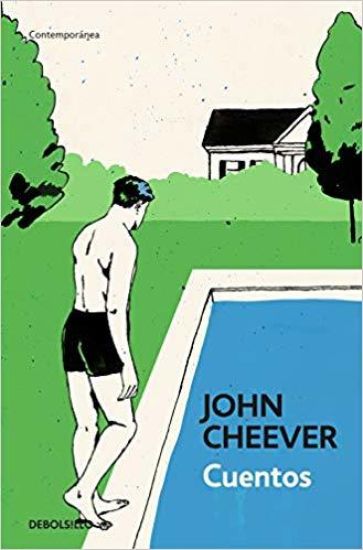
Esta sobresaliente colecci n de relatos muestra el poder y el alcance de uno de los mejores escritores del siglo pasado. Historias de amor y miseria, que incluyen obras maestras como "El nadador" o "Adi s, hermano" y que fechan de su salida del ej rcito al final de la Segunda Guerra Mundial. The Guardian Los cuentos de John Cheever son el gran testimonio literario de la clase media estadounidense de los a os cincuenta y sesenta. Conocido como el Ch jov norteamericano , fue el gran cronista de ese territorio casi mitol gico de las zonas residenciales a las afueras de las grandes ciudades, con sus fiestas de c ctel y piscina, sus despertares de peri dico en la puerta, sombrero, malet n y beso a los ni os, tardes con cuartetos de Benny Goodman en la radio y noches enteras anhelando una vida distinta. Cheever convirti con maestr a ese espejismo de xito y felicidad en el escenario de glorias y penas de familias que, entre la frustraci n, el deseo y el tedio, conforman un retrato incomparable del alma humana que transciende cualquier poca o pa s. Esta edici n incluye un ep logo de Rodrigo Fres n y mantiene la selecci n del propio Cheever, merecedora tras su publicaci n en 1978 del Premio Pulitzer y el National Book Critics Circle. Recorriendo una trayectoria de casi tres d cadas, contiene relatos tan emblem ticos como El nadador , retrato on rico de un hombre a la deriva, o El marido rural , novela en miniatura seg n Nabokov cuyo protagonista sobrevive a un accidente de avi n y vuelve a casa ante la indiferencia total de su familia. Cheever, que luch toda su vida contra la adicci n al alcohol y contra una bisexualidad reprimida, demostr conocer a la perfecci n los estragos que causan las pasiones m s ocultas cuando explotan sin apenas ruido. En plena oscuridad supo encontrar destellos en las existencias m s apagadas, d biles rayos de luz que en sus manos acababan alumbrando una vida entera.
The Critical Response to John Cheever

The Critical Response to John Cheever

Francis J. Bosha

Greenwood Press
1993
sidottu
Bosha collects major, representative criticism of John Cheever's fiction, and his posthumously published Letters and Journals, from the earliest reviews of 1943, through to the present. The volume provides a clear and comprehensive assessment of Cheever's critical reputation both during his lifetime, as each of his books was published and reviewed, and retrospectively, by academics and literary historians who have sought to place Cheever's work in a larger literary context. In addition to several new essays written specifically for this volume, this book publishes, for the first time, a long interview which John Cheever gave less than a year before his death. This interview, according to Prof. Robert G. Collins, who conducted it, is almost certainly the last to be publicly heard. The book begins with a critical introductory essay that traces the dominant themes and patterns in Cheever criticism and comments on the critical reception of his work over the last five decades. A chronology highlights the chief events in Cheever's life and career. The chapters that follow are arranged chronologically, with each chapter devoted to one of Cheever's works. Within each chapter are selections of criticism. The book concludes with a bibliography and index.
Conversations with John Cheever

Conversations with John Cheever

University Press of Mississippi
2013
nidottu
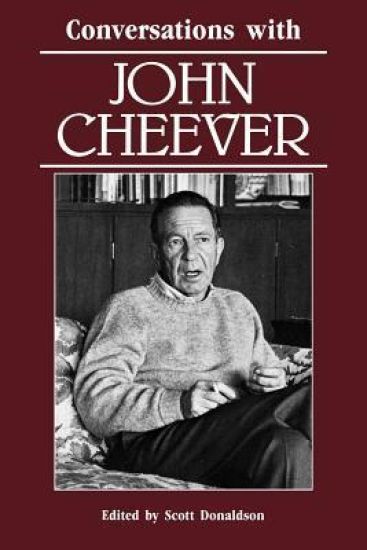
In this collection of thirty interviews compiled by John Cheever's biographer Cheever moves from gentlemanly reticence in the early pieces to forthright commentary upon a variety of subjects in the later ones. This admirably articulate author of The Wapshot Scandal, Bullet Park, Falconer, and many New Yorker stories gives answers that are satisfying to the curious, though the expression of his views is very much under his control. Cheever, the conversationalist, like his fiction, is always casually in good form, always respected for his expression and his art.For most of his fifty-year career Cheever was unusually reticent about himself. He used to say he had no public image and no wish to cultivate one. When curious reporters invaded his suburban bailiwick in Westchester, he evaded their questions by taking them on hikes in their best clothes or trying to get them drunk.A remarkable change occurred in Cheever in the spring of 1975 when he stopped drinking. With his release from alcohol came renewed energy and a revivified sense of the importance of his work and of the audience he was addressing. Now Cheever became almost shockingly open in talking with fellow writers, with professional interviewers of magazines, newspapers, radio, and television, and with just about anyone who asked for an hour of his time. Now he spoke enthusiastically about the process and purpose of his writing and about the details of his private life.In these later interviews Cheever shucked of his Yankee reserve and spoke with candor about his alcoholism, his marriage and even his sexual orientation. Reporters drew him out on virtually every subject under the sun, including religion (""I go to church because prayer seems to contain certain levels of gratitude and aspiration that I know no other way of expressing"") and politics. He defended the suburbs, his literary milieu, against the usual charges of conformity and boredom.By the standards of sheer variety and scope of subject matter, it is hard to conceive of more interesting interviews than those Cheever gave in the back, he had something to say, and he said it with the grace and wit of the born storyteller.
Kulturkritik in Der Kurzprosa John Cheevers

Kulturkritik in Der Kurzprosa John Cheevers

Helga Kuhli-Kortmann

Peter Lang AG
1994
nidottu
Durch die Analyse ausgewahlter Texte versucht diese Arbeit, die kulturkritische Diagnose zu ergrunden, die John Cheever in seiner Kurzprosa stellt. Insbesondere prangert der amerikanische Autor die unangemessenen Wertvorstellungen seiner Landsleute an, die diese zu Opfern einer umfassenden Entfremdung werden lassen. Phobien und Obsessionen sind Folgeerscheinungen, die sich in allen wichtigen Lebensbereichen manifestieren. So entwickeln die Figuren ein gestortes Verhaltnis zur Vergangenheit, deren Probleme genausowenig bewaltigt werden wie die der Gegenwart. Die daraus resultierenden Frustrationsgefuhle belasten daruber hinaus die zwischenmenschlichen Beziehungen der Protagonisten. Eine dritte Folge ihrer korrekturbedurftigen Weltanschauung ist schliesslich die Entfremdung von der Natur, die nicht mehr als kraft- und trostspendende Quelle genutzt werden kann."
When All the Men Wore Hats: Susan Cheever on the Stories of John Cheever
A sympathetic and illuminating account of the stories of John Cheever, and the intersecting life and work of the legendary writer John Cheever, as told by his eldest daughter.The Stories of John Cheever, published in 1978, brought together some of the finest short fiction ever written. The collection was honored with the Pulitzer Prize and the National Book Award, and it would go on to sell millions of copies and to define the American short story and shape generations of writers. Cheever's chronicles of modern life both emerged from a distinctly American culture and also created it--inspiring everything from Mad Men to a Raymond Carver story, from rock songs to a Seinfeld episode.Growing up, Susan Cheever, John Cheever's eldest child and only daughter, read what he read, heard what he heard, bantered and gossiped with him and her brothers and mother at the dinner table, and later watched her father type on the cheap yellow paper he favored. A daughter much like Susan appears in many of Cheever's stories and a family much like theirs is at the center of his writing. In When All the Men Wore Hats, Susan Cheever looks back on her father's work and seeks to understand the connections between art and life. How did a bit of local gossip, a slice of Greek myth, and a new translation of Madame Bovary somehow become a brilliant gem like "The Country Husband" or "The Swimmer"? In her 1984 book Home Before Dark, published two years after her father's death, Cheever wrote movingly about her father and the secrets he kept, but here, years later, she tells the story of the remarkable stories themselves, six of which appear in full in the book's appendix.
Wapshot Chronicle

Wapshot Chronicle

John Cheever

Vintage
1998
pokkari
Meet the Wapshots of St Botolphs. and Moses's adoring and errant younger brother, Coverly. Tragic and funny, ribald and splendidly picaresque, and partly based on Cheever's adolescence in New England, The Wapshot Chronicle is a family narrative in the finest traditions of Trollope, Dickens, and Henry James
Journals

Journals

John Cheever

Vintage
2009
pokkari
John Cheever's journals reveal the inner life of this remarkable writer and the contradictions that drove him. He loved his wife and their children, but was acutely lonely; he loved women, but he also loved men; he was a great writer, but one whose acute levels of perception often crippled him as a person.
Falconer

Falconer

John Cheever

Vintage
2014
pokkari
Discover John Cheever�s quirky psychological novel that is the perfect book club read. Ezekiel Farragut is a college professor, a drug-addict and a murderer.
Collected Stories

Collected Stories

John Cheever

Vintage
1990
pokkari
John Cheeverâ??s Collected Stories explores the delicate psychological frameworks of 20th century suburbia. WITH AN INTRODUCTION BY HANIF KUREISHIThis outstanding collection by Pulitzer Prize-winning novelist John Cheever shows the power and range of one of the finest short story writers of the last century.