Kirjojen hintavertailu. Mukana 11 627 484 kirjaa ja 12 kauppaa.

Kirjahaku

Etsi kirjoja tekijän nimen, kirjan nimen tai ISBN:n perusteella.

1000 tulosta hakusanalla John R. Axelson

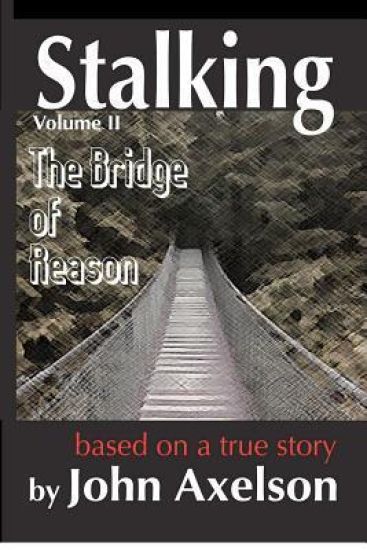
Stalking The Bridge Of Reason

Stalking The Bridge Of Reason

John R. Axelson

John Axelson
2011
nidottu
I met a beautiful woman whose interests lay in the design of destiny, miracles, and me-an average looking man whose naivet had been savaged while working for television news organizations in places like San Salvador and Beirut. Given our divergent views on the nature of our world, this meeting was a predictably bizarre exchange of explanatory experiences during which Bonnie dangled mystical intrigues from her novel-in-progress to secure my help adapting it for the screen. In addition to her clear interest in my personal exploits, her subsequent reluctance to reveal her plot made little sense: in spite of my persistent prodding, by evening's end I knew little more than her story involved a rescue mission of such massive proportion and intricate design that rescuers had to be stealthily recruited and indoctrinated to its methods before they were told what they were up against. Without this preparation, she apologetically explained, the quest would sound like pure fantasy. There was one other mystifying caveat for me; volunteers weren't welcome. In spite of these restrictive conditions, Bonnie flirtatiously cajoled me into role-playing a trainee's development to fulfil what she described as a critical element that was missing in her story. I blithely assumed this was because I articulated my cynicism well, and she recognized that her work needed a grim counterpoint to her Disney-like views. For the next four months we worked closely, occasionally combatively, discussing the supernatural precepts her characters were studying without revealing the mission's ultimate goal. Finally, she made a claim too ridiculous to contemplate, even in jest: Bonnie said she had been contacted by an ancient teaching Spirit who told her that mankind has reached an evolutionary cul-de-sac. This was the time of the Second Coming, being both a misnomer and not the end of the world: Our biblical characters had been here on many occasions, and it was the end of times "cycle" in which we were now repeating historical lessons unlearned. Awkwardly, I nudged her to admit that her cleverly persuasive staging was part of our role playing, but even when I adopted intimidating postures she steadfastly said only that her character's training entailed discovering a design in his life - a purpose. Reluctantly accepting that I had been chasing a brilliant lunatic, I decided to cut my losses and civilly left her home thinking about how I could quit our arrangement without becoming her final straw; she was so invested in her story as to be living it, not just for it. However, while gathering the courage to abandon her otherwise delightful companionship and our challenging discussions I demanded of the Universe, and immediately received, an experience that proved her ancient Spirit's existence. Later that same day, Bonnie said I was the first target of the rescue mission, beginning with exploring what I was really like. She said my reactive behavior was a consequence of extreme experiences that had been long ago seeded in the average man's beliefs, and nurtured by governments and cultural contrivances until they reached their final manifestation of apocalyptic behaviors. It followed that to excavate the core influences upon my values, which had become so harmful as to threaten to destroy me, would be to reveal how an otherwise intelligent race had managed to perch itself on the brink of annihilation. As I understood my circumstance, I was the metaphor for the self-destroyer, which constituted half of my life's quest. The other half was to learn how to heal myself - a process that did not end when I stopped being an idiot. I could also experience the realm of the emissaries if I had the courage to learn what they all had to know, before gaining access to knowledge that was true power. This second volume in the Stalking series deals with these lessons.
John R. La Montagne Memorial Symposium on Pandemic Influenza Research
The Institute of Medicine (IOM) of the National Academies of Science held a symposium, in memory of Dr. John R. La Montagne on April 4-5, 2005, to discuss the current state of the art of research on pandemic influenza and to identify gaps in research. The symposium serves as a first step of discussion towards a combined and coordinated research effort among Department of Health and Human Services agencies, other governmental agencies, international partners and the private sector. The statement of task that guided the Symposium agenda included these specific questions: What is the current state of the science on pandemic influenza research? What are the pressing unmet scientific questions and technical issues? What administrative, logistic or legal impediments exist that block progress towards the development of interventions to respond to pandemic influenza? How can collaboration among Global health Security Action Group nations be strengthened to address unmet scientific questions and technical issues related to research on pandemic influenza? What do experts believe are the most important next steps to take to advance research on pandemic influenza? The Proceedings of the John La Montagne Memorial Symposium on Pandemic Influenza Research Gaps represents a slightly edited transcript of the plenary presentations, rapporteur presentations, plenary discussion and presentation slides. This document contains the Symposium agenda, short biographies of plenary speakers, and provides a list of individuals who attended the symposium. Table of Contents Front Matter 1 Introduction 2 Plenary Speakers, Day 1 3 Morning Plenary Discussion, Day 1 4 Working Groups , Day 1 5 Afternoon Discussion: Reaction to Rapporteurs, Day 1 6 Plenary Speakers, Day 2 7 Morning Plenary Discussion, Day 2 8 Working Groups, Day 2 9 Preparation for Pandemic Infuenza: Filling the Gaps in Knowledge and Understanding Appendix A: Speaker Biographies Appendix B: Pandemic Flu Workshop Participants
Some Historical Facts About the Chiles Family / Recorded by John R. Chiles.

Some Historical Facts About the Chiles Family / Recorded by John R. Chiles.

John R. (John Russell) 1879- Chiles

Hassell Street Press
2021
nidottu
This work has been selected by scholars as being culturally important and is part of the knowledge base of civilization as we know it.This work is in the public domain in the United States of America, and possibly other nations. Within the United States, you may freely copy and distribute this work, as no entity (individual or corporate) has a copyright on the body of the work.Scholars believe, and we concur, that this work is important enough to be preserved, reproduced, and made generally available to the public. To ensure a quality reading experience, this work has been proofread and republished using a format that seamlessly blends the original graphical elements with text in an easy-to-read typeface.We appreciate your support of the preservation process, and thank you for being an important part of keeping this knowledge alive and relevant.
The Emerald City of Oz (1910), by L. Frank Baum and John R. Neill(illustrated)original version: John Rea Neill (November 12, 1877 - September 19, 1943
The Emerald City of Oz is the sixth of L. Frank Baum's fourteen Land of Oz books. It was also adapted into a Canadian animated film in 1987. Originally published on July 20, 1910, it is the story of Dorothy Gale and her Uncle Henry and Aunt Em coming to live in Oz permanently. While they are toured through the Quadling Country, the Nome King is assembling allies for an invasion of Oz. This is the first time in the Oz series that Baum made use of double plots for one of the books. Baum had intended to cease writing Oz stories with this book, but financial pressures prompted him to write and publish The Patchwork Girl of Oz, with seven other Oz books to follow.The book was dedicated to "Her Royal Highness Cynthia II of Syracuse" actually the daughter (born in the previous year, 1909) of the author's younger brother, Henry Clay "Harry" Baum.At the beginning of this story, it is made quite clear that Dorothy Gale (the primary protagonist of many of the previous Oz books), is in the habit of freely speaking of her many adventures in the Land of Oz to her only living relatives, her Aunt Em and Uncle Henry. Neither of them believes a word of her stories, but consider her a dreamer, as her dead mother had been. She is undeterred (unlike her alter ego in the film Return to Oz who is much perturbed by her guardians' doubts.) Later, it is revealed that the destruction of their farmhouse by the tornado back in The Wonderful Wizard of Oz has left Uncle Henry in terrible debt. In order to pay it, he has taken out a mortgage on his farm. If he cannot repay his creditors, they will seize the farm, thus leaving Henry and his family homeless. He is not too afraid for himself, but both he and his wife, Aunt Em, fear very much for their niece's future. Upon learning this, Dorothy quickly arranges with Princess Ozma to let her bring her guardians to Oz where they will be very happier and forever safe. Using the Magic Belt (a tool captured from the jealous Nome King Roquat), Ozma transports them to her throne room. They are given rooms to live in and luxuries to enjoy, including a vast and complex wardrobe. They meet with many of Dorothy's animal friends, including the Cowardly Lion and Billina the Yellow Hen. In the underground Nome Kingdom, the Nome King, Roquat, is plotting to conquer the Land of Oz and recover his magic belt, which Dorothy took from him in Ozma of Oz. After ordering the expulsion of his General (who will not agree to such an attack) and the death of his Colonel (who also refuses), King Roquat holds counsel with a veteran soldier called Guph. Guph believes that against the many magicians of Oz (the reputation of which has grown in the telling), the Nome Army has no chance alone. He therefore sets out personally to recruit allies. John Rea Neill (November 12, 1877 - September 19, 1943) was a magazine and children's book illustrator primarily known for illustrating more than forty stories set in the Land of Oz, including L. Frank Baum's, Ruth Plumly Thompson's, and three of his own.His pen-and-ink drawings have become identified almost exclusively with the Oz series. He did a great deal of magazine and newspaper illustration work which is not as well known today.Born in Philadelphia, Pennsylvania, John R. Neill did his first illustration work for the Philadelphia's Central High School newspaper in 1894-95. Neill dropped out of Pennsylvania Academy of the Fine Arts after one semester because he said, "they have nothing to teach me".
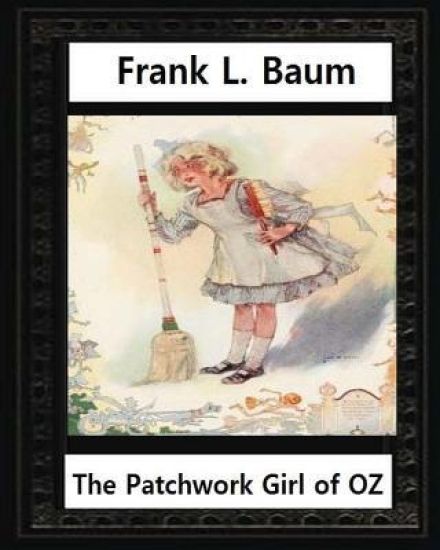
The Patchwork Girl of Oz (1913), by by L.Frank Baum and John R.Neill(illustrator): John Rea Neill (November 12, 1877 - September 19, 1943) was a magaz
The Patchwork Girl of Oz by L. Frank Baum, is a children's novel, the 7th set in the Land of Oz. Characters include the Woozy, Ojo "the Unlucky", Unc Nunkie, Dr. Pipt, Scraps (the patchwork girl), and others. The book was first published on July 1, 1913, with illustrations by John R. Neill. In 1914, Baum adapted the book to film through his "Oz Film Manufacturing Company." In the previous Oz book, The Emerald City of Oz, magic was used to isolate Oz from all outside worlds. Baum did this to end the Oz series, but was forced to restart the series with this book due to financial hardships. 1] In the prologue, he explains how he managed to get another story about Oz, even though it is isolated from all other worlds. He explains that a child suggested he make contact with Oz with wireless telegraphy. 2] Glinda, using her book that records everything that happens, is able to know that someone is using a telegraph to contact Oz, so she erects a telegraph tower and has the Shaggy Man, who knows how to make a telegraph reply, tell the story contained in this book to Baum. The book was dedicated to Sumner Hamilton Britton, the young son of one of its publishers, Sumner Charles Britton of Reilly & Britton.Ojo the very unlucky, is a young Munchkin boy who, devoted to life with his uncle Unc Nunkie in the wilderness but on the verge of starvation, goes to see a neighboring "magician" and old friend of Unc, Dr. Pipt. While there they see a demonstration of the Pipt-made Powder of Life, which animates any object it touches after saying the magic words. Unc Nunkie and Dr. Pipt's wife are also the sufferers of the consequences of another of the Doctor's inventions, the Liquid of Petrifaction, which turns them into solid marble statues. The remainder of this book is Ojo's quest through Oz to collect the five components of an antidote to the Liquid: a six-leaved clover found only in the Emerald City, three hairs from the tip of a Woozy's tail, a gill (a quarter of a pint) of water from a dark well (one that remains untouched by natural light), a drop of oil from a live man's body, and the left wing of a yellow butterfly. With the help of the life-size patchwork doll named Scraps, Bungle the snobbish Glass Cat (another of Dr. Pipt's creations), the Woozy, Dorothy, the Shaggy Man, and the Scarecrow, Ojo gathers all of these supplies but the left wing - the Tin Woodman, who rules the yellow Winkie Country, which is the only place where yellow butterflies grow, will not allow any living thing to be killed, even to save another's life. The party returns to the Emerald City, where the Wizard of Oz (one of the few allowed to lawfully practice magic in Oz) uses his own magic to restore Unc Nunkie and Dr. Pipt's wife. The story is also a growth process for Ojo; he learns that luck is not a matter of who you are or what you have, but what you do; he is renamed "Ojo the Lucky," and so he appears in the following Oz books. John Rea Neill (November 12, 1877 - September 19, 1943) was a magazine and children's book illustrator primarily known for illustrating more than forty stories set in the Land of Oz, including L. Frank Baum's, Ruth Plumly Thompson's, and three of his own. His pen-and-ink drawings have become identified almost exclusively with the Oz series. He did a great deal of magazine and newspaper illustration work which is not as well known today.
The sea fairies, By L. Frank Baum and illustrated By John R. Neill: (children's books).John Rea Neill (November 12, 1877 - September 19, 1943) was a m
The Sea Fairies is a children's fantasy novel written by L. Frank Baum, illustrated by John R. Neill, and published in 1911 by the Reilly & Britton Company, the publisher of Baum's series of Oz books..... Lyman Frank Baum (May 15, 1856 - May 6, 1919), better known by his pen name L. Frank Baum, was an American author chiefly known for his children's books, particularly The Wonderful Wizard of Oz.He wrote thirteen novel sequels, nine other fantasy novels, and a host of other works (55 novels in total, plus four "lost works", 83 short stories, over 200 poems, an unknown number of scripts, and many miscellaneous writings), and made numerous attempts to bring his works to the stage and screen. His works anticipated such century-later commonplaces as television, augmented reality, laptop computers (The Master Key), wireless telephones (Tik-Tok of Oz), women in high risk, action-heavy occupations (Mary Louise in the Country), and the ubiquity of advertising on clothing (Aunt Jane's Nieces at Work).
The patchwork girl of Oz. By: L. Frank Baum and John R. Neill ( children's NOVEL ) (Illustrated)

The patchwork girl of Oz. By: L. Frank Baum and John R. Neill ( children's NOVEL ) (Illustrated)

John R. Neill; L. Frank Baum

Createspace Independent Publishing Platform
2017
nidottu
The Patchwork Girl of Oz by L. Frank Baum, is a children's novel, the 7th set in the Land of Oz. Characters include the Woozy, Ojo "the Unlucky", Unc Nunkie, Dr. Pipt, Scraps (the patchwork girl), and others. The book was first published on July 1, 1913, with illustrations by John R. Neill. In 1914, Baum adapted the book to film through his "Oz Film Manufacturing Company." In the previous Oz book, The Emerald City of Oz, magic was used to isolate Oz from all outside worlds. Baum did this to end the Oz series, but was forced to restart the series with this book due to financial hardships.
The magic of Oz. By: L. Frank Baum and John R. Neill ( Children's NOVEL ) (Illustrated)

The magic of Oz. By: L. Frank Baum and John R. Neill ( Children's NOVEL ) (Illustrated)

John R. Neill; L. Frank Baum

Createspace Independent Publishing Platform
2017
nidottu
The Magic of Oz: A Faithful Record of the Remarkable Adventures of Dorothy and Trot and the Wizard of Oz, Together with the Cowardly Lion, the Hungry Tiger and Cap'n Bill, in Their Successful Search for a Magical and Beautiful Birthday Present for Princess Ozma of Oz is the thirteenth Land of Oz book written by L. Frank Baum. Published on June 7, 1919, one month after the author's death, The Magic of Oz relates the unsuccessful attempt of the Munchkin boy Kiki Aru and former Nome King Ruggedo to conquer Oz. The novel was dedicated to "the Children of our Soldiers, the Americans and their Allies, with unmeasured Pride and Affection.At the top of Mount Munch lives a group of people known as the Hyups. One of their numbers, a Munchkin named Bini Aru, discovered a method of transforming people and objects by merely saying the word "Pyrzqxgl". After Princess Ozma decreed that no one could practice magic in Oz except for Glinda the Good Witch and the Wizard of Oz, Bini wrote down the directions for pronouncing "Pyrzqxgl" and hid them in his magical laboratory.
John R. Searle

John R. Searle

De Gruyter
2010
sidottu
John R. Searle is one of the world's leading philosophers. During his long and outstanding career, he has made groundbreaking and lasting contributions to the philosophy of language, to the philosophy of mind, as well as to the nature, structure, and functioning of social reality. This volume documents the 13th Münster Lectures on Philosophy with John R. Searle. It includes not only 11 critical papers on Searle’s philosophy and Searle's replies to the papers, but also an original article by John R. Searle on his overall philosophical enterprise entitled "The Basic Reality and the Human Reality". "I think Münster is probably unique among contemporary universities in its ability to produce such a high level of philosophical production from their philosophy students." - John R. Searle