Kirjojen hintavertailu. Mukana 12 390 323 kirjaa ja 12 kauppaa.

Kirjahaku

Etsi kirjoja tekijän nimen, kirjan nimen tai ISBN:n perusteella.

1000 tulosta hakusanalla John Stuart Mill

John Stuart Mill

John Stuart Mill

Gregory Claeys

Oxford University Press
2022
nidottu
Very Short Introductions: Brilliant, Sharp, Inspiring John Stuart Mill (1806-73) is widely regarded as the leading liberal philosopher, economist, and political theorist of nineteenth century Britain. In his lifetime he was best known for his System of Logic (1843) and the Principles of Political Economy (1848). Today Mill is chiefly identified with On Liberty (1859), perhaps the definitive text of modern liberal statement of its subject, and probably the single most important work of modern political thought. Mill was also the first major male feminist thinker of the period (author of The Subjection of Women, 1869), and the first, as an MP, to introduce a bill for female enfranchisement before Parliament. This Very Short Introduction offers a brief survey of the life and key ideas of this most influential Victorian British writer. Moving chronologically, Gregory Claeys outlines the philosophical background out of which Mill developed, chiefly through the ideas of Jeremy Bentham and James Mill. He demonstrates how Mill's personal life, especially his 'mental crisis' of 1827, and his relationship with Harriet Taylor, were integral to his intellectual development. Throughout Claeys considers Mill's key works set within the context of his lesser writings and correspondence, and discusses the more controversial aspects of his thought concerning religion, secularism, and birth control. ABOUT THE SERIES: The Very Short Introductions series from Oxford University Press contains hundreds of titles in almost every subject area. These pocket-sized books are the perfect way to get ahead in a new subject quickly. Our expert authors combine facts, analysis, perspective, new ideas, and enthusiasm to make interesting and challenging topics highly readable.
John Stuart Mill

John Stuart Mill

Timothy Larsen

Oxford University Press
2018
sidottu
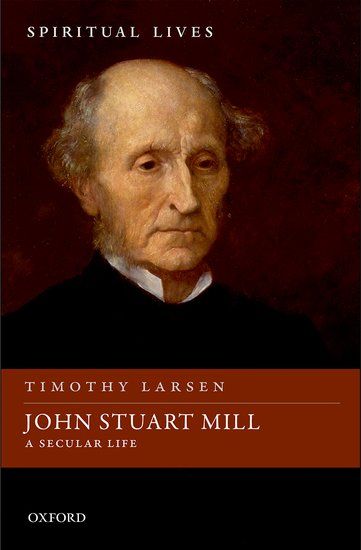
John Stuart Mill observed in his Autobiography that he was a rare case in nineteenth-century Britain because he had not lost his religion but never had any. He was a freethinker from beginning to end. What is not often realized, however, is that Mill's life was nevertheless impinged upon by religion at every turn. This is true both of the close relationships that shaped him and of his own, internal thoughts. Mill was a religious sceptic, but not the kind of person which that term usually conjures up. The unexpected presence and prominence of spirituality is not only there in Mill's late, startling essay, 'Theism', in which he makes the case for hope in God and in Christ. It is everywhere--in his immediate family, his best friends, and his vision for the future. It is even there in such a seemingly unlikely place as his Logic, which repeatedly addresses religious themes. John Stuart Mill: A Secular Life is a biography which follows one of Britain's most well-respected intellectuals through all of the key moments in his life from falling in love to sitting in Parliament and beyond. It also explores his classic works including, On Liberty, Principles of Political Economy, Utilitarianism, and The Subjection of Women. In this well-researched study which offers original findings and insights, Timothy Larsen presents the Mill you never knew. The Mill that even some of his closest disciples never knew. This is John Stuart Mill, the Saint of Rationalism--a secular life and a spiritual life.
John Stuart Mill

John Stuart Mill

Palgrave Macmillan
2013
sidottu
This edited collection highlights the inquisitive and synthetic aspects of John Stuart Mill's mode of philosophising while exploring various aspects of Mill's thought, intellectual development and influence. The contributors to this volume discuss a number of Mill's ideas including those on political participation, democracy, liberty and justice.
The Basic Writings of John Stuart Mill

The Basic Writings of John Stuart Mill

John Stuart Mill

Modern Library Inc
2002
pokkari
The writings of John Stuart Mill have become the cornerstone of political liberalism. Collected for the first time in this volume are Mill’s three seminal and most widely read works: On Liberty, The Subjection of Women, and Utilitarianism. A brilliant defense of individual rights versus the power of the state, On Liberty is essential reading for anyone interested in political thought and theory. As Bertrand Russell reflected, “On Liberty remains a classic . . . the present world would be better than it is, if [Mill’s] principles were more respected.”This Modern Library Paperback Classics edition includes newly commissioned endnotes and commentary by Dale E. Miller, and an index.
Collected Works of John Stuart Mill

Collected Works of John Stuart Mill

John Stuart Mill

Routledge
1996
sidottu
The Collected Works of John Stuart Mill took thirty years to complete and is acknowledged as the definitive edition of J.S. Mill and as one of the finest works editions ever completed. Mill's contributions to philosophy, economics, and history, and in the roles of scholar, politician and journalist can hardly be overstated and this edition remains the only reliable version of the full range of Mill's writings. Each volume contains extensive notes, a new introduction and an index. Many of the volumes have been unavailable for some time, but the Works are now again available, both as a complete set and as individual volumes.
John Stuart Mill

John Stuart Mill

R J Halliday; R. J. Halliday

Routledge
2003
sidottu
First published in 1976, this volume offers a significant new interpretation of Mill's political thought, Mill's ambivalent attitude to democracy is carefully examined. The implications for modern democracy of Mill's views on consensus and leadership, bureaucracy and participation, equality and liberty emerge from a deep understanding of Mill's place in 19th century ideas.
John Stuart Mill

John Stuart Mill

R J Halliday; R. J. Halliday

Routledge
2007
nidottu
First published in 1976, this volume offers a significant new interpretation of Mill's political thought, Mill's ambivalent attitude to democracy is carefully examined. The implications for modern democracy of Mill's views on consensus and leadership, bureaucracy and participation, equality and liberty emerge from a deep understanding of Mill's place in 19th century ideas.
John Stuart Mill

John Stuart Mill

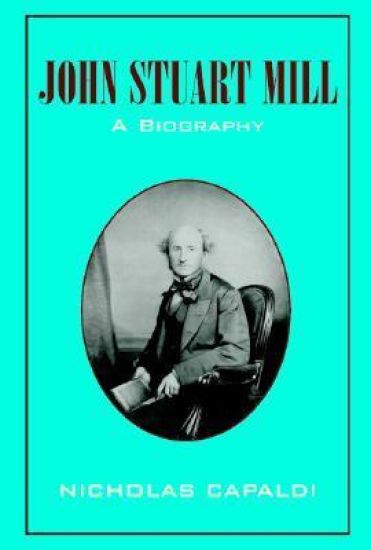
Nicholas Capaldi

Cambridge University Press
2004
sidottu
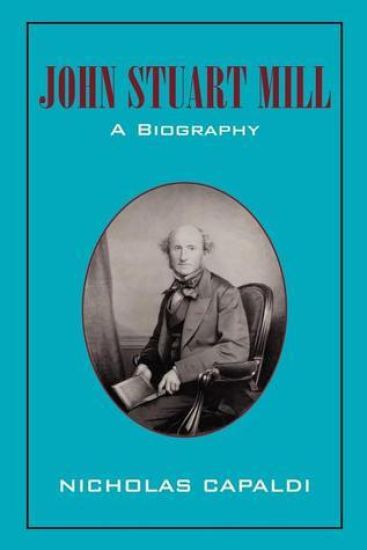
Nicholas Capaldi’s biography of John Stuart Mill traces the ways in which Mill’s many endeavours are related and explores the significance of Mill’s contribution to metaphysics, epistemology, ethics, social and political philosophy, the philosophy of religion, and the philosophy of education. He shows how Mill was groomed for his life by both his father James Mill, and Jeremy Bentham, the two most prominent philosophical radicals of the early nineteenth century. Yet Mill revolted against this education and developed friendships with both Thomas Carlyle and Samuel Taylor Coleridge who introduced him to Romanticism and political conservatism. A special feature of this biography is the attention devoted to his relationship with Harriet Taylor. No one exerted a greater influence than the woman he was eventually to marry. Nicholas Capaldi reveals just how deep her impact was on Mill’s thinking about the emancipation of women.
John Stuart Mill

John Stuart Mill

Dale E. Miller

Polity Press
2010
sidottu
This book offers a clear and highly readable introduction to the ethical and social-political philosophy of John Stuart Mill. Dale E. Miller argues for a "utopian" reading of Mill's utilitarianism. He analyses Mill's views on happiness and goes on to show the practical, social and political implications that can be drawn from his utilitarianism, especially in relation to the construction of morality, individual freedom, democratic reform, and economic organization. By highlighting the utopian thinking which lies at the heart of Mill's theories, Miller shows that rather than allowing for well-being for the few, Mill believed that a society must do everything in its power to see to it that each individual can enjoy a genuinely happy life if the happiness of its members is to be maximized. Miller provides a cogent and careful account of the main arguments offered by Mill, considers the critical responses to his work, and assesses its legacy for contemporary philosophy. Lucidly and persuasively written, this book will be a valuable resource for students and scholars seeking to understand the continued importance of Mill's thinking.
John Stuart Mill

John Stuart Mill

Dale E. Miller

Polity Press
2010
nidottu
This book offers a clear and highly readable introduction to the ethical and social-political philosophy of John Stuart Mill. Dale E. Miller argues for a "utopian" reading of Mill's utilitarianism. He analyses Mill's views on happiness and goes on to show the practical, social and political implications that can be drawn from his utilitarianism, especially in relation to the construction of morality, individual freedom, democratic reform, and economic organization. By highlighting the utopian thinking which lies at the heart of Mill's theories, Miller shows that rather than allowing for well-being for the few, Mill believed that a society must do everything in its power to see to it that each individual can enjoy a genuinely happy life if the happiness of its members is to be maximized. Miller provides a cogent and careful account of the main arguments offered by Mill, considers the critical responses to his work, and assesses its legacy for contemporary philosophy. Lucidly and persuasively written, this book will be a valuable resource for students and scholars seeking to understand the continued importance of Mill's thinking.
Collected Works of John Stuart Mill, Volume 10

Collected Works of John Stuart Mill, Volume 10

John Stuart Mill

Liberty Fund Inc
2006
nidottu
Volume 10 includes such significant essays as Utilitarianism, Auguste Comte and Positivism, and Three Essays on Religion, as well as other works, which clarify Mill's enduring intellectual connection to Jeremy Bentham's utilitarian school. In Utilitarianism, Mill sought to refine utilitarian doctrine by exploring the qualitative differences in different types of pleasures and arguing that higher artistic and intellectual pleasures should be given greater value over lesser types of pleasure.
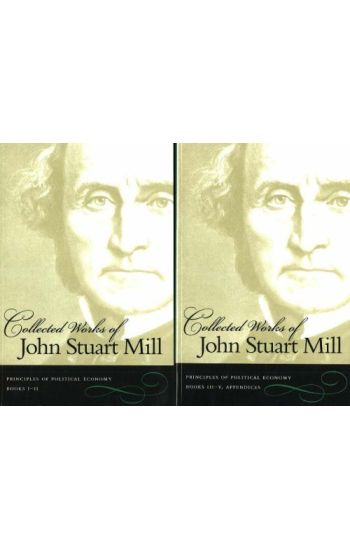
Collected Works of John Stuart Mill, Volumes 2 & 3
First published in 1848, 'Principles of Political Economy' established Mill as a leading economic thinker of his time, and this work endured as the principal economics textbook for the balance of the nineteenth century. As a comprehensive treatment of economic thought, the book touches on the full range of micro- and macroeconomic topics, including taxation, national debt, and theories of money, production, and prices. Volumes 2 and 3 are based on the seventh and final edition of this work published by Mill in 1871. Professor Robson and his editorial team allow the reader to seamlessly track the changes made through all seven editions of Principles of Political Economy, providing insight into the development of Mill's economic ideas.
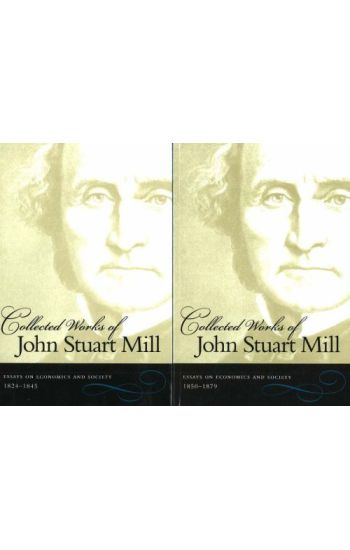
Collected Works of John Stuart Mill, Volumes 4 & 5
Volumes 4 and 5 bring together a rich collection of Mill's writing on politics and the economy over the course of his intellectual career. Volume 4 includes, most significantly, 'Essays on Some Unsettled Questions of Political Economy'. Here, Mill grapples with issues related to foreign trade and the balancing of government's goal of promoting free trade with its interest in raising revenues from import duties and tariffs. Also included in these volumes are such early essays as 'The Silk Trade' and 'The Nature, Origin, and Progress of Rent' and such later works as Mill's petition on free trade and 'Chapters on Socialism' (posthumously published).
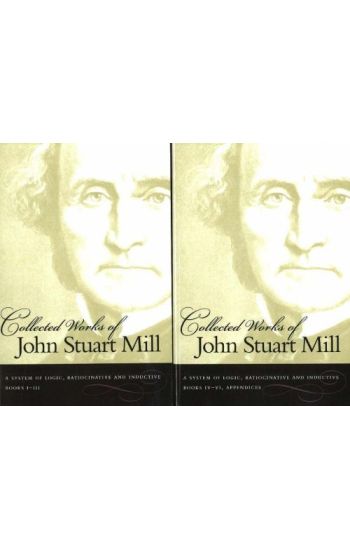
Collected Works of John Stuart Mill, Volume 7 & 8

Collected Works of John Stuart Mill, Volume 7 & 8

John Stuart Mill

Liberty Fund Inc
2006
nidottu
Volumes 7 and 8 comprise Mill's landmark philosophical work 'A System of Logic, Ratiocinative and Inductive', in which Mill explores the basic principles of inductive reasoning. In this work Mill presents the five basic modes of induction, which are now known as Mill's Methods: the method of agreement, the method of difference, the joint or double method of agreement, the method of residues, and that of concomitant variations. In contrast to Aristotle's syllogisms, which are based on deductive reasoning, Logic provides an alternate path to knowledge and constitutes an important contribution to the development of the scientific method.
John Stuart Mill

John Stuart Mill

Capaldi Nicholas

Cambridge University Press
2012
pokkari
Nicholas Capaldi's biography of John Stuart Mill traces the ways in which Mill's many endeavours are related and explores the significance of Mill's contribution to metaphysics, epistemology, ethics, social and political philosophy, the philosophy of religion, and the philosophy of education. He shows how Mill was groomed for his life by both his father James Mill, and Jeremy Bentham, the two most prominent philosophical radicals of the early nineteenth century. Yet Mill revolted against this education and developed friendships with both Thomas Carlyle and Samuel Taylor Coleridge, who introduced him to Romanticism and political conservatism. A special feature of this biography is the attention devoted to his relationship with Harriet Taylor. No one exerted a greater influence than the woman he was eventually to marry. Nicholas Capaldi reveals just how deep her impact was on Mill's thinking about the emancipation of women.