

Kirjahaku
Etsi kirjoja tekijän nimen, kirjan nimen tai ISBN:n perusteella.
1000 tulosta hakusanalla Jon Philo

The Influence of Henry David Thoreau's Philosophy in Jon Krakauer's Novel "Into the Wild"
Marc Felsbrecher
GRIN Verlag
2015
nidottu

Bilderbücher als Ausgangspunkt für philosophische Gespräche im Unterricht. Eine Analyse von Jon Klassens "Das ist nicht mein Hut"
Stephan Jaskolla
GRIN Verlag
2022
nidottu

Underworlds: Philosophies of the Unconscious from Psychoanalysis to Metaphysics
Jon Mills
Routledge
2014
sidottu
The first book of its kind to provide a detailed analysis of the history of the unconscious from the underworlds of Greek and Egyptian mythology to psychoanalysis and metaphysics, Jon Mills presents here a unique study of differing philosophies of the unconscious. Mills examines how three major philosophical systems on the nature of the unconscious emerge after modern philosophy, finding their most celebrated elaborations in Freud, Lacan and Jung. These three psychoanalytic traditions, quite separate from one another in terms of their emphasis and philosophical presuppositions, are scrutinised alongside contemporaneous movements in existential phenomenology, semiotics, epistemology, transcendental psychology and Western metaphysics in the texts of Hegel, Heidegger, Sartre and Whitehead. Underworlds provides a scholarly exegesis and critique of the main philosophies of the unconscious to have transpired in the history of ideas.Exploring the unconscious from its philosophical beginnings in antiquity to its systematic articulation brought about by the rise of psychoanalysis, Underworlds is ideal for practicing psychoanalysts, academics of Freud, Jung and Lacan, and scholars of psychology, philosophy and the humanities.
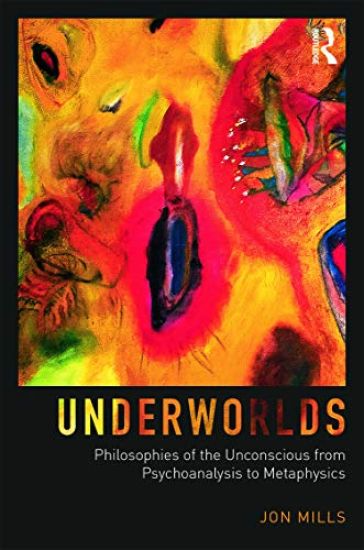
Underworlds: Philosophies of the Unconscious from Psychoanalysis to Metaphysics
Jon Mills
Routledge
2016
nidottu
This book presents a unique study of differing philosophies of the unconscious, providing a detailed analysis of the history of the unconscious from the underworlds of Greek and Egyptian mythology to psychoanalysis and metaphysics.

A comprehensive, up to date and concise guide to one of the most important branches of philosophy. Both topical and historical, Political Philosophy A-Z has entries on Hobbes, Marx, and Rorty, as well as entries which explain what 'contract theory' is, and gives an account of 'multi-culturalism.' This book guides the reader through the intricacies of political theory, enabling them to trace their way through a debate, fixing historical and theoretical points of reference along the way. It is well suited for students studying political philosophy at university. Political Philosophy A-Z links up positions, thinkers and theories without unnecessary technicality. It is a valuable guide to political theorising.
A comprehensive, up to date and concise guide to one of the most important branches of philosophy. Both topical and historical, Political Philosophy A-Z has entries on Hobbes, Marx, and Rorty, as well as entries which explain what 'contract theory' is, and gives an account of 'multi-culturalism.' This book guides the reader through the intricacies of political theory, enabling them to trace their way through a debate, fixing historical and theoretical points of reference along the way. It is well suited for students studying political philosophy at university. Political Philosophy A-Z links up positions, thinkers and theories without unnecessary technicality. It is a valuable guide to political theorising.


The philosophy of terror: Nietzsches theory of freedom, obedience and resentment
Jon-Arild Johannessen Profes
Createspace Independent Publishing Platform
2016
nidottu

The Philosophy of Freedom: Nietzsches theory of freedom, obedience and resentment
Jon-Arild Johannessen
Createspace Independent Publishing Platform
2016
nidottu

Knowledge management expert Jon-Arild Johannessen presents a comprehensive exploration of tacit knowledge based on the research problem: How can tacit knowledge be used to improve organizational performance in practice? To explore this problem, 50 short cases are presented and discussed to analyze and reflect on what tacit knowledge is, how it is developed, transferred and integrated, to improve performance. Tacit knowledge is hard to codify and specify, yet these short cases will demystify how tacit knowledge works in organizations and the benefits of it in relation to improving productivity and processes. The emphasis on short, easy to connect with cases in The Philosophy of Tacit Knowledge allows readers to develop their own models and policy strategies towards improving their own practice.

How can Wii Sports teach us about metaphysics?Can playing World of Warcraft lead to greater self-consciousness?How can we learn about aesthetics, ethics and divine attributes fromZork, Grand Theft Auto, and Civilization?A variety of increasingly sophisticated video games are rapidly overtaking books, films, and television as America's most popular form of media entertainment. It is estimated that by 2011 over 30 percent of US households will own a Wii console - about the same percentage that owned a television in 1953.In Philosophy Through Video Games, Jon Cogburn and Mark Silcox - philosophers with game industry experience - investigate the aesthetic appeal of video games, their effect on our morals, the insights they give us into our understanding of perceptual knowledge, personal identity, artificial intelligence, and the very meaning of life itself, arguing that video games are popular precisely because they engage with longstanding philosophical problems.Topics covered include:* The Problem of the External World* Dualism and Personal Identity* Artificial and Human Intelligence in the Philosophy of Mind* The Idea of Interactive Art* The Moral Effects of Video Games* Games and God's GoodnessGames discussed include:Madden Football, Wii Sports, Guitar Hero, World of Warcraft, Sims Online, Second Life, Baldur's Gate, Knights of the Old Republic, Elder Scrolls, Zork, EverQuest Doom, Halo 2, Grand Theft Auto, Civilization, Mortal Kombat, Rome: Total War, Black and White, Aidyn Chronicles

How can Wii Sports teach us about metaphysics?Can playing World of Warcraft lead to greater self-consciousness?How can we learn about aesthetics, ethics and divine attributes fromZork, Grand Theft Auto, and Civilization?A variety of increasingly sophisticated video games are rapidly overtaking books, films, and television as America's most popular form of media entertainment. It is estimated that by 2011 over 30 percent of US households will own a Wii console - about the same percentage that owned a television in 1953.In Philosophy Through Video Games, Jon Cogburn and Mark Silcox - philosophers with game industry experience - investigate the aesthetic appeal of video games, their effect on our morals, the insights they give us into our understanding of perceptual knowledge, personal identity, artificial intelligence, and the very meaning of life itself, arguing that video games are popular precisely because they engage with longstanding philosophical problems.Topics covered include:* The Problem of the External World* Dualism and Personal Identity* Artificial and Human Intelligence in the Philosophy of Mind* The Idea of Interactive Art* The Moral Effects of Video Games* Games and God's GoodnessGames discussed include:Madden Football, Wii Sports, Guitar Hero, World of Warcraft, Sims Online, Second Life, Baldur's Gate, Knights of the Old Republic, Elder Scrolls, Zork, EverQuest Doom, Halo 2, Grand Theft Auto, Civilization, Mortal Kombat, Rome: Total War, Black and White, Aidyn Chronicles

Philosophy of Social Science: An introduction
Jon-Arild Johannessen
Createspace Independent Publishing Platform
2016
nidottu

Knowledge Management is an important part of all business, and yet the discipline lacks a philosophy based on systemic thinking. Exploring this gap, expert author Jon-Arild Johannessen continues his research on knowledge management with the groundwork for a new philosophy. Across the four chapters in this book, Johannessen tackles the issues that have stopped a cohesive philosophy from being formed. Tackling the large questions first, he asks: what constitutes a philosophy for knowledge management? What quality criteria are relevant in a knowledge management philosophy? Johannessen also looks at how the emergence of the fourth industrial revolution has eroded and atomized the cohesion of social systems, and explores how knowledge management works in social systems, as well as whether social laws can be used to explain knowledge management systems. For students and researchers of information and knowledge management, Johannessen offers a new perspective on our current philosophies, bringing systemic thinking to the front of knowledge management philosophy.


Bayesian Nets and Causality: Philosophical and Computational Foundations
Jon Williamson
Oxford University Press
2004
sidottu
Bayesian nets are widely used in artificial intelligence as a calculus for causal reasoning, enabling machines to make predictions, perform diagnoses, take decisions and even to discover causal relationships. But many philosophers have criticised and ultimately rejected the central assumption on which such work is based - the Causal Markov Condition. So should Bayesian nets be abandoned? What explains their success in artificial intelligence? This book argues that the Causal Markov Condition holds as a default rule: it often holds but may need to be repealed in the face of counterexamples. Thus Bayesian nets are the right tool to use by default but naively applying them can lead to problems. The book develops a systematic account of causal reasoning and shows how Bayesian nets can be coherently employed to automate the reasoning processes of an artificial agent. The resulting framework for causal reasoning involves not only new algorithms but also new conceptual foundations. Probability and causality are treated as mental notions - part of an agent's belief state. Yet probability and causality are also objective - different agents with the same background knowledge ought to adopt the same or similar probabilistic and causal beliefs. This book, aimed at researchers and graduate students in computer science, mathematics and philosophy, provides a general introduction to these philosophical views as well as an exposition of the computational techniques that they motivate.
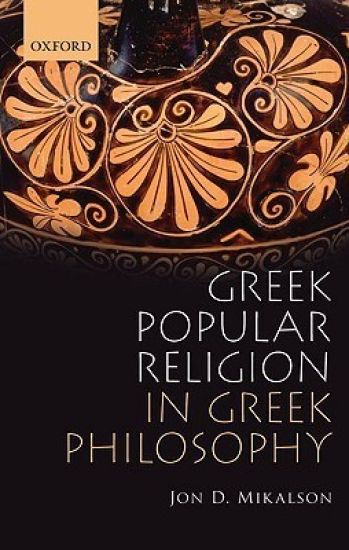
Jon D. Mikalson examines how Socrates, Plato, Aristotle, and other Greek philosophers described, interpreted, criticized, and utilized the components and concepts of the religion of the people of their time - practices such as sacrifice, prayer, dedications, and divination. The chief concepts involved are those of piety and impiety, and after a thorough analysis of the philosophical texts Mikalson offers a refined definition of Greek piety, dividing it into its two constituent elements of `proper respect' for the gods and `religious correctness'. He concludes with a demonstration of the benevolence of the gods in the philosophical tradition, linking it to the expectation of that benevolence evinced by popular religion.
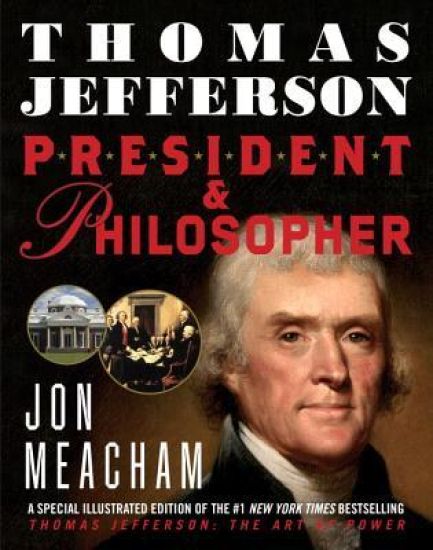
Thomas Jefferson: President and Philosopher
Jon Meacham
Random House Books for Young Readers
2016
pokkari
In this special illustrated edition of the #1 New York Times bestselling Thomas Jefferson: The Art of Power by Pulitzer Prize-winning author Jon Meacham, young readers will learn about the life and political philosophy of one of our Founding Fathers. This book is a must-read for President's Day Thomas Jefferson was the third president of the United States. He was one of the authors of the Declaration of Independence. But he was also a lawyer and an ambassador, an inventor and a scientist. He had a wide range of interests and hobbies, but his consuming interest was the survival and success of the United States. This book contains a note from Meacham and over 100 archival illustrations, as well as sections throughout the text about subjects such as the Boston Tea Party, the Library of Congress, and Napol on Bonaparte. Additional materials include a time line; a family tree; a Who's Who in Jefferson's world; sections on Jefferson's original writings and correspondence, "inventions," interests, places in Jefferson's world, finding Jefferson in the United States today, additional reading, organizations, and websites; notes; a bibliography; and an index. This adaptation, ideal for those interested in American presidents, biographies, and the founding of the American republic, is an excellent example of informational writing and reflects Meacham's extensive research using primary source material. Praise for Thomas Jefferson: President and Philosopher"A solid resource for young people intrigued by Jefferson." -Booklist "Comprehensive and engaging." -Scholastic Instructor "There is a surprising paucity of books about Jefferson at this level and this handsome, well-written, and engaging volume fills that literary gap." -Horn Book "Wonderfully written and crafted... Entertaining for both kids and adults alike." -KidsReads.com
This new textbook is a lively and highly accessible introduction to philosophy. From the fundamental issues of philosophical thought to the latest theories in the philosophy of mind, An Introduction to Philosophy provides clear and incisive discussion of the key areas of philosophy for students new to the subject. Provides the tools new students need to tackle philosophical arguments themselvesClearly presents and explains contemporary issues and current debatesCovers the key areas of philosophy, including perception, epistemology, metaphysics, the mind, philosophy of religion, ethics and political philosophyContains numerous learning features such as introductions, summaries, questions and further reading An Introduction to Philosophy is an ideal text for AS level, A level and first-year undergraduate students or anyone studying the subject for the first time.