Kirjojen hintavertailu. Mukana 11 417 157 kirjaa ja 12 kauppaa.

Kirjahaku

Etsi kirjoja tekijän nimen, kirjan nimen tai ISBN:n perusteella.

1000 tulosta hakusanalla Jonathan Cott

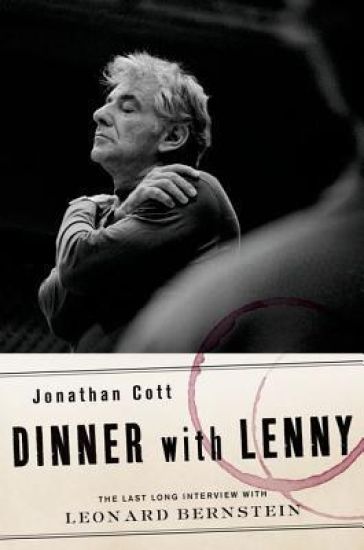
Dinner with Lenny

Dinner with Lenny

Jonathan Cott

Oxford University Press Inc
2013
sidottu
Leonard Bernstein was arguably the most highly esteemed, influential, and charismatic American classical music personality of the twentieth century. Conductor, composer, pianist, writer, educator, and human rights activist, Bernstein truly led a life of Byronic intensity--passionate, risk-taking, and convention-breaking. In November 1989, just a year before his death, Bernstein invited writer Jonathan Cott to his country home in Fairfield, Connecticut for what turned out to be his last major interview--an unprecedented and astonishingly frank twelve-hour conversation. Now, in Dinner with Lenny, Cott provides a complete account of this remarkable dialogue in which Bernstein discourses with disarming frankness, humor, and intensity on matters musical, pedagogical, political, psychological, spiritual, and the unabashedly personal. Bernstein comes alive again, with vodka glass in hand, singing, humming, and making pointed comments on a wide array of topics, from popular music ("the Beatles were the best songwriters since Gershwin"), to great composers ("Wagner was always in a psychotic frenzy. He was a madman, a megalomaniac"), and politics (lamenting "the brainlessness, the mindlessness, the carelessness, and the heedlessness of the Reagans of the world"). And of course, Bernstein talks of conducting, advising students "to look at the score and make it come alive as if they were the composer. If you can do that, you're a conductorand if you can't, you're not. If I don't become Brahms or Tchaikovsky or Stravinsky when I'm conducting their works, then it won't be a great performance." After Rolling Stone magazine published an abridged version of the conversation in 1990, the Chicago Tribune praised it as "an extraordinary interview" filled with "passion, wit, and acute analysis." Studs Terkel called the interview "astonishing and revelatory." Now, this full-length version provides the reader with a unique, you-are-there perspective on what it was like to converse with this gregarious, witty, candid, and inspiring American dynamo.
Conversations with Glenn Gould

Conversations with Glenn Gould

Jonathan Cott

University of Chicago Press
2005
nidottu
One of the most idiosyncratic and charismatic musicians of the twentieth century, pianist Glenn Gould (1932-82) slouched at the piano from a sawed-down wooden stool, interpreting Bach, Beethoven, and Mozart at hastened tempos with pristine clarity. A strange genius and true eccentric, Gould was renowned not only for his musical gifts but also for his erratic behavior: he often hummed aloud during concerts and appeared in unpressed tails, fingerless gloves, and fur coats. In 1964, at the height of his controversial career, he abandoned the stage completely to focus instead on recording and writing. Jonathan Cott, a prolific author and poet praised by Larry McMurtry as "the ideal interviewer," was one of the very few people to whom Gould ever granted an interview. Cott spoke with Gould in 1974 for Rolling Stone and published the transcripts in two long articles; after Gould's death, Cott gathered these interviews in Conversations with Glenn Gould, adding an introduction, a selection of photographs, a list of Gould's recorded repertoire, a filmography, and a listing of Gould's programs on radio and TV. A brilliant one-on-one in which Gould discusses his dislike of Mozart's piano sonatas, his partiality for composers such as Orlando Gibbons and Richard Strauss, and his admiration for the popular singer Petula Clark (and his dislike of the Beatles), among other topics, "Conversations with Glenn Gould" is considered by many, including the subject, to be the best interview Gould ever gave and one of his most remarkable performances.
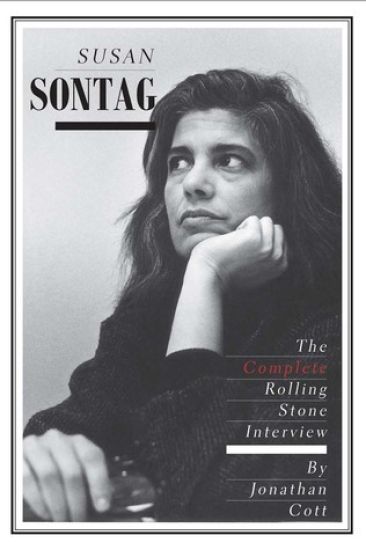
Susan Sontag

Susan Sontag

Jonathan Cott

Yale University Press
2014
pokkari
Published in its entirety for the first time, a candid conversation with Susan Sontag at the height of her brilliant career “A humanizing interview with the late cultural icon, who was often perceived as a fiercely aggressive and polarizing intellect.”—Kirkus Reviews Susan Sontag (1933–2004), one of the most internationally renowned and controversial intellectuals of the latter half of the twentieth century, still provokes. In 1978 Jonathan Cott, a founding contributing editor of Rolling Stone magazine, interviewed Sontag first in Paris and later in New York. Only a third of their twelve hours of discussion ever made it to print. This book provides the entire transcript of Sontag’s remarkable conversation, accompanied by Cott’s preface and recollections. Sontag’s musings and observations reveal the passionate engagement and breadth of her critical intelligence and curiosities at a moment when she was at the peak of her powers. These hours of conversation offer a revelatory and indispensable look at the self-described “besotted aesthete” and “obsessed moralist.”
Dylan on Dylan

Dylan on Dylan

Jonathan Cott

Hodder Stoughton General Div
2007
pokkari
Gathered together for the first time: a rare and diverse collection of intimate interviews, straight from the mouth of America's most celebrated street poet. DYLAN ON DYLAN is a must-read for his millions of fans.
Thirteen: A Journey Into the Number

Thirteen: A Journey Into the Number

Jonathan Cott

Doubleday Books
1996
nidottu
Odysseus, the 13th of his group of companions, is the only one to have escaped the devouring appetite of the Cyclops Polyphemus. The ill-fated Apollo 13 mission was launched on April 11, 1970, at 1313 hours Central Time from Pad 39 (13 x 3), and had to be aborted on April 13 after the explosion of an oxygen tank serving the commanding ship. Three of the sleeping periods scheduled for the astronauts were supposed to start 13 minutes past the hour, as was one of the possible splashdown times. There are said to be 13 stages of Buddhahood consisting of ten bohisattva stages and three additional pre-Buddhist stages. When Queen Elizabeth II paid a visit to West Germany in 1965, the number of the platform at Duisburg railway station, from which she was about to depart, was changed from 13 to 12A. The 13 weather-related disasters covered by insurance companies: (1) hurricane, (2) tornado, (3) flood/flash flood, (4) lightning, (5) blizzard, (6) avalanche, (7) ice storm, (8) dust storm, (9) hailstorm, (10) forest fire, (11) tsunami (tidal wave), (12) drought, (13) heat wave/cold wave. From the Yorkshire Post, May 1960: A note left by a window cleaner who was found dead in a gas-filled room at his home said: It just needed to rain today Friday the 13th for me to make up my mind. "
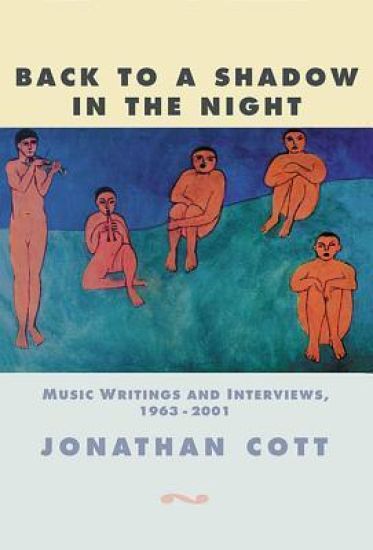
Back to a Shadow in the Night

Back to a Shadow in the Night

Jonathan Cott

HAL LEONARD CORPORATION
2003
sidottu
One of the most important critics writing in the past 35 years, Jonathan Cott has interviewed and reviewed major artists in publishing, art, film and music, often unearthing new voices years before they're discovered by the mainstream. In Back to a Shadow in the Night, his music interviews and essays – covering an astonishingly wide range of artists and styles – are collected for the first time in one volume. From pondering the links between Patti Smith and Rimbaud to revealing the introverted and eccentric mind of Glenn Gould, Cott consistently provides probing and fascinating dialogues in his interviews. In this collection, John Lennon gives insights on surviving fame four days before his murder, Bob Dylan contemplates identity in his film Renaldo and Clara, and Lou Reed explores the nihilism of New York City and the best lines he's ever written, to name but a few topics. Cott's independent writing on the music world is equally stimulating. With interwoven strands of Eastern philosophy and classical music, nursery rhymes and rock and roll, Cott's musings have a beauty and texture all their own. Jonathan Cott is the author of 12 books including Isis and Osiris: Exploring the Goddess Myth, City of Earthly Love, He Dreams What Is Going On Inside His Head and The Search for Om Sety. A contributing editor for Rolling Stone since its beginnings, he has frequently been published in the New York Times, American Review and The New Yorker. Cott lives in New York City. “Jonathan Cott, as an interviewer, reveals truths of creative spirits – especially those in the world of music – that they themselves may not have understood.” – Studs Terkel
Listening

Listening

Jonathan Cott

UNIVERSITY OF MINNESOTA PRESS
2025
nidottu
A wide-ranging collection of interviews and profiles from twenty years of Jonathan Cott’s remarkable writings “All I really need to do is simply ask a question,” Jonathan Cott occasionally reminds himself. “And then listen.” It sounds simple, but in fact few have taken the art of asking questions to such heights-and depths-as Jonathan Cott, whom Jan Morris called “an incomparable interviewer,” one whose skill, according to the great interviewer and oral historian Studs Terkel, “is artless yet impassioned and knowing.” Collected here are twenty-two of Cott’s most illuminating interviews that encourage readers to listen to film directors and musicians, actors and writers, scientists and visionaries. These conversations affirm the indispensable and transformative powers of the imagination and offer us new ways to view these lives and their worlds. What is it like to be Bob Dylan making a movie? Carl Sagan taking on the cosmos? Oliver Sacks doctoring the soul? John Lennon, on December 5, 1980? Elizabeth Taylor, ever? From Chinua Achebe to Dr. Seuss (Theodor Geisel), Federico Fellini to Werner Herzog, and Oriana Fallaci to Studs Terkel, Listening takes readers on a journey to discover not ways of life but ways to life. Within these pages,Cott proves himself to be, in the words of Brain Pickings’s Maria Popova, “an interlocutor extraordinaire,” drawing candid insights and profound observations from these inspired and inspiring individuals.
Listening

Listening

Jonathan Cott

University of Minnesota Press
2020
sidottu
A wide-ranging collection of interviews and profiles from twenty years of Jonathan Cott’s remarkable writings “All I really need to do is simply ask a question,” Jonathan Cott occasionally reminds himself. “And then listen.” It sounds simple, but in fact few have taken the art of asking questions to such heights-and depths-as Jonathan Cott, whom Jan Morris called “an incomparable interviewer,” one whose skill, according to the great interviewer and oral historian Studs Terkel, “is artless yet impassioned and knowing.” Collected here are twenty-two of Cott’s most illuminating interviews that encourage readers to listen to film directors and musicians, actors and writers, scientists and visionaries. These conversations affirm the indispensable and transformative powers of the imagination and offer us new ways to view these lives and their worlds. What is it like to be Bob Dylan making a movie? Carl Sagan taking on the cosmos? Oliver Sacks doctoring the soul? John Lennon, on December 5, 1980? Elizabeth Taylor, ever? From Chinua Achebe to Dr. Seuss (Theodor Geisel), Federico Fellini to Werner Herzog, and Oriana Fallaci to Studs Terkel, Listening takes readers on a journey to discover not ways of life but ways to life. Within these pages,Cott proves himself to be, in the words of Brain Pickings’s Maria Popova, “an interlocutor extraordinaire,” drawing candid insights and profound observations from these inspired and inspiring individuals.
Let Me Take You Down

Let Me Take You Down

Jonathan Cott

UNIVERSITY OF MINNESOTA PRESS
2024
sidottu
The conception, creation, recording, and significance of the Beatles’ “Penny Lane” and “Strawberry Fields Forever” John Lennon wrote “Strawberry Fields Forever” in Almería, Spain, in fall 1966, and in November, in response to that song, Paul McCartney wrote “Penny Lane” at his home in London. A culmination of what was one of the most life-altering and chaotic years in the Beatles’ career, these two songs composed the 1967 double A-side 45 rpm record that has often been called the greatest single in the history of popular music and was, according to Beatles producer George Martin, “the best record we ever made.” In Let Me Take You Down: Penny Lane and Strawberry Fields Forever, Jonathan Cott recounts the conception and creation of these songs; describes the tumultuous events and experiences that led the Beatles to call it quits as a touring band and redefine themselves solely as recording artists; and details the complex, seventy-hour recording process that produced seven minutes of indelible music. In writing about these songs, he also focuses on them as inspired artistic expressions of two unique ways of experiencing and being in the world, as Lennon takes us down to Strawberry Fields and McCartney takes us back to Penny Lane. In order to gain new vistas and multiple perspectives on these multifaceted songs, Cott also engages in conversation with five remarkable people: media artist Laurie Anderson; guitarist Bill Frisell; actor Richard Gere; Jungian analyst Margaret Klenck; and urban planner, writer, and musician Jonathan F. P. Rose. The result is a wide-ranging, illuminating exploration of the musical, literary, psychological, cultural, and spiritual aspects of two of the most acclaimed songs in rock and roll history.
Do Nothing

Do Nothing

Jonathan Cottrell

MORGAN JAMES PUBLISHING LLC
2022
pokkari
Do Nothing shares a strong message of how to accomplish something greater for Jesus.Most religions proudly and regularly teach what their followers must do to reap spiritual rewards and climb the peaks of enlightenment. But then, there’s Jesus. Rather than tell His followers what they could do, Christ taught believers that they could “do nothing” apart from Him (John 15:5). Likewise, the Son of God insisted that He could “do nothing” apart from His Father in heaven (John 5:19). Unfortunately, this is a message that has been largely forgotten among even the most well-intentioned Christians and trendiest of churches. Maybe it’s a message that readers have never even heard.In Do Nothing, readers learn how to peacefully rest, better discern, and calmly walk forward in the completed work of Jesus. Finally, they can escape the burdensome mantras of today’s culture which indoctrinate everyone everywhere to work hard, hustle, earn it, make it happen, try harder, and do something. So much doing. Jesus offers a much easier way—in fact, He is the way. And He accomplishes everything He begins.
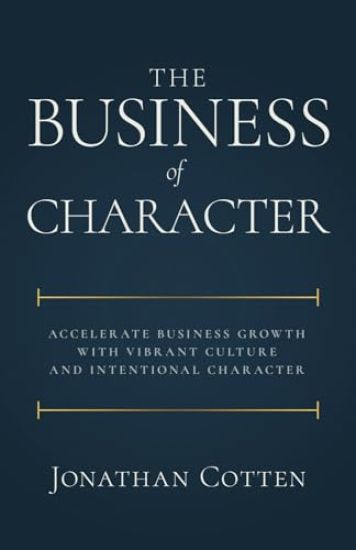
The Business of Character

The Business of Character

Jonathan Cotten

Ethos Collective
2025
sidottu
Your Character Is Contagious When you consider the duties of a business owner, your thoughts probably go to responsibilities like revenue, growth, and employee retention. While these are important, what's being overlooked is the most important duty: character.Character impacts every aspect of the business. It is the one thing that can influence the bottom line more than just about anything else. So, why don't more businesses make character a priority, and how can you integrate this into your company? The Business of Character offers new business owners, leaders, and those going through difficult transitions more than just the systems and decisions. It gives you the deeper values and frameworks behind those systems and decisions from someone who has struggled through them and found success.Discover how to: Define your mission, vision, and culture so your business stands on a strong foundationIntegrate your character, culture, and family to live an integrated lifeBe authentic in your business so you can achieve diversity and harmony It's time to use authenticity and integrity in pursuit of The Business of Character so you can rest knowing that your work was well done.Learn to be in the business of character starting today
Cotton Mather, Jonathan Edwards, and the Quest for Evangelical Enlightenment

Cotton Mather, Jonathan Edwards, and the Quest for Evangelical Enlightenment

Ryan P. Hoselton

Springer International Publishing AG
2023
sidottu
This book explores the early evangelical quest for enlightenment by the Spirit and the Word. While the pursuit originated in the Protestant Reformation, it assumed new forms in the long eighteenth-century context of the early Enlightenment and transatlantic awakened Protestant reform. This work illuminates these transformations by focusing on the dynamic intersection of experimental philosophy and experimental religion in the biblical practices of early America’s most influential Protestant theologians, Cotton Mather (1663-1728) and Jonathan Edwards (1703-1758). As the first book-length project to treat Mather and Edwards together, this study makes an important contribution to the extensive scholarship on these figures, opening new perspectives on the continuities and complexities of colonial New England religion. It also provides new insights and interpretive interventions concerning the history of the Bible, early modern intellectual history, and evangelicalism’s complex relationship to the Enlightenment.