Kirjojen hintavertailu. Mukana 11 342 296 kirjaa ja 12 kauppaa.

Kirjahaku

Etsi kirjoja tekijän nimen, kirjan nimen tai ISBN:n perusteella.

1000 tulosta hakusanalla Jonathan Swift

Jonathan Swift

Jonathan Swift

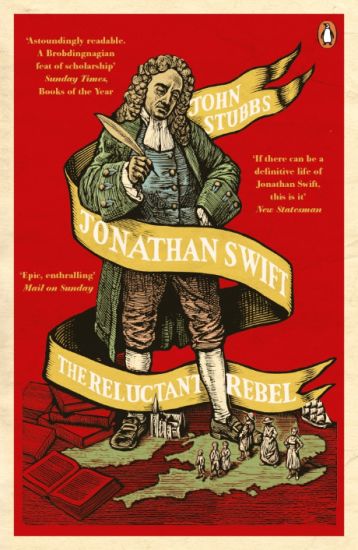
John Stubbs

Penguin Books Ltd
2017
pokkari
Jonathan Swift was a man of contradictions: a man who satirized the powerful but aspired to political greatness, who mocked men's vanity but held himself in high esteem, a religious moralizer famed for his malice - a man sharply aware of humanity's flaws, but no less susceptible to them.As with his acclaimed biography of John Donne, John Stubbs paints a vivid portrait of an extraordinary man and a turbulent period of English and Irish history.
Jonathan Swift

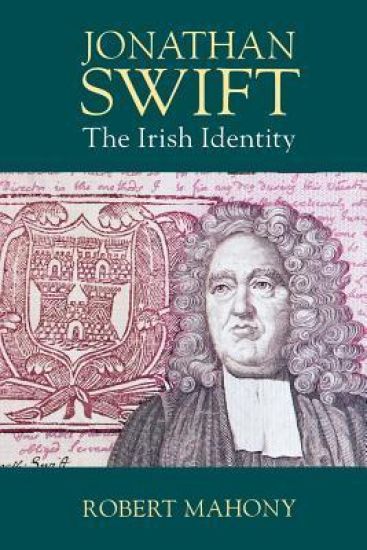
Jonathan Swift

Robert Mahony

Yale University Press
2012
pokkari
Jonathan Swift was internationally acclaimed in his own time for Gulliver's Travels and other brilliant satires in verse and prose. In his native Ireland, however, he was most fervently admired as a patriot. Advocating economic self-sufficiency for Ireland and resistance to the high-handedness of the British government, Swift represented an articulate challenge to British rule. Although his reputation as an Irish patriot declined after his death, the twentieth century has come to recognize him as a founding father of Irish nationalism.This book traces Swift's fluctuating reception in Ireland through the centuries, examining his nationalist ambivalence for a homeland he could defend but not love, and comparing his feelings with the ambiguities that have marked the development of Irish identity more widely. Robert Mahony considers Swift's posthumous reputation in both literary and popular culture and examines his unusual place in Irish political rhetoric. He shows how Swift's reputation suffered in the later eighteenth century through its seeming irrelevance to shifting political circumstances. In the early nineteenth century, Irish Protestants made him a symbol of their own patriotism within the British union, but he was ignored, or dismissed as a bigot, by most Catholic writers. In the 1840s the tide turned as the Young Ireland movement emphasized Swift's anti-British rhetoric while establishing his Protestant pedigree for contemporary Protestants. Although charges of hypocrisy and of an English cultural orientation survived as late as the 1930s, the construction of Swift as a patriot—with human flaws—was ultimately sustained.
Jonathan Swift

Jonathan Swift

Leo Damrosch

Yale University Press
2014
pokkari
Winner of the 2013 National Book Critics Circle Award in Biography: The life of satirist Jonathan Swift, written by a master biographer and leading scholar of eighteenth-century literature Selected by New York Times Book Review as a Best Book Since 2000 “Superb. . . . Damrosch’s outstanding book has raised Swift’s provocative genius to life.”—Jeffrey Collins, Wall Street Journal Jonathan Swift is best remembered today as the author of Gulliver’s Travels, the satiric fantasy that quickly became a classic and has remained in print for nearly three centuries. Yet Swift also wrote many other influential works, was a major political and religious figure in his time, and became a national hero, beloved for his fierce protest against English exploitation of his native Ireland. What is really known today about the enigmatic man behind these accomplishments? Can the facts of his life be separated from the fictions? In this deeply researched biography, Leo Damrosch draws on discoveries made over the past thirty years to tell the story of Swift’s life anew. Probing holes in the existing evidence, he takes seriously some daring speculations about Swift’s parentage, love life, and various personal relationships and shows how Swift’s public version of his life—the one accepted until recently—was deliberately misleading. Swift concealed aspects of himself and his relationships, and other people in his life helped to keep his secrets. Assembling suggestive clues, Damrosch re-narrates the events of Swift’s life while making vivid the sights, sounds, and smells of his English and Irish surroundings.Through his own words and those of a wide circle of friends, a complex Swift emerges: a restless, combative, empathetic figure, a man of biting wit and powerful mind, and a major figure in the history of world letters.
Jonathan Swift

Jonathan Swift

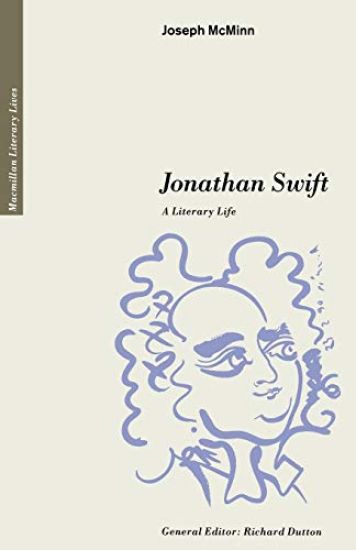
Joseph McMinn

Palgrave Macmillan
1991
sidottu
This biography emphasises the extraordinary versatility and resourcefulness of a lifetime spent serving the public interest with the pen. At the same time, it shows Swift's distinctive love of writing for personal entertainment and diversion, with little or no interest in publication. While remaining a fiercely committed writer, he always tried to preserve, especially in his poetry and letters, a literature dedicated to friendship. Swift's literary career comprises much more than the well-known satires.
Jonathan Swift

Jonathan Swift

McMinn Joseph

PALGRAVE MACMILLAN
1991
nidottu
This biography emphasises the extraordinary versatility and resourcefulness of a lifetime spent serving the public interest with the pen. At the same time, it shows Swift's distinctive love of writing for personal entertainment and diversion, with little or no interest in publication. While remaining a fiercely committed writer, he always tried to preserve, especially in his poetry and letters, a literature dedicated to friendship. Swift's literary career comprises much more than the well-known satires.
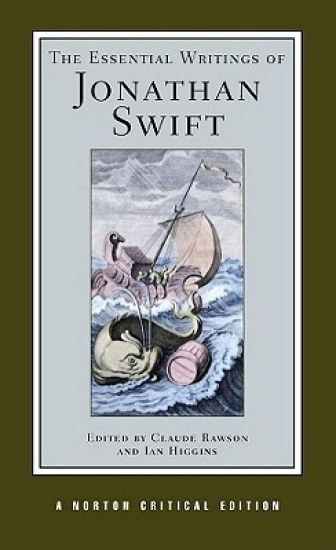
The Essential Writings of Jonathan Swift

The Essential Writings of Jonathan Swift

Jonathan Swift

WW Norton Co
2009
nidottu
“Contexts” features a generous selection of contemporary materials, among them Swift's letters, autobiographical documents, and personal writings. “Criticism” provides readers with a wide chronological and thematic range of scholarly interpretations, divided into two sections. The first, “1745–1940,” includes assessments by Henry Fielding, Samuel Johnson, Samuel Taylor Coleridge, William Makepeace Thackeray, D. H. Lawrence, W. B. Yeats, F. R. Leavis, and André Breton, among others. The second, “After 1940,” is by subject and collects critical discussions of A Tale of the Tub, the poems, the English and Irish politics, and Gulliver’s Travels, by Hugh Kenner, Marcus Walsh, Irvin Ehrenpreis, Penelope Wilson, Derek Mahon, S. J. Connolly, George Orwell, R. S. Crane, Jenny Mezciems, Ian Higgins, and Claude Rawson. A Chronology and Selected Bibliography are also included.
Jonathan Swift
The Critical Heritage gathers together a large body of critical sources on major figures in literature. Each volume presents contemporary responses to a writer's work, enabling student and researcher to read the material themselves.
Jonathan Swift
The Critical Heritage gathers together a large body of critical sources on major figures in literature. Each volume presents contemporary responses to a writer's work, enabling student and researcher to read the material themselves.
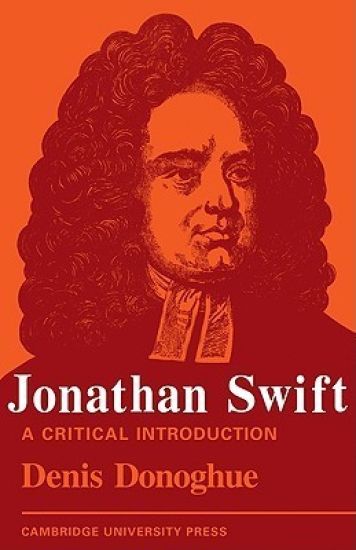
Jonathan Swift

Jonathan Swift

Denis Donoghue

Cambridge University Press
2010
pokkari
In this concise critical survey, Professor Donoghue looks at Swift's whole output, and expresses a fresh sense of his literary character. In particular, he questions the widespread view that Swift is to be understood in terms of irony, persona or mask. He points out, for instance, that Swift's irony is not continuous, and that his sense of form is not ours. We should not see him as producing elaborate artistic structures, but as meeting particular needs which forced themselves upon him. We need also to identify the 'gestures' through which Swift revealed his characteristic mental attitudes, and behind them to sense his general life-stance; to understand his devices - such as the choice and change of perspective; his deeper pre-occupations - such as the relationship between the body, the mind and the soul; his attitude to and use of language; his conception of the nature of humanity; the characteristics of his verse.
Jonathan Swift

Jonathan Swift

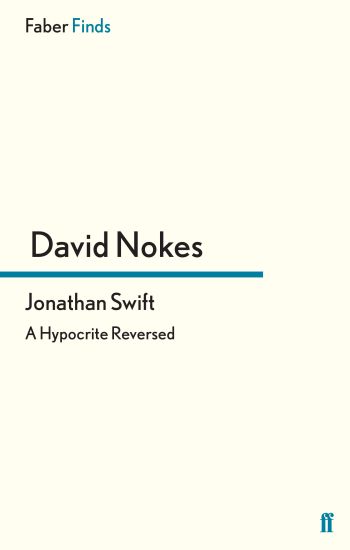
David Nokes

Faber Faber
2014
pokkari
David Nokes presents a gripping and authoritative portrait of Swift in his multifarious roles as satirist, politician, churchman and friend. Drawing on the most recent scholarship, he seeks in particular to re-establish a proper balance between Swift's public and private lives.'The best biography of Swift to date.' Michael Foot, Observer'David Nokes's book is splendid.' Denis Donoghue, London Review of Books'Should remain the standard one-volume Life for years to come.' New York Times
Jonathan Swift

Jonathan Swift

Nigel Wood

Routledge
1999
nidottu
This collection of critical thinking situates the satire of Jonathan Swift within both its eighteenth-century contexts and our modern anxieties about personal identity and communication. Augustan satire at its most provocative is not simply concerned with the public matters of politics or religion, but also offers a precise medium in which to express the paradox of ironic detachment amidst deep conviction. The critics chosen for this volume demonstrate the complexity of Swift's work. Its four sections explore matters of authorial identity, the relation between Swift's writing and its historical context, the full range of his comments on gender, and his deployment of metaphor and irony to engage the reader. Swift has often been regarded as a writer who anticipated many twentieth-century cultural preoccupations, and this volume provides an opportunity to test just how modern he actually was. It also provides an answer to those who would wish to simplify his writing as that of Tory and misogynist. The theoretical perspectives of the contributors are lucidly explained and their critical terms located in the wider contexts of contemporary theory in the introduction and headnotes. The volume places Swift historically within the philosophical and religious traditions of eighteenth-century thought.
Jonathan Swift

Jonathan Swift

Ian Higgins

Northcote House Publishers Ltd
2004
nidottu
The book's focus is the major satires upon which Swift's literary reputation principally rests, including A Tale of a Tub, Gulliver's Travels, A Modest Proposal and the infamous scatological poems. Swift was the greatest prose satirist in the English language and this critical analysis highlights the extremism of Swiftian satire and its off-the-page menaces.
Jonathan Swift

Jonathan Swift

Ian Higgins

Northcote House Publishers Ltd
2004
sidottu
The book's focus is the major satires upon which Swift's literary reputation principally rests, including A Tale of a Tub, Gulliver's Travels, A Modest Proposal and the infamous scatological poems. Swift was the greatest prose satirist in the English language and this critical analysis highlights the extremism of Swiftian satire and its off-the-page menaces.
The Poems of Jonathan Swift, D. D., Volume 1 (Esprios Classics)
Jonathan Swift (30 November 1667 - 19 October 1745) was an Anglo-Irish satirist, essayist, political pamphleteer (first for the Whigs, then for the Tories), poet and Anglican cleric who became Dean of St Patrick's Cathedral, Dublin, hence his common sobriquet, "Dean Swift". Swift is remembered for works such as A Tale of a Tub (1704), An Argument Against Abolishing Christianity (1712), Gulliver's Travels (1726), and A Modest Proposal (1729). He is regarded by the Encyclop dia Britannica as the foremost prose satirist in the English language, and is less well known for his poetry. He originally published all of his works under pseudonyms - such as Lemuel Gulliver, Isaac Bickerstaff, M. B. Drapier - or anonymously. He was a master of two styles of satire, the Horatian and Juvenalian styles.