L. Ron Hubbard; Jody Lynn Nye; Tim Powers; Robert J. Sawyer; Sean Williams; Tom Wood; Jr. Seth Atwater; Randyn C. J. Bartholomew; Barlow Crassmont; Andrew Jackson; Ian Keith; Robert F. Lowell; Patrick MacPhee; Lauren McGuire; T. R. Naus; Joel C. Scoberg; Sandra Skalski; Jefferson Snow; Echo Chernik
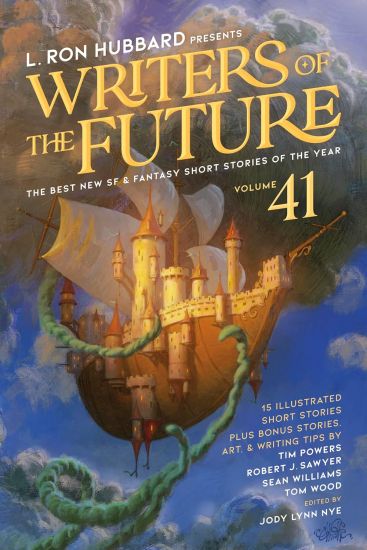
Step into the extraordinary with L. Ron Hubbard Presents Writers of the Future Volume 41—an anthology that promises the unexpected, the thought-provoking, and the unforgettable. Celebrating the best new voices in speculative fiction, this collection offers gripping tales of science fiction, fantasy, and beyond. Discover Distant Worlds Explore alien landscapes, futuristic technologies, and hidden realms. From time-traveling adventures to battles for survival in dystopian societies, these stories transport you far beyond the limits of imagination. Meet Extraordinary Heroes Follow protagonists who face impossible odds—from a young constable on a harsh alien frontier to a reclusive writer sharing a ride with a sentient car. These characters redefine courage, resilience, and what it means to be human. Experience Visual Wonder Every story is brought to life with breathtaking original illustrations. These commissioned works add depth, color, and vibrancy to the collection, making it a visual and literary masterpiece. Learn from the Legends Gain inspiration from essays by L. Ron Hubbard, Robert J. Sawyer, and Tom Wood, offering rare insights into storytelling and creative mastery. Discover Tomorrow's Stars This volume continues the legacy of Writers of the Future, the competition that has launched myriad bestselling authors. These rising talents are reshaping speculative fiction as we know it. Whether you love heart-pounding action, thought-provoking “what ifs,” or stories that blur the line between science and magic, Volume 41 is your gateway to new dimensions. With tales and illustrations that linger long after the final page, this anthology invites you to take the leap into worlds uncharted. Push Beyond the Ordinary. Explore the Extraordinary. Grab your copy of L. Ron Hubbard Presents Writers of the Future Volume 41 and discover the next generation of visionary storytellers and artists.
The NIV Application Commentary helps you communicate and apply biblical text effectively in today's context.To bring the ancient messages of the Bible into today's world, each passage is treated in three sections:Original Meaning. Concise exegesis to help readers understand the original meaning of the biblical text in its historical, literary, and cultural context.Bridging Contexts. A bridge between the world of the Bible and the world of today, built by discerning what is timeless in the timely pages of the Bible.Contemporary Significance. This section identifies comparable situations to those faced in the Bible and explores relevant application of the biblical messages. The author alerts the readers of problems they may encounter when seeking to apply the passage and helps them think through the issues involved.This unique, award-winning commentary is the ideal resource for today's preachers, teachers, and serious students of the Bible, giving them the tools, ideas, and insights they need to communicate God's Word with the same powerful impact it had when it was first written.The book you receive may have a different cover design than shown on the website.
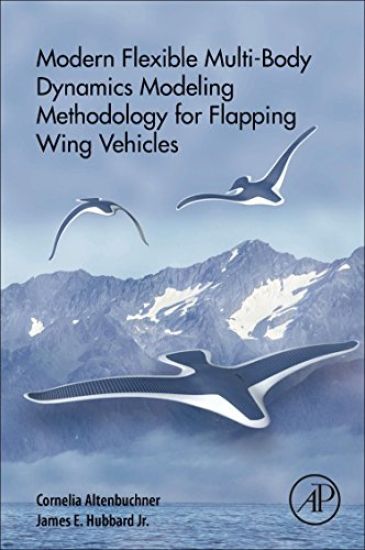
Modern Flexible Multi-Body Dynamics Modeling Methodology for Flapping Wing Vehicles presents research on the implementation of a flexible multi-body dynamic representation of a flapping wing ornithopter that considers aero-elasticity. This effort brings advances in the understanding of flapping wing flight physics and dynamics that ultimately leads to an improvement in the performance of such flight vehicles, thus reaching their high performance potential. In using this model, it is necessary to reduce body accelerations and forces of an ornithopter vehicle, as well as to improve the aerodynamic performance and enhance flight kinematics and forces which are the design optimization objectives. This book is a useful reference for postgraduates in mechanical engineering and related areas, as well as researchers in the field of multibody dynamics.
Unmanned air vehicles are becoming increasingly popular alternatives for private applications which include, but are not limited to, fire fighting, search and rescue, atmospheric data collection, and crop surveys, to name a few. Among these vehicles are avian-inspired, flapping-wing designs, which are safe to operate near humans and are required to carry payloads while achieving manoeuverability and agility in low speed flight. Conventional methods and tools fall short of achieving the desired performance metrics and requirements of such craft. Flight dynamics and system identification for modern feedback control provides an in-depth study of the difficulties associated with achieving controlled performance in flapping-wing, avian-inspired flight, and a new model paradigm is derived using analytical and experimental methods, with which a controls designer may then apply familiar tools. This title consists of eight chapters and covers flapping-wing aircraft and flight dynamics, before looking at nonlinear, multibody modelling as well as flight testing and instrumentation. Later chapters examine system identification from flight test data, feedback control and linearization.
Die Idee von Dr. Richardson Hubbard ist, das Gehirn in drei farbenfrohe Gestalten zu teilen, die Prinzessin, ein aufmerksamer junges M dchen Giggles, den gef hlsbetonten Papagei und Hope, das spontane Pony. Die Probleme entlang ihres Weges zeigen, wie die Prinzessin durch Zuh ren und Planen die Geschichten zu einem gl cklichen Ende f hrt.
The book is a realistic blend of basic knowledge and understanding in soil physical properties. It will enable the reader to scientifically analyze soils to develop practical and successful means of providing sufficient drainage and to develop science-based irrigation strategies. Only basic mathematical knowledge is necessary to understand and apply the proven principles covered. With limited resources that are increasing significantly in costs, the book blends the ideal concept of providing sufficient drainage and irrigation based on using soil physical properties but with financial limitations in mind. One traditional problem with many Soil Physics, Drainage, and Irrigations-based texts is the prerequisite of understanding complicated calculus-based mathematics. Although necessary for a theory-based text, our text was developed with practitioners in mind where such complicated mathematics was avoided but referenced if the reader wishes to further explore the specific topic. Anotherproblem with many traditional texts is the lack of practical examples or case-studies allowing readers to relate their specific scenarios to similar types of situations. We have purposely included numerous examples and practical field experiences. This is especially true when many of the theoretical ideals are covered, followed by explanations of how such ideals can be applied in the laboratory and field.
This book develops and details a rigorous, canonical modeling approach for analyzing spatio-temporal brain wave dynamics. The nonlinear, nonstationary behavior of brain wave measures and general uncertainty associated with the brain makes it difficult to apply modern system identification techniques to such systems. While there is a substantial amount of literature on the use of stationary analyses for brain waves, relatively less work has considered real-time estimation and imaging of brain waves from noninvasive measurements. This book addresses the issue of modeling and imaging brain waves and biomarkers generally, treating the nonlinear and nonstationary dynamics in near real-time. Using a modal state-space formulation leads to intuitive, physically significant models which are used for analysis and diagnosis.A Modal Approach to the Space-Time Dynamics of Cognitive Biomarkers provides a much-needed reference for practicing researchers in biomarker modeling leveraging the lens of engineering dynamics.
Introduction to Biblical Interpretation, now in its third edition, is a bestselling hermeneutics textbook that sets forth concise, logical, and practical guidelines for discovering the truth in God’s Word.With updates and revisions throughout that keep pace with current scholarship, this book offers students the best and most up-to-date information needed to interpret Scripture.Introduction to Biblical Interpretation:Defines and describes hermeneutics, the science of biblical interpretationSuggests effective methods to understand the meaning of the biblical textSurveys the literary, cultural, social, and historical issues that impact any textEvaluates both traditional and modern approaches to Bible interpretationExamines the reader’s role as an interpreter of the text and helps identify what the reader brings to the text that could distort its messageTackles the problem of how to apply the Bible in valid and significant ways todayProvides an extensive and revised annotated list of books that readers will find helpful in the practice of biblical interpretationUsed in college and seminary classrooms around the world, this textbook is a trusted and valuable tool for students and other readers who desire to understand and apply the Bible.
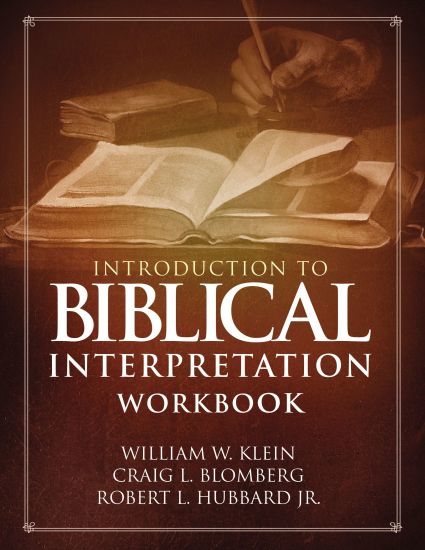
This workbook accompanies the third edition of Introduction to Biblical Interpretation by William W. Klein, Craig L. Blomberg, and Robert L. Hubbard Jr. Following the textbook’s structure, it offers readings, activities, and exercises designed to teach students how to understand and apply the Bible.This workbook gives students a chance to get hands-on experience in interpreting biblical texts as they are guided along by insightful questions and pointers from the authors. Ultimately the workbook is designed to get students interacting with the content of the textbook and with the biblical text in a way that helps reinforce classroom learning, while at the same time giving both student and instructor a way to gauge how well the student is learning the material from the textbook.The third edition of a classic hermeneutics textbook sets forth concise, logical, and practical guidelines for discovering the truth in God’s Word. A valuable tool for readers who desire to understand and apply the Bible, this text:Defines and describes hermeneutics, the science of biblical interpretationSuggests effective methods to understand the meaning of the biblical textSurveys the literary, cultural, social, and historical issues that impact any textEvaluates both traditional and modern approaches to Bible interpretationExamines the reader’s role as an interpreter of the text and helps identify what the reader brings to the text that could distort its messageTackles the problem of how to apply the Bible in valid and significant ways todayProvides an extensive and revised annotated list of books that readers will find helpful in the practice of biblical interpretation
John H. Walton; Peter E. Enns; Roy Gane; Daniel I. Block; Jr. Hubbard; K. Lawson Younger; Bill T. Arnold; August H. Konkel; Andrew E. Hill; Donna Petter; Thomas Petter; Karen H. Jobes
The NIV Application Commentary helps you communicate and apply biblical text effectively in today's context. To bring the ancient messages of the Bible into today's world, each passage is treated in three sections: Original Meaning. Concise exegesis to help readers understand the original meaning of the biblical text in its historical, literary, and cultural context. Bridging Contexts. A bridge between the world of the Bible and the world of today, built by discerning what is timeless in the timely pages of the Bible. Contemporary Significance. This section identifies comparable situations to those faced in the Bible and explores relevant application of the biblical messages. The author alerts the readers of problems they may encounter when seeking to apply the passage and helps them think through the issues involved. This unique, award-winning commentary is the ideal resource for today's preachers, teachers, and serious students of the Bible, giving them the tools, ideas, and insights they need to communicate God's Word with the same powerful impact it had when it was first written. Volumes and authors in The NIV Application Commentary, Old Testament Set One: Genesis-Job, 12-Volume Collection include: Genesis by John H. Walton Exodus by Peter Enns Leviticus, Numbers by Roy Gane Deuteronomy by Daniel I. Block Joshua by Robert L. Hubbard Jr. Judges, Ruth by K. Lawson Younger Jr. 1 and 2 Samuel by Bill T. Arnold 1 and 2 Kings by August H. Konkel 1 and 2 Chronicles by Andrew E. Hill Ezra, Nehemiah by Donna Petter and Thomas Petter Esther by Karen H. Jobes Job by John H. Walton
John H. Walton; Peter E. Enns; Roy Gane; Daniel I. Block; Jr. Hubbard; K. Lawson Younger; Bill T. Arnold; August H. Konkel; Andrew E. Hill; Donna Petter; Thomas Petter; Karen H. Jobes
The NIV Application Commentary helps you communicate and apply biblical text effectively in today's context. To bring the ancient messages of the Bible into today's world, each passage is treated in three sections:Original Meaning. Concise exegesis to help readers understand the original meaning of the biblical text in its historical, literary, and cultural context.Bridging Contexts. A bridge between the world of the Bible and the world of today, built by discerning what is timeless in the timely pages of the Bible.Contemporary Significance. This section identifies comparable situations to those faced in the Bible and explores relevant application of the biblical messages. The author alerts the readers of problems they may encounter when seeking to apply the passage and helps them think through the issues involved.This unique, award-winning commentary is the ideal resource for today's preachers, teachers, and serious students of the Bible, giving them the tools, ideas, and insights they need to communicate God's Word with the same powerful impact it had when it was first written.Volumes and authors in The NIV Application Commentary, Old Testament Set One: Genesis-Job, 12-Volume Collection include:Genesis by John H. WaltonExodus by Peter EnnsLeviticus, Numbers by Roy GaneDeuteronomy by Daniel I. BlockJoshua by Robert L. Hubbard Jr.Judges, Ruth by K. Lawson Younger Jr.1 and 2 Samuel by Bill T. Arnold1 and 2 Kings by August H. Konkel1 and 2 Chronicles by Andrew E. HillEzra, Nehemiah by Donna Petter and Thomas PetterEsther by Karen H. JobesJob by John H. WaltonThis set features newly designed covers for the volumes, updated from their original editions.
An inspiration for those trying to create socially engaged art and make a difference in marginalized communities. – Smithsonian Magazine The most comprehensive monograph on the enigmatic French artist – updated to include brand-new work Filled with stunning photography, this extraordinary monograph charts a range of JR’s collaborative projects executed across the globe. Created in close collaboration with the artist, it features chapters on each of JR’s major bodies of work – from Expo2Rue, using the street as his canvas to launch his career as an artist, to The Chronicles of Miami, which opened in November 2023. It also includes his collaborations with other artists and institutions such as the New York City Ballet, film director Agnès Varda, and Time magazine. A foreword by Hollywood legend George Lucas, a specially commissioned graphic novel by comic artist Joseph Remnant, an updated survey essay by Nato Thompson, and a short piece by Italian film director Alice Rohrwacher all come together to tell JR’s fascinating story.