

Kirjahaku
Etsi kirjoja tekijän nimen, kirjan nimen tai ISBN:n perusteella.
1000 tulosta hakusanalla June Hall

No More Career Pity Parties covers four topics in a succinct manner so readers can determine what needs to be done in terms of developing and handling career concerns then and jump right into doing it. The four topics are: - discovering ways to determine a good career that fits your personality and skills; - the traditional and non-traditional employment search - the application and interview process - ways to handle various situations that occur while employed such as stress and burnout Each chapter begins with my 2 cents, followed by Q & A from the advice column, then leads into the heart of the matter. There are so many people in college, others trying to get back in the workplace, and those who are displaced homemakers that don't know where to start regarding a career or even basic employment. No More Career Pity Parties offers help regardless if you're a teenage or mature adult looking for simple answers regarding gaining, sustaining, or changing employment.

The Jekyll Island Club
June Hall McCash; William Barton McCash
University of Georgia Press
1989
sidottu
From its inception in 1886, the Jekyll Island Club included in its elite membership the nation's wealthiest families, among them the Rockefellers, Pulitzers, Vanderbilts, and Morgans. Far from the hectic northern cities where the members tended their fortunes, this private island refuge off Georgia's coast offered the wealthy a tranquil change of pace.Bringing together more than 240 fascinating photographs, Barton and June McCash trace the sixty-two-year history of this exclusive retreat whose members at one time were reputed to represent one-seventh of the nation's wealth. From the time of the club's opening, members came to Jekyll Island each winter to seek elegant leisure, arriving on yachts or in private train cars from New York, Boston, Chicago, and Philadelphia. Capturing the lives and amusements of the very wealthy, this evocative photographic history presents descriptions of elaborate costume balls and playful outdoor parties; the Rockefeller clan gathering at water's edge and J. P. Morgan lounging by the pool; Victor Astor's "patented beach boat" and the Goulds' private indoor tennis court; the Vanderbilts' yacht anchored offshore and the imposing "cottages" built by individual members.During their stays, members amused themselves in a variety of pursuits. In the 1890s they organized bicycling clubs and held races on the beach. Hunting was also for a time a favorite activity and the island was regularly stocked with imported wildlife—pheasant, quail, turkey, and bucks. By 1919, however, the game committee had dwindled to one member, and prime hunting grounds had been cleared for golf courses and tennis courts. The hub of the island's social life, however, was the clubhouse, where members gathered in formal attire to converse, while drinking fine wine and dining on freshly caught game and local delicacies.The seclusion that Jekyll Island offered was not impenetrable. On the day after Christmas in 1900, the country's fascination with technology could no longer be resisted, and the sound of a gasoline automobile disturbed the island's quiet glades for the first time. Despite the immense wealth of the club, it was not immune to the stock market crash of 1893 and the Panic of 1907. The club managed to survive World War I intact and enjoyed a "golden age" from 1919 to 1927, during which time it held its own against the increasingly popular Florida resorts. The stock market crash of 1929, however, initiated a death spiral. Membership declined steadily throughout the 1930s, and when the United States entered World War II, the club closed its doors forever. Based on surviving club records, newspaper accounts, and letters and diaries of members and guests, The Jekyll Island Club chronicles an era when leisure was the preserve of the wealthy. For more than six decades the island, now a state park, served as a haven for millionaires. As one visitor described the Jekyll Island Club, it was "the only place of its kind in the world—and will never be again."

During the Gilded Age, Jekyll Island, Georgia, was one of the most exclusive resort destinations in the United States. Owned by the most elite and inaccessible social club in America, a group whose members included Rockefellers, Pulitzers, Vanderbilts, Goulds, and Morgans, this quiet refuge in the Golden Isles was the perfect winter getaway for the wealthy new industrial class of the snowbound North.In this delightful book, a companion volume to The Jekyll Island Club: Southern Haven for America's Millionaires, June Hall McCash focuses on the social club's members and the "cottages" they built near the clubhouse between 1888 and 1928. Illustrated with hundreds of never-before-published photographs from private family collections, The Jekyll Island Cottage Colony tells the stories of each home, the owners' connections with the island, and their interactions with one another.While quite grand by today's standards, these homes were relatively simple in design, built to enhance rather than subdue the island's wild beauty. The cottages of Jekyll's "Millionaire's Row" were not nearly as lavish as their Newport counterparts, but typified Victorian resort architecture from New England to Florida, ranging from Queen Anne to shingle to Spanish and Mediterranean styles.After the Jekyll Island Club disbanded following World War II, the state of Georgia acquired the island to ensure its conservation. Once threatened by years of neglect and disrepair, the elegant clubhouse has been converted to a hotel, and many of the gracious cottages have been restored to their original condition. The Jekyll Island Cottage Colony is a fascinating guide to a unique treasure of architectural history, as well as a personal look at golden days gone by.
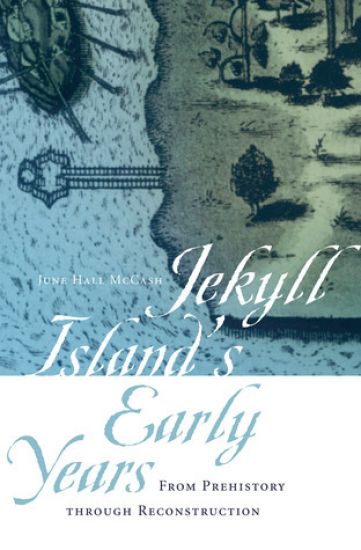
From the foremost authority on the famed Georgia barrier island, here is the first in-depth look at Jekyll Island’s early history. Much of what defines our view of the place dates from the Jekyll Island Club era. Founded in 1886, the Club was the private resort of America’s moneyed elite, including the Vanderbilts, Rockefellers, and Pulitzers. In her new book that ranges from pre-Columbian times through the Civil War and its aftermath, June Hall McCash shows how the environment, human conflict, and a desire for refuge shaped the island long before the Club’s founding.Jekyll’s earliest identifiable inhabitants were the Timucua, a flourishing group of Native Americans who became extinct within two hundred years after their first contact with Europeans. Caught up in the New World contests among France, Spain, and England, the island eventually became part of a thriving English colony. In subsequent stories of Jekyll and its residents, the drama of our nation plays out in microcosm. The American Revolution, the War of 1812, the slavery era, and the Civil War brought change to the island, as did hurricanes and cotton farming. Personality conflicts and unsanctioned love affairs also had an impact, and McCash’s narrative is filled with the names of Jekyll’s powerful and often colorful families, including Horton, Martin, Leake, and du Bignon.Bringing insight and detail to a largely untold chapter of Jekyll’s past, June Hall McCash breathes life into a small part of Georgia that looms large in the state’s history.

This book traces the life of Isidor and Ida Straus, both German Jewish immigrants who arrived as children in America in the early 1850s. Isidor's father, Lazarus, was an itinerate peddler in Georgia, but within one generation the family became the wealthy owners of Macy's Department Store in New York. A Titanic Love Story follows the Strauses' life from Talbotton, Georgia, where an anti-Semitic incident caused them to move to nearby Columbus. The devastation of Columbus at the end of the Civil War brought the family to New York, where Isidor met and eventually married the young Ida Blun. Ida and Isidor balanced the demands of business, family, and service to others and carved out their individual roles in those domains. A Titanic Love Story emphasizes their work together as a couple, focusing not only on Isidor's important roles as businessman, member of congress, and philanthropist, but also on Ida's contributions as an intelligent partner, the soul of the household, and matriarch of the family, as well as a stalwart supporter of her husband and one who engaged in philanthropic and creative activities of her own. The Strauses were wealthy Jews within their New York community, and as people committed to the welfare of their family, their city, their country, and those less fortunate than themselves, they dealt with their own grief, illness, and occasional brushes with anti-Semitism. Ironically, their final happy days in the south of France lead to their unexpected sailing on the Titanic. Both died as they had lived, with dignity, honor, loyalty to one another, and compassion for others. The public outpouring of grief at their deaths, even by today's standards of over-the-top journalism, was remarkable.

The Truth Keepers is a historical novel that tells the tale of a torn family and the struggles of a young nation. Set primarily on Jekyll Island, Georgia, in the nineteenth-century, it is based on the true story of Henri du Bignon, his wife, and his long-time mistress. Henri, the younger and favored du Bignon son, is portrayed through the eyes of his French wife, Amelia Nicolau, and his English mistress, Sarah Aust, both of whom have reasons for regret. Once well-respected in local social and business circles, Henri shocks the entire coastal community following his wife's death, with unexpected actions that ultimately drive him from the island to begin a new life elsewhere. The story begins with a fictionalized account, based on recently discovered documents of the Nicolau family in Bordeaux, France, who live through the revolution in their native land before coming to America and settling on the Georgia coast. As it explores the issues and limitations faced especially by women in nineteenth-century America, the story takes us from the French Revolution through the Civil War and its aftermath, when nearby Brunswick residents encounter many hardships, among them having to evacuate their town to the invading Union army. The novel ends in 1877, followed by a poignant epilogue set in the 1950s.



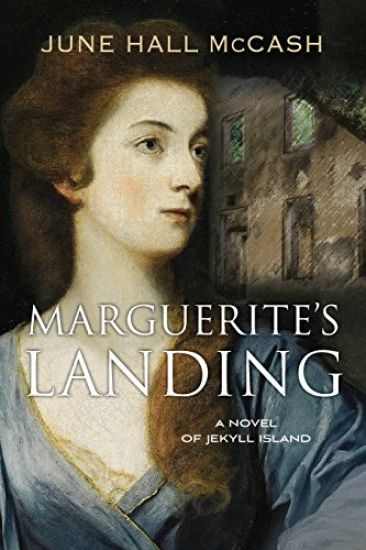


In a time when many agreed with Aristotle that women were incomplete males, Marie's birth was a bitter disappointment to her royal parents, French King Louis VII and his queen, Eleanor of Aquitaine, who desperately wanted a son. Yet, despite her parents' divorce and her separation from her mother when she was only seven, she clearly inherited Queen Eleanor's grit and determination, as well as her love of song and poetry. Today, the name of Marie, who became countess of Champagne, is associated with the medieval courts of love, and she is recognized as one of the greatest literary patrons of her day. As the crusades tore her life apart, she ruled over one of the largest domains in France for almost two decades. During that time, and well aware of the disadvantage of being a woman, she was compelled to defend her rights and those of her children--even to the point of going to war against her half-brother, Philip Augustus. Striving to meet the political demands of her fractured world, she became keenly aware of the competing needs of love, family, honor, and desire. Her story still resonates today.
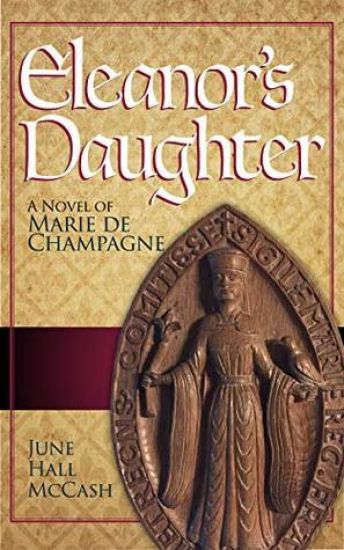
Marie's birth was a bitter disappointment to her royal parents, French King Louis VII and his queen, Eleanor of Aquitaine, who desperately wanted a son. Yet, despite her parents' divorce and her separation from her mother when she was only seven, she clearly inherited Queen Eleanor's grit and determination, as well as her love of song and poetry. Today, the name of Marie, who became countess of Champagne, is associated with the medieval courts of love, and she is recognized as one of the greatest literary patrons of her day. As the crusades tore her life apart, she ruled over one of the largest domains in France for almost two decades. During that time, and well aware of the disadvantage of being a woman, she was compelled to defend her rights and those of her children--even to the point of going to war against her half-brother, Philip Augustus. Striving to meet the political demands of her fractured world, she became keenly aware of the competing needs of love, family, honor, and desire. Her story still resonates today.

Christophe Poulain du Bignon arrived with his family on Jekyll Island, Georgia, in 1792, seeking to escape the violence of the French Revolution. The three books of the Jekyll Island trilogy follow four generations of the family who live through the rise and fall of their sea island cotton plantation, as they wrestle with the issues of slavery, betrayal, guilt, and war. Despite the turbulence of their lives, they emerge as individuals who seek to love, forgive, and find fulfillment in an uncertain world.



Level Up Maths: Pupil Book (Level 3-5)
Keith Pledger; Amanda Bearne; June Hall; Sharon Bolger; Mark Haslam; Ian Boote; Fiona Mapp; Greg Byrd; Phil Marshall; Meryl Carter; Avnee Morjaria; Gareth Cole; Crawford Craig; Robert Ward-Penny; Jackie Fairchild; Angela Wheeler; Anna Grayson
pearson education limited
2008
nidottu
This book puts Maths into contexts that make sense to pupils, showing them how it relates to other subjects and how useful it is in everyday life. Each concept is presented in a clear, relevant and engaging way, ensuring that pupils are inspired to succeed. Key points and practice questions are all arranged by level to provide explicit differentiation. Stimulating, fun and exciting activities provide a memorable learning experience with high impact images to help put maths in an exciting context. Extended activities give pupils plenty of opportunities for problem solving and peer discussion. SAT-style questions at the end of every Unit ensure that all readers are fully prepared.

Level Up Maths: Pupil Book (Level 4-6)
Keith Pledger; Amanda Bearne; Sharon Bolger; Ian Boote; Gwenllian Burns; Greg Byrd; Meryl Carter; Gareth Cole; Crawford Craig; Jackie Fairchild; Freda Gardiner; Anna Grayson; June Hall; Mark Haslam; Phil Marshall; Avnee Morjaria; Harry Smith; Robert Ward-Penny; Angela Wheeler
pearson education limited
2008
nidottu
Levelled and sub-levelled questions provide clear differentiation and progression. Bright and innovative design that enhances the pupil experience Extended activities give pupils plenty of opportunities for problem solving and peer discussion ‘Why learn this?’ sections relate maths to the real world. Stimulating, fun and exciting activities provide a memorable learning experience.