The Community-Oriented Needs Assessment (CONA) model presented by the authors demonstrates that effective two-way communication between providers of human services and the community is necessary for effective and efficient social services. The (CONA) model uses data from demographic/statistical profiles, key informants, and random community members to define needed services, to develop programs, to enhance interagency cooperation, and to improve accountability. The authors both outline the logic behind the use of this model and sketch a step-by-step approach for developing the model for use in a variety of settings.
Are Baby Boomers out of touch? Are Millennials too self-absorbed? Are Generation X'ers overstressed by trying to bridge the gap? What can we expect from Generation Z?Generational differences are way too common in our world today. Baby Boomers get frustrated because Millennials won't pick up the phone. Generation X'ers would rather do the work themselves instead of relying on others. Millennials distrust older leaders because they feel that they only want to get rich. These scenes of dysfunction exist in nearly every business and organization in America. Sadly, we still tend to focus on the diversity instead of the inclusion. What if there was a way all generations could learn to understand each other? What if there were easy to apply solutions that could turn your communication discord into harmony? What if you could see into the future and begin to build a workplace culture that is ready for the next generation?Conquering the Generational Challenge is the work of two people who share a common interest in how people interact in the workplace. While they agree on the goal, David and Keith provide very different commentary on the challenge. David, as a business leader, draws from an immense background of real experiences to create fun and engaging stories that bring the challenges to life. Keith, as a psychologist, provides perspective on why individuals do the things they do, and what goes into making changes for the better. Together they balance the generational challenge and the collaborative solution. As you read through the stories, understand their message, and recognize generational commonalities, you will gain perspective and learn how to create a workplace where everyone can do their best.
From George Washington to George W. Bush, this book summarizes the U.S. presidents with easy-to-read, rhyming poetry. It makes a great gift for children of all ages who love to read. Written by a former social studies teacher, this book promises to become a favorite in your collection.
From George Washington to George W. Bush, this book summarizes the U.S. presidents with easy-to-read, rhyming poetry. It makes a great gift for children of all ages who love to read. Written by a former social studies teacher, this book promises to become a favorite in your collection.
Set during the 1800s and centered on the American Civil War, this work of historical fiction focuses on the life of Matthew Thompson-an officer in the Union Army who finds himself at a crossroads. Targeted toward children in grades 5-8, this book will make a wonderful addition to the homes and libraries of elementary school and middle school students.
Set during the 1800s and centered on the American Civil War, this work of historical fiction focuses on the life of Matthew Thompson-an officer in the Union Army who finds himself at a crossroads. Targeted toward children in grades 5-8, this book will make a wonderful addition to the homes and libraries of elementary school and middle school students.
It has been rumored this was fabricated, like top 40 music or home runs in the 1990s. Keith A. Carey is funny, flawed, and thinks he might want to help you, but only after 1 PM in good weather. He was good at one thing for a decade - getting drunk to the bejeezus belt. Beyond redemption or salvation, impervious to correction; there was to be no sobriety date, yet another rehab stay, and mundane crawl back into society's good graces. There was only to be the end of life as he knew it. This was to come via a pawn shop 9 mm handgun at The Grotto.Fate intervenes as Carey relates in both grim and hilarious fashion; a man who had hit his bottom and needed to kill a pain that alcohol could not. No ordinary book and certainly not a boring individual, Carey bounces and weaves as if writing a Tarintino script. It's all true, except when it's obviously one of his absurd creations designed to amuse.Sure to be a classic, alongside other books which are collecting dust in America's basements. Some would compare it to "A Fan's Notes" or a very poor man's "The Art of Motorcycle Maintenance". The theme is recovery from alcohol abuse, which made Carey's defects and problems multiply just short of death.The interweaving true stories feature his family vacations, peculiar friends, golfing accidents, a world famous strip club, time in a psych ward, problems with cats (and women), and a few borrowed catch phrases from TV and the movies. His only regret is not getting electro-shocked while decompressing at the funny farm ... if only he could have been born 30 years earlier. A force higher than reason spared his life and he claims this is why he feels he has a story worth converting into a book. Sobriety doesn't equal sanity in the most entertaining non-fiction book since "Eat This" by Dom DeLuise. He survived a hell of his own making and is now ready to fulfill his true destiny. There is no law to state who can be a parent. Maybe there needs to be one on who is allowed to write a book. That's a joke, son.
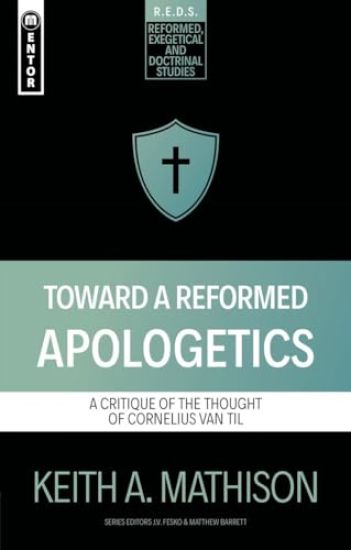
A Truly Reformed Apologetics? Cornelius Van Til claimed that all traditional apologetic methodologies are flawed and that those Reformed Christians who use such methods are compromising their theology. His goal was to develop an apologetic method that is truly consistent with Reformed theology. Did he achieve that goal? For almost a century, Reformed theologians, especially in North America, have debated this topic. The debate has often been acrimonious, with serious charges and counter–charges coming from both sides. This book seeks to take the debate in a more constructive direction by clearing away as much misunderstanding as possible in order that we might add to discussions of apologetic methods the actual practice of apologetics. In Part One, Cornelius Van Til’s own system of thought is set forth in a clear way in order that readers may know exactly what it entailed. His doctrine of God, creation, the fall, common grace, redemption, and the antithesis are explained in order that readers might understand the apologetic implications of these doctrines. Part Two is devoted to explaining why many Reformed Christians have not embraced Van Til’s apologetics in spite of its popularity and influence. These chapters outline biblical, philosophical, theological, historical, and practical concerns with Van Til’s system of thought. This book argues that Van Til’s apologetic system of thought is consistent with neither Scripture nor Reformed theology.