

Kirjahaku
Etsi kirjoja tekijän nimen, kirjan nimen tai ISBN:n perusteella.
1000 tulosta hakusanalla Kenneth Burchett



The life of Beatrice Cardwell was much like that of many Americans in the early 20th century. She grew up in rural southwest Missouri, went to a one-room school through the eighth grade, married, and raised a family. Curiosity about her family tree never went much beyond two generations. However, like many Americans, she had a rich heritage. There were a few men and women of great prominence and renown in her past, which every genealogist hopes to discover. Her tenth great grandfather was the colonist Roger Williams, the Puritan founder of the state of Rhode Island; she shared a distant relationship with Judy Garland; and had the same ancestors as Presidents George H. W. Bush and George W. Bush. Notwithstanding these examples, her people were mostly farmers of modest means who made up the core of the American story. This book begins in 1635 with William Fellows of Ipswich, Massachusetts, and Thomas Cardwell of Colonial Virginia. It is about the ancestry of these two families and the daughter of their union in 1904. Biographical sketches and genealogical summaries contain 145 surnames and more than 375 individuals; plus 85 illustrations, endnotes, bibliography, and index.

The author has collected in one place one of the most extensive bibliographies on color in existence, which will facilitate additional inquiry into the field of color and color harmony. The book describes the process of constructing the bibliographies and offers an impressive analysis of twelve books that occupy a unique place in the history of color. The twelve books cover a one-hundred-and-fifty-year time span to include the works of Goethe, Chevreul, Helmholtz, Munsell, Katz, Kandinsky, Pope, Wright, Judd, Arnheim, Itten, and Albers. Bibliographies include a retrospective bibliography of 318 specially selected books on color and color harmony with copyright dates prior to 1975; a general bibliography on color and color harmony in art containing a broader representation of 1,450 titles from antiquity forward; and a compilation of bibliographies of color. A subject cross reference of titles gives 37 color categories ranging from aesthetics to vocabulary cross-referenced by topic and date of publication.

The Omega Factor is a science fiction novella that blends mythology, spirituality, and the fate of humanity into a story about three unlikely superheroes who save the Third Kingdom of earth from destruction. Intergalactic travel and the ethos of goodness join to combat evil, as alien forces strive to reverse climate change and secure the Third Kingdom for future generations. The Greek goddess Artemis unites with her siblings Athena and Apollo to create a half-god, half-mortal trio in an adventure that leads to an alliance with the commander of an alien intergalactic federation. Danger, science, family bonds, romance, and greed are a few of the themes woven into this clandestine tale of ecological intrigue.

The Battle of Carthage, Missouri, was the first full-scale land battle of the Civil War. Governor Claiborne Jackson's rebel Missouri State Guard made its way toward southwest Missouri near where Confederate volunteers collected in Arkansas, while Colonel Franz Sigel's Union force occupied Springfield with orders to intercept and block the rebels from reaching the Confederates. The two armies collided near Carthage on July 5, 1861. The battle lasted for ten hours, spread over several miles, and included six separate engagements before the Union army withdrew under the cover of darkness. The New York Times called it "the first serious conflict between the United States troops and the rebels." This book describes the events leading up to the battle, the battle itself, and the aftermath.
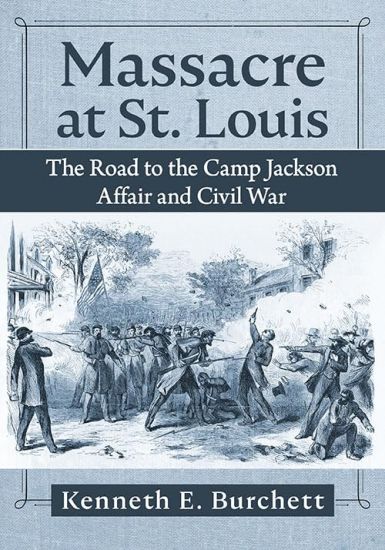
In 1861, Union Brigadier General Nathaniel Lyon marched to St. Louis in the divided slave state Missouri to arrest a state militia unit at Camp Jackson that planned to raid a federal arsenal in St. Louis. After capturing the men, the Union troops encountered crowds of hostile citizens and, after a gun shot, they fired on the mob, killing at least 28 civilians in what is now known as the Camp Jackson affair or the St. Louis massacre. In this book, the author describes partisan activities leading to hostilities, promotes awareness about the history of slavery in America, and explains political divisions still evident in American culture. Included are previously unpublished materials about Governor Claiborne Jackson, the role of Montgomery Blair in the fight for Missouri, and analysis of the number of arms in the St. Louis Arsenal and unknown casualties of the St. Louis massacre.

This book follows an immigrant family through three generations. It describes what it was like as an immigrant to live and work in the United States in the mid- to late-19th Century. True personal stories and anecdotes of immigrants are woven into the tapestry of historical events that shaped post-industrialized America from the building of the Brooklyn Bridge and the politics of New York to the struggling evolution of agriculture in the Midwest. Beginning in the countryside of the Kingdom of Hanover, Germany, in 1846, the Kastendieck family-four brothers and two sisters, along with their mother-immigrated to Brooklyn, New York, when South Brooklyn was a scarcely populated wetland. They built businesses, raised families, and experienced the ups and downs of a young nation, overcoming hardships and personal tragedy. After many years in Brooklyn and the deaths of three of his wives and five infant children, John Herman Kastendieck and his brother Dietrich left Brooklyn for the frontier of southwest Missouri.

This book follows an immigrant family through three generations. It describes what it was like as an immigrant to live and work in the United States in the mid- to late-19th Century. True personal stories and anecdotes of immigrants are woven into the tapestry of historical events that shaped post-industrialized America from the building of the Brooklyn Bridge and the politics of New York to the struggling evolution of agriculture in the Midwest. Beginning in the countryside of the Kingdom of Hanover, Germany, in 1846, the Kastendieck family--four brothers and two sisters, along with their mother--immigrated to Brooklyn, New York, when South Brooklyn was a scarcely populated wetland. They built businesses, raised families, and experienced the ups and downs of a young nation, overcoming hardships and personal tragedy. After many years in Brooklyn and the deaths of three of his wives and five infant children, John Herman Kastendieck and his brother Dietrich left Brooklyn for the frontier of southwest Missouri.

Freedome Corne: Virginia before the American Revolution
Kenneth E. Burchett
Amity America
2022
nidottu
Freedome Corne: Virginia before the American Revolution. is the true story of an ordinary Virginia family living in pre-Revolution America. The book describes day-to-day life in the context of historical events that challenged the men and women who lived in Middlesex County, Virginia, from 1660 to about 1760. The story begins with the unlikely appearance in 1663 of John Bristow, an indentured servant.Colonial Virginia prospered under the indentured labor system. Conscripted servants became free upon fulfilling a period of indenture, ordinarily about seven years. Upon gaining freedom, an indentured person received some clothing, a few tools, and a supply of seed corn with which to begin a new life. These colonial freemen formed the core citizenry of the agrarian nation that ultimately became the United States of America. For those interested in early Virginia, especially those who had ancestors there, this book offers a detailed picture of life in those times, including what life was like for residents in their homes, social strata, economics, and environment. The characters are common people experiencing life under the shadow of great historical events, people of ordinary means often struggling to survive. They encounter the same dilemmas, disappointments, and triumphs that most readers will easily identify in the history of their own ancestors.- Part I covers colonial life in the Chesapeake from the first settlement at Jamestown until the creation of Middlesex County, Virginia, and Bacon's Rebellion.- Part II is about the experiences of the Bristow family at home on Dragon Run.- Part III recounts challenges of the Bristow children as freeholders in pre-Revolutionary America.Chapters offer an intimate understanding of this important time in American life and the circles of friendship and mutual support among common citizens that meant their survival.Maps and engravings of colonial life, notes, bibliography, index.

Title: In Their Own Words : A Bibliographic History of Color
Kenneth E. Burchett
Amity America
2022
nidottu
This book brings together an extensive amount of material in an insightful and beautifully illustrated history of color and color harmony expressed in the original words and diagrams of leading color theorists. Chapters trace the origins of color harmony from ancient Greece to modern times. The author follows the development of color harmony in the Renaissance and Baroque periods, addresses the systematic study of color in the 16th and 17th centuries, and describes the rapid development of scientific interest in color in the 18th and 19th centuries. Chapters survey the proliferation, coexistence, and consolidation of meanings of color harmony in the 20th century using excerpts of original writings on each subject. The book concludes with a consideration of postmodernism, and includes a chapter on the language of color. Color theory, 125 illustrations, reading lists, bibliography.

From the beginning of humanity, people have looked up at the stars in the evening sky to wonder at the magnificence of what they saw and to imagine within the brilliance of the stars a separate existence in that place. It is human nature to want to understand being, and when not understood, to accept as a condition of faith that which is envisioned amid the mysteries of the unknown.Like distant horizons that once enchanted seafaring adventurers of long ago, the opening of the universe captivates the human spirit and releases humanity from the provincialism of small realities. This book is a story of the parting of the veil of the universe, tales of the many frontiers of space that once silently beckoned previous generations. This book describes the mysteries of the known universe and reveals its presence in a way that not only explains but also inspires. It is a story of astronomy told in a blend of history, art, science, philosophy, mythology, and personal insight, which takes the reader from our own planet to the edge of the unknown. It is about people, discoveries, ideas, and the connecting events that make the universe what humankind thinks it is. Astronomy, 170 illustrations, index.

The extraordinary life and career of Kenneth Battelle, pioneering hairstylist to the stars in the 1950's and beyond. Kenneth Battelle, known simply as “Kenneth,” was a pioneering hairstylist who obliterated the once-omnipresent hat and transformed the fashion industry through his A-list clients at his iconic 54th Street Salon. His 50-year career started in the early 1950s in New York City. The loyal client list he built, which included Jacqueline Kennedy, Marilyn Monroe, Judy Garland, Countess Consuelo Crespi, Diana Vreeland, Lucille Ball, and Gloria Vanderbilt, swore by his skills. Kenneth: Shear Elegance is a biography that not only celebrates Kenneth's extraordinary talent but examines his behind-the-scenes life and career struggles, including the disastrous fire that destroyed his salon, and his perseverance moving forward. Through personal memories of those closest to him, including friends, clients, and former employees, the man who created a cult of classic, timeless women comes to life. Previously unpublished photographs, notes, clippings, and original Joe Eula illustrations richly exhibit both his myriad achievements and America's 20th-century high-fashion scene.

