

Kirjahaku
Etsi kirjoja tekijän nimen, kirjan nimen tai ISBN:n perusteella.
1000 tulosta hakusanalla Kenneth L. Smith

Illinois River
Kenneth L Smith; Ken L Osf - Smith; Ken L Smith
Ozark Society Foundation, Affil of Ozark Society
1977
nidottu
Lively narrative, striking photos, detailed maps and river logs cover the Illinois and its major tributaries form Arkansas into Oklahoma.

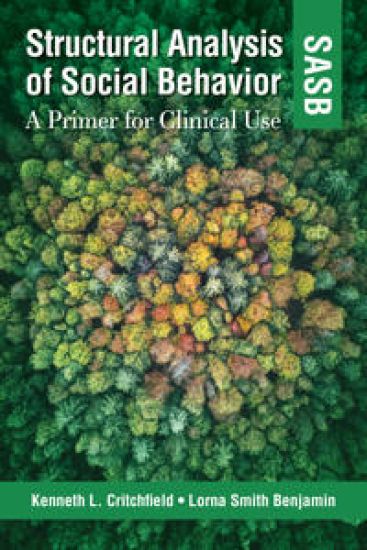
Structural Analysis of Social Behavior (SASB)
Kenneth L. Critchfield; Lorna Smith Benjamin
AMERICAN PSYCHOLOGICAL ASSOCIATION
2024
pokkari
Structural Analysis of Social Behavior (SASB) helps clinicians and researchers make objective assessments of relationship patterns, and enables clients to improve their social interactions. SASB can help identify connections between clients' current symptoms, and their current and historical relationship patterns. The SASB coding system serves as the basis for case formulation, which in turn informs the choice of interventions used in a variety of therapeutic approaches. SASB can also be used to evaluate the effectiveness of interventions, thus keeping therapy on track. This book summarizes over 5 years of research and clinical practice with SASB, and demonstrates how it can be used with any therapeutic approach. It has been traditionally used with patients who are comorbid, often rehospitalized, dysfunctional, and suicidal, although it can be used with any clinical population. SASB offers providers a therapy compass that helps clarify where the client is now, and pointing in the direction they need to go in order to reach their therapy goals.

Hydrothermal Processes at Seafloor Spreading Centers
Peter A. Rona; Kurt Boström; Lucien Laubier; Kenneth L. Smith
Kluwer Academic/Plenum Publishers
1984
sidottu
During the past ten years, evidence has developed to indicate that seawater convects through oceanic crust driven by heat derived from creation of lithosphere at the Earth-encircling oceanic ridge-rift system of seafloor spreading centers. This has stimulated multiple lines of research with profound implications for the earth and life sciences. The lines of research comprise the role of hydrothermal convection at seafloor spreading centers in the Earth's thermal regime by cooling of newly formed litho sphere (oceanic crust and upper mantle); in global geochemical cycles and mass balances of certain elements by chemical exchange between circulating seawater and basaltic rocks of oceanic crust; in the concentration of metallic mineral deposits by ore-forming processes; and in adaptation of biological communities based on a previously unrecognized form of chemosynthesis. The first work shop devoted to interdisciplinary consideration of this field was organized by a committee consisting of the co-editors of this volume under the auspices of a NATO Advanced Research Institute (ARI) held 5-8 April 1982 at the Department of Earth Sciences of Cambridge University in England. This volume is a product of that workshop. The papers were written by members of a pioneering research community of marine geologists, geophysicists, geochemists and biologists whose work is at the stage of initial description and interpretation of hydrothermal and associated phenomena at seafloor spreading centers.
Hydrothermal Processes at Seafloor Spreading Centers
Peter A. Rona; Kurt Boström; Lucien Laubier; Kenneth L. Smith
Springer-Verlag New York Inc.
2013
nidottu
During the past ten years, evidence has developed to indicate that seawater convects through oceanic crust driven by heat derived from creation of lithosphere at the Earth-encircling oceanic ridge-rift system of seafloor spreading centers. This has stimulated multiple lines of research with profound implications for the earth and life sciences. The lines of research comprise the role of hydrothermal convection at seafloor spreading centers in the Earth's thermal regime by cooling of newly formed litho sphere (oceanic crust and upper mantle); in global geochemical cycles and mass balances of certain elements by chemical exchange between circulating seawater and basaltic rocks of oceanic crust; in the concentration of metallic mineral deposits by ore-forming processes; and in adaptation of biological communities based on a previously unrecognized form of chemosynthesis. The first work shop devoted to interdisciplinary consideration of this field was organized by a committee consisting of the co-editors of this volume under the auspices of a NATO Advanced Research Institute (ARI) held 5-8 April 1982 at the Department of Earth Sciences of Cambridge University in England. This volume is a product of that workshop. The papers were written by members of a pioneering research community of marine geologists, geophysicists, geochemists and biologists whose work is at the stage of initial description and interpretation of hydrothermal and associated phenomena at seafloor spreading centers.

Swine in Biomedical Research
Michael Swindle; Alison C. Smith; Christian Alfaro; Kristi Helke; Andrew Makin; Anthony D. Dayan; Niels-Christian Ganderup; Kenneth L. Hastings
TAYLOR FRANCIS LTD
2026
muu
Together, these three seminal reference works provide all the information needed to work with pigs in laboratory settings. For three decades, Swine in the Laboratory has been the most respected practical technical guide for medical and veterinary researchers using swine as experimental animals. Sponsored by the American College of Laboratory Animal Medicine (ACLAM), it continues to be the most authoritative source of scientific and technical information on the use of domestic and miniature swine in research. Anatomy and Histology of the Pig is the first guide specific to swine since 1982. The high-quality, detailed full-color illustrations are accompanied by written material specific to each porcine anatomic section, with English-labeled terms for the various anatomic structures. The book covers all the major areas of interest in swine, including cardiovascular, digestive, neurologic, and thoracic structures. Differences between domestic and miniature pigs are discussed and a full-color histology section concludes the book. Finally, the second edition of The Minipig in Biomedical Research is a comprehensive resource for research scientists on the use of the minipig in basic and applied biomedical research. Written by experts in the field, coverage extends from the minipig’s origins, anatomy, genetics, immunology, pathology and physiology to its welfare, health, and husbandry; practical dosing and examination procedures; surgical techniques; and all areas of toxicity testing and the uses of the minipig as a disease model. The book represents the state of the art, recognising the growing influence of Artificial Intelligence, and where appropriate, relevant databases are referenced.
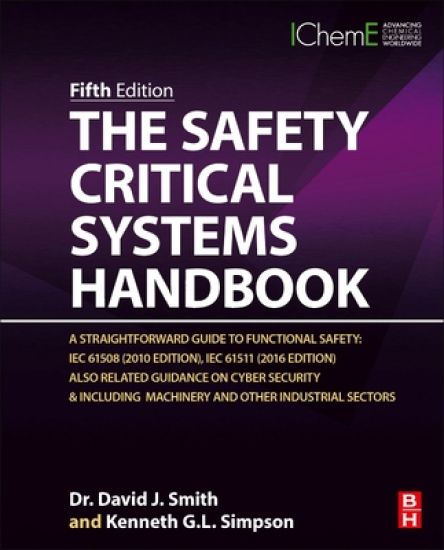
The Safety Critical Systems Handbook
David J. Smith; Kenneth G. L. Simpson
Butterworth-Heinemann Inc
2020
sidottu
The Safety Critical Systems Handbook: A Straightforward Guide to Functional Safety: IEC 61508 (2010 Edition), IEC 61511 (2015 Edition) and Related Guidance, Fifth Edition presents the latest guidance on safety-related systems that guard workers and the public against injury and death, also discussing environmental risks. This comprehensive resource has been fully revised, with additional material on risk assessment, cybersecurity, COMAH and HAZID, published guidance documents/standards, quantified risk assessment and new worked examples. The book provides a comprehensive guide to the revised IEC 61508 standard as well as the 2016 IEC 61511. This book will have a wide readership, not only in the chemical and process industries, but in oil and gas, power generation, avionics, automotive, manufacturing and other sectors. It is aimed at most engineers, including those in project, control and instrumentation, design and maintenance disciplines.
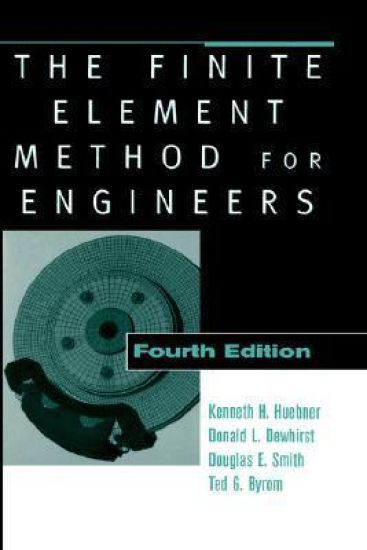
The Finite Element Method for Engineers
Kenneth H. Huebner; Donald L. Dewhirst; Douglas E. Smith; Ted G. Byrom
JOHN WILEY SONS INC
2001
sidottu
A useful balance of theory, applications, and real-world examples The Finite Element Method for Engineers, Fourth Edition presents a clear, easy-to-understand explanation of finite element fundamentals and enables readers to use the method in research and in solving practical, real-life problems. It develops the basic finite element method mathematical formulation, beginning with physical considerations, proceeding to the well-established variation approach, and placing a strong emphasis on the versatile method of weighted residuals, which has shown itself to be important in nonstructural applications. The authors demonstrate the tremendous power of the finite element method to solve problems that classical methods cannot handle, including elasticity problems, general field problems, heat transfer problems, and fluid mechanics problems. They supply practical information on boundary conditions and mesh generation, and they offer a fresh perspective on finite element analysis with an overview of the current state of finite element optimal design. Supplemented with numerous real-world problems and examples taken directly from the authors' experience in industry and research, The Finite Element Method for Engineers, Fourth Edition gives readers the real insight needed to apply the method to challenging problems and to reason out solutions that cannot be found in any textbook.
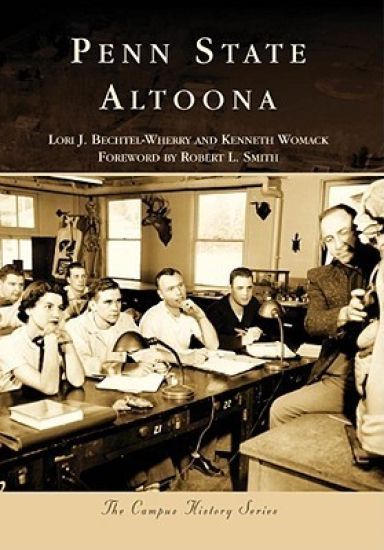
Penn State Altoona
Lori J. Bechtel-Wherry; Kenneth Womack; Foreword By Robert L. Smith
Arcadia Publishing (SC)
2009
nidottu
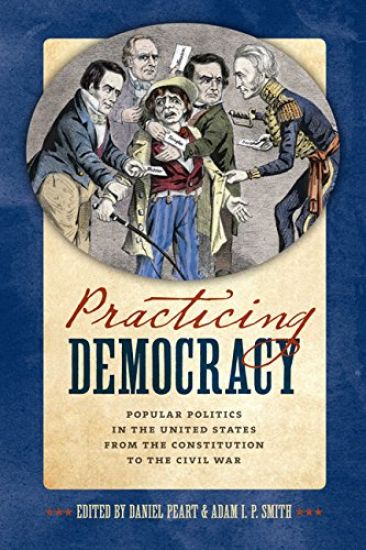
Practicing Democracy
Tyler Anbinder; Douglas Bradburn; Fred W. Smith; John L. Brooke; Andrew Heath; Reeve Huston; Johann N. Neem; Kenneth Owen
University of Virginia Press
2015
sidottu
In Practicing Democracy, eleven historians challenge conventional narratives of democratization in the early United States, offering new perspectives on the period between the ratification of the Constitution and the outbreak of the Civil War. The essays in this collection address critical themes such as the origins, evolution, and disintegration of party competition, the relationship between political parties and popular participation, and the place that parties occupied within the wider world of United States politics. In recent years, historians of the early republic have demolished old assumptions about low rates of political participation and shallow popular partisanship in the age of Jefferson?raising the question of how, if at all, Jacksonian politics departed from earlier norms. This book reaffirms the significance of a transition in political practices during the 1820s and 1830s but casts the transformation in a new light. Whereas the traditional narrative is one of a party-driven democratic awakening, the contributors to this volume challenge the correlation of party with democracy. They both critique constricting definitions of legitimate democratic practices in the decades following the ratification of the Constitution and emphasize the proliferation of competing public voices in the buildup to the Civil War. Taken together, these essays offer a new way of thinking about American politics across the traditional dividing line of 1828 and suggest a novel approach to the long-standing question of what it meant to be part of ""We the People.
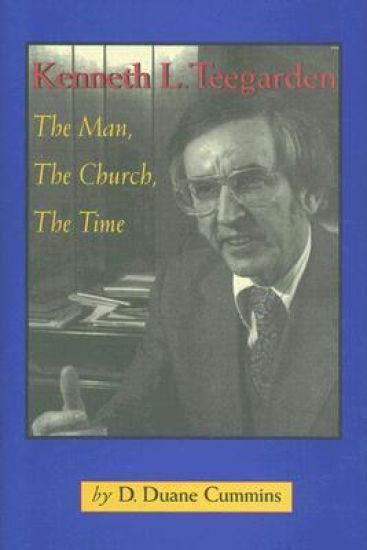
D. Duane Cummins describes this book as "an appreciative biography"; Cummins' approach combines the warmth of personal acquaintance with a lucid and well-researched account of Teegarden's life. Kenneth Teegarden was born in Cushing, Oklahoma, in 1921, "a fourth-generation Oklahoman and a sixth-generation Disciple," and the Christian Church (Disciples of Christ) never lost its importance in his life. Teegarden served as general minister and president of the Christian Church (Disciples of Christ) for many years. He was a central figure in planning and explaining the new ""design"" of the church through the Commission for Brotherhood Restructure and was ""a powerful and constant advocate of peace with justice,"" working toward the passage of peace resolutions and encouraging racial integration in the battle for civil rights. Kenneth Teegarden was minister in residence at the Brite Divinity School after he resigned as general minister and president of the Christian Church (Disciples of Christ), and he continued to teach and mentor students, parishioners, friends, and family until his death in 2002.

This biography examines the life of a most unusual twentieth-century evangelical, Kenneth L. ""Ken"" Pike (1912-2000), who served with the Wycliffe Bible Translators and the Summer Institute of Linguistics. Pike began his missionary career as a Bible translator, but he went on to become a world-class linguist who made his mark on the science of linguistics and the study of indigenous languages around the world. Known among linguists and anthropologists for his theoretical contributions, this volume seeks to bring Pike to a wider audience by illuminating his life as a key evangelical figure, one who often broke with conventional evangelical constraints to pursue the life of the mind as a Christian intellectual and scholar. Here is a story of how one evangelical Christian man served the global church, the scientific community, and the world's indigenous peoples with his entire heart, soul, and mind.

This biography examines the life of a most unusual twentieth-century evangelical, Kenneth L. ""Ken"" Pike (1912-2000), who served with the Wycliffe Bible Translators and the Summer Institute of Linguistics. Pike began his missionary career as a Bible translator, but he went on to become a world-class linguist who made his mark on the science of linguistics and the study of indigenous languages around the world. Known among linguists and anthropologists for his theoretical contributions, this volume seeks to bring Pike to a wider audience by illuminating his life as a key evangelical figure, one who often broke with conventional evangelical constraints to pursue the life of the mind as a Christian intellectual and scholar. Here is a story of how one evangelical Christian man served the global church, the scientific community, and the world's indigenous peoples with his entire heart, soul, and mind.
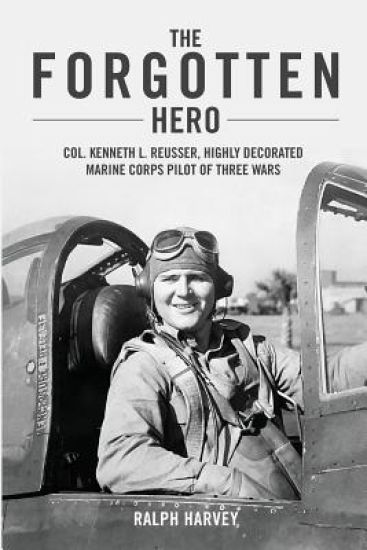
The Forgotten Hero: Col. Kenneth L. Reusser, Highly Decorated Marine Corps Pilot of Three Wars
Ralph Harvey
Createspace Independent Publishing Platform
2018
nidottu
Growing up in a small farming community near the Oregon coast, Ken Reusser saw a 1920s barnstormer and dreamed of becoming a military pilot. Coming of age during the Great Depression, he overcame many obstacles and learned to fly in the pre-war Civilian Pilot Training program (CPT). Enlisting in the Naval Reserve, Reusser completed naval flight training as an enlisted Aviation Cadet and accepted a commission in the Marine Corps upon graduation. After that, it was off to war. Ken Reusser's twenty-seven year military career included two combat tours as a fighter pilot in the Pacific during World War Two, a deployment as a carrier-based pilot aboard U.S.S. Sicily (CVE-118) during the Korean War, and a period commanding Marine Air group 16 during the helicopter air war in Vietnam. Known as an aggressive combat leader, he was officially credited with shooting down 1.5 enemy aircraft in WW II, and was awarded a Navy Cross for a daring, high altitude intercept mission over Okinawa. Flying an F4U off Sicily near Inchon, South Korea, he was awarded another Navy Cross for leading an audacious attack on a tank repair factory and then destroying a concealed tanker at anchors. But his bold exploits and long list of medals came at a steep price. Reusser was shot down five times: twice in WW II, twice in Korea, and once more in Vietnam, and suffered serious wounds in all three wars. The Forgotten Hero is more than the true story of a celebrated Marine Corps pilot. This long awaited biography reveals Ken Reusser's entire life story, including both triumphs and tragedies, and provides a testament to the power of one man's faith, determination and courage. Leader quotes: "This biography goes well beyond the retelling of brave deeds and fearless exploits. Every aspect of Col. Reusser's remarkable life is covered with meticulous detail that left this reader in absolute awe. It is not often that one man's life can cover the sweep of history, but here is a compelling narrative that does so with style, momentum and depth. It should not be missed." - Peter A. Young, a former Naval Flight Officer, flew the Grumman A-6A Intruder as a bombardier/navigator over South and North Vietnam and Laos. "Colonel Ken Reusser is an American hero whose service and sacrifice represent true valor. From flying the skies over Guadalcanal, to serving with the legendary Black Sheep squadron in Korea, to surviving the harrowing crash of his helicopter in Vietnam, Col. Ken Reusser is a Marine who should be recalled with the top aviators of all time." "Meticulously researched and vividly written, The Forgotten Hero is amazingly detailed and a must read chronicle of a highly decorated aviator whose story deserves to be remembered." - Kevin Bennett, general manager of the American Heroes Channel. "Colonel Kenneth Reusser was an amazing man and an amazing Marine. This book provides insight into his commitment to get the job done in combat-very specific details are provided. His commitment to serve our nation in time of war is a great example of why America wins wars-our military people who do more than is required of them. Reusser is an example of why America is great." - Lt. Col. Denny Gillem, U.S. Army (ret), is a West Point graduate, and a highly decorated airborne infantry officer and war planner. For many years Col. Gillem has hosted the nationally syndicated radio program Frontlines of Freedom. "The Forgotten Hero contains everything you should know about his life and the dangerous combat missions Ken Reusser flew in World War II, the Korean War and Vietnam." - Col. Warren MacQuarrie (ret), was a Marine Corps pilot who flew PBJ (B-25) Mitchell bombers during WW II and F4U Corsairs in Korea. Like Ken, Col. MacQuarrie also had a tour commanding Marine Air Group 16 in Vietnam, where the unit operated UH-1E, CH-46 and CH-53 helicopters.

The Reminiscences of Rear Adm. Kenneth L. Veth, USN (Ret.)
Naval Institute Press
1974
sidottu
Admiral Veth's naval career, almost from the outset, has been concentrated on mine warfare. After being graduated from the Naval Academy in 1935 and tours in the battleship USS Pennsylvania (BB-38) and light cruiser USS Phoenix (CL-46), he transferred to the minelayer USS Ramsay (DM-16), serving as mining officer. In 1941-1942, he served as assistant naval attaché in London. There he learned of the great British advances in mine warfare and reported them to U.S. authorities. Other events he relates were when he served on the staff of Admiral Lord Louis Mountbatten, RN, in Southeast Asia (1943-1945); when he concentrated on mine warfare in the Office of the Chief of Naval Operations (1945-1947); and again in 1967-1968 when he served as Commander, U.S. Naval Forces, Vietnam. The appendices contain a number of his reports on aircraft minelaying and mining operations.

TCP/IP Sockets in Java
Kenneth L. Calvert; Michael J. Donahoo
Morgan Kaufmann Publishers In
2008
nidottu
The networking capabilities of the Java platform have been extended considerably since the first edition of the book. This new edition covers version 1.5-1.7, the most current iterations, as well as making the following improvements: The API (application programming interface) reference sections in each chapter, which describe the relevant parts of each class, have been replaced with (i) a summary section that lists the classes and methods used in the code, and (ii) a "gotchas" section that mentions nonobvious or poorly-documented aspects of the objects. In addition, the book covers several new classes and capabilities introduced in the last few revisions of the Java platform. New abstractions to be covered include NetworkInterface, InterfaceAddress, Inet4/6Address, SocketAddress/InetSocketAddress, Executor, and others; extended access to low-level network information; support for IPv6; more complete access to socket options; and scalable I/O. The example code is also modified to take advantage of new language features such as annotations, enumerations, as well as generics and implicit iterators where appropriate. Most Internet applications use sockets to implement network communication protocols. This book's focused, tutorial-based approach helps the reader master the tasks and techniques essential to virtually all client-server projects using sockets in Java. Chapter 1 provides a general overview of networking concepts to allow readers to synchronize the concepts with terminology. Chapter 2 introduces the mechanics of simple clients and servers. Chapter 3 covers basic message construction and parsing. Chapter 4 then deals with techniques used to build more robust clients and servers. Chapter 5 (NEW) introduces the scalable interface facilities which were introduced in Java 1.5, including the buffer and channel abstractions. Chapter 6 discusses the relationship between the programming constructs and the underlying protocol implementations in more detail. Programming concepts are introduced through simple program examples accompanied by line-by-line code commentary that describes the purpose of every part of the program. No other resource presents so concisely or so effectively the material necessary to get up and running with Java sockets programming.

The Past in Perspective: An Introduction to Human Prehistory
Kenneth L. Feder
Oxford University Press
2019
nidottu
Ideal for introduction to archaeology and world prehistory courses, The Past in Perspective: An Introduction to Human Prehistory, Eighth Edition, is an engaging and up-to-date chronological overview of human prehistory. Kenneth L. Feder introduces students to "the big picture"--the grand sweep of human evolutionary history--presenting the human past within the context of fundamental themes of cultural evolution. Feder's unique, refreshing, and accessible narrative personalizes the past and makes it relevant to today's students. Using a consistent chapter format--"Prelude, Chronicle, Issues and Debates, Messages from the Past, and Case Study Close-up"--Feder helps students master both what we know and what is still debated about the complex story of the human past.
Chasing Pain: The Search for a Neurobiological Mechanism
Kenneth L. Casey
Oxford University Press Inc
2019
nidottu
Conceptual models of how pain is created influence medical practice, neuroscientific research, and philosophical ideas about pain and other neurological functions. Given the broad scope of pain experiences, realistic models of pain neurobiology must consider the correlation between pain and tissue damage and how it is strongly affected by neurological disease, emotionally compelling circumstances, and by complex cognitive processes. Recent discoveries have made it clear that both sensory and affective systems are strongly modulated by activity in other sensory pathways and by affective and cognitive processes originating in the brain. As a result, pain should then be conceived as emerging from the conjoint activity of both sensory and affective neural systems, each becoming a target for pain treatment. Historically, pain has been conceived as emerging either from an undefined pattern of neural activity or from anatomically and physiologically unique structures in the nervous system. Observations made during the early and mid- 20th century showed that pain and pain-like behaviors normally require not only sensory detectors of noxious events (called nociceptors) but also brain affective (hedonic) mechanisms that generate emotional experience and expression. In Chasing Pain, pain specialists and neuroscientists will find a thoughtful discussion of the neuroscientific and clinical evidence that has led to contemporary concepts of pain neurobiology and how pain might emerge from neuronal activity. Written in a concise and annotated format, Doctor Kenneth Casey reveals that while contemporary research has greatly enriched our model of pain neurobiology, several important and therapeutically challenging clinical conditions remain poorly understood.
![Linking to the Past: A Brief Introduction to Archaeology [With CDROM] [With CDROM]](/covers/9780195331172.jpg)
Linking to the Past: A Brief Introduction to Archaeology [With CDROM] [With CDROM]
Kenneth L. Feder
Oxford University Press
2007
nidottu
This thoroughly revised Second Edition of Linking to the Past features: * A completely reorganized structure that ensures all students take the same pathway to learning the material traditionally covered in an archaeology course* An expanded focus that covers the whole of the archaeological experience (including ceramics, theory, and human burials) and integrates examples from around the globe* Updated material on such cutting-edge technology and theory as transformation processes, GIS, Total Station, glacial dating, and aerial photography* Discussions of current issues facing archaeology, including federal legislation that protects archaeological sites* More in-depth coverage of the scientific method; the history and development of archaeology; various theoretical approaches; and the archaeology of social inequality, race, gender, and the sacred* An in-text CD with interactive student exercises and slide shows Written in a conversational style, Linking to the Past: A Brief Introduction to Archaeology, Second Edition, offers students a concise and entertaining introduction to archaeological methods. Author Kenneth L. Feder helps students relate to the study of the past and learn what it means to think like an archaeologist by using accessible examples drawn from daily life; he examines the evolution of the beer and soda can to teach about seriation, demonstrates how technology changes over time with an iPod, and introduces dendrochronology by discussing a tree that fell on his property during a storm. Employing an "ask-and-answer" approach, Feder leads students through a wide-ranging series of questions about how archaeologists find, recover, study, and interpret the material culture left behind by earlier peoples. To give students an opportunity to think like archaeologists, the author offers interactive student exercises and slide shows (provided on the in-text CD). Linked to chapters in the text, the exercises on the CD include exploring a topographic map to see what features might support human habitation, translating radiocarbon dates into calendar years, and calculating the age at death of a sample of human beings by examining their skeletal features. The text is also enriched by additional pedagogical features including detailed study questions at the end of each chapter, an extensive glossary of more than 200 key terms, and suggestions for further reading. An Instructor's Manual on CD is also available.