Kirjojen hintavertailu. Mukana 11 699 587 kirjaa ja 12 kauppaa.

Kirjahaku

Etsi kirjoja tekijän nimen, kirjan nimen tai ISBN:n perusteella.

1000 tulosta hakusanalla Kenneth Moss Bilal

Thomas

Thomas

Kenneth Moss Bilal

Xlibris Us
2021
pokkari
This is a story about Thomas a slave whose Mother was killed while defending herself in front of Thomas a little boy, Thomas was traumatized. He went into a zombie like coma where he would not respond to anyone except his Aunt. Thomas awakes from his coma, finding himself in a wagon moving down the road with his Aunt, they were sold to another plantation. Thomas was raised in the house of the master where Thomas meets Thomas Jefferson, Thomas is loaned out to Jefferson on occasions. Thomas meets George Washington. He is put into the continental Army where he becomes a Scout, then head Scout. After the Revolutionary War he flees to New York but not before he liberates some fellow soldiers who were also slaves. There he becomes the leader of what was called Coloured Town.

Paulette Marie the West Virginia Holler Booger!

Paulette Marie the West Virginia Holler Booger!

Bryan Kenneth Moss

Independently Published
2020
nidottu
A fictitious story and main character. A nosy body who is mean spirited, jealous, totally judgmental and self-righteous towards those who she doesn't even know. Living in beautiful West Virginia, in a impoverished situation because she is lazy and doesn't want to work but feeding off of the system instead. A big 8.5 x 11 inch adult coloring book. The author does all of his own artwork from cover to interior. NO stock photos used from the net For adults only please
Ethics and College Student Life

Ethics and College Student Life

Kenneth Strike; Pamela Moss

Pearson
2007
nidottu
This unique hands-on guide uses a highly effective case approach to explore specific, reality-based examples of the complex, controversial, and difficult ethical issues that students face on college campuses today–e.g., plagiarism, racism and hate speech, date rape, alcohol abuse. Then, through thought-provoking questions and critical discussions, prods readers to explore their own positions, notions, and opinions, and to justify their stances. It shows them how five important ethical principles can be used to think through these problems and to solve them in ethical dialogues. KEY TOPICS: Academic Integrity, Grading, and Cheating. Tolerance, Diversity, and Hate Speech. Privacy and Dialogue. Loyalty, Friendship, and Community. Sex, Relationships, and Power. Drinking and Living the Good Life. On Getting a Life. Religion, Relativism, and Dialogue. MARKET: For college students and anyone interested in ethics.
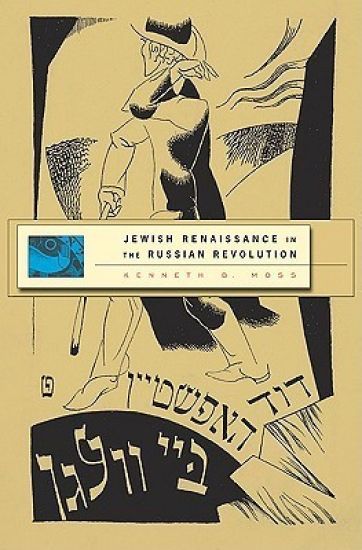
Jewish Renaissance in the Russian Revolution

Jewish Renaissance in the Russian Revolution

Kenneth B. Moss

Harvard University Press
2009
sidottu
Between 1917 and 1921, as revolution convulsed Russia, Jewish intellectuals and writers across the crumbling empire threw themselves into the pursuit of a “Jewish renaissance.” At the heart of their program lay a radically new vision of Jewish culture predicated not on religion but on art and secular individuality, national in scope yet cosmopolitan in content, framed by a fierce devotion to Hebrew or Yiddish yet obsessed with importing and participating in the shared culture of Europe and the world. These cultural warriors sought to recast themselves and other Jews not only as a modern nation but as a nation of moderns.Kenneth Moss offers the first comprehensive look at this fascinating moment in Jewish and Russian history. He examines what these numerous would-be cultural revolutionaries, such as El Lissitzky and Haim Nahman Bialik, meant by a new Jewish culture, and details their fierce disagreements but also their shared assumptions about what culture was and why it was so important. In close readings of Hebrew, Yiddish, and Russian texts, he traces how they sought to realize their ideals in practice as writers, artists, and thinkers in the burgeoning cultural centers of Moscow, Kiev, and Odessa. And he reveals what happened to them and their ideals as the Bolsheviks consolidated their hold over cultural life.Here is a brilliant, revisionist argument about the nature of cultural nationalism, the relationship between nationalism and socialism as ideological systems, and culture itself, the axis around which the encounter between Jews and European modernity has pivoted over the past century.
An Unchosen People

An Unchosen People

Kenneth B. Moss

Harvard University Press
2021
sidottu
A revisionist account of interwar Europe’s largest Jewish community that upends histories of Jewish agency to rediscover reckonings with nationalism’s pathologies, diaspora’s fragility, Zionism’s promises, and the necessity of choice.What did the future hold for interwar Europe’s largest Jewish community, the font of global Jewish hopes? When intrepid analysts asked these questions on the cusp of the 1930s, they discovered a Polish Jewry reckoning with “no tomorrow.” Assailed by antisemitism and witnessing liberalism’s collapse, some Polish Jews looked past progressive hopes or religious certainties to investigate what the nation-state was becoming, what powers minority communities really possessed, and where a future might be found—and for whom.The story of modern Jewry is often told as one of creativity and contestation. Kenneth B. Moss traces instead a late Jewish reckoning with diasporic vulnerability, nationalism’s terrible potencies, Zionism’s promises, and the necessity of choice. Moss examines the works of Polish Jewry’s most searching thinkers as they confronted political irrationality, state crisis, and the limits of resistance. He reconstructs the desperate creativity of activists seeking to counter despair where they could not redress its causes. And he recovers a lost grassroots history of critical thought and political searching among ordinary Jews, young and powerless, as they struggled to find a viable future for themselves—in Palestine if not in Poland, individually if not communally.Focusing not on ideals but on a search for realism, Moss recasts the history of modern Jewish political thought. Where much scholarship seeks Jewish agency over a collective future, An Unchosen People recovers a darker tradition characterized by painful tradeoffs amid a harrowing political reality, making Polish Jewry a paradigmatic example of the minority experience endemic to the nation-state.
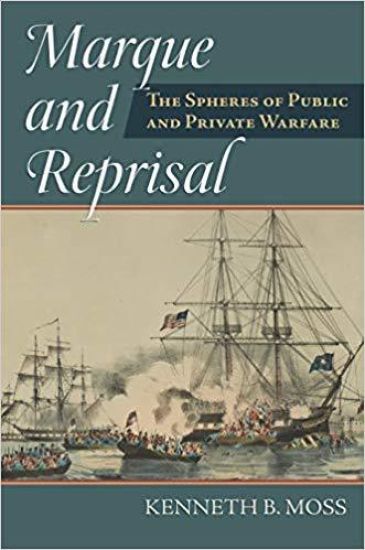
Marque and Reprisal

Marque and Reprisal

Kenneth B. Moss

University Press of Kansas
2019
sidottu
“Letters of marque” might suggest privateers of the Elizabethan era or the American Revolution. But such conventions are duly covered in the US Constitution, and the private military instruments they sanction are very much at work today in the form of mercenaries and military contractors. A history of such practices up to the present day, Marque and Reprisal by Kenneth B. Moss offers unique insight into the role of private actors in military conflicts and the reason they are increasingly deployed in our day.Along with an overview of mercenaries and privateers, Marque and Reprisal provides a comprehensive history of the “marque and reprisal” clause in the US Constitution, reminding us that it is not as arcane as it seems and arguing that it is not a license for all forms of undeclared war. Within this historical context Moss explains why governments and states have sought control over warfare and actors—and why private actors have reappeared in force in recent conflicts. He also looks ahead to the likelihood that cyberwar will become an important venue for “private warfare.” Moss wonders if international law will be up to the challenges of private military actors in the digital realm. Is international law, in fact, equipped to meet the challenges increasingly presented in our day by such extramilitary activity?A government makes no more serious decision than whether to resort to military force and war; and when doing so, Moss suggests, it should ensure that such actions are accountable, not on the sly, and not decided in the marketplace. Marque and Reprisal should inform future deliberations and decisions on that count.
Undeclared War and the Future of U.S. Foreign Policy

Undeclared War and the Future of U.S. Foreign Policy

Kenneth B. Moss

Johns Hopkins University Press
2008
sidottu
Undeclared wars have a history in the United States almost as old as the country itself and bear an importance that has grown along with the nation's power, international status, and technological proficiency. Kenneth B. Moss's highly original argument in Undeclared War and the Future of U.S. Foreign Policy demonstrates that though the framers of the Constitution had a broad notion of the varieties of war and the authority under which they would be undertaken without a formal declaration, Congress and the President are leading the United States into conflicts without fundamental oversight and accountability. The concentration of power in the president's hands is particularly troubling to Moss, and he traces the shift to congressional deference and even timidity. Presidential accountability to Congress and the public for limited wars has been harmfully weak, most recently in the wars against Vietnam and Iraq, says the author, and he proposes a new strategy for improving congressional institutions for oversight.
Undeclared War and the Future of U.S. Foreign Policy

Undeclared War and the Future of U.S. Foreign Policy

Kenneth B. Moss

Johns Hopkins University Press
2008
nidottu
Undeclared wars have a history in the United States almost as old as the country itself and bear an importance that has grown along with the nation's power, international status, and technological proficiency. Kenneth B. Moss's highly original argument in Undeclared War and the Future of U.S. Foreign Policy demonstrates that though the framers of the Constitution had a broad notion of the varieties of war and the authority under which they would be undertaken without a formal declaration, Congress and the President are leading the United States into conflicts without fundamental oversight and accountability. The concentration of power in the president's hands is particularly troubling to Moss, and he traces the shift to congressional deference and even timidity. Presidential accountability to Congress and the public for limited wars has been harmfully weak, most recently in the wars against Vietnam and Iraq, says the author, and he proposes a new strategy for improving congressional institutions for oversight.
Kenneth

Kenneth

Giuseppe Longo; Melissa Rivers

Schiffer Publishing Ltd
2020
sidottu
The extraordinary life and career of Kenneth Battelle, pioneering hairstylist to the stars in the 1950's and beyond. Kenneth Battelle, known simply as “Kenneth,” was a pioneering hairstylist who obliterated the once-omnipresent hat and transformed the fashion industry through his A-list clients at his iconic 54th Street Salon. His 50-year career started in the early 1950s in New York City. The loyal client list he built, which included Jacqueline Kennedy, Marilyn Monroe, Judy Garland, Countess Consuelo Crespi, Diana Vreeland, Lucille Ball, and Gloria Vanderbilt, swore by his skills. Kenneth: Shear Elegance is a biography that not only celebrates Kenneth's extraordinary talent but examines his behind-the-scenes life and career struggles, including the disastrous fire that destroyed his salon, and his perseverance moving forward. Through personal memories of those closest to him, including friends, clients, and former employees, the man who created a cult of classic, timeless women comes to life. Previously unpublished photographs, notes, clippings, and original Joe Eula illustrations richly exhibit both his myriad achievements and America's 20th-century high-fashion scene.
Kenneth

Kenneth

Katrine Sele

Samlaget
2013
sidottu
Historia om Kenneth Sivertsen er ei historie om eit uvanleg talent, absurde innfall og ville påfunn, intense kjærleikshistorier, men også om alt som kan bryte ned eit menneske. Kenneth Sivertsen døydde julaftan 2006, berre 45 år gammal. Mange hugsar ein brutal nedtur og eit halvt hovud, men Sivertsen var mykje meir enn eit fall for open scene. Han var gitarist, komponist, songar og humorist. Han voks opp på Mosterøy i Bømlo, med Jesus og englar som ein sjølvsagd del av kvardagen. Alt som 22-åring skreiv han sin første symfoni. Kenneth Sivertsen var klassisk komponist, skreiv viser, spelte med dei fremste amerikanske jazzmusikarane, vart rikskjendis som kabaretartist saman med kjærasten Herborg Kråkevik og turnerte ein periode saman med 47 teddybjørnar.
Kenneth Williams Diaries

Kenneth Williams Diaries

Harpercollins Publishers
1994
pokkari
â??Iâ??ll put you in my diary!â?? comedian Kenneth Williams was known to threaten on occasion, although tantalisingly he kept the journal to himself during his lifetime. Here at last, in one spellbinding volume, are four million words of it.
Kenneth Clark

Kenneth Clark

James Stourton

Harpercollins Publishers
2017
pokkari
Sunday Times Art Book of the Year The astonishing life of Kenneth Clark - the greatest British art historian of his time. As writer and presenter of the TV series Civilisation he was responsible for the greatest syntheses of art, music, literature and thought ever made - 'a contribution to civilisation itself'.
Kenneth Waltz

Kenneth Waltz

Paul R. Viotti

Columbia University Press
2024
sidottu
Kenneth Waltz (1924–2013) is perhaps the most enduringly influential figure in international relations theory of the second half of the twentieth century. He is considered the father of the structural-realist or neorealist school, and his views on core questions, such as the causes of war and the structure of the international system, are foundational to the field today and likely will remain so for decades to come. Waltz’s writings on both theoretical and policy-related topics, from the balance of power to the spread of nuclear weapons, continue to fuel debate.This book is a groundbreaking intellectual biography of Kenneth Waltz, shedding new light on the development and significance of his key contributions. Paul R. Viotti draws on extensive, candid interviews with Waltz as well as Waltz’s personal files and archival research to provide a nuanced account of the great scholar’s life and thought. He traces the intellectual sources and personal experiences that shaped Waltz’s work, including an intense Lutheran upbringing; service in World War II and the Korean War; and the academic environments of Oberlin College, Columbia University, and the University of California, Berkeley. Viotti examines the key influences on Waltz’s major works, Man, the State, and War and Theory of International Politics, and analyzes their distinctive insights. Engaging with the views of Waltz’s critics and featuring reminiscences from his colleagues, this book is a compelling portrait of an intellectual titan.
Kenneth Waltz

Kenneth Waltz

Paul R. Viotti

Columbia University Press
2025
pokkari
Kenneth Waltz (1924–2013) is perhaps the most enduringly influential figure in international relations theory of the second half of the twentieth century. He is considered the father of the structural-realist or neorealist school, and his views on core questions, such as the causes of war and the structure of the international system, are foundational to the field today and likely will remain so for decades to come. Waltz’s writings on both theoretical and policy-related topics, from the balance of power to the spread of nuclear weapons, continue to fuel debate.This book is a groundbreaking intellectual biography of Kenneth Waltz, shedding new light on the development and significance of his key contributions. Paul R. Viotti draws on extensive, candid interviews with Waltz as well as Waltz’s personal files and archival research to provide a nuanced account of the great scholar’s life and thought. He traces the intellectual sources and personal experiences that shaped Waltz’s work, including an intense Lutheran upbringing; service in World War II and the Korean War; and the academic environments of Oberlin College, Columbia University, and the University of California, Berkeley. Viotti examines the key influences on Waltz’s major works, Man, the State, and War and Theory of International Politics, and analyzes their distinctive insights. Engaging with the views of Waltz’s critics and featuring reminiscences from his colleagues, this book is a compelling portrait of an intellectual titan.
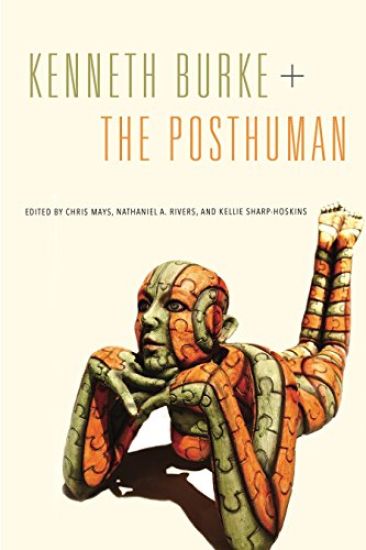
Kenneth Burke + The Posthuman

Kenneth Burke + The Posthuman

Pennsylvania State University Press
2017
sidottu
While rhetoric as a discipline is firmly planted in humanism and anthropology, posthumanism seeks to leave the human behind. This highly original examination of Kenneth Burke’s thought grapples with these ostensibly contradictory concepts as opportunities for invention, revision, and, importantly, transdisciplinary knowledge making.Rather than simply mapping posthumanist rhetorics onto Burke’s scholarship, Kenneth Burke + The Posthuman focuses on the multiplicity of ideas found both in his work and in the idea of posthumanism. Taking varied approaches organized within a framework of boundaries and futures, the contributors show that studying the humanist theories of Burke in this way creates a satisfyingly chaotic web of interconnections. The essays look at how Burke’s writing on the human mind and technology, from his earliest works to his very latest revisions, interrelates with current concepts such as new materiality and coevolution. Throughout, the contributors pay close attention to the fluidity, concerns, and contradictions inherent in language, symbolism, and subjectivity.A unique, illuminating exploration of the contested relationship between bodies and language, this inherently transdisciplinary book will propel important future inquiry by scholars of rhetoric, Burke, and posthumanism.In addition to the editors, the contributors are Casey Boyle, Kristie Fleckenstein, Nathan Gale, Julie Jung, Steven B. Katz, Steven LeMieux, Jodie Nicotra, Jeff Pruchnic, Timothy Richardson, Thomas Rickert, and Robert Wess.
Kenneth Burke + The Posthuman

Kenneth Burke + The Posthuman

Pennsylvania State University Press
2017
pokkari
While rhetoric as a discipline is firmly planted in humanism and anthropology, posthumanism seeks to leave the human behind. This highly original examination of Kenneth Burke’s thought grapples with these ostensibly contradictory concepts as opportunities for invention, revision, and, importantly, transdisciplinary knowledge making.Rather than simply mapping posthumanist rhetorics onto Burke’s scholarship, Kenneth Burke + The Posthuman focuses on the multiplicity of ideas found both in his work and in the idea of posthumanism. Taking varied approaches organized within a framework of boundaries and futures, the contributors show that studying the humanist theories of Burke in this way creates a satisfyingly chaotic web of interconnections. The essays look at how Burke’s writing on the human mind and technology, from his earliest works to his very latest revisions, interrelates with current concepts such as new materiality and coevolution. Throughout, the contributors pay close attention to the fluidity, concerns, and contradictions inherent in language, symbolism, and subjectivity.A unique, illuminating exploration of the contested relationship between bodies and language, this inherently transdisciplinary book will propel important future inquiry by scholars of rhetoric, Burke, and posthumanism.In addition to the editors, the contributors are Casey Boyle, Kristie Fleckenstein, Nathan Gale, Julie Jung, Steven B. Katz, Steven LeMieux, Jodie Nicotra, Jeff Pruchnic, Timothy Richardson, Thomas Rickert, and Robert Wess.