A look at the life and work of Edgar Allan Poe traces his life from his childhood as an adopted son, to his experiences in the U.S. Army, to his career as a journalist, editor, and writer, and discusses his influence on literature
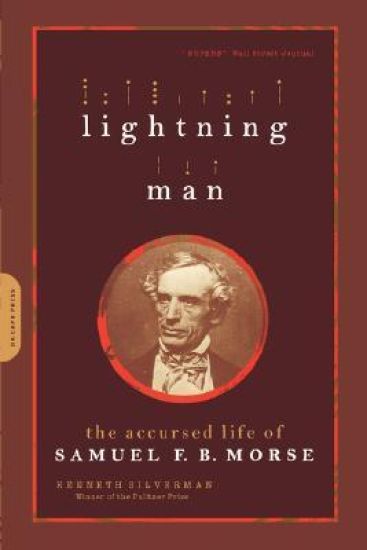
This brilliantly conceived biography is the very American tale of a quiet man, raised by religious zealots, who became a gifted and prolific painter (more than three hundred portraits and historical canvases), became the first Professor of Fine Arts at an American college, and founded the National Academy of Design. A classic overachiever, this was simply not enough for Samuel F. B. Morse he subsequently ran for Congress and mayor of New York. Lastly, in his most famous life's work, he invented a machine that was to transform commerce, communication, transportation, military affairs, diplomacy, and the course of the modern world. What invention could be so revolutionary? The telegraph, of course-and the eponymous Morse code. Here is the story of an incredible invention, and an engrossing life, by a Bancroft- and Pulitzer Prize-winning author.
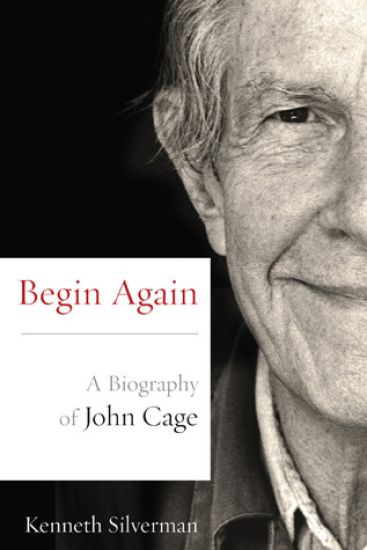
A man of extraordinary and seemingly limitless talents—musician, inventor, composer, poet, and even amateur mycologist—John Cage became a central figure of the avant-garde early in his life and remained at that pinnacle until his death in 1992 at the age of eighty. Award-winning biographer Kenneth Silverman gives us the first comprehensive life of this remarkable artist. Silverman begins with Cage’s childhood in interwar Los Angeles and his stay in Paris from 1930 to 1931, where immersion in the burgeoning new musical and artistic movements triggered an explosion of his creativity. Cage continued his studies in the United States with the seminal modern composer Arnold Schoenberg, and he soon began the experiments with sound and percussion instruments that would develop into his signature work with prepared piano, radio static, random noise, and silence. Cage’s unorthodox methods still influence artists in a wide range of genres and media. Silverman concurrently follows Cage’s rich personal life, from his early marriage to his lifelong personal and professional partnership with choreographer Merce Cunningham, as well as his friendships over the years with other composers, artists, philosophers, and writers. Drawing on interviews with Cage’s contemporaries and friends and on the enormous archive of his letters and writings, and including photographs, facsimiles of musical scores, and Web links to illustrative sections of his compositions, Silverman gives us a biography of major significance: a revelatory portrait of one of the most important cultural figures of the twentieth century.
Feelings of loneliness, isolation, and depression sometimes overcome people who have recently been bereaved, filling them with hopelessness and despair, extinguishing their will to go on living. When Mourning Comes is a unique source of comfort and hope. Written by William B. Silverman-a prominent rabbi-and Kenneth M. Cinnamon-a clinical psychologist-When Mourning Comes is not a book about grief, but rather a guide for the grieving. Full of comforting insights and wise suggestions on how to view and cope with the grief of bereavement, this book draws on the author's own experiences and those of people whom they have known and counseled over the years.
Feelings of loneliness, isolation, and depression sometimes overcome people who have recently been bereaved, filling them with hopelessness and despair, extinguishing their will to go on living. When Mourning Comes is a unique source of comfort and hope. Written by William B. Silverman—a prominent rabbi—and Kenneth M. Cinnamon—a clinical psychologist—When Mourning Comes is not a book about grief, but rather a guide for the grieving. Full of comforting insights and wise suggestions on how to view and cope with the grief of bereavement, this book draws on the author's own experiences and those of people whom they have known and counseled over the years.
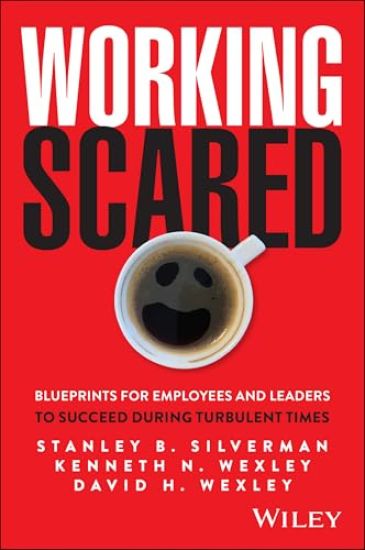
Transform workplace uncertainty into career confidence with proven strategies that work for both employees and organizations In Working Scared: Blueprints for Employees and Leaders to Succeed During Turbulent Times, authors Stanley B. Silverman, Kenneth N. Wexley, and David H. Wexley deliver a comprehensive roadmap for navigating today's volatile work environment. Drawing on decades of consulting experience across organizations ranging from small companies to Fortune 500 corporations, combined with extensive research and executive coaching credentials that establish them as leading authorities on workplace dynamics, the authors directly address eight primary sources of job insecurity plaguing the modern workforce. They discuss AI transformation, arrogant leadership, hybrid work challenges, economic turmoil, and more, providing dual-perspective solutions that empower both individual employees seeking career advancement and leaders working to optimize team effectiveness. The book systematically examines each workplace challenge through a structured framework that combines data-driven analysis with real-world case studies, revealing how successful employees and leaders have navigated similar situations. Avoiding boilerplate, generalized advice, the authors identify ten overarching Keys for Success that create resilience and adaptability in the face of organizational uncertainty. Each chapter delivers actionable strategies grounded in practical experience, moving readers from reactive anxiety to proactive confidence in their professional lives. You’ll find: An original, dual-perspective approach: Unique strategies tailored specifically for both employees and leaders facing the same workplace challenges Eight critical workplace scenarios: Comprehensive coverage of an AI organizational transformation, difficult leadership, team dynamics, hybrid work, restructuring, mergers, economic instability, and personal well-being Ten universal success principles: Overarching keys for success that apply across all workplace uncertainties and organizational changes Real-world case studies: Practical examples from the authors’ experience with diverse industries and organizational levels, from front-line workers to C-suite executives Evidence-based solutions: Strategies validated through extensive consulting work and research across small companies to global organizations An essential resource for all employees, including mid-career professionals, emerging leaders, and managers navigating workplace uncertainty or leading teams through organizational change, Working Scared is also the perfect guide for HR professionals, executive coaches, and business consultants required to solve problems for both individual workers and organizations.
The extraordinary life and career of Kenneth Battelle, pioneering hairstylist to the stars in the 1950's and beyond. Kenneth Battelle, known simply as “Kenneth,” was a pioneering hairstylist who obliterated the once-omnipresent hat and transformed the fashion industry through his A-list clients at his iconic 54th Street Salon. His 50-year career started in the early 1950s in New York City. The loyal client list he built, which included Jacqueline Kennedy, Marilyn Monroe, Judy Garland, Countess Consuelo Crespi, Diana Vreeland, Lucille Ball, and Gloria Vanderbilt, swore by his skills. Kenneth: Shear Elegance is a biography that not only celebrates Kenneth's extraordinary talent but examines his behind-the-scenes life and career struggles, including the disastrous fire that destroyed his salon, and his perseverance moving forward. Through personal memories of those closest to him, including friends, clients, and former employees, the man who created a cult of classic, timeless women comes to life. Previously unpublished photographs, notes, clippings, and original Joe Eula illustrations richly exhibit both his myriad achievements and America's 20th-century high-fashion scene.
Historia om Kenneth Sivertsen er ei historie om eit uvanleg talent, absurde innfall og ville påfunn, intense kjærleikshistorier, men også om alt som kan bryte ned eit menneske. Kenneth Sivertsen døydde julaftan 2006, berre 45 år gammal. Mange hugsar ein brutal nedtur og eit halvt hovud, men Sivertsen var mykje meir enn eit fall for open scene. Han var gitarist, komponist, songar og humorist. Han voks opp på Mosterøy i Bømlo, med Jesus og englar som ein sjølvsagd del av kvardagen. Alt som 22-åring skreiv han sin første symfoni. Kenneth Sivertsen var klassisk komponist, skreiv viser, spelte med dei fremste amerikanske jazzmusikarane, vart rikskjendis som kabaretartist saman med kjærasten Herborg Kråkevik og turnerte ein periode saman med 47 teddybjørnar.
â??Iâ??ll put you in my diary!â?? comedian Kenneth Williams was known to threaten on occasion, although tantalisingly he kept the journal to himself during his lifetime. Here at last, in one spellbinding volume, are four million words of it.
Following the bestselling publication of THE KENNETH WILLIAMS DIARIES, the devastating self-portrait of one of our most loved and complex performers is completed with this marvellous selection of his letters.
Sunday Times Art Book of the Year The astonishing life of Kenneth Clark - the greatest British art historian of his time. As writer and presenter of the TV series Civilisation he was responsible for the greatest syntheses of art, music, literature and thought ever made - 'a contribution to civilisation itself'.
Kenneth Waltz (1924–2013) is perhaps the most enduringly influential figure in international relations theory of the second half of the twentieth century. He is considered the father of the structural-realist or neorealist school, and his views on core questions, such as the causes of war and the structure of the international system, are foundational to the field today and likely will remain so for decades to come. Waltz’s writings on both theoretical and policy-related topics, from the balance of power to the spread of nuclear weapons, continue to fuel debate.This book is a groundbreaking intellectual biography of Kenneth Waltz, shedding new light on the development and significance of his key contributions. Paul R. Viotti draws on extensive, candid interviews with Waltz as well as Waltz’s personal files and archival research to provide a nuanced account of the great scholar’s life and thought. He traces the intellectual sources and personal experiences that shaped Waltz’s work, including an intense Lutheran upbringing; service in World War II and the Korean War; and the academic environments of Oberlin College, Columbia University, and the University of California, Berkeley. Viotti examines the key influences on Waltz’s major works, Man, the State, and War and Theory of International Politics, and analyzes their distinctive insights. Engaging with the views of Waltz’s critics and featuring reminiscences from his colleagues, this book is a compelling portrait of an intellectual titan.
Kenneth Waltz (1924–2013) is perhaps the most enduringly influential figure in international relations theory of the second half of the twentieth century. He is considered the father of the structural-realist or neorealist school, and his views on core questions, such as the causes of war and the structure of the international system, are foundational to the field today and likely will remain so for decades to come. Waltz’s writings on both theoretical and policy-related topics, from the balance of power to the spread of nuclear weapons, continue to fuel debate.This book is a groundbreaking intellectual biography of Kenneth Waltz, shedding new light on the development and significance of his key contributions. Paul R. Viotti draws on extensive, candid interviews with Waltz as well as Waltz’s personal files and archival research to provide a nuanced account of the great scholar’s life and thought. He traces the intellectual sources and personal experiences that shaped Waltz’s work, including an intense Lutheran upbringing; service in World War II and the Korean War; and the academic environments of Oberlin College, Columbia University, and the University of California, Berkeley. Viotti examines the key influences on Waltz’s major works, Man, the State, and War and Theory of International Politics, and analyzes their distinctive insights. Engaging with the views of Waltz’s critics and featuring reminiscences from his colleagues, this book is a compelling portrait of an intellectual titan.
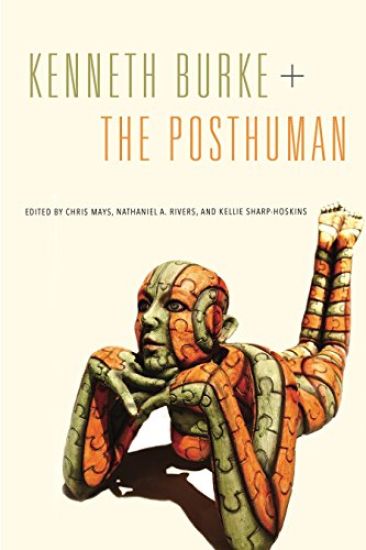
While rhetoric as a discipline is firmly planted in humanism and anthropology, posthumanism seeks to leave the human behind. This highly original examination of Kenneth Burke’s thought grapples with these ostensibly contradictory concepts as opportunities for invention, revision, and, importantly, transdisciplinary knowledge making.Rather than simply mapping posthumanist rhetorics onto Burke’s scholarship, Kenneth Burke + The Posthuman focuses on the multiplicity of ideas found both in his work and in the idea of posthumanism. Taking varied approaches organized within a framework of boundaries and futures, the contributors show that studying the humanist theories of Burke in this way creates a satisfyingly chaotic web of interconnections. The essays look at how Burke’s writing on the human mind and technology, from his earliest works to his very latest revisions, interrelates with current concepts such as new materiality and coevolution. Throughout, the contributors pay close attention to the fluidity, concerns, and contradictions inherent in language, symbolism, and subjectivity.A unique, illuminating exploration of the contested relationship between bodies and language, this inherently transdisciplinary book will propel important future inquiry by scholars of rhetoric, Burke, and posthumanism.In addition to the editors, the contributors are Casey Boyle, Kristie Fleckenstein, Nathan Gale, Julie Jung, Steven B. Katz, Steven LeMieux, Jodie Nicotra, Jeff Pruchnic, Timothy Richardson, Thomas Rickert, and Robert Wess.
While rhetoric as a discipline is firmly planted in humanism and anthropology, posthumanism seeks to leave the human behind. This highly original examination of Kenneth Burke’s thought grapples with these ostensibly contradictory concepts as opportunities for invention, revision, and, importantly, transdisciplinary knowledge making.Rather than simply mapping posthumanist rhetorics onto Burke’s scholarship, Kenneth Burke + The Posthuman focuses on the multiplicity of ideas found both in his work and in the idea of posthumanism. Taking varied approaches organized within a framework of boundaries and futures, the contributors show that studying the humanist theories of Burke in this way creates a satisfyingly chaotic web of interconnections. The essays look at how Burke’s writing on the human mind and technology, from his earliest works to his very latest revisions, interrelates with current concepts such as new materiality and coevolution. Throughout, the contributors pay close attention to the fluidity, concerns, and contradictions inherent in language, symbolism, and subjectivity.A unique, illuminating exploration of the contested relationship between bodies and language, this inherently transdisciplinary book will propel important future inquiry by scholars of rhetoric, Burke, and posthumanism.In addition to the editors, the contributors are Casey Boyle, Kristie Fleckenstein, Nathan Gale, Julie Jung, Steven B. Katz, Steven LeMieux, Jodie Nicotra, Jeff Pruchnic, Timothy Richardson, Thomas Rickert, and Robert Wess.
Since its publication in 1950, Kenneth Burke’s A Rhetoric of Motives has been one of the most influential texts of theory and criticism. Critics have discovered in its pages concepts that reveal new dimensions of human motivation. And yet, despite its obvious genius, critics have interpreted A Rhetoric of Motives as a collection of provocations rather than a systematic treatment of rhetoric.In this book, Kyle Jensen argues that the coherence in Burke’s thought has yet to be fully appreciated. Drawing on unpublished drafts and voluminous correspondence, he reconstructs Burke’s drafting and revision process for A Rhetoric of Motives as well as its recently discovered second volume, The War of Words. Jensen’s extensive archival analysis reveals that Burke relied on the concept of myth to draw together the loose ends in his argument. For Burke, all general theories of rhetoric are formed and structured using mythic images and terms.By exploring what Burke added and omitted, and by putting his writing process into the context of daily life after the Second World War—including Burke’s attempts to clear the weeds from his Andover farm—Jensen sheds new light on the key problems that Burke encountered and the methods he used to overcome them. Kenneth Burke’s Weed Garden is essential for those who study Burke and the tradition of modern rhetoric that he helped found.
Since its publication in 1950, Kenneth Burke’s A Rhetoric of Motives has been one of the most influential texts of theory and criticism. Critics have discovered in its pages concepts that reveal new dimensions of human motivation. And yet, despite its obvious genius, critics have interpreted A Rhetoric of Motives as a collection of provocations rather than a systematic treatment of rhetoric.In this book, Kyle Jensen argues that the coherence in Burke’s thought has yet to be fully appreciated. Drawing on unpublished drafts and voluminous correspondence, he reconstructs Burke’s drafting and revision process for A Rhetoric of Motives as well as its recently discovered second volume, The War of Words. Jensen’s extensive archival analysis reveals that Burke relied on the concept of myth to draw together the loose ends in his argument. For Burke, all general theories of rhetoric are formed and structured using mythic images and terms.By exploring what Burke added and omitted, and by putting his writing process into the context of daily life after the Second World War—including Burke’s attempts to clear the weeds from his Andover farm—Jensen sheds new light on the key problems that Burke encountered and the methods he used to overcome them. Kenneth Burke’s Weed Garden is essential for those who study Burke and the tradition of modern rhetoric that he helped found.
The first in-depth biography of theater genius Kenneth Tynan, looking behind the celebrity myth to show how Tynan’s eloquence and fervor helped change the course of theater in Britain and America Kenneth Tynan (1927–1980) lived one of the most intriguing theater lives of his century. A brilliant writer, critic, and agent provocateur, he made friends or enemies of nearly every major actor, playwright, impresario, and movie mogul of the 1950s, ‘60s, and ‘70s. He wrote for the Evening Standard, the Observer, and the New Yorker; served eleven years as dramaturg for Britain’s newly formed National Theatre, and spent his final years in Los Angeles. This biography offers the first complete appraisal of Tynan’s powerful contribution to post-war British theater, set against the context of the fifties, sixties, and seventies and his own turbulent life. Dominic Shellard highlights Tynan’s writings of 1952–1963, when the coruscating young critic came to prominence. He discusses how Tynan took his place at the vanguard of the new realist movement, helped to establish subsidized theater, fought censorship, and assisted in the creation of such groundbreaking theatrical phenomena as Oh Calcutta! in1970. The book reveals both the public and private Tynan, an outspoken, explicit, and sometimes savage critic who became one of the most influential theater figures of the twentieth century.