"Dil Ki Awaaz is a collection of thirty-five poems, out of which nineteen geets/ghazals are romantic, six are humorous and remaining ten are on politics and current affairs. You will love the romantic poems, you will laugh out loud at the humorous ones and you will find the voice of the Author resonating with the voice of the people of India."
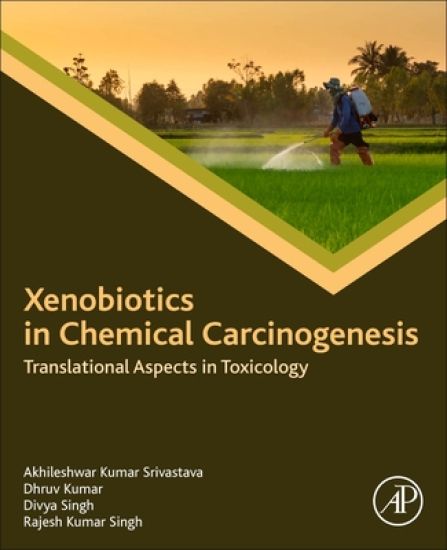
Xenobiotics in Chemical Carcinogenesis: Translational Aspects in Toxicology covers the translational toxicology of xenobiotics substances in carcinogenesis by explaining the toxicokinetic and toxicodynamic, toxicogenomic, biotransformation, and resistance mechanisms in the human body. The book begins with a historical review and link to future prospects for chemical carcinogenesis. It discusses major environmental xenobiotics and their risks in inducing cancer, along with content on toxic xenobiotics and their routes of exposure in humans, the role of xenobiotic metabolism in carcinogenesis, and the toxicokinetic and toxicodynamic of xenobiotics in cancer development. Lastly, the book explores current achievements such as using toxicogenomics for predicting the carcinogenicity of xenobiotic substances and the challenges posed by carcinogenic xenobiotic substances when examining preventive methods, diagnosis, and the development of anticancer drugs for specific toxicants.
This novel explains the impact of social (caste) barriers on the love affair between Dhruv Kushvaha and Uttra Chaudhry-the main characters. This further reveals the complexities of adolescent college life in India during the eighties and the nineties. It is a beautiful sketch of tender sentiments, emotional pangs and mental pathos of teenagers.
To meet the high demand of food, fiber and fuel to an ever increasing population of the country, it is necessary to bring more land under cultivation or to increase production per unit area from presently available land and water. Due to rising pace of urbanization and a reluctance to disturb environment, it seems to be a difficult task to bring more area under farming. The effect of climate change on agriculture is adversely affecting the Indian agriculture, making food availability scarce. The existing production levels barely manage to keep pace with the growing population. Thus, the only option available with us is to optimize production with efficient management of available natural resources like land and water. Keeping the above facts in mind the present book "Optimal Crop Planning and Resource Use Management" has been written and scope to enhance income of the farming community is being worked out. The book will serve as guide to policy maker, planner as well as researchers in formulating policies to tackle food security and strengthening economic conditions of farming community of the state in particular and nation in general.