Kirjojen hintavertailu. Mukana 12 390 323 kirjaa ja 12 kauppaa.

Kirjahaku

Etsi kirjoja tekijän nimen, kirjan nimen tai ISBN:n perusteella.

1000 tulosta hakusanalla LEVIN B

Blodröd höst

Blodröd höst

Margaretha Levin Blekastad

Ahlemarkers förlag
2017
nidottu
En ekonom och en framgångsrik företagare försvinner. Kriminalinspektör Ellinor Sandin misstänker kidnappning. Hon och hennes chef Lars Bergquist tar upp jakten på okända gärningsmän. Men tiden rinner iväg. Blodröd höst är den andra delen i Margaretha Levin Blekastads kriminalserie som utspelas i och omkring Uppsala.
Evidence-Based Strategies for Leading 21st Century Schools

Evidence-Based Strategies for Leading 21st Century Schools

Schrum Lynne R.; Levin Barbara B.

SAGE Publications Inc
2012
nidottu
Today's educational environment is a complex interplay of goals, needs, competing requirements and pressures, and dwindling resources. School leaders have responsibility for creating an educational environment that improves student outcomes, prepares them for their futures, and supports opportunities for all. This book offers school and district leaders with leader-tested strategies, exemplars, and practical advice based on the authors' current research of award-winning schools that showcase leadership for the 21st century. This book provides examples of how a 21st century school looks, plans, uses data, and supports its teachers, including: - Developing and implementing the vision - Establishing the school culture - Planning and implementing technology - Providing professional development - Reforming the curriculum and instructional practices - Funding the initiatives - Collaborating with parents and the community This book deepens and extends the work begun by the authors' previous book, Leading 21st Century Schools, by presenting strategies, exemplars, and practical advice about specific ways to continue on the journey of successfully leading 21st century schools. This sequel provides practical and evidence-based ideas, strategies, and experiences for moving schools toward their goals of meeting students', communities', and policy makers' expectations for educational systems.
Aufbau Und Verwendung Großer Efgt-Netze

Aufbau Und Verwendung Großer Efgt-Netze

Levin Brunner

Peter Lang Gmbh, Internationaler Verlag Der Wissenschaften
2009
sidottu
Dieses Buch behandelt die Realisierung eines innovativen Systems f r eine semantische Hintergrundressource zur Textklassifizierung. Der Ansatz basiert auf der Verwendung von EFGT-Netzen, die am Centrum f r Informations- und Sprachverarbeitung der Ludwig-Maximilians-Universit t entwickelt wurden. Einsatzgebiete eines solchen Systems sind umfangreiche Textarchive und Kollektionen von Textdokumenten. EFGT-Netze stellen eine spezielle Art von semantischen Netzen dar, die insbesondere dazu verwendet werden k nnen, in Dokumenten angesprochene Themen maschinell zu erfassen und strukturiert verarbeitbar zu machen. Der erste Teil des Buches fasst theoretische Grundlagen und bekannte Ans tze zusammen, auf denen die folgenden Teile aufbauen, und stellt die EFGT-Systematik in groben Z gen vor. Im zweiten Teil wird auf das realisierte System eingegangen. Der letzte Teil stellt Einsatzszenarien vor, die auf Basis des Systems durchgef hrt wurden und gibt einen Ausblick auf weitere m gliche Einsatzgebiete.
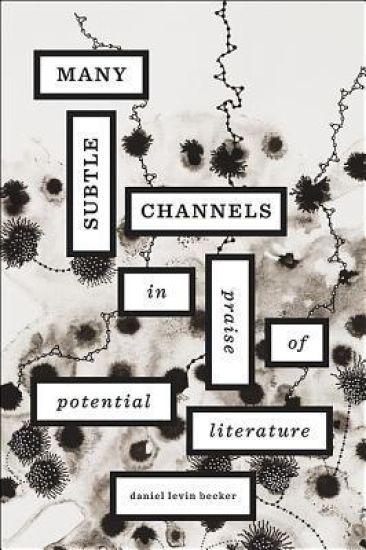
Many Subtle Channels

Many Subtle Channels

Daniel Levin Becker

Harvard University Press
2012
sidottu
What sort of society could bind together Jacques Roubaud, Italo Calvino, Marcel Duchamp, and Raymond Queneau—and Daniel Levin Becker, a young American obsessed with language play? Only the Oulipo, the Paris-based experimental collective founded in 1960 and fated to become one of literature’s quirkiest movements. An international organization of writers, artists, and scientists who embrace formal and procedural constraints to achieve literature’s possibilities, the Oulipo (the French acronym stands for “workshop for potential literature”) is perhaps best known as the cradle of Georges Perec’s novel A Void, which does not contain the letter e. Drawn to the Oulipo’s mystique, Levin Becker secured a Fulbright grant to study the organization and traveled to Paris. He was eventually offered membership, becoming only the second American to be admitted to the group. From the perspective of a young initiate, the Oulipians and their projects are at once bizarre and utterly compelling. Levin Becker’s love for games, puzzles, and language play is infectious, calling to mind Elif Batuman’s delight in Russian literature in The Possessed. In recent years, the Oulipo has inspired the creation of numerous other collectives: the OuMuPo (a collective of DJs), the OuMaPo (marionette players), the OuBaPo (comic strip artists), the OuFlarfPo (poets who generate poetry with the aid of search engines), and a menagerie of other Ou-X-Pos (workshops for potential something). Levin Becker discusses these and other intriguing developments in this history and personal appreciation of an iconic—and iconoclastic—group.
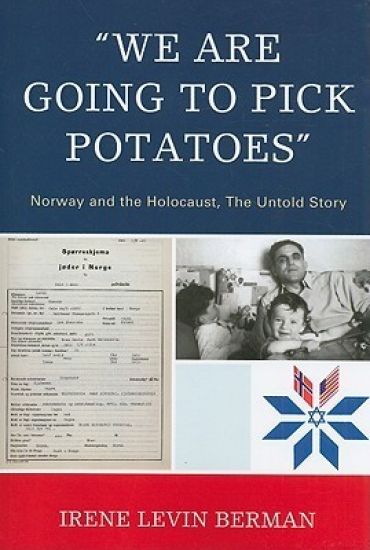
'We Are Going to Pick Potatoes'

'We Are Going to Pick Potatoes'

Irene Levin Berman

Hamilton Books
2010
nidottu
Irene Levin Berman was born, raised, and educated in Norway. Her first conscious recollection of life goes back to 1942, when as a young child she escaped to Sweden, a neutral country during World War II, to avoid annihilation. Germany had invaded Norway and the persecution of two thousand Norwegian Jews had begun. Seven members of her father's family were among the seven hundred and seventy-one unfortunate persons who were deported and sent to Auschwitz. In 2005, Irene was forced to examine the label of being a Holocaust survivor. Her strong dual identity as a Norwegian and a Jew led her to explore previously unopened doors in her mind. This is not a narrative of the Holocaust alone, but the remembrance of growing up Jewish in Norway during and after WWII. In addition to the richness of both her Norwegian and Jewish cultures, she ultimately acquired yet another identity as an American.
'We Are Going to Pick Potatoes'

'We Are Going to Pick Potatoes'

Irene Levin Berman

Hamilton Books
2010
sidottu
Irene Levin Berman was born, raised, and educated in Norway. Her first conscious recollection of life goes back to 1942, when as a young child she escaped to Sweden, a neutral country during World War II, to avoid annihilation. Germany had invaded Norway and the persecution of two thousand Norwegian Jews had begun. Seven members of her father's family were among the seven hundred and seventy-one unfortunate persons who were deported and sent to Auschwitz. In 2005, Irene was forced to examine the label of being a Holocaust survivor. Her strong dual identity as a Norwegian and a Jew led her to explore previously unopened doors in her mind. This is not a narrative of the Holocaust alone, but the remembrance of growing up Jewish in Norway during and after WWII. In addition to the richness of both her Norwegian and Jewish cultures, she ultimately acquired yet another identity as an American.
Norway Wasn't Too Small

Norway Wasn't Too Small

Irene Levin Berman

Hamilton Books
2016
nidottu
Norway didn't have many Jews—but it had enough to attract Hitler's attention. It’s 1940 in Norway, and one Jewish family would rather be thinking of anything else. Budding artist Rebekka Davidson sketches the soldiers filling the school and streets, while her cousin Harald Rosenberg learns that he’d rather read about Hitler’s politics than experience them. Talented musician Ingrid Rosenberg prepares to go to her dream school while experiencing the wonders of first love—with the nephew of the leader of the local Nazis. Together, the family will do whatever it takes to return to normal life…but will it be enough? By the end of the war, Norway had lost a higher percentage of its Jews than almost any other country in Europe. This story, inspired by the author’s own experience growing up Jewish in 1940s Norway, brings readers both young and old into the touching struggles of one incredible family. Norway wasn’t too small for Hitler, and for some families, it was everything.
The Price of Survival

The Price of Survival

Irene Levin Berman

Hamilton Books
2019
nidottu
In The Price of Survival: Marcus Levin, Norwegian Holocaust Humanitarian, Irene Levin Berman tells the story of her father’s heroic attempts to save the Jews of Norway, as well as hundreds of stateless refugees who had escaped other European countries in the 1930s, from deportation to Nazi concentration camps during World War II. Marcus Levin worked tirelessly to help Jews before and after the Nazis invaded Norway, and after the war he worked with the American Joint Distribution Committee and organizations in Norway such as the Jewish Social Unit to help find homes and jobs for the few Norwegian Jews who returned survived the concentration camps as well as about 600 stateless Displaced Persons. In 1962 Marcus Levin was awarded a gold Medal of Honor by King Olav of Norway in recognition of his efforts during World War II.
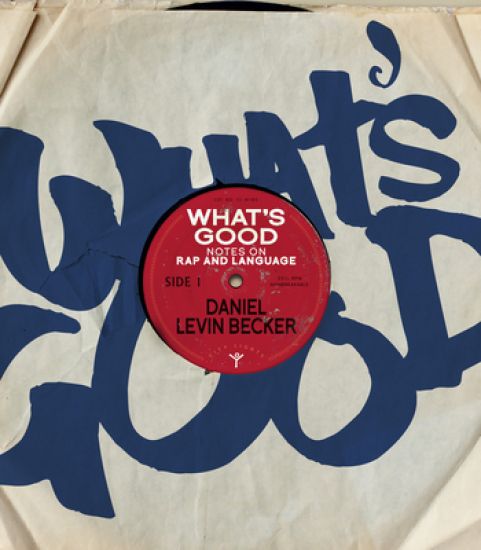
What's Good

What's Good

Daniel Levin Becker

City Lights Books
2022
pokkari
A NEW YORKER & GLOBE AND MAIL BEST BOOK OF THE YEARA love letter to the verbal artistry of hip-hop, What's Good is a work of passionate lyrical analysis"What's Good is, among a great many other things, a byproduct of joyful obsession and immersion into both language and sound, an intersection that offers a rich and expansive land upon which to play." —Hanif Abdurraqib, author of A Little Devil in America: Notes in Praise of Black Performance " . . . an often hilarious, surprisingly moving and always joyful paean to rap’s relationship to words."—Jayson Greene, The New York Times"Rap, he is not afraid to say, is as close to a universal tongue as we have."—Adam Gopnik, The New YorkerWhat's Good is a work of passionate lyrical analysis, a set of freewheeling liner notes, and a love letter to the most vital American art form of the last half century. Over a series of short chapters, each centered on a different lyric, Daniel Levin Becker considers how rap's use of language operates and evolves at levels ranging from the local (slang, rhyme) to the analytical (quotation, transcription) to the philosophical (morality, criticism, irony), celebrating the pleasures and perils of any attempt to decipher its meaning-making technologies.Ranging from Sugarhill Gang to UGK to Young M.A, Rakim to Rick Ross to Rae Sremmurd, Jay-Z to Drake to Snoop Dogg, What's Good reads with the momentum of a deftly curated mixtape, drawing you into the conversation and teaching you to read it as it goes. A book for committed hip-hop heads, curious neophytes, armchair linguists, and everyone in between."For those of us who love rap, What's Good is a gift. The book offers a new set of eyes and ears through which to see and to hear the language of rap. Its brief and brilliant chapters are like the best kinds of freestyles: spontaneous and structured, startling and profound. A remarkable achievement." —Adam Bradley, author of Book of Rhymes: The Poetics of Hip Hop"Could this be the rap equivalent of Lewis Hyde's The Gift or Marina Warner's Once Upon A Time? Anyhow, it's an electrifying book, full of wild epiphanies and provocations, an exhibition of a critical mind in full and open contact with their subject at the highest level, with a winning streak of confessional intimacy as well." —Jonathan Lethem, author of The Arrest: A Novel "What's Good is a feat of critical precision and personal obsession: Daniel Levin Becker's deep appreciation for rap is rangy and illuminating, and his delight in language is infectious. What a thrill to swing so gracefully from Lil Wayne to Mary Ruefle to the lyrical evolution of 'tilapia'; pure pleasure. A generous, joyful exegesis."—Anna Wiener, author of Uncanny Valley: A Memoir
Guds lamm

Guds lamm

Margaretha Levin Blekastad

Retriever förlag
2019
nidottu
Valborgsfirandet i Uppsala avbryts av ett högt skrik. Ett genomträngande rop, mitt i vimlet vid Fyrisån. En av forsränningens farkoster är utformad som ett kors, med en fastspänd Jesusgestalt ombord. Men är det verkligen en docka? Eller är det en människa? Det visar sig snart att Jesusfiguren är en ung student, som hoppat av från den isolerade församlingen Guds lamm. Kriminalinspektör Ellinor Sandin och hennes chef Lars Bergquist tar upp jakten på mördaren i en utredning där maktmissbruk, droger och svartsjuka är några av ingredienserna. ”Guds lamm” är den tredje, fristående delen i en kriminalserie om de båda poliserna Ellinor Sandin och Lars Bergquist. Serien inleddes med ”Blod och is” (2016). Serien utspelar sig i Uppsala och andra Upplandsmiljöer. Margaretha Levin Blekastad är kulturjournalist och författare, bosatt i Lagga, utanför Uppsala.
Dödligt högmod

Dödligt högmod

Margaretha Levin Blekastad

Retriever förlag
2022
nidottu
Forskaren Astrid Mikkola är pressad från flera håll. Hennes exman är hotfull, samtidigt blir hon mer och mer övertygad om att något inte stämmer i det laboratorieprojekt hon ansvarar för. Att något är fel. En dag försvinner hon spårlöst. Kvar vid hennes ensligt belägna torp finns ett bord dukat för två personer och en halvt urdrucken kopp kaffe. Kriminalinspektör Ellinor Sandin förstår att det är bråttom. Tillsammans med sin chef Lars Bergquist tar hon upp sökandet efter den försvunna Astrid. Det leder dem till ett prestigefyllt forskningsprojekt, fyllt av maktkamper, en hämndlysten exmake och en grupp militanta aktivister. Vad hände med Astrid Mikkola? Och vilken roll spelar sonen Oskar? "Dödligt högmod" är den fjärde spänningsromanen i serien om de båda Uppsalapoliserna Ellinor Sandin och Lars Bergquist. Serien inleddes med "Blod och is" 2016, som följdes av "Blodröd höst" och "Guds lamm." Författaren Margaretha Levin Blekastad är verksam som kulturjournalist och bosatt i Lagga, strax söder om Uppsala.
World Politics Simulations in a Global Information Age

World Politics Simulations in a Global Information Age

Hemda Ben-Yehuda; Luba Levin-Banchik; Chanan Naveh

The University of Michigan Press
2015
nidottu
A comprehensive guide explaining how to create simulations of international relations for the purposes of both teaching and research. Hemda Ben-Yehuda, Luba Levin-Banchik, and Chanan Naveh offer as a model their hallmark “World Politics Simulations Project,” which involves participants representing various states, nonstate actors, and media organizations embroiled in an international political crisis. Following the trajectory of a simulation, the authors describe theory, implementation, and analysis. Starting with a typology of simulations, they present a framework for selecting the most suitable one for a given teaching situation, based on academic setting, goals, costs, and other practical considerations. They then provide step-by-step instructions for creating simulations on cyber platforms, particularly Facebook, complete with schedules, guidelines, sample forms, teaching tips, and student exercises. Throughout the simulation, and especially during the final analysis, they explain how to reinforce learning and foster critical thinking, creativity, teamwork, and other essential skills. The authors conclude with suggestions for using data gathered during a simulation for scholarly research. Instructors in both introductory and advanced courses in political science, international relations, media, history, and area studies—as well as leaders of professional training programs in the civil and military service and media organizations—will find this guide invaluable.
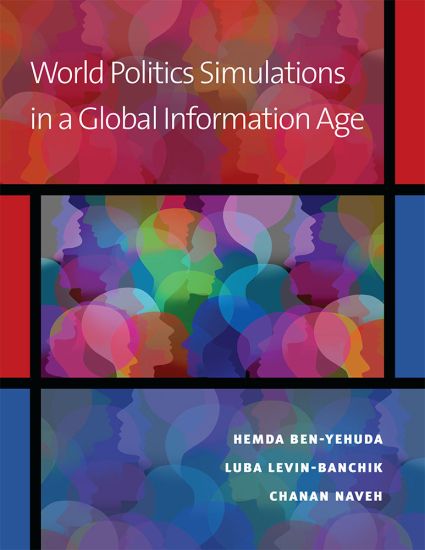
World Politics Simulations in a Global Information Age

World Politics Simulations in a Global Information Age

Hemda Ben-Yehuda; Luba Levin-Banchik; Chanan Naveh

The University of Michigan Press
2015
sidottu
A comprehensive guide explaining how to create simulations of international relations for the purposes of both teaching and research. Hemda Ben-Yehuda, Luba Levin-Banchik, and Chanan Naveh offer as a model their hallmark “World Politics Simulations Project,” which involves participants representing various states, nonstate actors, and media organizations embroiled in an international political crisis. Following the trajectory of a simulation, the authors describe theory, implementation, and analysis. Starting with a typology of simulations, they present a framework for selecting the most suitable one for a given teaching situation, based on academic setting, goals, costs, and other practical considerations. They then provide step-by-step instructions for creating simulations on cyber platforms, particularly Facebook, complete with schedules, guidelines, sample forms, teaching tips, and student exercises. Throughout the simulation, and especially during the final analysis, they explain how to reinforce learning and foster critical thinking, creativity, teamwork, and other essential skills. The authors conclude with suggestions for using data gathered during a simulation for scholarly research. Instructors in both introductory and advanced courses in political science, international relations, media, history, and area studies—as well as leaders of professional training programs in the civil and military service and media organizations—will find this guide invaluable.