Kirjojen hintavertailu. Mukana 11 342 296 kirjaa ja 12 kauppaa.

Kirjahaku

Etsi kirjoja tekijän nimen, kirjan nimen tai ISBN:n perusteella.

1000 tulosta hakusanalla Lars Boesgaard

Provence

Provence

Lars Boesgaard

Clearview
2013
sidottu
A mighty view of all aspects of Provence, from food and wine to landscape and history. Divided into three chapters, this 544pp book is the largest ever written on one of the world's most alluring, sun-drenched and seductive cultures. The first section focuses on Provencal cuisine, with over 150 classic recipes, which are delicious, simple and easy to prepare. The second part of the book examines the Provencal way of life, with short essays on the provenance of mountain villages, petanque, artists, museums, pottery, glassblowing, soap manufacturing, textiles, Pastis and the best markets to shop at. The finale is, appropriately, a generous discourse on the wines of the region, from Les Baux, through Cotes de Ventoux and Coteaux de Pierrevert, listing the best wine producers, the best vineyards and how to find them. Over 700 specially shot images form a dazzling panorama of food, wine, landscape and culture.
Christian 2.

Christian 2.

Lars Bisgaard

G. E. C. Gads Forlag
2019
sidottu
Christian 2. (1481-1559) er en af de mest kendte danske konger. Han var en magtfuld international skikkelse, og da han kom til magten, var han konge af Danmark og Norge og arving til tronen i Sverige. Han er omgærdet at myter og dramatiske historier. Mange kender ham fra Det Stockholmske Blodbad i 1520 (som er forklaringen på hans navn i Sverige: Christian Tyran), fra historierne om hans tvivlrådige sejlads frem og tilbage over Lillebælt utallige gange en vinternat i 1523 og fra kærlighedsforholdet til den smukke Dyveke, hvis mor Sigbrit blev kongens rådgiver. Han er omdrejningspunkt i den måske mest kendte og elskede roman i Danmark, Johannes V. Jensens Kongens Fald.Og alligevel er der i Danmark ikke skrevet en egentlig biografi om Christian 2. siden 1800-tallet.Det rådes der nu bod på med historikeren Lars Bisgaards nye biografi, som bl.a. i gennem et rigt brevmateriale kommer tættere på mennesket bag myterne, end man før har været. Biografien fortæller historien om Christians dramatiske liv og tid på kanten til Reformationen, og rydder undervejs op i de mange historier og misforståelser, som knytter sig til hans person.
Grevens fejde

Grevens fejde

Lars Bisgaard

Aarhus Universitetsforlag
2023
sidottu
Når en konge dør, plejer en efterfølger at stå klar i kulissen. Sådan var det ikke i 1533, da Frederik 1. udåndede. Rigsrådet, der skulle vælge en ny regent, kunne ikke nå til enighed og udskød beslutningen. Spliden fik modsætninger mellem katolikker og protestanter til at flamme op. Riget var i ubalance, og striden om arvefølgen førte fra sommeren 1534 til en regulær borgerkrig. Oprørske bønder hvæssede deres leer, og lejetropper blev hyret ind, blandt andet anført af en tysk greve. Den blodige fejde stod på i to lange år og banede vejen for Reformationen og afskaffelsen af den katolske kirke i Danmark. Marchér med Lars Bisgaard, lektor ved Syddansk Universitet, tilbage til en tumultarisk tid, der så let som ingenting kunne have sat en helt anden kurs for Danmark.
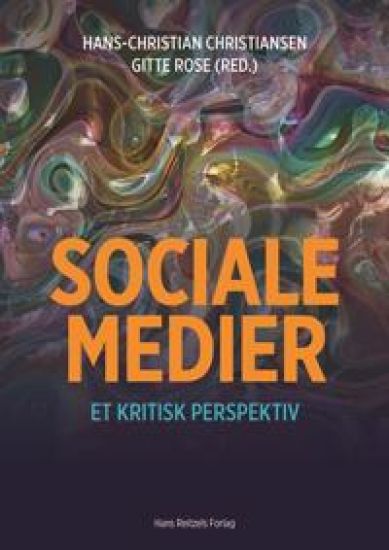
Sociale medier

Sociale medier

Hans-Christian Christiansen; Gitte B. Rose; Rikke Bjergaard Dinnetz; Lars Funck Kristensen; Trine-Maria Kristensen; Hanne Laursen; Troels Pleimert

Gyldendal
2022
nidottu
Sociale medier er en praksisnær introduktion til kommunikation og markedsføring på sociale medier. Læseren introduceres til centrale kommunikationsteorier og metoder, der er anvendelige til såvel analysen som udarbejdelsen af sociale medie-strategier. Bogens forfattere, der henter deres erfaring fra praksis, undervisning og forskning, illustrerer forklaringsmodellerne med eksempler og cases. Sociale medier henvender sig til to overordnede målgrupper: dem, der har brug for at danne sig det store overblik over mediernes baggrund og forskelligartede styrker og svagheder (som for eksempel undervisere og instruktører), og dem, der overvejer at anvende en eller flere sociale medieplatforme i praksis. I otte kapitler gennemgår lærebogen: • Sociale medier – en introduktion • Analyse af sociale medier • Social media-strategi • Ledelse i en 2 .0-verden • Brand communities • Møder mellem mennesker – offline og online • Markedsføring på sociale medier • Nyhedsformidling på sociale medier Bogen er rettet mod erhvervsuddannelse og videreuddannelse og passer bl.a. til Akademiuddannelsen i Sociale medier. Den passer desuden til læreruddannelsen samt tilvalgsfag i Medier ved universitetet.
Normkritik i pædagogisk praksis

Normkritik i pædagogisk praksis

Karen Liebing Madsen; Janne Jørgensen; Jacob Graack-Larsen; Laila Lagermann; Maj Borggaard Hansen; Ahrong Gersager Yang Nissen; Christoffer Dejgaard; Jin Hui Li; Helle Bøgelund Frederiksen; Freja Mannov Olesen; Simone Stegeager; Luis Lisa Rasmussen; Rasmus Præstmann Hansen; Kim Sandersen; Lars Grenaa; Ida Secher Houengaard; Cecilie Kim Nimb Williams; Sara Wondie; Johanne Eliana Tapia Segura

Gyldendal
2022
nidottu
Normkritik i pædagogisk praksis klæder pædagogstuderende på til at blive bevidste om og udfordre de stereotype forestillinger og fortællinger, der knytter sig til både køn, race, seksualitet og handicap. Bogen er desuden relevant for uddannede pædagoger, der ønsker at arbejde mere normbevidst med deres praksis. Der er tre centrale dele i bogen, som indeholder teori og praksiseksempler samt forslag til refleksion og handling: Del 1 Centrale begreber i pædagogisk arbejde med normkritik Del 2 Normkritik i pædagogisk praksis Del 3 Erfaringer med udviklingen af normkritiske miljøer Normkritik i pædagogisk praksis indeholder bidrag fra undervisere, forskere og praktikere, der tilsammen sikrer en grundig udfoldelse af det normkritiske arbejdes mange facetter. Den er praksisnær og skrevet i et let tilgængeligt sprog i alle dens dele.
Lars

Lars

Ann Gimpel

Ann Giimpel Books, LLC
2018
pokkari
Tamara MacBride has a much bigger problem than hiding her shifter side from the world. By the skin of her teeth, and with a smattering of Irish luck, she manages to kill her sister's murderer. Escaping from the scene of the crime is much harder than she anticipated. Just when she thinks she might be safe, her cab driver shrieks and slumps over the wheel.An unknown assailant terminates Lars Kinsvogel's target. Pleased by the outcome--after all dead is dead--he exchanges the glitz of Monte Carlo for a nearby airport, intent on collecting the private plane he left there. He's no sooner arrived when a cab jumps the curb, and he races over to investigate. There's not much he can do for the cabbie, but his passenger is still very much alive.Trying to hustle Tamara out of the cab is tough. She's frozen by fear, but when Lars lays out the rest of his plan to move her out of danger's path, her temper flares. He can't leave her alone in Monte Carlo. Can he convince her to trust him in time to save her life?
Lars

Lars

Ulrica Martinsdotter

Lava Förlag
2023
nidottu
Mitt i morgonpromenaden, steg 1834 för att vara mer exakt, bestämmer sig Lars för att han ska ta livet av sig. Han bestämmer också att han ska göra det en regnig dag – han vill nämligen inte påverka någons soliga dag med sitt avslut.Den soligaste sommaren på 103 år får vi sedan följa Lars och hans tankar när han planerar allt in i minsta detalj, i väntan på regnet.I ett bibliotek står Lisa och tar emot för sent tillbakalämnade böcker med dåliga ursäkter som obligatoriskt komplement.Hon drömmer sig tillbaka till när barnen var så små att hon kunde högläsa deckare för dem, eftersom de ändå inte förstod vad hon sa. Nu är allt hon hinner läsa baksidestexter på böckerna hon packar upp på jobbet, och samma barnböcker om och om igen.
Lars von Trier Beyond Depression

Lars von Trier Beyond Depression

Linda Badley

Columbia University Press
2022
sidottu
Lars von Trier built a reputation as a provocateur from the start—but in the late 2000s, he entered an even more inflammatory phase. Amid Cannes controversies, Antichrist (2009), Melancholia (2011), Nymphomaniac (2013–14), and The House That Jack Built (2018) brandished the cinematic virtuosity von Trier once banned under the Dogme 95 Manifesto while subjecting audiences to “extreme” cinema. Following von Trier’s experience of clinical depression in 2006 and 2007, these films took an aggressively personal and retrospective turn against the backdrop of the director’s controversy-courting public appearances.Playing against widespread assumptions, Linda Badley takes a reparative approach, offering an in-depth examination of these four films and the contexts that produced them. Drawing on numerous interviews with the director and his collaborators as well as inside access to archival materials, she provides a thorough and comprehensive account of von Trier’s preproduction and creative process. Highlighting a transmedial turn, Badley tracks von Trier’s artistic touchstones from Wagner, Proust, and the Marquis de Sade to Scandinavian erotic cinema and serial killer genre tropes. She considers his portrayals of mental illness and therapy, gender and sexuality, nature and extinction, shedding light on the thematic concerns that unite these films as a distinct cycle. Offering nuanced readings of these films, the book emphasizes the significance of von Trier’s work for current critical and philosophical debates, showing how they engage with notions of the Anthropocene, “dark ecology,” and the postcinematic.
Lars von Trier Beyond Depression

Lars von Trier Beyond Depression

Linda Badley

Columbia University Press
2022
pokkari
Lars von Trier built a reputation as a provocateur from the start—but in the late 2000s, he entered an even more inflammatory phase. Amid Cannes controversies, Antichrist (2009), Melancholia (2011), Nymphomaniac (2013–14), and The House That Jack Built (2018) brandished the cinematic virtuosity von Trier once banned under the Dogme 95 Manifesto while subjecting audiences to “extreme” cinema. Following von Trier’s experience of clinical depression in 2006 and 2007, these films took an aggressively personal and retrospective turn against the backdrop of the director’s controversy-courting public appearances.Playing against widespread assumptions, Linda Badley takes a reparative approach, offering an in-depth examination of these four films and the contexts that produced them. Drawing on numerous interviews with the director and his collaborators as well as inside access to archival materials, she provides a thorough and comprehensive account of von Trier’s preproduction and creative process. Highlighting a transmedial turn, Badley tracks von Trier’s artistic touchstones from Wagner, Proust, and the Marquis de Sade to Scandinavian erotic cinema and serial killer genre tropes. She considers his portrayals of mental illness and therapy, gender and sexuality, nature and extinction, shedding light on the thematic concerns that unite these films as a distinct cycle. Offering nuanced readings of these films, the book emphasizes the significance of von Trier’s work for current critical and philosophical debates, showing how they engage with notions of the Anthropocene, “dark ecology,” and the postcinematic.
Lars von Trier

Lars von Trier

Linda Badley

University of Illinois Press
2011
sidottu
Scandinavia's foremost living auteur and the catalyst of the Dogme95 movement, Lars von Trier is arguably world cinema's most confrontational and polarizing figure. Willfully devastating audiences, he takes risks few filmmakers would conceive, mounting projects that somehow transcend the grand follies they narrowly miss becoming. Challenging conventional limitations and imposing his own rules, he restlessly reinvents the film language. The Danish director has therefore cultivated an insistently transnational cinema, taking inspiration from sources that range from the European avant-garde to American genre films. This volume provides a stimulating overview of Trier's career while focusing on the more recent work, including his controversial Gold Heart Trilogy (Breaking the Waves, The Idiots, and Dancer in the Dark), the as-yet unfinished USA Trilogy (Dogville and Manderlay), and individual projects such as the comedy The Boss of It All and the incendiary horror psychodrama Antichrist. Closely analyzing the films and their contexts, Linda Badley draws on a range of cultural references and critical approaches, including genre, gender, and cultural studies, performance theory, and trauma culture. Two revealing interviews that Trier granted during crucial stages of Antichrist's development are also included.
Lars Von Trier

Lars Von Trier

Linda Badley

University of Illinois Press
2011
nidottu
Scandinavia's foremost living auteur and the catalyst of the Dogme95 movement, Lars von Trier is arguably world cinema's most confrontational and polarizing figure. Willfully devastating audiences, he takes risks few filmmakers would conceive, mounting projects that somehow transcend the grand follies they narrowly miss becoming. Challenging conventional limitations and imposing his own rules, he restlessly reinvents the film language. The Danish director has therefore cultivated an insistently transnational cinema, taking inspiration from sources that range from the European avant-garde to American genre films. This volume provides a stimulating overview of Trier's career while focusing on the more recent work, including his controversial Gold Heart Trilogy (Breaking the Waves, The Idiots, and Dancer in the Dark), the as-yet unfinished USA Trilogy (Dogville and Manderlay), and individual projects such as the comedy The Boss of It All and the incendiary horror psychodrama Antichrist. Closely analyzing the films and their contexts, Linda Badley draws on a range of cultural references and critical approaches, including genre, gender, and cultural studies, performance theory, and trauma culture. Two revealing interviews that Trier granted during crucial stages of Antichrist's development are also included.
Lars von Trier's Cinema

Lars von Trier's Cinema

Rebecca Ver Straten-McSparran

Routledge
2021
sidottu
This book offers a bold and dynamic examination of Lars von Trier’s cinema by interweaving philosophy and theology with close attention to aesthetics through style and narrative. It explores the prophetic voice of von Trier's films, juxtaposing them with Ezekiel's prophecy and Ricoeur’s symbols of evil, myth, and hermeneutics of revelation. The films of Lars von Trier are categorized as extreme cinema, inducing trauma and emotional rupture rarely paralleled, while challenging audiences to respond in new ways. This volume argues that the spiritual, biblical content of the films holds a key to understanding von Trier’s oeuvre of excess. Spiritual conflict is the mechanism that unpacks the films’ notorious excess with explosive, centrifugal force. By confronting the spectator with spiritual conflict through evil, von Trier's films truthfully and prophetically expose the spectator’s complicity in personal and structural evil, forcing self-examination through theological themes, analogous to the prophetic voice of the transgressive Hebrew prophet Ezekiel, his prophecy, and its form of delivery. Placed in context with the prophetic voices of Dante, Milton, Dostoyevsky, O’Connor, and Tarkovsky, this volume offers a theoretical framework beyond von Trier. It will be of great interest to scholars in film studies, film and philosophy, film and theology.
Lars von Trier's Cinema

Lars von Trier's Cinema

Rebecca Ver Straten-McSparran

TAYLOR FRANCIS LTD
2023
nidottu
This book offers a bold and dynamic examination of Lars von Trier’s cinema by interweaving philosophy and theology with close attention to aesthetics through style and narrative. It explores the prophetic voice of von Trier's films, juxtaposing them with Ezekiel's prophecy and Ricoeur’s symbols of evil, myth, and hermeneutics of revelation. The films of Lars von Trier are categorized as extreme cinema, inducing trauma and emotional rupture rarely paralleled, while challenging audiences to respond in new ways. This volume argues that the spiritual, biblical content of the films holds a key to understanding von Trier’s oeuvre of excess. Spiritual conflict is the mechanism that unpacks the films’ notorious excess with explosive, centrifugal force. By confronting the spectator with spiritual conflict through evil, von Trier's films truthfully and prophetically expose the spectator’s complicity in personal and structural evil, forcing self-examination through theological themes, analogous to the prophetic voice of the transgressive Hebrew prophet Ezekiel, his prophecy, and its form of delivery. Placed in context with the prophetic voices of Dante, Milton, Dostoyevsky, O’Connor, and Tarkovsky, this volume offers a theoretical framework beyond von Trier. It will be of great interest to scholars in film studies, film and philosophy, film and theology.