It's Christmastime, so that means making snowmen, sitting by the fire, and drinking hot cocoa...right? Not in Australia Santa on a Surfboard brings readers on a fun-filled journey into the world of Christmas in Australia: a sandy celebration under the sun. Readers can recognize reflections of their own Christmas festivities while also learning about another country's traditions. The joyful, rhyming couplets of Santa on a Surfboard show us that holiday magic can truly be found anywhere.
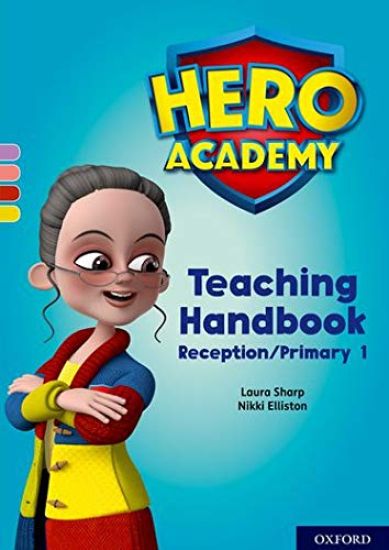
The Reception/Primary 1 Teaching Handbook includes everything you will need to turn your children into reading superheroes. Written by early years expert Laura Sharp, the Teaching Handbook includes: advice on how to successfully use Project X Hero Academy; easy-to-follow guidance for one-to-one, independent, and guided reading; a phonic and vocabulary breakdown for each book; support on assessment; and ideas for writing, speaking, listening, and cross-curricular activities.
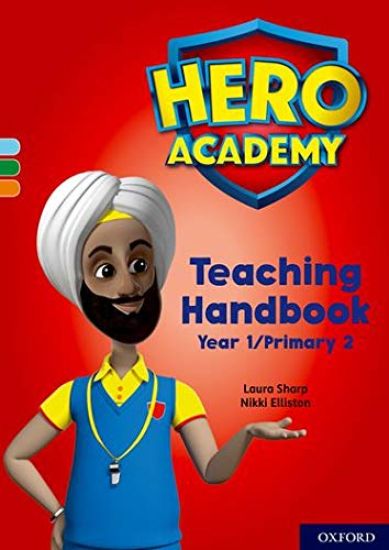
The Year 1/Primary 2 Teaching Handbook includes everything you will need to turn your children into reading superheroes. Written by early years expert Laura Sharp, the Teaching Handbook includes: advice on how to successfully use Project X Hero Academy; easy-to-follow guidance for one-to-one, independent, and guided reading; a phonic and vocabulary breakdown for each book; support on assessment; and ideas for writing, speaking, listening, and cross-curricular activities.
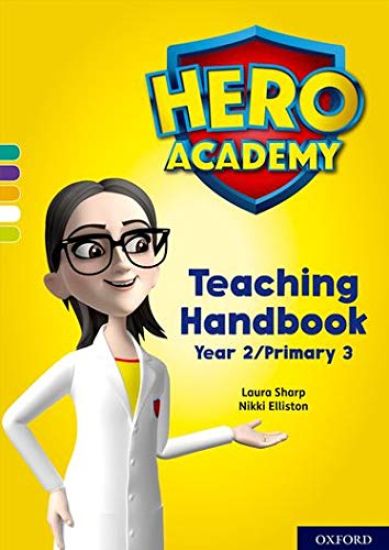
The Year 2/Primary 3 Teaching Handbook includes everything you will need to turn your children into reading superheroes. Written by early years expert Laura Sharp, the Teaching Handbook includes: advice on how to successfully use Project X Hero Academy; easy-to-follow guidance for one-to-one, independent, and guided reading; a phonic and vocabulary breakdown for each book; support on assessment; and ideas for writing, speaking, listening, and cross-curricular activities.
The Vulnerable Witnesses (Scotland) Act 2004 amends the Criminal Procedure (Scotland) Act 1995 for criminal cases. It creates a similar regime for civil cases, so that vulnerability of witnesses is considered, and measures are taken to support vulnerable witnesses to give evidence effectively. This book contains the Act's main provisions together with commentary to help you to understand it fully. Informed by the authors' experience of vulnerable witnesses in practice, the book provides an essential reference for lawyers, law students, those who lead or hear witness in court and other professionals dealing with young people and adults who may be vulnerable as potential witnesses.
The Read With Oxford: Biff, Chip and Kipper: My Phonics Flashcards have been specially developed to help your child succeed at reading. Created by reading experts and based on current teaching practice, they complement how your child is starting to read at school and keep children engaged in reading at home. Biff, Chip, Kipper and Floppy the dog are the well-loved characters from Oxford Reading Tree, used in 80% of primary schools. These My Phonics Flashcards are a fun way for children to practise their letters and sounds at home - just as they do in school. Four different phonics games will help children to learn that one sound can be represented in several ways, blend sounds together to read words and develop memory and concentration skills. Find practical advice, free eBooks and fun activities to help your child progress on oxfordowl.co.uk. Let's get them flying!
Packed full of fun activities, engaging stories and useful tips, this kit provides you with everything you need to support your child in the lead up to the national phonics screening check for 6-year-olds. Practise phonics skills with three activity workbooks and three phonics storybooks to share. Reward good work and build confidence with fun stickers and find out everything you need to know about the phonics check with expert advice from phonics advisor, Laura Sharp. Biff, Chip, Kipper and Floppy the dog are the well-loved characters from Oxford Reading Tree, used in 80% of primary schools. With exciting stories, humorous illustrations, tips for parents and after-reading activities, this series is the perfect companion from your child's very first steps in phonics all the way to reading independence. Featuring much-loved characters, great authors, engaging storylines and fun activities, Read with Oxford offers an exciting range of carefully levelled resources to build your child's reading confidence. Find practical advice, free eBooks and fun activities to help your child progress on oxfordowl.co.uk. Let's get them flying!
"Eagle-eyed" often describes an individual who is sharp-sighted with an eye for detail. Eagle-Eyed dives into eagle characteristics and behavior to investigate if there is truth behind this common expression. Easy-to-read text, vivid images, and helpful back matter give readers a clear look at this subject. Features include a table of contents, infographics, a glossary, additional resources, and an index. Aligned to Common Core Standards and correlated to state standards. Kids Core is an imprint of Abdo Publishing, a division of ABDO.
"What does this poem mean?" "How should I read it?" "How do we talk about it?" "What do I DO with it?" "What's the best way to assess it?" "How do I meet standards?" "When can I possibly fit it into my already over-packed day?" Have you ever asked these questions about poetry? The 30 Painless Classroom Poems series makes it easy for you, the elementary school teacher, media specialist, or reading specialist, to share poetry with your students. Whether you already love poetry or you fear or even actively dislike it, these books are for you. The poems, Notes from the Poet, extension activities written by experienced classroom teachers, and tips for using poetry in your classroom will have you sharing poems in no time. In Fairy Tale Garage Sale, award-winning poet Laura Purdie Salas (author of BookSpeak , Water Can Be..., and more) shares 30 poems from the citizens of Fairy Tale Land, who are having a neighborhood garage sale. Finally, they can get rid of clutter from their earlier adventures These 30 poems focus on seven fairy tales: Cinderella; Goldilocks and the Three Bears; Snow White and the Seven Dwarves; Rapunzel; Jack and the Beanstalk; The Emperor's New Clothes; and Thumbelina. For each fairy tale, an introductory poem summarizes the key events of the tale for those students not familiar with it. Then three poems from three characters' points-of-view offer up items for sale. What does the Evil Queen need with a mirror that tells the truth, after all? And why doesn't Rapunzel need barrettes anymore? These humorous poems offer behind-the-scenes looks and sometimes different opinions about why things happened as they did. Great for comparing versions of the same event when paired with prose or multimedia versions of the fairy tales. Mostly rhyming poems, but some other forms, too (cinquain, diamante, acrostic...) Extension activities by Colby Sharp share ideas for springboarding from these poems into deeper learning across many content areas. Sample: From Rapunzel: Item for sale: Castle For sale by: The Witch Charming Tower - Perfect for One One room One window Not one single door No rugs No curtains No tacky d cor I'm old Can't climb up These walls made of stone So make me An offer And make this your home Note from the Poet: Repetition (and I know I've already talked about this in another Note, so I'm repeating myself a little bit ) is really key to lots of poetry. I repeat two words in this poem: "one" and "no." The idea for this horrible castle where Rapunzel was kept prisoner is that it's lonely. It's lacking in anything that would show comfort or luxury. I'm hoping that repeating those words helps get that idea across. See all of the 30 Painless Classroom Poems at www.30PainlessClassroomPoems.com. Disclaimer: For those of you collecting all my 30 Painless Classroom Poems books, please note that some information, such as Why Poetry Matters and Classroom Poetry Tips, is repeated from book to book. The introduction to the book, the poems, the Notes from the Poet, and the classroom activities are unique to each book.
Originally published in 1983, this cross-national study had three aims. First, to examine the cross-national differences among the elderly community in the prevalence of psychiatric problems and their relationship to other health and social problems. Second, to examine the differences in health care of aged people, with a view to providing a framework for improvement of health and support services to those elderly with psychiatric problems who reside in the community. Finally, the differences in the course and outcome of psychiatric disability with implications for the role of healthcare and community resources in reducing chronic disability or its consequences.This study included the examination of two randomly drawn probability samples of people over the age of sixty-five years and resident in the cities of New York and London. The people studied were reinterviewed after one year in order to record their use of health services and the course of their symptoms, or the development of new symptoms. Social and medical factors were studied in relation to psychopathological conditions.
Originally published in 1983, this cross-national study had three aims. First, to examine the cross-national differences among the elderly community in the prevalence of psychiatric problems and their relationship to other health and social problems. Second, to examine the differences in health care of aged people, with a view to providing a framework for improvement of health and support services to those elderly with psychiatric problems who reside in the community. Finally, the differences in the course and outcome of psychiatric disability with implications for the role of healthcare and community resources in reducing chronic disability or its consequences.This study included the examination of two randomly drawn probability samples of people over the age of sixty-five years and resident in the cities of New York and London. The people studied were reinterviewed after one year in order to record their use of health services and the course of their symptoms, or the development of new symptoms. Social and medical factors were studied in relation to psychopathological conditions.
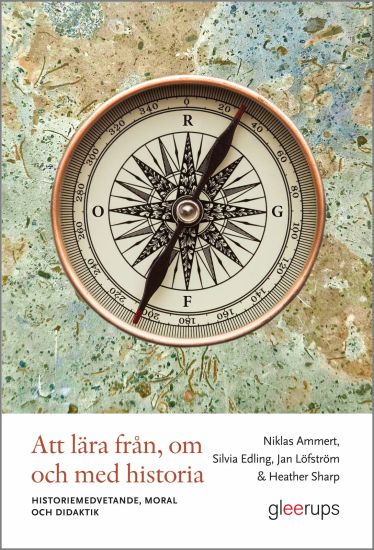
Hur vi orienterar oss i världen är intimt sammanflätat med våra tolkningar av historia, samtiden och våra perspektiv på framtiden. Vårt historiemedvetande påverkar hur vi förhåller oss till samhället och till andra människor. För historielärare är det viktigt att få en uppfattning om elevernas historiemedvetande eftersom detta speglar elevernas tänkande om meningsfulla samband över tid. Dessutom är kunskap om elevernas moraliska medvetande och dess relation till historiemedvetandet viktiga förutsättningar för att kunna tolka elevernas möten med historia. I dessa möten lär sig eleverna om, men också från, av och med historia. Den här boken visar hur moraliska och etiska frågor i undervisningen kan stimulera intresset för och förståelsen av historia. Att uppmärksamma skärningspunkter mellan historiska och moraliska frågor kan hjälpa lärare, lärarstudenter och elever att navigera i nuet mot framtiden. Niklas Ammert är professor i historia med inriktning mot utbildningsvetenskap vid Linnéuniversitetet. Silvia Edling är professor i didaktik vid Högskolan i Gävle. Jan Löfström är professor i historisk-samhällelig utbildning vid Åbo universitet. Heather Sharp är associate professor (docent) i pedagogik med fokus på didaktik vid University of Newcastle i Australien.
In the doorway of an elegant New York apartment, blood seeps over silk negligee, over polished wood floors and plush carpet: a beautiful young woman lies dead, her face disfigured by a single gun shot. But who was Laura?
In a captivating departure, Larry Watson, "a writer whose work is worthy of prizes" ("Los Angeles Times Book Review"), unveils a portrait of faith, obsession, and enduring love -- and a work of greater tenderness than anything he has yet written. "Laura" Love captures Paul Finley, in, of all places, his own bedroom -- literally waking him from his dreams. The night he discovers Laura Pettit standing at his windowsill, Paul is eleven years old, a boy naturally inclined toward seriousness, precociously adept at the art of watching the world without being watched. Laura is twenty-two, a fiercely passionate and independent poet already experiencing the first flickers of fame, a beautiful woman on the brink of seducing Paul's father. No matter; Paul is smitten. When she leaves him to rejoin the grown-ups' party downstairs, Laura issues Paul a wholly impossible command, one that will haunt and consume both of them for the rest of their lives: "Forget me." Laying bare the inner life of one man during the course of nearly four decades, Larry Watson delivers a riveting treatise on the excruciating power of love -- and two of the most remarkable characters in recent American literature. Infused with breathtaking pathos and delicate grace, "Laura" is an extraordinary triumph of the novelist's art.
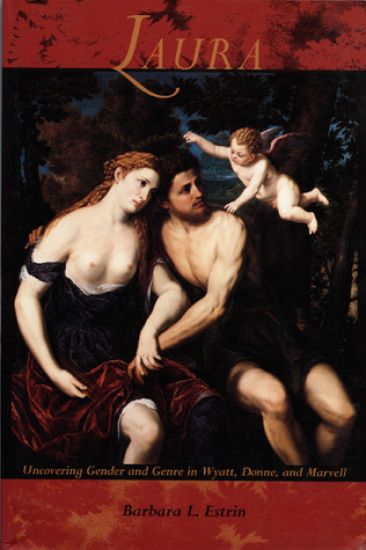
How do men imagine women? In the poetry of Petrarch and his English successors-Wyatt, Donne, and Marvell-the male poet persistently imagines pursuing a woman, Laura, whom he pursues even as she continues to deny his affections. Critics have long held that, in objectifying Laura, these male-authored texts deny the imaginative, intellectual, and physical life of the woman they idealize. In Laura, Barbara L. Estrin counters this traditional view by focusing not on the generative powers of the male poet, but on the subjectivity of the imagined woman and the imaginative space of the poems she occupies. Through close readings of the Rime sparse and the works of Wyatt, Donne, and Marvell, Estrin uncovers three Lauras: Laura-Daphne, who denies sexuality; Laura-Eve, who returns the poet’s love; and Laura-Mercury, who reinvents her own life. Estrin claims that in these three guises Laura subverts both genre and gender, thereby introducing multiple desires into the many layers of the poems. Drawing upon genre and gender theories advanced by Jean-FranÇois Lyotard and Judith Butler to situate female desire in the poem’s framework, Estrin shows how genre and gender in the Petrarchan tradition work together to undermine the stability of these very concepts.Estrin’s Laura constitutes a fundamental reconceptualization of the Petrarchan tradition and contributes greatly to the postmodern reassessment of the Renaissance period. In its descriptions of how early modern poets formulate questions about sexuality, society and poetry, Laura will appeal to scholars of the English and Italian Renaissance, of gender studies, and of literary criticism and theory generally.
How do men imagine women? In the poetry of Petrarch and his English successors-Wyatt, Donne, and Marvell-the male poet persistently imagines pursuing a woman, Laura, whom he pursues even as she continues to deny his affections. Critics have long held that, in objectifying Laura, these male-authored texts deny the imaginative, intellectual, and physical life of the woman they idealize. In Laura, Barbara L. Estrin counters this traditional view by focusing not on the generative powers of the male poet, but on the subjectivity of the imagined woman and the imaginative space of the poems she occupies. Through close readings of the Rime sparse and the works of Wyatt, Donne, and Marvell, Estrin uncovers three Lauras: Laura-Daphne, who denies sexuality; Laura-Eve, who returns the poet’s love; and Laura-Mercury, who reinvents her own life. Estrin claims that in these three guises Laura subverts both genre and gender, thereby introducing multiple desires into the many layers of the poems. Drawing upon genre and gender theories advanced by Jean-FranÇois Lyotard and Judith Butler to situate female desire in the poem’s framework, Estrin shows how genre and gender in the Petrarchan tradition work together to undermine the stability of these very concepts.Estrin’s Laura constitutes a fundamental reconceptualization of the Petrarchan tradition and contributes greatly to the postmodern reassessment of the Renaissance period. In its descriptions of how early modern poets formulate questions about sexuality, society and poetry, Laura will appeal to scholars of the English and Italian Renaissance, of gender studies, and of literary criticism and theory generally.