Kirjojen hintavertailu. Mukana 11 627 373 kirjaa ja 12 kauppaa.

Kirjahaku

Etsi kirjoja tekijän nimen, kirjan nimen tai ISBN:n perusteella.

1000 tulosta hakusanalla Leo van Bergen

Before My Helpless Sight

Before My Helpless Sight

Leo van Bergen

Ashgate Publishing Limited
2009
sidottu
Despite the numerous vicious conflicts that scarred the twentieth century, the horrors of the Western Front continue to exercise a particularly strong hold on the modern imagination. The unprecedented scale and mechanization of the war changed forever the way suffering and dying were perceived and challenged notions of what the nations could reasonably expect of their military. Examining experiences of the Western Front, this book looks at the life of a soldier from the moment he marched into battle until he was buried. In five chapters - Battle, Body, Mind, Aid, Death - it describes and analyzes the physical and mental hardship of the men who fought on a front that stretched from the Belgian coast to the Swiss border. Beginning with a broad description of the war it then analyzes the medical aid the Tommies, Bonhommes and Frontschweine received - or all too often did not receive - revealing how this aid was often given for military and political rather than humanitarian reasons (getting the men back to the front or munitions factory and trying to spare the state as many war-pensions as possible). It concludes with a chapter on the many ways death presented itself on or around the battlefield, and sets out in detail the problems that arise when more people are killed than can possibly be buried properly. In contrast to most books in the field this study does not focus on one single issue - such as venereal disease, plastic surgery, shell-shock or the military medical service - but takes a broad view on wounds and illnesses across both sides of the conflict. Drawing on British, French, German, Belgian and Dutch sources it shows the consequences of modern warfare on the human individuals caught up in it, and the way it influences our thinking on 'humanitarian' activities.
Before My Helpless Sight

Before My Helpless Sight

Leo van Bergen

Routledge
2016
nidottu
Despite the numerous vicious conflicts that scarred the twentieth century, the horrors of the Western Front continue to exercise a particularly strong hold on the modern imagination. The unprecedented scale and mechanization of the war changed forever the way suffering and dying were perceived and challenged notions of what the nations could reasonably expect of their military. Examining experiences of the Western Front, this book looks at the life of a soldier from the moment he marched into battle until he was buried. In five chapters - Battle, Body, Mind, Aid, Death - it describes and analyzes the physical and mental hardship of the men who fought on a front that stretched from the Belgian coast to the Swiss border. Beginning with a broad description of the war it then analyzes the medical aid the Tommies, Bonhommes and Frontschweine received - or all too often did not receive - revealing how this aid was often given for military and political rather than humanitarian reasons (getting the men back to the front or munitions factory and trying to spare the state as many war-pensions as possible). It concludes with a chapter on the many ways death presented itself on or around the battlefield, and sets out in detail the problems that arise when more people are killed than can possibly be buried properly. In contrast to most books in the field this study does not focus on one single issue - such as venereal disease, plastic surgery, shell-shock or the military medical service - but takes a broad view on wounds and illnesses across both sides of the conflict. Drawing on British, French, German, Belgian and Dutch sources it shows the consequences of modern warfare on the human individuals caught up in it, and the way it influences our thinking on 'humanitarian' activities.
The Dutch East Indies Red Cross, 1870–1950

The Dutch East Indies Red Cross, 1870–1950

Leo van Bergen

Lexington Books
2019
sidottu
The Dutch East Indies Red Cross (NIRK) took action in 1873 when the Aceh War broke out, which lasted several decades. In this war the organization’s neutrality was tested, but it turned out not to be an issue. Neutrality was a concept for European wars between “civilized” countries, not applicable in colonial wars. As a consequence, aid was tailored to the needs of the Dutch East Indian Army. This also showed itself in a statutory change making aid not only possible during “war”’ but also in case of “uprising.” After the war ended several decades of “peace”—if peace is a proper term in colonial circumstances—followed. They were used to be prepared in case of an attack by a foreign enemy. For this “peace-work,” societal work of the Red Cross, was deemed important. This means that it was not an aim in itself, but seen as practice for the war task. It also had to avoid the Red Cross becoming invisible and lose popularity, for only with enough (wo)men active the war task could be fulfilled. When war came, preparation turned out to have been in vain. Japan quickly conquered the archipelago. It forbade the organization only making use of some local branches when this came in handy. However, it proved not to be the end of the NIRK. When after the war independence was declared by Indonesian nationalists, the Netherlands send an army “to restore law and order.” In the war that followed, Red Cross-work became part of military carrot-and-stick strategy, trying to get the population back on Dutch side, and hoping that patients would inform the doctor with military information. The Red Cross not only had a humanitarian but a national task to fulfill.
Uncertainty, Anxiety, Frugality

Uncertainty, Anxiety, Frugality

Leo van Bergen

NUS Press
2018
nidottu
The story of leprosy in the Dutch East Indies from the beginning of the 19th century to the middle of the 20th reveals important themes in the colonial enterprise across the territory that is today’s Indonesia. Operating in a territory with only a few hundred Western-trained doctors and a population in the tens of millions, Dutch colonial officials approached leprosy with uncertainty and anxiety. In the early 19th century, the Dutch administrationsimply removed sufferers from public view: campaigns targetted anyone “looking ugly”. Towards the end of the century, colonial science considered leprosy a hereditary disease of tropical subjects, and therefore undeserving of the colonial government’s limited resources. The leprosariums were emptied. At the start of the 20th century, a growing understanding that leprosy was spread by a bacillus caused a panic that leprosy might spread from the tropics to the colonial metropole. The mixed emotions of pity, fear and revulsion associated with management of the disease intensified, and fed into broader debates on colonial policy. The experts were unsure, and resources were never forthcoming, and despite a view that “bacteria are the same everywhere”, Dutch leprosy treatment in the East Indies mobilized traditional healing practices and relied on home care. Leo van Bergen’s detailed, attentive study to changing policies for treatment and prevention of leprosy (now often called Hansen’s disease) is fascinating medical history, and provides a useful lens for understanding colonialism in Indonesia.
Regional Change in Industrializing Asia
First published in 1998 this boo responds to the dynamics of Industrializing Asia and the behavioural changes of actors which, in response to changing internal and external forces, have given rise to and are constantly giving rise to alterations in patterns of growth. From a geographical perspective, these are expressed in regional change, understood as a reconstruction of spatial organization. The imperatives of dynamic comparative advantage, changing global or regional competitiveness, and regional competition, faced by different actors, entities or territorial units can be identified as important forces underlying and shaping regional change. This volume provides further illumination, contextualization and interpretation of the spatiality of the economic reality in Industrializing Asia, as well as the role played by, and the implications for, different actors.The objectives of this book are 1) to outline the processes of regional change, linked to responses in the form of restructuring and integrative and regionalization tendencies, as well as the realignment of the global-regional-local divide in production systems/complexes and the operation of firms associated with reorganization of production in the process of maintaining and reconfiguring comparative advantage; 2) to highlight the wide scope of the process by considering differential units of analysis, linked to the agents and manifestations of regional change, and the role of scale in terms of the spatial units involved; 3) to highlight the implications as to the current and future position or role of differential actors/agents (particularly nation state) in shaping the new economic reality in the region and as a corollary, its positioning in the global economic order.
Regional Change in Industrializing Asia
First published in 1998 this boo responds to the dynamics of Industrializing Asia and the behavioural changes of actors which, in response to changing internal and external forces, have given rise to and are constantly giving rise to alterations in patterns of growth. From a geographical perspective, these are expressed in regional change, understood as a reconstruction of spatial organization. The imperatives of dynamic comparative advantage, changing global or regional competitiveness, and regional competition, faced by different actors, entities or territorial units can be identified as important forces underlying and shaping regional change. This volume provides further illumination, contextualization and interpretation of the spatiality of the economic reality in Industrializing Asia, as well as the role played by, and the implications for, different actors.The objectives of this book are 1) to outline the processes of regional change, linked to responses in the form of restructuring and integrative and regionalization tendencies, as well as the realignment of the global-regional-local divide in production systems/complexes and the operation of firms associated with reorganization of production in the process of maintaining and reconfiguring comparative advantage; 2) to highlight the wide scope of the process by considering differential units of analysis, linked to the agents and manifestations of regional change, and the role of scale in terms of the spatial units involved; 3) to highlight the implications as to the current and future position or role of differential actors/agents (particularly nation state) in shaping the new economic reality in the region and as a corollary, its positioning in the global economic order.
European Cities in the Knowledge Economy
Across Western Europe, the emphasis has shifted from physical manufacturing to the development of ideas, new products and creative processes. This has become known as the knowledge economy. While much has been written about this concept, so far there has been little focus on the role of the city. Bringing together comparative case studies from Amsterdam, Dortmund, Eindhoven, Helsinki, Manchester, Munich, Münster, Rotterdam and Zaragoza, this volume examines the cities' roles, as well as how the knowledge economy affects urban management and policies. In doing so, it demonstrates that the knowledge economy is a trend that affects every city, but in different ways depending on the specific local situation. It describes a number of policy options that can be applied to improve cities' positions in this new environment.
Interaction in the Language Curriculum
Interaction in the Language Curriculum offers an innovative theory of language education integrating curriculum practice, research and teaching. It emphasises the interdependence of knowledge and values and stresses the central importance of learning as a social process.Leo van Lier argues that moral as well as intellectual and practical principles must underlie curriculum development and everyday teaching, captured in his triple focus on Awareness, Autonomy, and Authenticity. In addition to its rich grounding in language education practice, the book draws support for his position from diverse sources in sociology, philosophy and cognitive science, from the work of Bourdieu, Giddens, Wittgenstein, Peirce, Vygotsky, Bakhtin, and Dewey. In the current broadening context of language education this study makes an important contribution to research. It presents a coherent philosophical theory as well as considering practical issues in implementation of a new language curriculum. As such, it will be of great benefit to teachers, applied linguists and educationalists generally.
Sports and City Marketing in European Cities

Sports and City Marketing in European Cities

Leo van den Berg; Erik Braun; Alexander H.J. Otgaar

Ashgate Publishing Limited
2002
sidottu
In our increasingly global and commercial world, where once sport would only have been seen by a few thousand on the terraces it is now watched by many millions via satellite. This mass global audience is invited not only to watch the sporting event, but also to visit the city where it takes place. Such events may help promote the host city as a tourist destination and business location. City governors are becoming increasingly aware of the possibilities of using sport as an instrument of reaching objectives of urban management. This engaging book investigates the state of the art of sports and city marketing in five European cities: Rotterdam, Barcelona, Helsinki, Manchester and Turin. In each of these cities, the book examines how sports (accommodations, clubs and events) have been made an instrument of city marketing and how the cities have attempted to maximize their potential through sports and city marketing policies. A comparison of the findings highlights the merits or disadvantages of sports clusters and strategic co-operation in sports and city marketing.
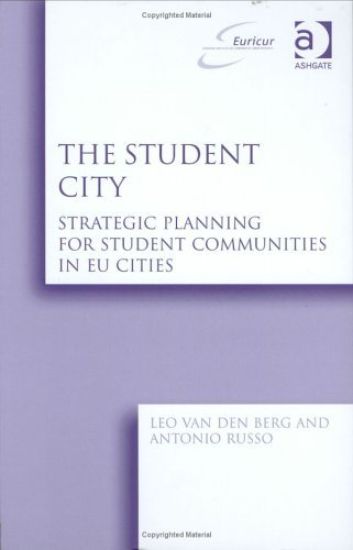
The Student City

The Student City

Leo van den Berg; Antonio Russo

Ashgate Publishing Limited
2004
sidottu
Student communities are without doubt a strategic resource for urban development and students are the citizens and the high-skilled working class of tomorrow. They are seen as an 'invisible population' with little say in local policy and decision-making. Co-operation between educational institutions and city planners is often missing and cities tend to neglect the universities' foreign relations. This volume argues that the importance of human capital in the competitiveness of cities demands pro-active, integral city policies targeting this community. Bringing together nine case studies of European cities (Rotterdam, Utrecht, Eindhoven, Munich, Lyon, Lille, Venice, Birmingham and Helsinki), it puts forward a comprehensive strategic plan of action, aiming at the integration of student communities in urban development. The book analyses the essential characteristics of the relationship between students and their host communities, as well as the role of higher education institutions and other actors in building the 'student friendly' city.
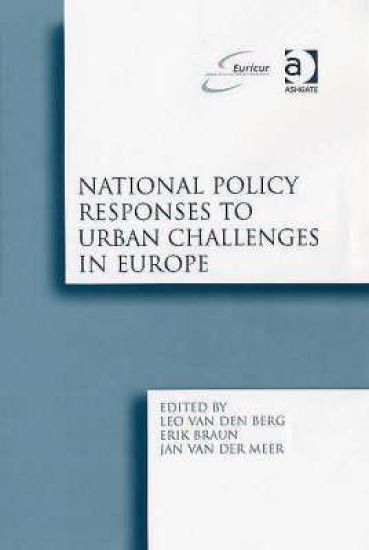
National Policy Responses to Urban Challenges in Europe

National Policy Responses to Urban Challenges in Europe

Leo van den Berg; Erik Braun

Ashgate Publishing Limited
2007
sidottu
This book presents a unique overview of urban policy conducted by national authorities in the fifteen 'old' member states of the EU. Focussing on recent changes in the development of the larger cities and changes in policymaking by national authorities with respect to urban development, the book is structured around 15 'country chapters', written by national experts in the field of urban development. The book provides an up-to-date source of information, and will be of importance to anyone involved in the role and development of European cities as well as the formulation and delivery of associated national policies.
E-Governance in European and South African Cities

E-Governance in European and South African Cities

Leo van den Berg; Andre van der Meer; Willem van Winden; Paulus Woets

CRC Press Inc
2017
sidottu
Since the late 1990s, city councils have become increasingly aware of the potential for information technologies (ICTs) to improve the management of cities and as an instrument for economic and social policy. This has resulted in a wave of urban ICT strategies and policies, such as the adoption of ICTs within the city administration itself, projects that facilitate access to ICTs by weaker social groups and policies to improve the urban electronic infrastructure. By comparing eight cities - Barcelona, Cape Town, Eindhoven, Johnnesburg, Manchester, Tampere, the Hague and Venice - this book examines a range of innovative urban e-governance strategies and develops a framework of analysis that permits a common approach. Throughout the book, a distinction is made between access policies (aimed at improving access to ICTs for all citizens), content policies (directed to improve the use of ICTs in the city administration and semi-public domains) and infrastructure policies (to improve the provision of broadband infrastructure). For each of the cities, e-strategies and policies are critically reviewed and compared. The book reveals that urban e-strategies have evolved from an internal and technology-centred orientation to a more outward-looking approach.
European Cities in the Knowledge Economy

European Cities in the Knowledge Economy

Leo van den Berg

CRC Press Inc
2017
sidottu
Across Western Europe, the emphasis has shifted from physical manufacturing to the development of ideas, new products and creative processes. This has become known as the knowledge economy. While much has been written about this concept, so far there has been little focus on the role of the city. Bringing together comparative case studies from Amsterdam, Dortmund, Eindhoven, Helsinki, Manchester, Munich, Münster, Rotterdam and Zaragoza, this volume examines the cities' roles, as well as how the knowledge economy affects urban management and policies. In doing so, it demonstrates that the knowledge economy is a trend that affects every city, but in different ways depending on the specific local situation. It describes a number of policy options that can be applied to improve cities' positions in this new environment.
The Flemish Drawings in the Collection of His Majesty the King at Windsor Castle
This work has been selected by scholars as being culturally important and is part of the knowledge base of civilization as we know it.This work is in the public domain in the United States of America, and possibly other nations. Within the United States, you may freely copy and distribute this work, as no entity (individual or corporate) has a copyright on the body of the work.Scholars believe, and we concur, that this work is important enough to be preserved, reproduced, and made generally available to the public. To ensure a quality reading experience, this work has been proofread and republished using a format that seamlessly blends the original graphical elements with text in an easy-to-read typeface.We appreciate your support of the preservation process, and thank you for being an important part of keeping this knowledge alive and relevant.
The Flemish Drawings in the Collection of His Majesty the King at Windsor Castle
This work has been selected by scholars as being culturally important and is part of the knowledge base of civilization as we know it.This work is in the public domain in the United States of America, and possibly other nations. Within the United States, you may freely copy and distribute this work, as no entity (individual or corporate) has a copyright on the body of the work.Scholars believe, and we concur, that this work is important enough to be preserved, reproduced, and made generally available to the public. To ensure a quality reading experience, this work has been proofread and republished using a format that seamlessly blends the original graphical elements with text in an easy-to-read typeface.We appreciate your support of the preservation process, and thank you for being an important part of keeping this knowledge alive and relevant.
Interaction in the Language Curriculum
Interaction in the Language Curriculum offers an innovative theory of language education integrating curriculum practice, research and teaching. It emphasises the interdependence of knowledge and values and stresses the central importance of learning as a social process.Leo van Lier argues that moral as well as intellectual and practical principles must underlie curriculum development and everyday teaching, captured in his triple focus on Awareness, Autonomy, and Authenticity. In addition to its rich grounding in language education practice, the book draws support for his position from diverse sources in sociology, philosophy and cognitive science, from the work of Bourdieu, Giddens, Wittgenstein, Peirce, Vygotsky, Bakhtin, and Dewey. In the current broadening context of language education this study makes an important contribution to research. It presents a coherent philosophical theory as well as considering practical issues in implementation of a new language curriculum. As such, it will be of great benefit to teachers, applied linguists and educationalists generally.
Sports and City Marketing in European Cities

Sports and City Marketing in European Cities

Leo van den Berg; Erik Braun; Alexander H.J. Otgaar

Routledge
2017
nidottu
In our increasingly global and commercial world, where once sport would only have been seen by a few thousand on the terraces it is now watched by many millions via satellite. This mass global audience is invited not only to watch the sporting event, but also to visit the city where it takes place. Such events may help promote the host city as a tourist destination and business location. City governors are becoming increasingly aware of the possibilities of using sport as an instrument of reaching objectives of urban management. This engaging book investigates the state of the art of sports and city marketing in five European cities: Rotterdam, Barcelona, Helsinki, Manchester and Turin. In each of these cities, the book examines how sports (accommodations, clubs and events) have been made an instrument of city marketing and how the cities have attempted to maximize their potential through sports and city marketing policies. A comparison of the findings highlights the merits or disadvantages of sports clusters and strategic co-operation in sports and city marketing.