

Kirjahaku
Etsi kirjoja tekijän nimen, kirjan nimen tai ISBN:n perusteella.
1000 tulosta hakusanalla Lester L. Adams

An Autoethnography of Letter Writing and Relationships Through Time
Jennifer L. Adams
TAYLOR FRANCIS LTD
2023
sidottu
An Autoethnography of Letter Writing and Relationships Through Time: Finding Our Perfect Moon is about love letters, stories, and the ability of words to bring people together across time and physical space.Weaving together edited and annotated letters between a young couple in the 1930s with interludes of autoethnographic reflection, the book relates the author’s experiences as she has negotiated this project over 20 years. Reading the letters is a sepia-toned window into the very private world of two young, well-educated Jewish-American people who lived their lives against the backdrop of the Jazz Age, the Great Depression, and Prohibition. The author uses reflective autoethnographic interludes to tell the story of finding the letters and to explore the significance of letters as a communicative genre. Adams considers the ethical implications of being a researcher eavesdropping on private moments in others' lives, and she explores the function of dialogue in the development of the romantic relationship that unfolds in the letters and between the letters and her. The author also advocates for the everyday relational communication practices that collectively comprise life's most important experiences.Students and researchers interested in letter-writing, autoethnography, and relationship development will find relevance in this book. It will also be of value to those interested in letter collections, the ethical implications of intimate research on people from the past who cannot offer consent, the role of nostalgia in interpersonal communication, and anyone who thrills at a love story told from primary documents from the past.
An Autoethnography of Letter Writing and Relationships Through Time
Jennifer L. Adams
TAYLOR FRANCIS LTD
2023
nidottu
An Autoethnography of Letter Writing and Relationships Through Time: Finding Our Perfect Moon is about love letters, stories, and the ability of words to bring people together across time and physical space.Weaving together edited and annotated letters between a young couple in the 1930s with interludes of autoethnographic reflection, the book relates the author’s experiences as she has negotiated this project over 20 years. Reading the letters is a sepia-toned window into the very private world of two young, well-educated Jewish-American people who lived their lives against the backdrop of the Jazz Age, the Great Depression, and Prohibition. The author uses reflective autoethnographic interludes to tell the story of finding the letters and to explore the significance of letters as a communicative genre. Adams considers the ethical implications of being a researcher eavesdropping on private moments in others' lives, and she explores the function of dialogue in the development of the romantic relationship that unfolds in the letters and between the letters and her. The author also advocates for the everyday relational communication practices that collectively comprise life's most important experiences.Students and researchers interested in letter-writing, autoethnography, and relationship development will find relevance in this book. It will also be of value to those interested in letter collections, the ethical implications of intimate research on people from the past who cannot offer consent, the role of nostalgia in interpersonal communication, and anyone who thrills at a love story told from primary documents from the past.
![Defence of Usury; Shewing the Impolicy of the Present Legal Restaints [Sic] on the Terms of Pecuniary Bargains. to Which Is Added, a Letter to Adam Smith, Esq. L.L.D. on the Discouragement of Inventive Industry](/covers/9781170981993.jpg)
![Defence of Usury; Shewing the Impolicy of the Present Legal Restaints [sic] on the Terms of Pecuniary Bargains. To Which is Added, a Letter to Adam Smith, Esq. L.L.D. on the Discouragement of Inventive Industry](/covers/9781385517215.jpg)
Defence of Usury; Shewing the Impolicy of the Present Legal Restaints [sic] on the Terms of Pecuniary Bargains. To Which is Added, a Letter to Adam Smith, Esq. L.L.D. on the Discouragement of Inventive Industry
Jeremy Bentham
Gale Ecco, Print Editions
2018
sidottu
The 18th century was a wealth of knowledge, exploration and rapidly growing technology and expanding record-keeping made possible by advances in the printing press. In its determination to preserve the century of revolution, Gale initiated a revolution of its own: digitization of epic proportions to preserve these invaluable works in the largest archive of its kind. Now for the first time these high-quality digital copies of original 18th century manuscripts are available in print, making them highly accessible to libraries, undergraduate students, and independent scholars.Delve into what it was like to live during the eighteenth century by reading the first-hand accounts of everyday people, including city dwellers and farmers, businessmen and bankers, artisans and merchants, artists and their patrons, politicians and their constituents. Original texts make the American, French, and Industrial revolutions vividly contemporary.++++The below data was compiled from various identification fields in the bibliographic record of this title. This data is provided as an additional tool in helping to insure edition identification: ++++British LibraryW004815Advertisements for books sold by Mathew Carey, H. & P. Rice & Co., Thomas Dobson, Joseph Crukshank, John Ormrod, and Lang & Ustick, p. 151-152].Philadelphia: Printed for Mathew Carey, by Lang and Ustick, M.DCC.XCVI. 1796] 149, 3] p.; 12

Tales from Dream World
Adam Chase; Robert Silverberg; Milton Lesser; Randall Garrett; P. G. Wodehouse; Bill Majeski; Walt Sheldon; James Cooper; Ivar Jorgensen; Forrest Norton; G. L. Vandenburg; Darius John Granger
Lulu.com
2017
nidottu
A FICTION HOUSE BOOK: DREAM WORLD was an experiment by Ziff-Davis Publishing Company and the editors of AMAZING STORIES and FANTASTIC. For three issues in 1957 it lasted before the plug was pulled on the experi-ment. We present seventeen of the stories which appeared in this fantasy magazine, along with the non-fiction features and cartoons.
In this provocative study, Lester Grabbe presents a unique approach to Ezra-Nehemiah with the combination of a literary and historical approach. Lester Grabbe challenges commonly held assumptions about Joshua and Zerubbabel, the initial resettlement of land after the exile, the figure of Ezra and the activities of Nehemiah. Controversially, the challenge comes, not from radical theory but from paying careful attention to the text of the Bible itself.

The developments in Judaism which occurred during the Second Temple period (c. 550 BC to 100 AD) were of great importance for the nature of Jewish religion in later centuries, yet few studies have examined the era in full. Now Lester L. Grabbe's lucid and accessible volume provides a much-needed encyclopedic study and holistic interpretation of the period. Topics examined include: * views about God and the spirit world * the temple and priesthood * scripture and synagogue * the main religious sects and revolutionary movements * eschatology and messianism * magic and predicting the future * religion in the Jewish diaspora * converts and 'Godfearers'. With an extensive, up-to-date bibliography, plus numerous helpful cross-references, summaries and syntheses, this book is essential reading for scholars and students of the history of Jewish religion. It will also be of great value as a reference tool.
The developments in Judaism which occurred during the Second Temple period (c. 550 BC to 100 AD) were of great importance for the nature of Jewish religion in later centuries, yet few studies have examined the era in full. Now Lester L. Grabbe's lucid and accessible volume provides a much-needed encyclopedic study and holistic interpretation of the period. Topics examined include: * views about God and the spirit world * the temple and priesthood * scripture and synagogue * the main religious sects and revolutionary movements * eschatology and messianism * magic and predicting the future * religion in the Jewish diaspora * converts and 'Godfearers'. With an extensive, up-to-date bibliography, plus numerous helpful cross-references, summaries and syntheses, this book is essential reading for scholars and students of the history of Jewish religion. It will also be of great value as a reference tool.
Introduction to Probability Theory with Contemporary Applications
Lester L Helms
Dover Publications Inc.
2010
nidottu
A History of the Jews and Judaism in the Second Temple Period, Volume 2
Lester L. Grabbe
BLOOMSBURY PUBLISHING PLC
2008
sidottu
This is the second volume of the projected four-volume history of the Second Temple period. It is axiomatic that there are large gaps in the history of the Persian period, but the early Greek period is possibly even less known. This volume brings together all we know about the Jews during the period from Alexander's conquest to the eve of the Maccabaean revolt, including the Jews in Egypt as well as the situation in Judah. Based directly on the primary sources, which are surveyed, the study addresses questions such as administration, society, religion, economy, jurisprudence, Hellenism and Jewish identity. These are discussed in the context of the wider Hellenistic world and its history. A strength of the study is its extensive up-to-date secondary bibliography (approximately one thousand items).
A History of the Jews and Judaism in the Second Temple Period (vol. 1)
Lester L. Grabbe
T. T.Clark Ltd
2006
nidottu
In the first of four volumes on A History of the Jews and Judaism in the Second Temple Period, Lester Grabbe presents a comprehensive history of Yehud - the Aramaic name for Judah - during the Persian Period. Among the many crucial questions he addresses are: What are the sources for this period and how do we evaluate them? And how do we make them 'speak' to us through the fog of centuries? This first volume, Yehud: A History of the Persian Province of Judah offers the most up to date and comprehensive examination of the political and administrative structures; the society and economy; the religion, temple and cult; the developments in thought and literature; and the major political events of Judah at the time.
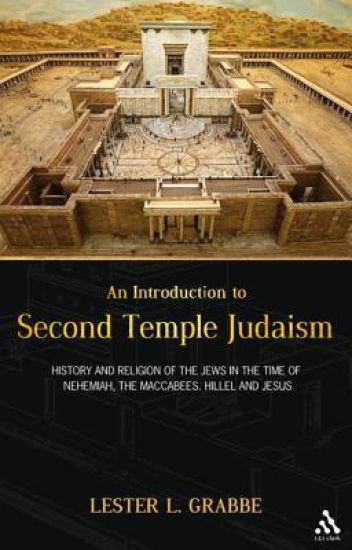
An internationally respected expert on the Second Temple period provides a fully up-to-date introduction to this crucial area of Biblical Studies. This introduction, by a world leader in the field, provides the perfect guide to the Second Temple Period, its history, literature, and religious setting. Lester Grabbe magisterially guides the reader through the period providing a careful overview of the most studied sources, the history surrounding them and the various currents within Judaism at the time. This book will be a core text for courses on the Apocrypha and Pseudepigrapha, as well as Qumran, Intertestamental Literature and Early Judaism.

According to the Bible, among the last kings of the kingdom of Judah was one of the most notorious kings-Manasseh-and one of the most righteous-Josiah. Are the accounts of their contrasting reigns anything more than the ideological creations of pious writers and editors? Does this juxtaposition of a 'good king' and a 'bad king' provide good historical information or only theological wishful thinking? In this volume the on-going discussions in the European Seminar on Methodology in Israel's History have tackled the history of Judah in the seventh century BCE, with a focus on the reign of Josiah. Some essays survey the history and archaeology of Judah from Sennacherib to Nebuchadnezzar. Several examine the reign of Manasseh and address the question of whether it is ripe for re-evaluation. Others ask what we know of the reign of Josiah and, especially, what form his famous cult reform took or even whether it was historical. As always, the editor gives an introduction to the topic, with summaries of the contributions, plus a concluding summary of and personal perspective on the discussion. Contributors include such internationally known scholars as Rainer Albertz, Philip Davies, Axel Knauf, Nadav Na'aman, Marvin Sweeney, and Christoph Uehlinger. JSOTS 393
Originally published as part of the acclaimed Sheffield Guides series, this helpful study-guide is designed to meet the needs of students and general readers in a concise, accessible and affordable format. The complete set of books will offer a comprehensive introduction to the Bible and related writings. Each study-guide comprises. - An Introduction to the content and message of the particular book; - A survey of the significant critical issues; - An assesment of recent scholarship -+ Signposts towards major critical works in the area; - Annotated bibliographies T & T Clark Study Guides are written by some of the world's greatest biblical scholars, each of whom draws on their extensive teaching experience to make their subject come alive for all who are approaching biblical studies for the first time.
A History of the Jews and Judaism in the Second Temple Period, Volume 2
Lester L. Grabbe
T. T.Clark Ltd
2011
nidottu
This is the second volume of the projected four-volume history of the Second Temple period. It is axiomatic that there are large gaps in the history of the Persian period, but the early Greek period is possibly even less known. This volume brings together all we know about the Jews during the period from Alexander's conquest to the eve of the Maccabaean revolt, including the Jews in Egypt as well as the situation in Judah. Based directly on the primary sources, which are surveyed, the study addresses questions such as administration, society, religion, economy, jurisprudence, Hellenism and Jewish identity. These are discussed in the context of the wider Hellenistic world and its history. A strength of the study is its extensive up-to-date secondary bibliography (approximately one thousand items).
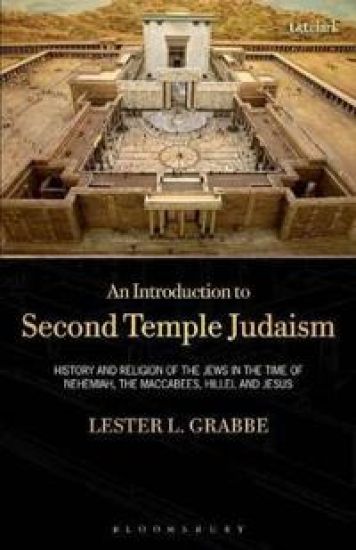
An internationally respected expert on the Second Temple period provides a fully up-to-date introduction to this crucial area of Biblical Studies. This introduction, by a world leader in the field, provides the perfect guide to the Second Temple Period, its history, literature, and religious setting. Lester Grabbe magisterially guides the reader through the period providing a careful overview of the most studied sources, the history surrounding them and the various currents within Judaism at the time. This book will be a core text for courses on the Apocrypha and Pseudepigrapha, as well as Qumran, Intertestamental Literature and Early Judaism.
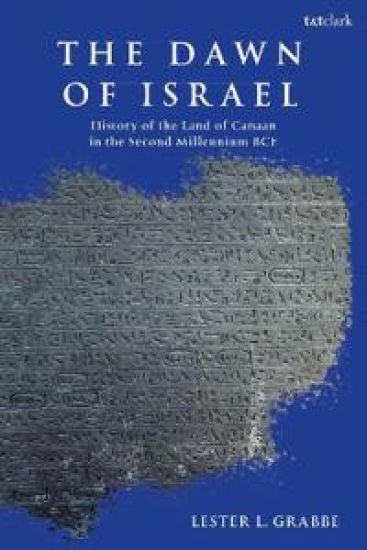
In this companion volume to his bestselling Ancient Israel: What Do We Know and How Do We Know It? Lester L. Grabbe provides the background history of the main ancient Near Eastern peoples and empires: Babylonia, Assyria, Urartu, Hittites, Amorites, Egyptians. Grabbe's focus is on Palestine/Canaan and covers the early second millennium, including the Middle Bronze Age and the Second Intermediate Period and Hyksos rule of Egypt. Grabbe also addresses the question of a 'patriarchal period'. The main focus of the book is on the second half of the second millennium: Late Bronze and early Iron Age, the Egyptian New Kingdom, the Amarna letters, the Sea Peoples, the question of 'the exodus', the early settlements in the hill country of Palestine, and the first mention of Israel in the Merenptah inscription. Archaeology and the contribution of the social sciences both feature heavily, as does inscriptional and iconographic material. As such this volume provides a fascinating portrayal of ancient Israel and this definitive work by one of the world's leading biblical historians will be of interest to all students and scholars of biblical history.
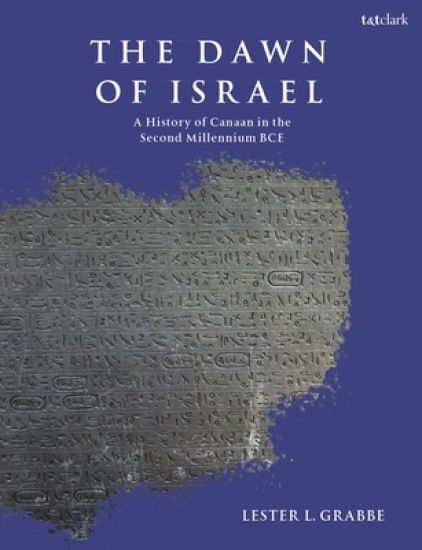
In this companion volume to his bestselling Ancient Israel: What Do We Know and How Do We Know It? Lester L. Grabbe provides the background history of the main ancient Near Eastern peoples and empires: Babylonia, Assyria, Urartu, Hittites, Amorites, Egyptians. Grabbe's focus is on Palestine/Canaan and covers the early second millennium, including the Middle Bronze Age and the Second Intermediate Period and Hyksos rule of Egypt. Grabbe also addresses the question of a 'patriarchal period'. The main focus of the book is on the second half of the second millennium: Late Bronze and early Iron Age, the Egyptian New Kingdom, the Amarna letters, the Sea Peoples, the question of 'the exodus', the early settlements in the hill country of Palestine, and the first mention of Israel in the Merenptah inscription. Archaeology and the contribution of the social sciences both feature heavily, as does inscriptional and iconographic material. As such this volume provides a fascinating portrayal of ancient Israel and this definitive work by one of the world's leading biblical historians will be of interest to all students and scholars of biblical history.
In Ancient Israel Lester L. Grabbe sets out to summarize what we know through a survey of sources and how we know it by a discussion of methodology and by evaluating the evidence. The most basic question about the history of ancient Israel, how do we know what we know, leads to the fundamental questions of Grabbe’s work: what are the sources for the history of Israel and how do we evaluate them? How do we make them 'speak' to us through the fog of centuries? Grabbe focuses on original sources, including inscriptions, papyri, and archaeology. He examines the problems involved in historical methodology and deals with the major issues surrounding the use of the biblical text when writing a history of this period. Ancient Israel provides an enlightening overview and critique of current scholarly debate. It can therefore serve as a 'handbook' or reference-point for those wanting a catalogue of original sources, scholarship, and secondary studies. Grabbe's clarity of style makes this book eminently accessible not only to students of biblical studies and ancient history but also to the interested lay reader. For this new edition the entire text has been reworked to take account of new archaeological discoveries and theories. There is a major expansion to include a comprehensive coverage of David and Solomon and more detailed information on specific kings of Israel throughout. Grabbe has also added material on the historicity of the Exodus, and provided a thorough update of the material on the later bronze age.