Kirjojen hintavertailu. Mukana 11 244 527 kirjaa ja 12 kauppaa.

Kirjahaku

Etsi kirjoja tekijän nimen, kirjan nimen tai ISBN:n perusteella.

1000 tulosta hakusanalla Louis MacNeice

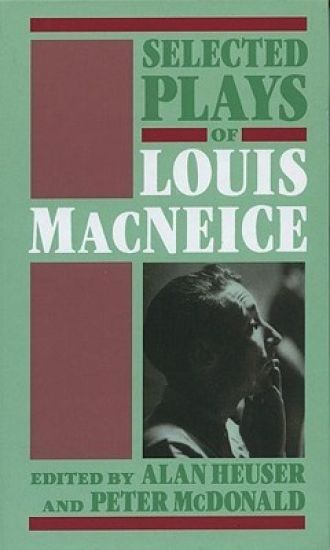
Selected Plays of Louis MacNeice

Selected Plays of Louis MacNeice

Louis MacNeice

Clarendon Press
1993
sidottu
Louis MacNeice (1907-1963) is rightly regarded as one of the foremost Irish poets of this century, but he was also a distinctive, gifted, and popular playwright. This unique selection of eight of MacNeice's best-known plays, most of which were written for BBC Radio, draws on the most authoritative texts to provide a much-needed reminder of the power of his dramatic writing. All the plays are published here in authentic versions for the first time, several considerably changed, and two entirely new plays, never before published. The volume comprises MacNeice's famous The Dark Tower, published here for the first time in its third and final version; the saga play They Met on Good Friday and the parable The Mad Islands, both of which use explicitly Irish subject-matter; the stage play One for the Grave, which mercilessly satirizes television and commercialism; the epic Christopher Columbus; He Had a Date (in its second version), an experiment in radio biography; Prisoner's Progress, a prize-winning parable about an escape from a prisoner-of-war camp; and MacNeice's last play, Persons from Porlock, which traces the nemesis of an artist and was broadcast just four days before MacNeice's own death. This generous and representative selection makes available again MacNeice's entertaining and innovative Irish blend of fantasy and realism, prose and verse, and offers important new perspectives on MacNeice's poetry.
Selected Prose of Louis MacNeice

Selected Prose of Louis MacNeice

Louis MacNeice

Clarendon Press
1990
sidottu
This is the second of two collections of MacNeice's prose writings, prepared by Alan Heuser. The first, concentrating on his literary criticism, came out in 1987 (still available from OUP). The present collection will be of interest to a wider readership, since it covers the sweep of MacNeice's many ardently-pursued interests outside the strictly literary: philosophy and travel, history, autobiography, Ireland (the country of his birth, and one of the mainsprings of his writing of both prose and poetry), India, Greece - and rugby football. The volume also contains the `London letters', written during the Blitz; and a previously unpublished piece: Northern Ireland and her People. These writings convey the visual perceptiveness, humour, seriousness, and enthusiasm of MacNeice's personality and poetry: they are more than simply reflections of the decades in which they were written (from the thirties to the early sixties), revealing MacNeice's particular gifts as a writer, and throwing light on his personality and preoccupations. The complete bibliography of the shorter prose, included in Selected Literary Criticism of Louis MacNeice, is repeated here; and there is annotation and an index. This title also appears in the Oxford General Books catalogue for Autumn 1990.
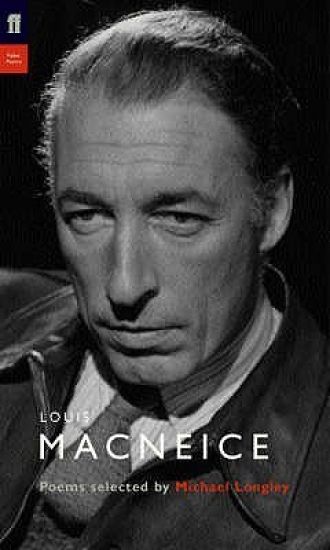
Louis MacNeice

Louis MacNeice

Faber Faber
2005
nidottu
In this series, a contemporary poet selects and introduces a poet of the past. By their selection of verses and by the personal and critical reactions they express in their introductions, the selectors offer a passionate and accessible introduction to some of the greatest poets in history.Louis MacNeice was born in Belfast in 1907 and educated at Marlborough and Merton College, Oxford. For most of his working life he was a writer and producer for BBC radio. His death in 1963 was sudden and unexpected.
Louis MacNeice

Louis MacNeice

Jon Stallworthy

Faber Faber
2010
pokkari
T S Eliot called Louis MacNeice 'a poet of genius', a poet's poet, one 'whose virtuosity can be fully appreciated only by other poets'. As his publisher, however, Eliot knew that MacNeice's work could speak to a much larger public. His Autumn Journal, published in May 1939, went through five printings during the war years, and it was to become one of the definitive poems of the 1930s.'I would have a poet,' wrote MacNeice, 'able-bodied, fond of talking, a reader of the newspapers, capable of pity and laughter, informed in economics, appreciative of women, involved in personal relationships, actively interested in politics, susceptible to physical impressions.' Knowing himself to be all of those things, modesty and a desire to demystify his calling led him to make no mention of the one all-important characteristic that distinguishes a poet: a mastery of the music and magic of language.MacNeice's mother died when he was seven, and Jon Stallworthy shows how his imagination transmuted her ghostly presence, and the powerful presence of his father, into an elemental opposition structuring most of what he would write - from anguished indictments of his native Ireland to poignant love poems. Drawing on the testimony of MacNeice's family, friends and lovers, and his extensive correspondence, Stallworthy has produced a remarkable portrait of a poet of rare energy and integrity who was also a brilliant scholar, critic, autobiographer, playwright and translator.'Jon Stallworthy's Louis MacNeice is the indispensable guide to the poetry and is written with great verve, generosity and brilliance. A moving and eloquent account of the life of the poet, as well as a superb analysis of the relationship between the life and the work, this is surely one of the great literary biographies of our time.'Jonathan Allison, editor of The Selected Letters of Louis MacNeice
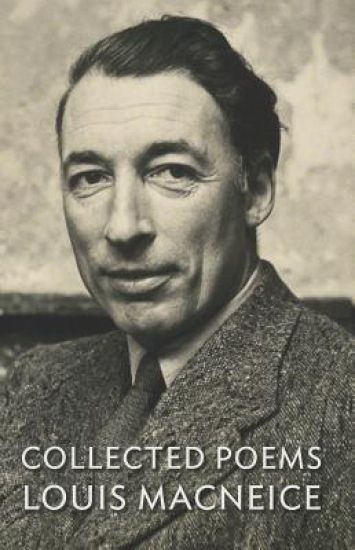
Collected Poems Louis MacNeice

Collected Poems Louis MacNeice

Louis MacNeice

Wake Forest University Press
2013
nidottu
It is no longer necessary--and not before time--to "make a case" for MacNeice as a poet. He had a couple of decades of fame, and more of comparative neglect, but his contemporaries read him poorly on the whole, even when they were most appreciative: as a "30s poet" or "journalist," as the author of a few near-perfect lyrics, and even as a "professional lachrymose Irishman." Fortunately, errors of this order no longer need detailed correction. More to the point, it is the generations of poets, in Ireland as well as Britain, who have learned so much from MacNeice--formally, as well as in other ways--who provide the most potent argument for his poetry's continuing life. Two Irish poets in particular--Derek Mahon and Paul Muldoon--would be unrecognisable without MacNeice's example and influence; and others, from later Irish generations still, are continuing to discover and make creative use of resources in the poems of this writer who died before they were born.
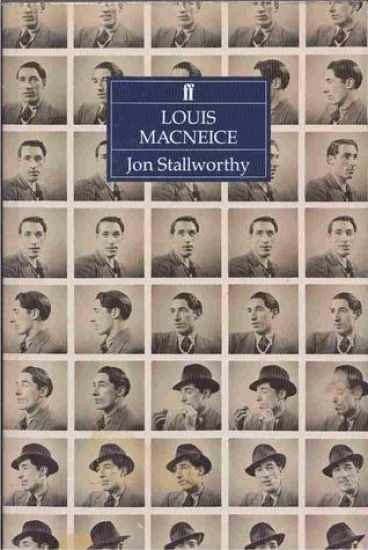
Louis MacNeice

Louis MacNeice

Stallworthy Jon

FABER FABER
1996
pokkari
A biography of the Irish poet, Louis MacNeice, contemporary and friend of W.H. Auden, Stephen Spender and Cecil Day Lewis. Jon Stallworthy is the author of a prize-winning biography of Wilfred Owen, and editor of a volume of his collected poems.
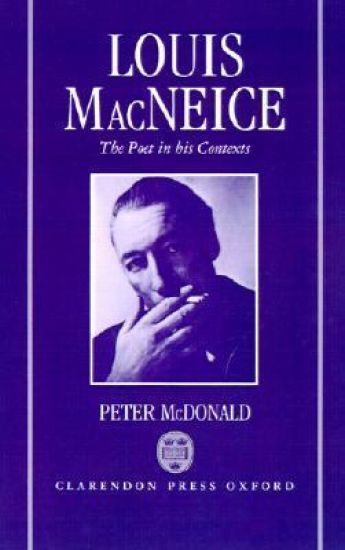
Louis MacNeice: The Poet in his Contexts

Louis MacNeice: The Poet in his Contexts

Peter McDonald

Clarendon Press
1991
sidottu
Since his death in 1963, Louis MacNeice's critical standing has risen steadily. This new study addresses the contexts of MacNeice's writings which are of greatest relevance to his place in modern poetry: his problematic, and still controversial relationship with Ireland and his significance for the understanding of the largely English `thirties generation' with which he is often identified. The influence of these contexts upon the nature of MacNeice's poetic development is studied in detail here together with the important questions of his relation to Yeats and Modernism. The book examines MacNeice's conception of parable as key imaginative response to these influences, and it includes the first study of the poet's revealing and little-known early writings. Peter McDonald demonstrates that MacNeice is a central figure in modern Irish and British poetry of greater substantial complexity than is often thought, and suggests that his through his work we should see its contexts in a challenging new light.
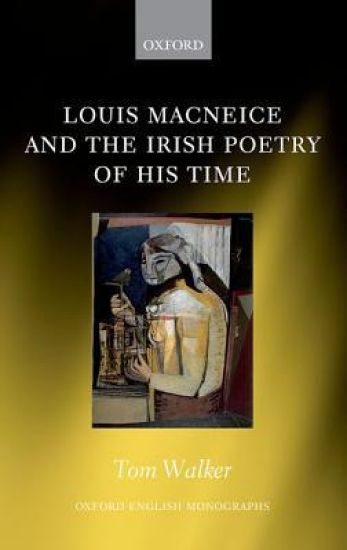
Louis MacNeice and the Irish Poetry of his Time

Louis MacNeice and the Irish Poetry of his Time

Tom Walker

Oxford University Press
2015
sidottu
This study focuses on Louis MacNeice's creative and critical engagement with other Irish poets during his lifetime. It draws on extensive archival research to uncover the previously unrecognised extent of the poet's contact with Irish literary mores and networks. Poetic dialogues with contemporaries including F.R. Higgins, John Hewitt, W.R. Rodgers, Austin Clarke, Patrick Kavanagh, John Montague, and Richard Murphy are traced against the persistent rhetoric of cultural and geographical attachment at large in Irish poetry and criticism during the period. These comparative readings are framed by accounts of MacNeice's complex relationship with the oeuvre of W.B. Yeats, which forms a meta-narrative to MacNeice's broader engagement with Irish poetry. Yeats is shown to have been MacNeice's contemporary in the 1930s, reading and reacting to the younger poet's work, just as MacNeice read and reacted to the older poet's work. But the ongoing challenge of the intellectual and formal complexity of Yeats's poetry also provided a means through which MacNeice, across his whole career, dialectically developed various modes through which to confront modernity's cultural, political and philosophical challenges. This book offers new and revisionary perspectives on MacNeice's work and its relationship to Ireland's literary traditions, as well as making an innovative contribution to the history of Irish literature and anglophone poetry in the twentieth century.
Louis MacNeice: The Classical Radio Plays

Louis MacNeice: The Classical Radio Plays

Amanda Wrigley; S. J. Harrison

Oxford University Press
2013
sidottu
This volume presents eleven radio scripts written and produced by the poet and writer Louis MacNeice (1907-1963) over the span of his twenty-year career at the BBC, during which he wrote and produced well over a hundred radio scripts on an impressively wide variety of subjects. This volume's selection of scripts, all but one of which is published for the first time, illustrates the various ways that MacNeice re-worked one particular and recurrent source of material for radio broadcast - ancient Greek and Roman history and literature. The volume thus seeks to explore MacNeice's literary relationship with classical antiquity, including engagements with authors such as Homer, Thucydides, Aristophanes, Xenophon, Petronius, Apuleius, and Horace, in a variety of types of programmes from wartime propaganda work, which used ancient Greek history to comment on the international situation, to lighter entertainment programmes drawing on the Roman novel. MacNeice's educational background in classics, combined with his skill as a writer and his ability in exploring radio's potential for creative work, resulted in programmes which brought the ancient world imaginatively alive for a massive, popular audience at home and abroad. Each script is prefaced by an individual introduction, written by the editors and guest contributor Gonda Van Steen, detailing the political and broadcasting contexts, the relationship of the script with classical antiquity, notes on cast and credits, and the reception of each script's radio performance amongst contemporary listeners. The volume opens with a general introduction which seeks to contextualise the scripts in MacNeice's wider life and work for radio, and it includes an appendix of extant MacNeicean scripts and recordings.
Die Antike in Der Dichtung Von Louis MacNeice

Die Antike in Der Dichtung Von Louis MacNeice

Wolfgang Rebetzky

Peter Lang GmbH
1981
nidottu
Louis MacNeice (1963), Schriftsteller und lange Zeit Mitarbeiter der BBC, war zu Beginn seiner Karriere selbst als Dozent fur Alte Sprachen in Oxford und London tatig. Dieses sein Interesse an der Antike blieb nicht ohne Einfluss auf sein schriftstellerisches Werk und seine Produktionen fur die BBC. Die Arbeit beschrankt sich auf sein dichterisches Schaffen und versucht, im Rahmen einer Bestandsaufnahme anhand der in Frage kommenden Gedichte und Sequenzen das Verhaltnis des Dichters zur Antike zu beschreiben. Dabei wird eine Antwort auf die Frage gesucht, ob und inwieweit ein moderner Autor wie MacNeice uberhaupt noch in der Lage ist, einen direkten Zugang zur Antike zu finden bzw. diesen auch seinem Lesepublikum zu ermoglichen."
The Burning Perch

The Burning Perch

Louis MacNeice

Faber Faber
2001
nidottu
Faber are pleased to announce the relaunch of the poetry list - starting in Spring 2001 and continuing, with publication dates each month, for the rest of the year. This will involve a new jacket design recalling the typographic virtues of the classic Faber poetry covers, connecting the backlist and the new titles within a single embracing cover solution. A major reissue program is scheduled, to include classic individual collections from each decade, some of which have long been unavailable: Wallace Stevens's Harmonium and Ezra Pound's Personae from the 1920s; W.H. Auden's Poems (1930); Robert Lowell's Life Studies from the 1950s; John Berryman's 77 Dream Songs and Philip Larkin's The Whitsun Weddings from the 1960s; Ted Hughes's Gaudete and Seamus Heaney's Field Work from the 1970s; Michael Hofmann's Acrimony and Douglas Dunn's Elegies from the 1980s. Timed to celebrate publication of Seamus Heaney's new collection, Electric Light, the relaunch is intended to re-emphasize the predominance of Faber Poetry, and to celebrate a series which has played a shaping role in the history of modern poetry since its inception in the 1920s.
Selected Poems

Selected Poems

Louis MacNeice

Faber Faber
2007
pokkari
'I would have a poet able bodied, fond of talking, a reader of the newspapers, capable of pity and laughter, informed in economics, appreciative of women, involved in personal relationships, actively interested in politics, susceptible to physical impressions.'Louis MacNeice's prescription is designed to look ordinary, rather than esoteric, but very little poetry can claim to meet these specifications, stringent in their very wideness. MacNeice's work matches the world he famously described as 'incorrigibly plural.'Michael Longley, himself a distinguished Ulster poet, has written an introductory essay of meticulous advocacy. His wife, the critic Edna Longley, has supplied the apparatus for students and the general reader.
Autumn Journal

Autumn Journal

Louis MacNeice

Faber Faber
2013
nidottu
Written between August and December 1938, Autumn Journal is still considered one of the most valuable and moving testaments of living through the thirties by a young writer. It is a record of the author's emotional and intellectual experience during those months, the trivia of everyday living set against the events of the world outside, the settlement in Munich and slow defeat in Spain.
The Dark Tower and Other Radio Scripts

The Dark Tower and Other Radio Scripts

Louis MacNeice

Faber Faber
2008
nidottu
Born in Ireland, Louis MacNeice was sent to England for his schooling, to Marlborough, and then went on to read classics at Oxford. His professional life began as a lecturer in classics but in 1941 he joined the BBC and for the next twenty years produced programmes for the legendary Features Department, including his own celebrated radio play, The Dark Tower, which was broadcast for the first time in 1946, with original music by Benjamin Britten. Described by the author as 'a radio parable play', written in response to the rise of fascism in Germany and the events of World War II, The Dark Tower stages the debate about free will with reference to the ancient theme of the Quest, but in modern contexts exporing sexuality, gender, family and geography.'The Dark Tower is in my view the best piece of writing ever done for radio.' George MacBeth
The Poetry of W. B. Yeats

The Poetry of W. B. Yeats

Louis MacNeice

Faber Faber
2008
nidottu
The poet Louis MacNeice's pioneering critical study of W. B. Yeats was undertaken in 1939, shortly after the death of Yeats, and published early in 1941, in time of war - as an attempt to disentangle MacNeice's own feelings about the elder poetic statesman and compatriot, but also to investigate the reality of poetry at a historical moment when its uses seemed most tenuous.As Richard Ellmann remarked: 'MacNeice's book on Yeats is still as good an introduction to that poet as we have, with the added interest that it is also an introduction to MacNeice. It discloses a critical mind always discontented with its own formulations, full of self-questionings and questionings of others, scrupling to admire, reluctant to be won. Yet mistrust of Yeats is overcome by wary approval, in a rising tone of endorsement'.MacNeice's study succeeded in delineating those aspects of Yeats that remain central to discussion of the poet today.
Varieties of Parable

Varieties of Parable

Louis MacNeice

Faber Faber
2008
nidottu
In Varieties of Parable, which comprises the Clark Lectures given by Louis MacNeice at Cambridge in 1963, a few months before his death, the poet discusses the significance of 'parable' for the times in which he lived, and implictly for his own poetic. The discussion ranges widely, including Samuel Beckett, Harold Pinter and William Golding (new writers with whom MacNeice felt an obvious kinship), and backwards genealogically to Spenser's The Faerie Queene or Bunyan's Pilgrim's Progress, by way of Alice in Wonderland and the fantasy tales of George MacDonald - as well as outwards into the exemplary European fictional world of Kafka.Most importantly, MacNeice ponders the uses of parable for poetry, and Varieties of Parable stands as an implict handbook to the landscapes and 'thumbnail nightmares' of his own later verse, whose new horizons were abruptly foreshortened by the poet's untimely death in autumn 1963. Varieties of Parable stands as MacNeice's last considered statement about poetry and poetics, and one of his most atmospheric and personal acts of literary criticism.
The Agamemnon of Aeschylus

The Agamemnon of Aeschylus

Louis MacNeice

Faber Faber
2008
nidottu
Louis MacNeice read classics at Oxford, and his professional life began as a lecturer in classics, before his career developed as a poet and broadcaster. Published in 1936 and intended primarily for the stage, MacNeice's version of The Agamemnon was immediately recognised, in the words of T. S. Eliot, as 'an accurate, almost literal translation, and at the same time as English poetry for the twentieth century. For many readers of Greek, Aeschylus is revealed as a great poet and dramatist of contemporary importance'.
Goethe's Faust

Goethe's Faust

Louis MacNeice

Faber Faber
2008
nidottu
Commissioned by the BBC for the Goethe Centenary in 1949, and originally broadcast in six instalments, Louis MacNeice's translation of Goethe's Faust distills the digressive dimensions of the original - at once a play and an epic poem - into a verse drama for the ear. The translation is almost line for line, following closely and skilfully the varied verse patterns of the original, as well as its radical shifts of mood and momentum. Louis MacNeice joined the BBC in 1941, and for the next twenty years produced programmes for the legendary Features Department, as well as composing a very individual body of work for radio. He wrote in praise of the 'calculated speech' of the radio as a medium, 'divorced from all visual supports or interferences'. His Goethe's Faust remains the most successful adaptation of Goethe's masterpiece for an English audience, but is also an important and neglected contribution to MacNeice's own poetic oeuvre for radio.
Zoo

Zoo

Louis MacNeice

Faber Faber
2013
nidottu
'I go the zoo half because I like looking at the animals and half because I like looking at the people... The pleasure of dappled things, the beauty of adaptation to purpose, the glory of extravagance, classic elegance or romantic nonsense and grotesquerie - all these we get from the Zoo.' In 1938 Louis MacNeice published his second collection of poems with Faber; his 'personal essay' Modern Poetry for OUP; and Zoo, a prose commission from Michael Joseph to write an impressionistic 'guide' to the London Zoo in Regents Park. Envisioned as a breezy assignment MacNeice's Zoo inevitably became a richer endeavour, taking in side-trips to Paris and Belfast. Zoo also benefited from illustrations by the painter Nancy Sharp, with whom MacNeice had begun an affair after moving to London in 1936.This Faber Finds edition returns to circulation a delightful rarity by one of the twentieth century's most brilliant poets.
Collected Poems

Collected Poems

Louis MacNeice

Faber Faber
2016
nidottu
In the decades since his death in 1963, Louis MacNeice's reputation as a poet (and, indeed, amongst poets) has grown steadily, and there are now several generations of readers in Ireland, Britain, and beyond, for whom he is one of the essential poets of the twentieth century. His work has also received increasing attention from academic writers and students. For both readers and critics, the nature of MacNeice's poetic work as a whole is a matter of importance, and the second posthumous Collected Poems, entirely re-edited by Peter McDonald, attempts, for the first time, to print MacNeice's poetry in groupings corresponding closely to the collections published by Faber between 1935 and 1963. This makes it easier to read the poet in the published forms in which he was read by his contemporaries. In choosing to re-create the environments of MacNeice's individual volumes of poetry, moreover, this new Collected reflects the opinion that MacNeice works best in and through those separate volumes, particularly so in the brilliant return to form - and unique kinds of return on lyric form itself - of the last three collections. The texts of the poems in the new edition are based on a comparison of all printed versions, as revised in the light of the poet's later thoughts. This has resulted in a large number of changes. It is hoped that the present edition presents MacNeice's poetry more accurately, as well as more fully, than all previous collections. The new Collected Poems also includes, as appendices, The Last Ditch - the short book of poems which MacNeice published with the Cuala Press in 1940 - and The Revenant, a cycle of songs written for MacNeice's wife, the singer Hedli Anderson, a selection of uncollected early poems, and from Blind Fireworks, MacNeice's first published book of verse.